
VAPE FAQs
Can You Vape On Carnival Cruise?
Aug
The Reality of Personal Device Use at Sea: What Carnival Guests Actually Need to Know
You have packed carefully. Sunscreen, a good book, and the personal electronic device you rely on throughout your daily routine. Then, as the ship pulls away from the dock, a quiet uncertainty settles in: where exactly can you use it, and what happens if you get it wrong? The question is not trivial. Cruise lines operate in a tightly regulated environment where onboard safety, shared air spaces, and the comfort of thousands of passengers must be balanced against individual preferences. At OZVAPE Shop, we see the same confusion surface in conversations with adult Australian travellers who want to stay within the rules without making their journey needlessly complicated. This article sets out to answer the question directly, without glossing over the details that matter when you are actually standing on deck.
Understanding Carnival Cruise Line’s Vaping Policy
Carnival Cruise Line maintains a clearly documented policy that distinguishes vaping from other forms of smoking, but applies a location-based restriction framework to both. At first glance, the rules appear simple; the real challenge lies in how they interact with the geography of a modern cruise ship and the routines of a passenger who may want to use a device at different times throughout the day.
Designated Areas Where Vaping Is Permitted
Carnival’s published guest conduct policy permits vaping in three specific environments:
The casino, but only while actively seated and playing at a designated slot machine or table game. Stepping away to stand near the casino bar or lingering at the edge of the gaming floor while using a device violates the rules and will usually draw intervention from staff.
Designated outdoor smoking and vaping areas located on open decks. These are marked with fixed signage, typically on the starboard side of the ship, and can include specific sections of the pool deck or promenade. The number of such zones varies by vessel class, and you should locate them on the deck plan during your first hour onboard rather than relying on memory from a previous sailing.
Certain nightclub or entertainment venues may permit vaping when a specific area is designated, though this is the exception rather than the rule. Carnival does not treat a general nightclub as a permitted zone unless a contained section is explicitly signposted.
The consistent principle is spatial separation. Vaping is permitted only where the design of the ship intentionally channels and exhausts air away from general passenger areas. This is not a policy shaped by social preference alone; it is an engineering decision driven by HVAC design and fire suppression system zoning.
Stateroom and Balcony Prohibition — A Zero-Tolerance Rule
Carnival prohibits all vaping inside staterooms and on private balconies. This restriction is absolute and carries consequences that range from a mandatory cleaning fee (typically several hundred dollars) to disembarkation at the next port without compensation. The justification is twofold: sensitive smoke detection systems inside cabins are calibrated to particulate levels far finer than human perception, and balcony use introduces fire risk from devices that, while small, reach temperatures capable of igniting accumulated lint, drapes, or cushions under the right conditions.
A frequently misunderstood nuance: the balcony is legally considered part of the ship’s structure, not an extension of your private space. Maritime safety regulations do not carve out exceptions for individual balconies, and Carnival’s crew are trained to enforce the rule uniformly. Even if you believe your device produces minimal residual output, the crew cannot and will not make case-by-case judgments.
The Safety and Design Logic Behind the Policy
Personal electronic devices that use lithium-ion power cells, particularly those with push-button activation rather than air-flow-only sensors, introduce a fire risk profile that cruise lines take seriously. Thermal runaway incidents are rare but catastrophic in a ship environment where evacuation is complex and firefighting resources, though robust, are finite. Carnival’s policy of limiting vaping to specific monitored areas is partly a fire-prevention control, not merely a comfort measure.
There is also the matter of shared air handling. Cruise ship cabins recirculate a significant portion of air. Allowing vaping inside cabins would mean any residual output is drawn into the HVAC system and redistributed to neighbouring cabins, creating a discomfort cascade that the cruise line is unwilling to manage. Outdoor designated zones, by contrast, vent directly to the open environment and do not create the same recirculation problem.
Applying the Policy to a Real-World Cruise Experience
Understanding the rules in the abstract is one thing; living with them across a seven-day itinerary is another. The most consistently reported friction points come from passengers who do not plan their device use around the ship’s layout and daily schedule.
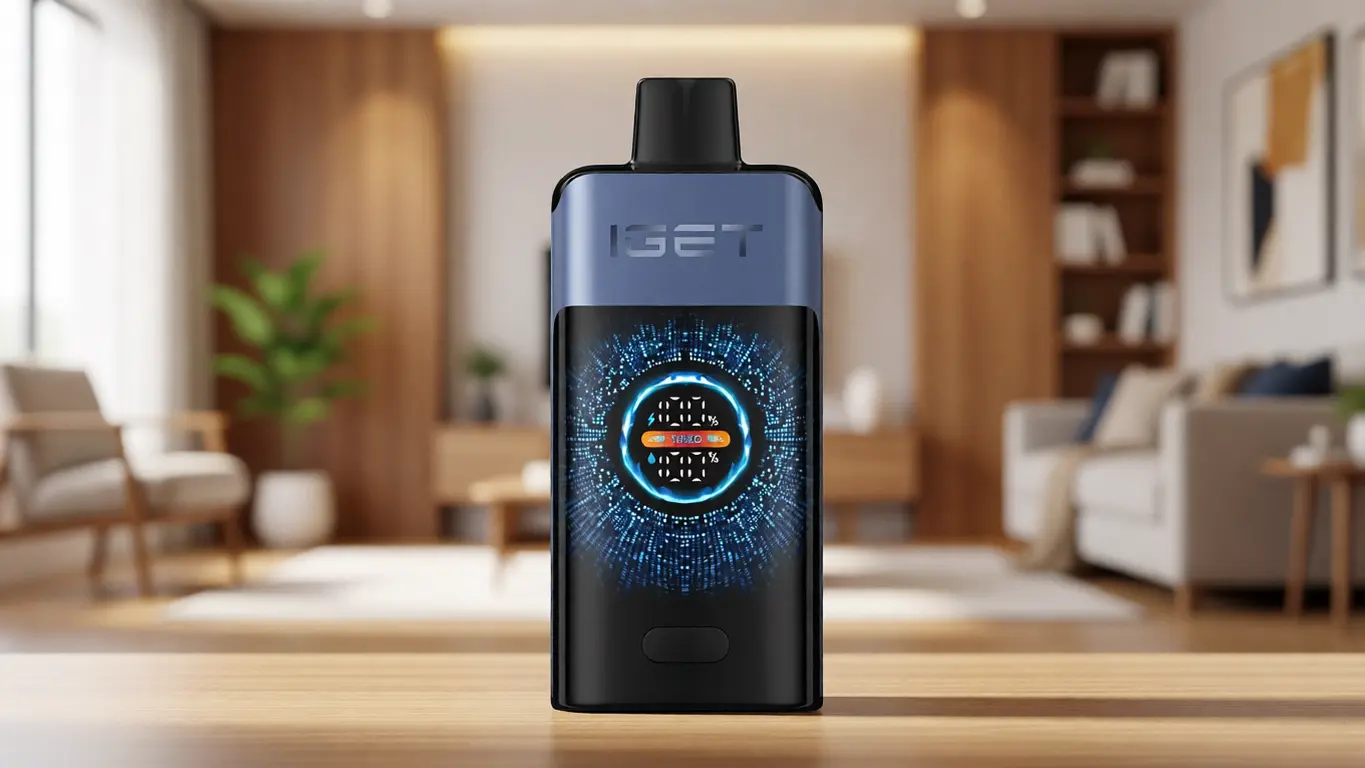
A compact, closed-system device with clear power-status indication — such as many in the ALIBARBAR range distributed through OZVAPE Shop — can simplify matters considerably. You are less likely to be caught off guard needing to use a device precisely when you are far from a permitted zone if you know your remaining operational life at a glance. But even the best-engineered device does not excuse you from knowing where you are allowed to use it.
Mornings and late evenings present the greatest challenge for the routine user. The casino may be closed or inactive. Outdoor deck zones can be windswept and uninviting. A practical strategy that many experienced cruisers adopt is to carry a device designed for quick, predictable sessions and to time use around the moment they pass through a designated outdoor area rather than make a dedicated trip. This approach works only if the device delivers consistent output from the first draw onward, without requiring warm-up or tinkering — something that well-designed temperature-regulated power delivery circuits, like those in the current ALIBARBAR INGOT series, are engineered to provide.
When you are in a permitted zone, remain aware of the immediate environment. Vaping near a doorway where output drifts back inside, or standing so that the breeze carries it toward non-designated seating, will generate complaints and can lead to staff asking you to move even if you are technically inside the marked zone.
A Practical Framework for Travellers Using Personal Electronic Devices on Carnival
If you want to remove the guesswork entirely, run through this mental checklist before you board, and repeat it as a daily habit once onboard:
Verify current policy before departure. Cruise lines—Carnival included—update their terms without fanfare. Check the Guest Conduct Policy on Carnival’s website within 48 hours of sailing. Do not rely on a screenshot from a previous trip or a forum post.
Identify the ship’s designated zones early. On embarkation day, take five minutes to walk the outdoor decks and note the location of every signposted vaping area. Ask at Guest Services if any area is contested or temporarily closed.
Match your device to the rhythm of the ship. If you know you will be in the casino for an hour every evening after dinner, a device with a sufficient rated capacity to cover that window without degradation is a practical advantage. If you are a balcony-dwelling reader who values discretion, understand that the balcony is entirely off-limits; plan accordingly.
Carry a backup only if its power source meets cruise line safety standards. Spare lithium-ion cells must be in carry-on luggage, not checked bags. Any device with an integrated battery should be stored so that its activation button cannot be accidentally pressed in transit.
Never test the smoke detectors. Even with a device that produces minimal visible output, stateroom detectors can trigger. The activation algorithm often looks for a sustained particulate spike, and the cleaning fee—if charged—is non-negotiable. If a detector does activate, report it immediately rather than attempting to clear the air; the ship’s safety officer will treat an unreported alarm as a higher-risk event.
When in doubt, ashore. Port days often offer more flexibility. Many Caribbean and South Pacific destinations have far less restrictive use regulations than the ship itself, though you should still confirm local laws before stepping off the gangway.
Common Selection Errors and Misconceptions That Lead to Onboard Problems
Years of industry observation reveal that most cruise-related device incidents stem not from wilful rule-breaking but from predictable miscalculations. These are the mistakes that turn a relaxing holiday into an administrative headache.
Assuming All Cruise Lines Are Alike
Carnival’s policy is specific. Royal Caribbean, Norwegian, and MSC each have slightly different zoning, and some lines designate balcony use as permissible while others mirror Carnival’s absolute prohibition. Switching from one line to another without re-reading the policy is the single most common source of accidental violations. The second most common: assuming that because a device was permitted on a Carnival sailing two years ago, the rules have not changed since.
Overvaluing Device Stealth Over Compliance
There is a category of traveller who selects a device primarily for its minimal visible output, believing this will allow cabin or balcony use without detection. This thinking collapses under the weight of two realities: first, many of the most discreet devices use high-resistance heating architectures that still produce detectable particulate; second, human observation by room stewards and neighbouring guests is a more reliable enforcement mechanism than smoke detectors. Even if you avoid a technical alarm, a report from a balcony neighbour will trigger the same consequences.
Neglecting Battery Safety Protocols
A device with a user-replaceable power cell may seem convenient for a longer voyage, but the International Air Transport Association’s (IATA) restrictions on lithium-ion batteries apply to cruise lines too, since many sailings involve a flight to the embarkation port. Loose cells must be in carry-on baggage only and protected from short circuits. Passengers who toss spare batteries into checked luggage are often unaware they are violating maritime safety codes that Carnival integrates into its own policies.
Assuming “Vape” Only Means One Class of Device
Cruise line policies generally apply to any electronic device that produces an aerosol, regardless of what the user calls it. The distinction an engineer might draw between a heated-tobacco system, a nicotine delivery device, and a pod-based system is not relevant to Carnival’s enforcement. If it has a power source and produces a visible or detectable emission, it falls under the same restriction. Do not attempt to carve out an exception by arguing semantics with the crew.

Frequently Asked Questions
Q: Can I vape in my Carnival stateroom if I use a device that produces no visible vapour?
A: No. Carnival’s policy does not make exceptions based on output visibility. The stateroom prohibition applies to all personal electronic aerosol-producing devices. Additionally, even if you perceive no output, detectable particulate can still activate smoke detection systems. The cleaning fee, if assessed, will not be waived.
Q: Is vaping permitted on Carnival’s private islands, such as Half Moon Cay or Princess Cays?
A: On Carnival’s private destinations, the designated area rules generally apply. Look for marked outdoor smoking and vaping sections. These are often located near beach bars or away from primary foot traffic. Do not assume the entire island is unrestricted; the ship’s policy extends to these properties.
Q: What happens if I am caught vaping on my balcony?
A: You will likely receive a warning from ship security if it is a first incident and no alarm was triggered. If a smoke alarm activates, or if you are reported by a neighbour more than once, Carnival imposes a cleaning fee (typically $250–$500 USD) charged to your onboard account. In extreme or repeated cases, you may be removed from the ship at the next port and required to make your own travel arrangements home.
Q: Can I carry my device and spare parts in my luggage?
A: Yes, with restrictions. The device itself, power cells, and any associated components must be in your carry-on luggage. Never pack lithium-ion batteries in checked bags, as this violates both Carnival’s policies and maritime safety regulations. If you carry spare power sources, cover the terminals with tape or use an approved case.
Q: Does Carnival’s policy differ for different device categories, like disposables versus rechargeable systems?
A: No. The policy applies equally to all electronic aerosol-producing devices. Whether the device is sealed, rechargeable, or uses a pod-based architecture does not alter its classification under the guest conduct rules. The only thing that matters is where you use it.
Q: Are the designated vaping areas the same on every Carnival ship?
A: The general principle is consistent, but the exact deck location varies by vessel class and sometimes by ship within the same class. Always check the deck plan and onboard signage. Do not assume that the zone you used on Carnival Splendor is in the same place on Carnival Celebration.
Q: Can I vape in the casino if I am not gambling?
A: Carnival’s rule is explicit: you must be actively seated and playing. Standing behind a player, watching from the railing, or waiting near the entrance while using a device is not permitted. Casino staff will intervene if they observe a guest vaping without being actively engaged in a game.
Q: If I have a medical reason for using my device, can I get an exception?
A: Carnival does not publish a medical exemption process for vaping policy. You should contact the Guest Access Team well in advance of sailing to discuss any specific requirements, but do not expect an automatic waiver of the designated area rules. The ship’s safety and operational framework takes precedence over individual accommodations in this area.
Choosing Devices with Travel in Mind
The most frustrating cruise experiences we hear about at OZVAPE Shop stem from travellers who selected a device based on characteristics that work well on land—maximum output volume, dense formulation, elaborate power adjustments—without considering how those features interact with a confined maritime environment. A device that constantly needs recharging, has ambiguous status feedback, or produces an output profile that attracts attention is a liability at sea.
When you look at the current ALIBARBAR catalogue, you will notice engineering decisions that directly address these pain points. The sealed, pre-configured architecture eliminates the need to manage loose components or power cells. The integrated status indicators—present across the INGOT and Ice Adjust lines—remove the uncertainty of wondering whether a device is ready or depleted. And the form factors are deliberately compact, sliding easily into a pocket or small bag without creating the bulk that invites questions during embarkation screenings.
None of this changes where you can use your device. A well-engineered device used in a non-permitted area will still trigger consequences. But a device built for consistency and discretion makes it far easier to stay within the rules without rearranging your entire day.
Return of Control to the Traveller
Cruise holidays are meant to be an escape from friction, and the most effective way to ensure your personal device doesn’t become a source of stress is to treat the ship’s policy as a fixed design parameter, not a negotiable preference. Once you accept the designated zones, select a device that fits neatly into the pockets of your day, and take ten minutes to learn the deck layout, the question of whether you can vape on Carnival ceases to be an abstract worry and becomes a simple logistical detail.
At OZVAPE Shop, our commitment is to provide Australian adults with factory-certified devices and transparent, specification-driven information so that decisions like these are grounded in reality rather than guesswork. Because the right choice is never the device with the most aggressive claims—it’s the one that aligns with your actual routine, including the hours you spend watching the sun set from a deck chair in a designated zone, knowing you haven’t created a problem for yourself or anyone else.