
VAPE FAQs
What Happens If I Blow Into A Vape?
May
What Actually Happens When You Blow Into a Vape — And Why Device Engineering Matters
Most adult users pick up a personal electronic device with a clear, learned behaviour: inhale. The reverse action — exhaling back through the mouthpiece — is rarely deliberate, but it occurs more often than manufacturers might like to admit. A coughing fit, a moment of distraction, or a well-meaning attempt to clear a clogged airway can all lead to an accidental back-puff. The result is rarely catastrophic, but it can be silently damaging in ways that degrade performance over time. Understanding what is happening inside the device when air flows in the wrong direction is not just a technical curiosity; it is a practical skill that can extend the usable life of your equipment and save you from inexplicable failures.
From a product analyst’s perspective, the harm caused by blowing into a vape device reveals a great deal about the quality of its internal engineering. Pressure-sensitive components, liquid containment systems, and power management circuits are designed around a unidirectional flow assumption. When that assumption is violated, the failure modes tell you exactly which corners were cut during design. This article unpacks the sequence of events that unfold during a back-puff, maps each potential risk to the underlying component, and explains how better-built devices — the kind that retailers like OZVAPE Shop prioritise in their sourcing criteria — contain safeguards that minimise long-term consequences.
The Mechanical Sequence: Airflow in Reverse
To grasp what goes wrong, we need to first recall how a standard draw-activated device operates. Inside the slim chassis of most modern units, a tiny microphone-style sensor sits in the airflow path. When you inhale, the resulting negative pressure flexes a diaphragm, closing a circuit that signals the power management chip to energise the heating element. E-liquid, held in a saturated wick, is vaporised as air passes through the heating chamber.
Blowing into the mouthpiece inverts this entire chain. Positive pressure pushes the sensor diaphragm in the opposite direction from its intended travel range. In a well-engineered device, a back-flow prevention valve or a mechanical stop limits how far that diaphragm can move, and the control chip is programmed to ignore signals that don’t match the characteristic negative-pressure waveform. In cheaper designs, the sensor may be directly exposed to moisture and pressure spikes, leading to immediate or cumulative failure.
Understanding What Matters: Core Engineering and Design Factors
When evaluating how a device might tolerate an unintended back-puff — or, more practically, when deciding which device to rely on — four engineering characteristics become particularly relevant.
Internal Architecture and Output Consistency
The heating chamber is designed to manage fluid dynamics in one direction. E-liquid enters the wick from a reservoir, and vapour exits toward the mouthpiece. Blowing inward forces vapour and any unvaporised liquid back toward the reservoir or, worse, out of the device’s air intake vents. If the chamber lacks a dedicated condensate trap or if the air intake is positioned directly below the coil, e-liquid can pool inside the body, eventually contacting the circuit board or leaking out of the casing.
High-quality devices account for this possibility with sealed internal compartments and drainage paths that channel leaked liquid away from sensitive electronics. Observing how a device behaves after an accidental back-puff — whether it simply stops working, gurgles temporarily, or recovers without incident — is a reliable indicator of internal architecture quality.

Power Management and Status Transparency
The moment the sensor misreads a pressure spike as a valid draw, the power management system may attempt to fire the heating element. If the coil energises while airflow is reversed, the temperature rise can caramelise liquid inside the wick without actually producing vapour, leading to burnt residue that permanently taints flavour. Devices with intelligent control chips incorporate a minimum draw-time threshold and a rate-of-pressure-change analysis that distinguishes a deliberate inhale from a sharp pressure transient. The difference is tangible: a device that pulses briefly and stops is protecting itself; one that begins glowing or emits a hot, acrid smell has already been compromised.
Status transparency plays a role here as well. A unit that clearly communicates a fault — through a blinking LED sequence or haptic feedback — allows the user to recognise that something is wrong and stop using it before further damage occurs. Opaque devices leave you guessing, and guessing often leads to continued use of a compromised unit.
Physical Design and Material Durability
Mouthpiece geometry determines how easily a back-puff can occur in the first place. Narrow-bore tips create higher velocity airflow during normal inhalation, which can lead to coughing fits if the vapour is warm; those coughing fits, in turn, increase the likelihood of an accidental blowback. A more ergonomically designed mouthpiece with a wider, tapered opening reduces velocity and provides a natural lip stop, making unintentional exhalation physically less probable.
Material durability matters after the fact. Silicone gaskets and sealing rings that degrade when exposed to e-liquid can cause persistent leakage after a single back-puff event. Devices built with fluoroelastomer seals or mechanical compression fittings fare substantially better than those relying on simple O-rings.
Modularity and Lifecycle Flexibility
A sealed disposable device offers no recourse after a back-puff causes internal damage. You dispose of it and absorb the cost. A device with replaceable pods or coils, by contrast, lets you salvage the power unit and simply swap in a new pod if the original becomes flooded or contaminated. Understanding your own usage pattern — are you prone to accidental back-puffs? do you use your device in high-motion environments? — will determine whether modularity is a theoretical benefit or a genuine cost-saver over time.
Applying These Criteria to Real-World Options
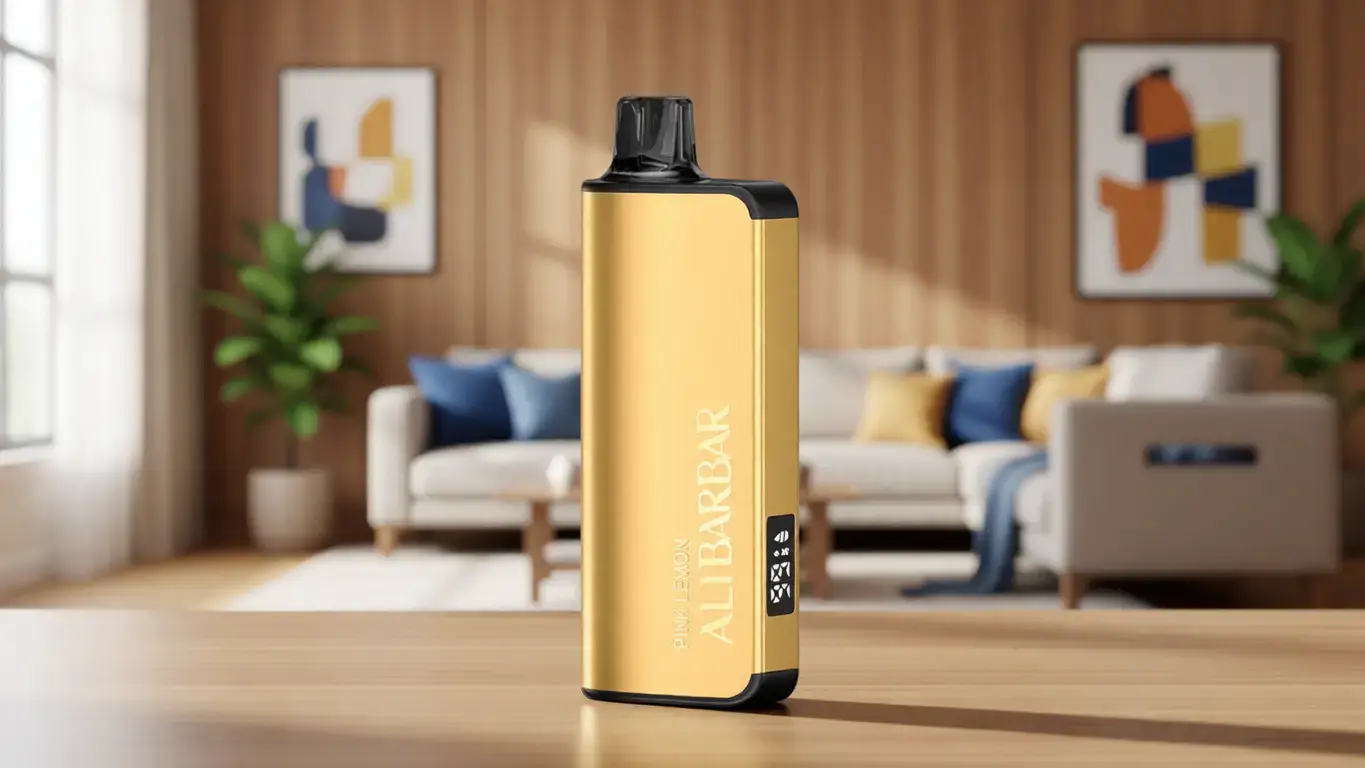
When we apply this framework to the devices available through a curated retailer like OZVAPE Shop, patterns emerge. The ALIBARBAR INGOT series, for example, incorporates a sealed chassis with a dedicated airflow channel that routes intake away from the main circuit board. In practical terms, this means that should any liquid condensation accumulate after repeated hard use, it drains away from the electronics rather than pooling against them. This is an engineering choice — not a marketing claim — that directly addresses the kind of failure scenario a back-puff can accelerate.
Other device families in the market may pack similar claims into their product descriptions, but the presence of this feature can only be verified through tear-down analysis or long-term usage. The INGOT 9000 and 15000 units achieve their status partly because their internal layout has been publicly documented, giving users confidence that the design matches the description. Conversely, lower-priced alternatives that visually resemble these units often lack the internal compartmentalisation necessary to survive a single mishap.
That is not to say ALIBARBAR devices are impervious. No device is. Blowing hard into any mouthpiece will eventually overcome the protection mechanisms. The difference lies in the margin of safety: a well-built unit will withstand an occasional, brief back-puff without immediate failure, while a poorly constructed one may develop erratic sensor behaviour, persistent gurgling, or complete shutdown after a single event.
A Practical Framework for Evaluation
How should you assess your current device — or a device you are considering — for its resilience to reverse airflow? Use the following diagnostic checklist:
Before anything else, locate the air intake. On most draw-activated devices, the intake is a small pinhole or slot on the side or bottom. If it is positioned near the base of the body, liquid that is forced back through the system can easily exit there and make contact with skin or clothing.
Perform a controlled self-test. Remove the pod or cartridge if possible. Gently blow into the mouthpiece of the empty power unit. Does air exit cleanly, or do you hear rattling, feel resistance, or notice anything loose? A clean exit suggests a well-designed airflow path; obstruction or noise suggests debris or a collapsed seal.
Observe sensor recovery. After a known back-puff, set the device aside for five minutes. Then attempt a normal draw. If the unit fires normally, the control chip handled the anomaly. If it continues to fire without stopping, or refuses to fire at all, the sensor has been damaged.
Check for leakage. Remove the pod and inspect the contact area. Any e-liquid here is a sign that the seal between pod and body has been compromised and that liquid has been forced into places it should not be.
Ask about design features. When purchasing, look for specifications like “sealed PCB,” “anti-backflow valve,” or “condensation chamber.” If a retailer like OZVAPE Shop makes such information available, use it. If a product page avoids these details entirely, that absence is itself information.
This framework does not require advanced tools or technical expertise. It simply requires paying attention to what the device is telling you. Most users skip straight past the device’s feedback, and that is precisely where costly mistakes originate.
Common Selection Errors and Industry Observations
Our observations of user behaviour, drawn from support interactions and long-term product monitoring, reveal several recurring errors that make a back-puff incident more likely or more damaging than it needs to be.

Error 1: Assuming all draw-activated devices use the same sensor technology. In reality, the sensor type ranges from simple electret microphones with minimal protection to MEMS-based pressure sensors rated for millions of cycles. A MEMS sensor is inherently less susceptible to diaphragm deformation from reverse pressure. Yet manufacturers rarely advertise sensor type. Users often gravitate toward the smallest, lightest devices on the market without realising that miniaturisation often forces the use of cheaper sensor components that are far less tolerant of abuse.
Error 2: Ignoring mouthpiece ergonomics until after a mishap. A device that feels comfortable during a two-second test draw at the point of sale may prove problematic in real-world use — for example, during physical activity or while distracted. Blowback incidents spike when users multitask. A device with a flared, duck-bill mouthpiece naturally resists accidental exhalation; a simple cylindrical tip does not. This is not a matter of aesthetic preference but of functional design.
Error 3: Treating a disposable device as a permanent tool. Disposable devices, by definition, are not built for long-term durability. Their sensor assemblies and seals are designed for a finite lifespan under ideal conditions. A single strong back-puff can shorten that lifespan from 5000 rated draws to a few hundred. Users who habitually purchase low-cost disposables and then experience repeated failures do not have a bad luck problem; they have a mismatch between their usage pattern and the product’s design tolerances.
From an industry vantage point, it is worth noting that the trend toward ever-higher puff counts in sealed disposable units has quietly increased the cost of failure. A device rated for 9000 draws represents a substantial sunk cost. Yet many of these devices lack any user-serviceable drain path, meaning a flooded coil cannot be remedied. The market is slowly recognising that capacity without resilience is a false economy. The more extended-use devices coming from engineering-focused brands incorporate features like vertical coil orientation and bottom-facing drainage channels specifically to mitigate this vulnerability.
Frequently Asked Questions
Q: Can blowing into a vape cause the battery to explode?
A: No, not directly. However, forcing liquid onto the circuit board can cause a short circuit that may overheat the battery. A properly engineered device includes a protection circuit that disconnects the battery in the event of a short, but poorly constructed devices may lack this safeguard. The risk is thermal runaway from a short, not from the act of blowing itself.
Q: Why does my device keep firing after I accidentally blew into it?
A: The pressure sensor diaphragm is likely stuck in the closed position due to moisture or mechanical deformation. The control chip interprets this as a continuous draw and energises the coil. Stop using the device immediately, remove any pod, and allow it to dry for several hours. If the problem persists, the sensor is permanently damaged.
Q: Will blowing into a button-activated device cause the same problems?
A: Button-activated devices bypass the draw sensor entirely for activation, so the sensor is less of a concern. However, blowing into the mouthpiece can still flood the heating chamber and force liquid into the fire button assembly. A sticky or unresponsive button is a common consequence.
Q: Can I fix a flooded coil after a back-puff?
A: Partially. Remove the pod, wrap it in a tissue, and blow gently through the mouthpiece end (the direction of normal airflow) to expel excess liquid from the coil and air intake. Let it sit mouthpiece-up for ten minutes before reinstalling. This recovery is often temporary; a severely flooded coil usually requires replacement.
Q: Does the type of e-liquid affect the damage from a back-puff?
A: Yes. Higher-viscosity liquids are less likely to be forced through wick channels and into the airflow path. Thinner liquids, especially those with a high PG ratio, travel more easily and can reach the sensor or board more quickly.
Q: How can I tell if a device has a back-flow prevention valve?
A: Unless the manufacturer explicitly states it in the specifications, you cannot know without disassembling the unit. Some devices make a faint clicking sound when you gently suck or blow as the valve opens and closes, but this is not a universal indicator. Purchasing from a retailer that provides detailed technical breakdowns is the most reliable way to know.
Q: Are there any devices specifically designed to tolerate accidental back-puffs?
A: No mainstream device is marketed specifically for this, but certain design choices inherently improve tolerance: a sealed PCB, a vertically oriented coil, a separated air intake channel, and a MEMS pressure sensor. Devices that combine these features — such as the ALIBARBAR INGOT series — demonstrate significantly better recovery in real-world conditions.
Q: What should I do immediately after accidentally blowing into my device?
A: Stop using it. Remove the pod or cartridge if possible. Inspect the contacts for liquid and wipe them dry. Leave the device standing upright on a tissue for at least 10 minutes. If the device offers any status feedback, watch for error indicators. Do not attempt to charge it until you have confirmed it is functioning normally.
Q: Can I claim warranty for a device damaged by blowing into it?
A: Most warranties exclude damage caused by misuse, and back-puffing is typically classified as misuse. However, retailers that maintain direct relationships with manufacturers, such as OZVAPE Shop, can sometimes arbitrate on a case-by-case basis if the device’s failure suggests a pre-existing weakness rather than gross user error.
Q: Why do some devices leak immediately after a back-puff while others don’t?
A: It comes down to the quality of the sealing system. Devices that use multiple O-rings, grommets, and press-fit silicone seals tend to contain the liquid within the pod. Devices that rely on a simple friction fit between pod and body will leak at the connection point under positive pressure.
Conclusion
The simple act of blowing into a vape device unravels a complex sequence of mechanical and electronic stresses that most users never see. In the best-case scenario, a well-engineered unit shrugs off the event with a brief sensor hiccup and continues working. In the worst case, a single momentary mistake destroys an irreplaceable sealed unit, leaving nothing but a hard lesson in component fragility.
The real takeaway is not that you must treat your device with exaggerated caution. It is that the margin for error is designed into the product — or it is not. When you understand the internal architecture, sensor technology, and sealing system that lie behind a device’s outer shell, you can make choices that align with your actual usage reality rather than with a spec sheet’s best-case laboratory scenario. Retailers that prioritise technical transparency and factory-certified sourcing, such as OZVAPE Shop, provide the specification detail that allows you to make these judgements before you buy, not after you have had a problem.
Ultimately, the right device is the one that can absorb the small, inevitable mistakes of daily life without punishing you for them. That is not a feature you can see in a product photo. It is something you can only verify through research, through asking the right questions, and through trusting channels that stake their reputation on the answers.