
VAPE FAQs
What Does Vape Taste Like?
May
For someone new to portable personal electronic devices, the initial curiosity often reduces to a single question: what does it actually taste like? The answer, however, is not a simple list of flavours. It is a conversation about engineering, materials, and the way a device manages heat and airflow moment by moment. The sensory experience — whether sweet, cooling, or rich — depends less on the liquid formulation alone and more on the consistency of the hardware delivering it. At OZVAPE Shop, we have observed that users who understand this connection tend to make more satisfying choices, because they evaluate devices as flavour delivery systems rather than disposable commodities.
This article unpacks the factors that define what a vape tastes like, from the heating architecture to the physical shape of the mouthpiece. It provides a structured framework you can apply independently, no matter which device family you ultimately consider. Along the way, we reference design principles found in well‑executed products like the ALIBARBAR range — not as a recommendation, but because their engineering choices illustrate what actually moves the needle on flavour quality.
Understanding What Matters: How Hardware Shapes Taste
Flavour fidelity is not a marketing promise; it is an engineering outcome. Four interrelated factors determine whether a device delivers the same experience on day 30 as it did on day one.
The Flavour Delivery Chain: From Coil to Palate
Inside every device, a heating element turns a liquid into an inhalable aerosol. The coil’s material (ceramic, mesh, or wire), its resistance, and how it contacts the wicking medium all influence the temperature ramp and the size of the particles produced. A controlled, repeatable heating profile preserves the intended flavour notes. In contrast, a poorly regulated element can overheat, producing a harsh or “burnt” sensation that masks everything else.
What you taste is also shaped by the airflow path. Devices designed with a smooth, turbulence‑minimised airway reduce spitting and deliver a cooler, more coherent profile. This is why two devices using the same broad ingredient class can taste radically different.
Internal Architecture and Output Consistency
A common frustration among long‑term users is flavour degradation over the device’s lifespan. After the first few days, the output often becomes thinner or less defined. The root cause is usually thermal management. When a device cannot dissipate heat evenly, the coil gradually scorches the wick, permanently altering taste.
The ALIBARBAR family, which includes the INGOT 9000 and INGOT 15000 series, addresses this through dual‑mesh coil configurations and calibrated power delivery. These devices are engineered to maintain a steady temperature window throughout the entire volume of liquid, so what you taste on the first draw remains recognisable on the last. This is not “flavour innovation” in the liquid sense; it is mechanical stability applied to sensory consistency.
Power Management and Flavour Stability
Taste changes dramatically when a power cell cannot sustain its rated output. As voltage sags, the coil runs cooler, producing larger aerosol particles that feel wetter and less intense. That subtle shift is often mistaken for a weak batch of liquid, when in fact the device’s power regulation is at fault.
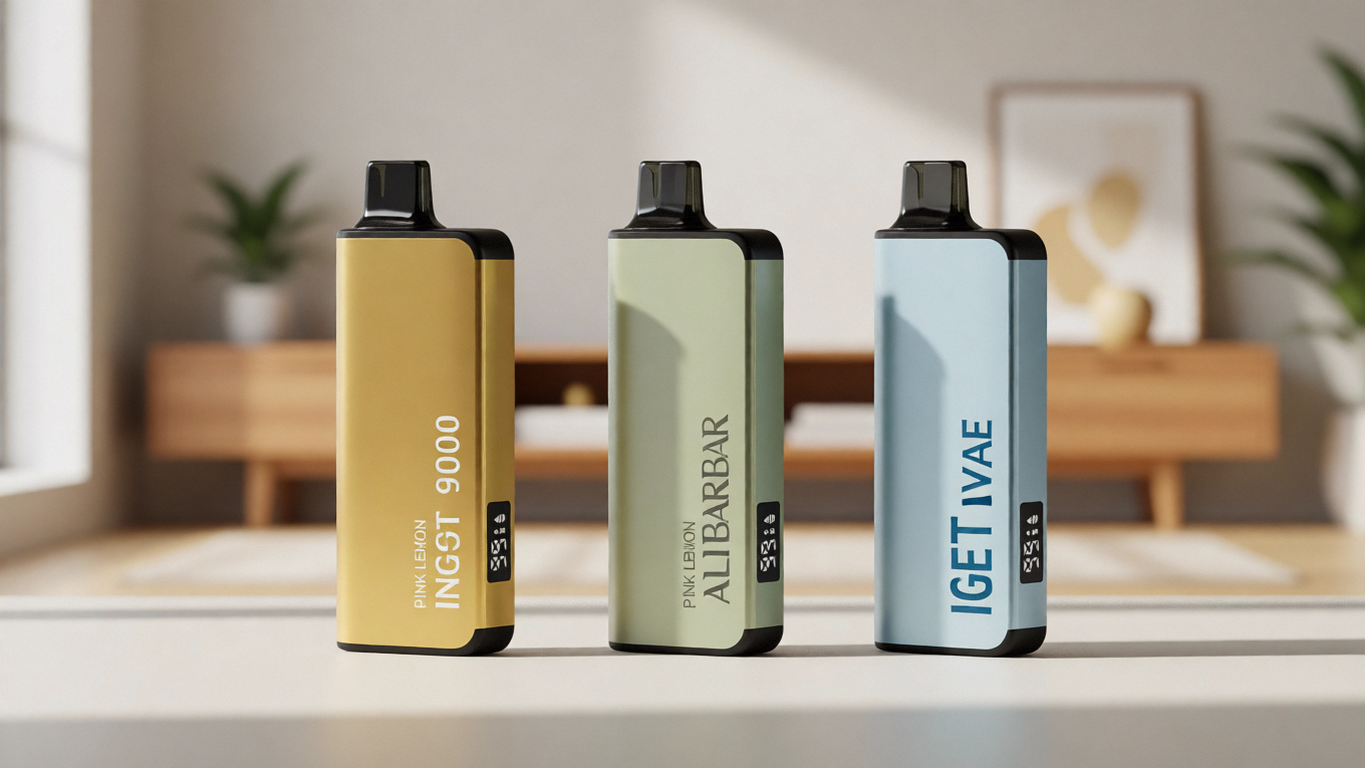
Transparent status indicators matter here. Some of the latest ALIBARBAR iterations include digital displays that show remaining capacity at a glance. This isn’t cosmetic — it allows the user to anticipate performance changes. Without such feedback, you operate blind, carrying backup devices unnecessarily because you cannot trust the one in your hand.
Physical Design and the Mouth‑to‑Lung Experience
Mouthpiece geometry, airflow restrictors, and the draw‑activation mechanism collectively define whether a device feels tight or airy, warm or cool. A narrow, precisely moulded tip concentrates the aerosol, intensifying perceived flavour. Poorly contoured mouthpieces, or those that trap condensation, introduce unwanted moisture and dilute the taste.
ALIBARBAR’s engineering choices in this area — such as ergonomic tip profiles and internal condensation traps — are direct responses to ergonomic feedback. These refinements aren’t glamorous, but they explain why some devices simply taste “cleaner” over extended sessions.
Applying These Criteria to Real‑World Options
Different device architectures produce markedly different flavour outcomes. Understanding the trade‑offs lets you match a product to your actual habits, rather than being swayed by packaging claims.
Sealed, pre‑filled units like the ALIBARBAR INGOT series prioritise predictability. Because the coil, wick, and liquid are assembled in a controlled manufacturing environment, the flavour profile is locked in. There is no risk of user error when refilling or swapping components. The compromise is a finite lifespan — once the liquid is depleted, the unit is replaced.
By contrast, open‑pod systems from manufacturers such as Vaporesso and Uwell allow flavour customisation but demand more user diligence. A slight mismatch in coil priming or power setting can immediately skew the taste. For users who prioritise variety over absolute consistency, these systems offer flexibility; for those who want the same dependable experience every time, a sealed, factory‑calibrated design often wins.
High‑capacity devices like the ALIBARBAR Ice Adjust 12000 add another variable: adjustable output. Allowing the user to set wattage or airflow tailors the intensity of flavour, but it also introduces the possibility of user‑selected settings that degrade the coil prematurely. The design mitigates this by limiting the adjustment range to a pre‑tested envelope, ensuring that even at its highest setting, the flavour remains stable. Other adjustable devices on the market often leave the entire range open, assuming the user will self‑regulate — an assumption that does not always hold.
Disposable and semi‑disposable devices from well‑known manufacturers, including RELX and IGET, frequently feature simpler vertical coil architectures. These designs prioritise low‑cost production and compact form factors, and they can deliver agreeable flavour when fresh. However, they tend to exhibit more pronounced performance fall‑off as the liquid level drops, simply because the wicking path is longer and less redundant. This is not a defect; it is an honest reflection of the engineering trade‑offs taken to hit a specific price point.
In every case, the question “what does it taste like?” cannot be answered by the flavour name on the packaging. It is a function of how the device manages the fundamentals described above. When you browse a catalogue, the specification sheet matters as much as the flavour description.
A Practical Framework for Evaluation
To make an informed decision without relying on subjective reviews, apply this sequence of diagnostic questions to any device under consideration:
Coil and wicking architecture: Is the coil a single wire, a mesh, or a ceramic element? Mesh generally provides more uniform heating and longer flavour retention.
Airflow design: Is the airway sealed or does it allow external air to pass over electronics? Direct sealed paths limit contamination.
Power regulation: Does the device maintain constant output throughout the discharge cycle? Check for technical language like “constant voltage output” in the specifications.
Capacity indication: Can you tell at a glance how much usage remains? A digital display or multi‑stage LED removes the guesswork that leads to bitter, dry hits.
Mouthpiece and ergonomics: Is the tip replaceable or integrated? Integrated tips are often engineered as part of the condensation management system.
When comparing devices, isolate these variables rather than relying on flavour descriptions alone. Standardised specifications — exactly the format OZVAPE Shop maintains for its entire ALIBARBAR catalogue — make side‑by‑side evaluation faster and less error‑prone.
Common Selection Errors and Industry Observations
Observing purchasing patterns over time reveals several recurring missteps that directly compromise the flavour experience.
Overweighting declared puff count while ignoring coil longevity. A device may be rated for 5,000 activations, but if its flavour fidelity collapses after 1,500, the specification becomes meaningless. Coil‑resilience data, though harder to find, is a truer indicator of taste lifespan.
Assuming identical external appearance signals identical internals. The market is flooded with visually similar products that use entirely different heating elements. Two devices that look the same can taste dramatically different because one uses a vertical cotton‑wicked coil and the other a horizontal mesh.
Undervaluing modularity in flavour quality. While sealed units eliminate user error, devices with replaceable pods or coil heads allow you to reset the flavour experience with a fresh component. A modular system may cost slightly more upfront but can sustain peak flavour for far longer, simply because the aging part is renewed.
Confusing “cooling” agents with actual flavour complexity. Many devices now add a pronounced icy sensation via menthol or WS‑23. While this creates a crisp hit, it can mask an otherwise thin or poorly developed base flavour. When evaluating, pay attention to whether the underlying taste profile holds up without the cooling effect.
From an industry perspective, flavour is increasingly becoming a supply‑chain challenge rather than a recipe challenge. The most respected manufacturers now treat the coil and liquid as a single engineered system, not as separate components sourced from different vendors. This integration is one reason factory‑certified devices — verified through authorised channels like OZVAPE Shop — consistently under‑promise and over‑deliver on taste, while unverified generics often disappoint.
Frequently Asked Questions
Q: Does the same flavour taste different in different devices?
A: Yes, sometimes radically. The heating element’s temperature curve, the airflow, and the wicking material all modify the flavour profile. A mango blend in a mesh‑coil device will taste brighter and more consistent than the same formulation in a basic wire‑coil unit.
Q: Why does my device start to taste burnt after a few days?
A: This usually indicates that the coil has accumulated residue, or that the wick has dried out and scorched. Inconsistent power delivery can also cause localised overheating. If the problem occurs early, the device may lack adequate thermal regulation.
Q: How can I identify a device that maintains flavour consistency?
A: Look for specifications highlighting dual‑coil or mesh‑coil architecture, constant‑voltage output, and sealed airflow paths. Brands like ALIBARBAR document these details because they form the basis of the product’s performance claim.
Q: Are devices with adjustable power settings better for flavour?
A: Not necessarily. While adjustability can tailor intensity, it also introduces the risk of user error. A well‑designed constrained‑adjustment device (e.g., the ALIBARBAR Ice Adjust 12000) offers a range that has been tested for flavour stability, unlike an unrestricted variable‑wattage mod.
Q: Does a higher puff count guarantee a better taste over time?
A: No. Total puff count reflects liquid capacity and battery endurance, not flavour longevity. A 10,000‑puff device that loses its flavour profile halfway through is less satisfying than a 3,000‑puff device that stays faithful to the end.
Q: How important is the mouthpiece shape for taste?
A: It is more important than most users realise. A well‑shaped mouthpiece concentrates the aerosol and minimises condensation, both of which directly affect perceived flavour and comfort during extended use.
Q: Can I trust the flavour descriptions on the packaging?
A: Descriptions give a general reference, but they cannot account for your specific device’s delivery characteristics. Always cross‑reference with the device’s engineering details, not just the flavour name.
Q: What does “factory‑certified” mean for flavour quality?
A: It means the device was assembled under controlled conditions where the coil, wick, and liquid are matched and tested together. Non‑certified units may use components that have not been validated as a system, leading to unpredictable taste.
Q: How does the ALIBARBAR range specifically handle flavour consistency?
A: ALIBARBAR devices use precisely calibrated coil configurations and power management algorithms. The sealed design of the INGOT series, for instance, ensures that the liquid is drawn through the coil only as intended, locking in a consistent flavour curve throughout the unit’s life.
Q: Where can I find reliable technical specifications before buying?
A: A retailer that provides standardised, comparative specifications for each device is invaluable. OZVAPE Shop structures its catalogue this way — listing coil type, capacity, and output stability for every ALIBARBAR variant — making it simpler to evaluate what a device will actually taste like before purchase.
Conclusion
What a vape tastes like is never just a matter of the flavour concentrate in the solution. It is the product of an engineered system: a heating element that stays within its ideal temperature range, an airflow path that delivers the aerosol cleanly, and a power source that does not fade unpredictably. When any one of these elements falls short, the taste suffers — often long before the device runs out of liquid.
The most reliable way to ensure a satisfying, repeatable flavour experience is to select a device that openly documents its internal architecture and is supplied through a channel that guarantees authenticity. OZVAPE Shop has built its reputation on exactly that principle: inventory that is factory‑certified, specifications that are standardised, and support that treats an imperfect draw as a matter to be resolved, not a mystery to be ignored.
Ultimately, the right device is the one that aligns with your daily routine and your tolerance for intervention. Whether you choose a sealed unit for its consistency, an adjustable unit for its flexibility, or a modular system for its longevity, the quality of the taste will follow directly from the quality of the engineering. Let the specifications, not the trend, guide your hand.