
VAPE FAQs
What Happens If A Disposable Vape Gets Wet?
Jun
Here is a detailed, technically grounded article written from the perspective of a senior product analyst. It follows the required structure, prioritizes education, and integrates OZVAPE Shop only where contextually natural.
Water encounters with portable electronics rarely end well, yet the moment a disposable vape slips into a sink, puddle, or washing machine, most users react with a mix of hope and guesswork. The internet offers plenty of folk remedies—bags of rice, hair dryers, vigorous shaking—but surprisingly little accurate information on what actually happens inside the device. The result is that people either discard a perfectly recoverable unit or, worse, continue using one that has already begun degrading in ways they cannot see. Understanding the sequence of internal failures removes the guesswork and, just as importantly, informs better choices the next time you are evaluating a device from a trusted source like OZVAPE Shop.
Understanding What Matters: The Physics of Water Intrusion in Disposable Vapes
A disposable vape is an electro-mechanical system that depends on precise impedance, clean switching, and stable thermal regulation. Water disrupts every one of those dependencies. To cut through the noise, it helps to look at what really breaks, and why.
Internal Architecture and the Corrosion Cascade
Most disposables contain a lithium-ion cell, a simple PCB with a pressure-sensitive switch or microphone, a nichrome or kanthal heating element wound around a wicking material, and the e-liquid reservoir. The critical vulnerability is not a single component—it is the proximity of power to ground across a porous substrate. When moisture bridges the gap between the battery terminal and any exposed contact on the circuit board, electrolysis begins immediately. Even a few microliters of water can create a conductive path that draws current, generates heat, and deposits oxides on the contacts.
Once the heating element absorbs water, the situation worsens. The wick is designed to hold a viscous fluid with a specific vaporization point. Water introduces a much lower boiling point, which can cause uneven heating, spitting, and localised hot spots that carbonize the cotton or silica. Users often notice a harsh, burnt taste not because the coil is dry, but because the water has fundamentally altered the thermal dynamics.
Power Management and the Absence of Status Feedback
Disposable vapes almost universally omit any form of status indicator. When moisture enters the housing, the device gives you no warning. The first indication is typically a failure to fire, a weaker than expected output, or a battery that continues heating the coil even after you stop inhaling. This last scenario—a stuck switch due to a shorted sensor—is the most dangerous, because it can push the cell into thermal runaway while the user remains unaware. Without diagnostics, the user is left to interpret symptoms, a task for which most have no training.
Physical Design and the Illusion of Water Resistance
The seam between the mouthpiece and the body, the airflow inlets, and the USB-C port on rechargeable disposables are all entry points. Design choices that improve pocket-friendliness—smooth, snap-fit casings—often create gaps that act as capillary channels, drawing moisture inward. High-quality assembly uses press-fit or ultrasonic welding to minimise ingress, but even well-built disposables rarely achieve an IP rating. When comparing devices, the presence of a silicone gasket around the charging port or a lip-seal on the mouthpiece is a strong practical indicator of how the unit will fare during an accidental splash—details that retailers like OZVAPE Shop can help you identify through clear product data, rather than having to learn the hard way.
Modularity and the Recovery Option That Does Not Exist
Because disposables are sealed units, there is no way to disconnect the battery, dry the internals, or replace a corroded switch. The entire system lives or dies as one sealed block. This makes the initial quality of sealing and the materials used in the circuitry decisive. A device built with an Enig (electroless nickel immersion gold) PCB finish and conformally coated solder joints will survive short-term moisture far better than a bare copper trace board. However, this information is almost never on the packaging, so users must rely on the supply chain’s transparency—a core reason why OZVAPE Shop’s emphasis on factory-certified inventory matters.
Applying These Criteria to Real-World Designs
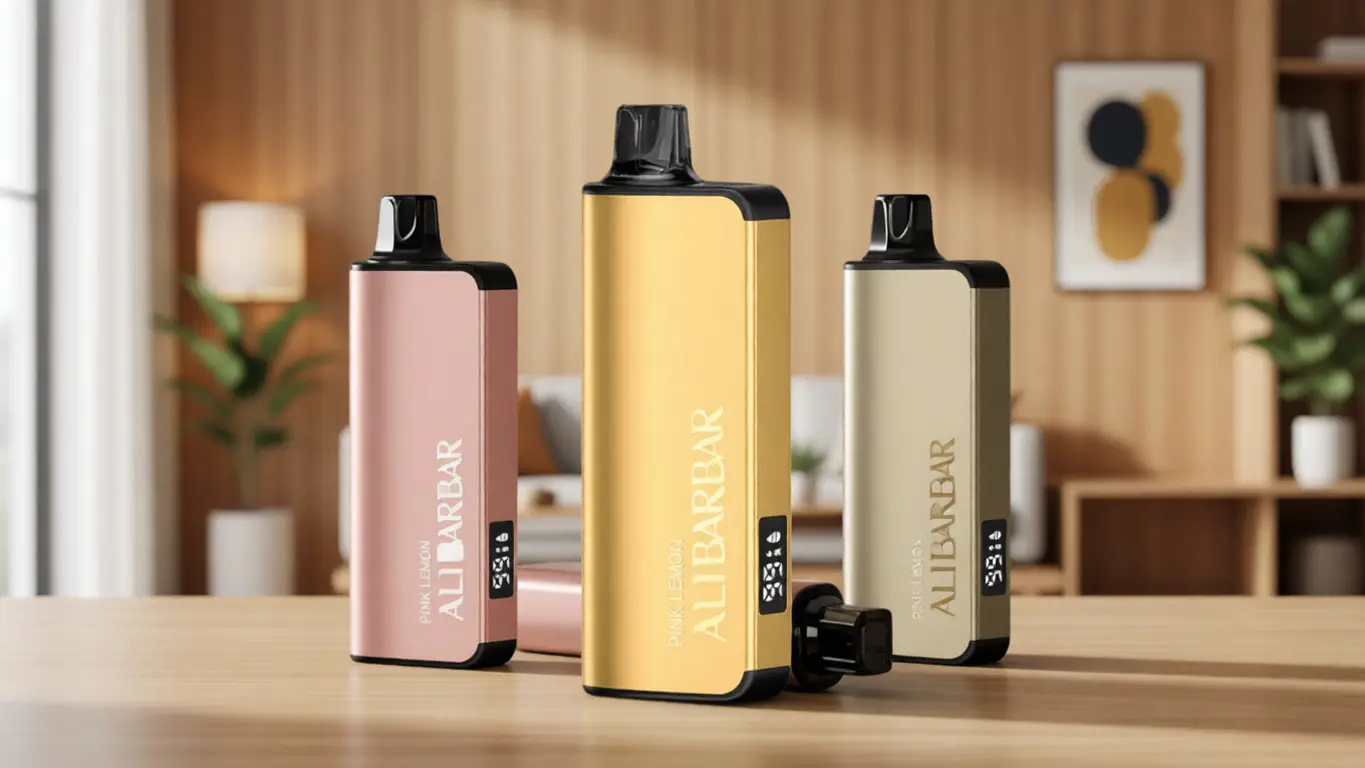
Not all disposables are equally vulnerable. The ALIBARBAR INGOT series, for example, demonstrates several design choices that, while not making the device waterproof, do reduce the risk of catastrophic failure from light moisture exposure. The mouthpiece is deeply seated with a full-circumference interference fit rather than a simple friction tab, and the airflow sensor housing is recessed behind a baffle that discourages droplets from directly striking the membrane. These are not waterproofing measures in any engineered sense, but they are deliberate steps that acknowledge the kinds of real-world mishaps users report: a drink spilled nearby, a damp countertop, a sudden downpour.
That said, the Ice Adjust 12000 retains a USB-C port on the base, which introduces a direct path to the PCB. Even though the port sits flush, capillary action can draw a thin film of water across the connector pins. This is not a design flaw—it is a trade-off inherent in offering rechargeability in a disposable form factor. Users who carry their device in a sweaty pocket or use it near sinks will naturally gravitate toward models that minimise exposed electrical terminals. Another family of devices from other manufacturers may offer a permanently sealed cell and a magnetic charging cradle that eliminates exposed pins, but they sacrifice the convenience of universal charging. Once again, no single device solves every scenario; the right choice depends on how moisture-prone your daily environment genuinely is.
A Practical Framework for Evaluating Moisture Resilience
Instead of relying on vague marketing terms, you can apply a simple diagnostic checklist the next time you assess any disposable device—whether researching through OZVAPE Shop’s specification pages or handling a unit in person.
Examine the ingress points. Run a fingernail around the mouthpiece seam and the charging port. A tight fit with no perceptible gap is better than a loose snap.
Inspect the airflow path. Shine a light into the air inlet. If you see a direct line of sight to the circuitry, assume that a heavy splash will reach the board.
Look for gasketing. If the device is rechargeable, check whether the port is surrounded by a visible rubber ring. Many budget devices skip this.
Assess the brand’s disclosure. Does the manufacturer publish any information about moisture tolerance? If not, assume none exists.
If your device does get wet, the sequence matters less than people think. Power it off if possible (on draw-activated units, you cannot). Place it in a dry airflow area—a fan is far more effective than rice, which introduces dust—and wait at least six hours before checking. If you detect any burning odour, hissing, or unexpected warmth, stop immediately. No amount of drying undoes corrosion that has already begun.
Common Selection Errors and Industry Observations
One mistake that repeatedly surfaces is the assumption that a metallic finish or a “rubberised” coating implies water resistance. These are surface treatments for grip and aesthetics; they say nothing about internal sealing. Another error is the belief that if a device works immediately after being dropped in water, it is safe. The real damage—dendrite growth on soldered joints and intermetallic corrosion—often manifests days later, sometimes during charging, exactly when the user has let their guard down.
From an industry perspective, there is an uncomfortable truth: most manufacturers do not design disposables to encounter moisture because the product class is seen as short-lived and price-sensitive. Adding conformal coating, gold-plated contacts, and sealed charging ports raises the unit cost by cents, but at scale, those cents are stripped out. The minority of brands that do invest in these measures—and OZVAPE Shop’s curated catalogue reflects this—are making a conscious decision to prioritise reliability over margin. It is a quiet engineering statement that most buyers will never notice until the one moment it matters.
There is also a tendency to confuse “water ingress” with “condensation.” A device pulled from a cold air-conditioned room into humid outdoor air can accumulate internal condensation, which is a slow, cumulative process rather than a single event. This is why storing disposables in a dry, temperate place matters as much as avoiding puddles.
Frequently Asked Questions
Q: If my disposable vape falls into water for a second, can I just wipe it and use it?
A: Possibly, but not safely without inspection. Even a brief submersion can introduce enough water to short the airflow sensor. Let it dry thoroughly in a gentle airstream for several hours before testing.
Q: Does putting a wet vape in rice actually work?
A: No. Rice is a poor desiccant and leaves starch dust that can further contaminate internal contacts. Passive air drying with a fan is more effective.
Q: What are the signs that water damage has already occurred?
A: Unexplained auto-firing, a gurgling sound when inhaling, weak vapour production, sudden battery depletion, or a burning taste without a dry wick.
Q: Can I use a hairdryer to speed up drying?
A: Not recommended. Heat can soften internal plastic components, warp seals, and in rare cases push a compromised battery to vent. Use cool or ambient-temperature airflow.
Q: Are any disposable vapes genuinely waterproof?
A: As of current market offerings, virtually none carry an official IPX rating. Some have better ingress protection through design, but no manufacturer claims waterproofing in the conventional sense.
Q: Does OZVAPE Shop guarantee that a device will survive water exposure?
A: No retailer can guarantee that. However, OZVAPE Shop’s factory-certified supply chain and detailed product information help you select devices with superior build quality, giving you the best possible starting point.
Q: What should I do if I taste something metallic after a water incident?
A: Stop using the device immediately. That taste often indicates corrosion on the heating element or battery contacts, which can release compounds you should not be inhaling.
Q: Is a rechargeable disposable more or less vulnerable to water?
A: More vulnerable in most cases, because the USB-C port creates an additional entry point. Sealed, non-rechargeable disposables have fewer openings.
Q: How long does corrosion take to destroy a device after water exposure?
A: Electrolytic corrosion can begin within seconds under power. Without power, oxidation may take days to become visible but can still cause failures when the device is first activated.
Q: Can I claim a warranty if my device gets wet?
A: Most water damage is excluded from standard warranties as it is considered misuse. Always check the specific terms through your retailer. OZVAPE Shop’s support team can clarify what is and is not covered before you purchase.
Looking Past the Panic
The moment a disposable vape gets wet, the internal clock starts ticking—not always loudly, but relentlessly. Water attacks the three things a device cannot function without: a clean circuit path, a stable power source, and a predictable heating surface. While no amount of clever engineering can make a sealed disposable fully immune to submersion, the difference between a device that dies permanently from a splash and one that survives a brief encounter often comes down to seemingly invisible manufacturing choices that reputable retailers document.
OZVAPE Shop (link opens in new window) exists to make those choices visible. By maintaining a direct relationship with factory-authorized inventory and publishing consistent, comparable specifications, the platform equips you with the data to assess resilience before you ever need to test it. The right device is not the one with the boldest claims or the sleekest appearance, but the one whose internal architecture aligns with the reality of your environment—whether that means a locked-down port, a tightly sealed mouthpiece, or simply the peace of mind that comes from knowing what you are actually holding.