
VAPE FAQs
What Does A Vape Coil Look Like?
Aug
Introduction
Anyone who has spent time around portable personal electronic devices has heard the word “coil” — often treated as the central component that determines whether an experience feels consistent or frustratingly unpredictable. Yet for those who haven’t had a reason to open a device or peer into its inner workings, the question remains: what does this coil actually look like, and why does its physical form matter so much? At OZVAPE Shop, our conversations with adult users across Australia often circle back to this basic visual curiosity, not from idle interest but from a practical desire to recognise when a coil is functioning properly and when it has reached the natural end of its operational life.
This article provides a clear, technically grounded answer. It describes coil anatomy in plain terms, explains the materials that make a difference, and helps you identify what you’re looking at whether you’re holding a replaceable component, inspecting a pod, or simply trying to understand what’s inside a thoughtfully engineered device like those found in the ALIBARBAR range. We won’t tell you what to buy; we’ll give you a framework so you can see what’s in front of you and make informed decisions.
Understanding Coil Anatomy: The Core Components
Every personal vaporisation device — regardless of size, shape, or brand — relies on a heating module that transforms stored energy into the thermal output the user expects. That module is the coil assembly, and its physical form reveals most of what you need to know about performance consistency.
The Heating Element – Wire, Mesh, and Beyond
At the centre of any coil is a resistive conductor, almost always a metal alloy arranged in a specific geometry. The two most common configurations produce visibly different structures:
Round-wire coils look exactly as the name suggests: a spiral of wire, typically wound around a short axis. Under magnification, you’ll see uniform loops, often made from Kanthal (an iron-chromium-aluminium alloy), nichrome, or stainless steel. The wire gauge (thickness) and the number of wraps directly affect resistance and the ramp‑up time required to reach stable operating temperature.
Mesh coils replace the spiral with a flat, perforated sheet of the same alloy family. To the naked eye, the surface resembles a fine metal screen or a thin honeycomb stamp. The advantage is a much larger contact area against the wick, which tends to produce a more consistent output across the coil’s lifespan. Many modern high‑capacity devices, including the ALIBARBAR INGOT series, use precisely drawn mesh because it reduces the temperature variance that leads to uneven wick degradation.
In either case, a functioning heating element will appear clean, evenly coloured, and free of flaking or visible carbon build‑up. The colour can shift slightly after the first few cycles — stainless steel, for example, often develops a blue‑gold patina — but the structure should remain uniform.
The Wick – Material Identity and Visible Condition
The heating element never works alone: it is in continuous contact with a wicking material that draws fluid from the reservoir toward the heat source. What you see when you look at a coil is almost always this wick either visible through a side port or directly surrounding the mesh or wire.
Most devices use one of two wick materials:
Organic cotton appears as dense, fibrous padding. It is bright white when new, and its surface should be smooth, not frayed or lumpy. Cotton’s main shortcoming is that it eventually caramelises sugars and residuals onto its fibres, turning from white to amber to dark brown — a clear visual signal that the coil assembly is approaching end-of-life.
Ceramic porous media (used less commonly) resembles a pale, granular cylinder. Unlike cotton, ceramic does not burn but can develop surface fouling that is harder to detect by colour alone. Visual inspection is therefore less diagnostic, which is why ceramic‑wicked systems usually rely on taste or diminished output to signal degradation.
When you examine a well‑maintained coil, the wick should appear moist but not saturated, with even coloration near the heating element. Any dark, crust-like residue indicates that organic compounds have baked onto the surface, effectively insulating the element and reducing both efficiency and taste quality.
The Housing – External Casing and Contact Points
Everything described so far sits inside a metal or high‑temperature plastic shell. On replaceable coils, this housing is clearly visible as a cylindrical or rectangular unit with a central airway and threaded or press‑fit base. The base contains a positive pin (usually gold‑plated or nickel‑plated) and an insulator ring separating it from the grounded body.
When holding a coil assembly, you’ll see:
Wicking ports — oval or rectangular openings on the sides where the white cotton is exposed.
Top gasket or o‑ring — a silicone seal that prevents leakage around the chimney.
Base threading — finely machined grooves that ensure stable electrical contact.
Any pitting, corrosion, or deformation around the threading or insulator is a signal of a component that may deliver intermittent performance. Trustworthy manufacturers — notably the ALIBARBAR design team — use stainless steel for housing in their pre‑installed coil assemblies, which resists the micro‑arcing damage that can plague lower‑grade materials over hundreds of activation cycles.
Recognising Different Coil Types in Real Devices
Coil architecture is not one‑size‑fits‑all. The way a coil looks and is accessed varies significantly depending on the device category, and understanding these differences helps you know what to expect when inspecting your own equipment.
Replaceable Coil Heads for Traditional Tanks
In a tank system with a glass reservoir, the coil is a standalone component sold in packs. These are the easiest to inspect visually: a metal cylinder roughly 20–30 mm tall, with a wide-open base, exposed cotton through large side ports, and a visible wire or mesh element inside the central bore. Looking down through the top, you can often see the heating element’s shape and whether the wick is properly aligned.
Because such coils are user‑replaceable, quality variation is immediately apparent. A poorly wound coil will show uneven spacing between wraps, while a well‑made mesh strip will sit perfectly centred, parallel to the airflow path. It’s worth noting that even coils from the same brand can exhibit batch‑level variation unless the factory has strict tolerances.
Pod System Coils – Integrated and Replaceable
Pod‑based devices use coils that are either permanently embedded in the pod or designed as press‑fit inserts. When the coil is integrated into the pod, you typically cannot see the heating element without destructive disassembly. You can, however, observe the cotton through the base of the pod — it will look like a compressed white ring or pad visible under the plastic.
In pods with replaceable coils (common in higher‑capacity systems), the component appears as a small rectangular block or miniature cylinder that clicks into the pod base. Here, the wicking ports are usually smaller, and because the coil is often surrounded by a silicone barrier for leak prevention, the cotton might be partially masked. If the cotton visible at the port is darkening unevenly, that’s an early indicator that the coil’s effective life is ending, even if other areas still appear clean.
Pre‑Installed Coils in High‑Capacity Disposables
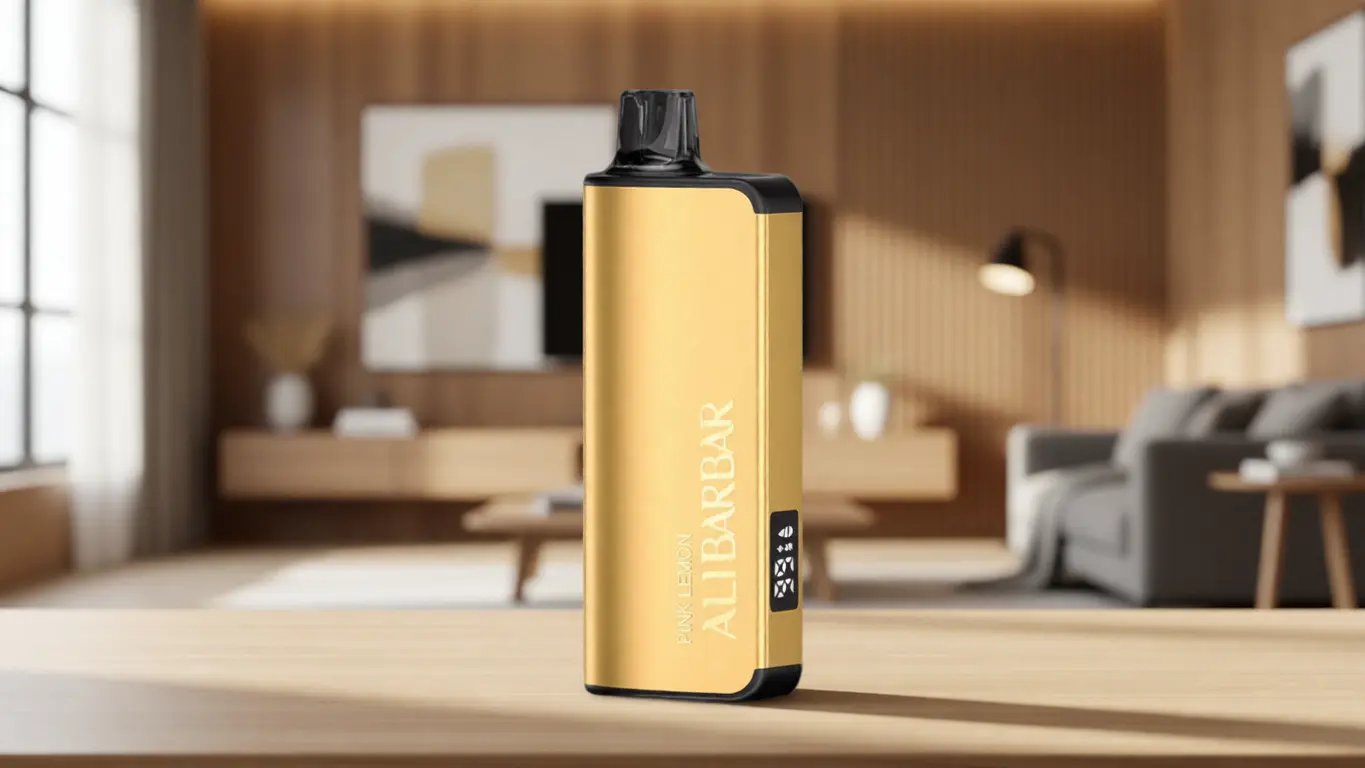
A growing segment of the market consists of devices that arrive fully charged and pre‑filled, with a coil sealed inside. You cannot remove or directly inspect the coil, but you can still infer its type and condition through external indicators. The ALIBARBAR INGOT range, for instance, uses a vertical mesh coil architecture — a cylindrical, perforated screen wrapped around a central airway — chosen for its ability to distribute heat uniformly across the full fluid‑saturated wick, even when the fluid level drops low.
In a transparent or semi‑opaque device, you might glimpse the coil housing as a metallic tube near the base. More commonly, you judge coil health indirectly: if the device’s status light flashes in a pattern indicating a short circuit, or if the output becomes noticeably diminished and harsh, the coil’s internal structure has degraded. The consistent visual cue in a well‑engineered disposable is that the coil chamber remains clean and dry externally, with no egress of fluid into the airflow channels — a sign that the seals and wick ports are doing their job.
What a Healthy vs. Worn‑Out Coil Looks Like
Distinguishing a coil that still has useful life from one that is failing is not about timing alone — it’s about direct visual and functional signs.
Visual Indicators of Gunk and Caramelization
As organic cotton repeatedly heats and cools, it gradually accumulates a layer of residue from the compounds it absorbs. This layer, often called “coil gunk,” starts as a faint brown discolouration near the hottest part of the element. Over time it thickens and darkens to black. Physically, it resembles burnt sugar — hard, slightly glossy, and uneven. Under magnification, you would see it clinging to individual cotton fibres like a brittle shell that insulates the wire from the wick.
In a replaceable coil, if you remove the assembly and look through the bore, a clean coil will show white cotton surrounding bright metal. A gunked coil will show a ring of black char directly where the wire contacts the wick, with the rest of the cotton still pale. This unevenness is the clearest sign that performance has already dropped, even if the user hasn’t yet noticed a burnt taste.
Wick Decomposition and Structural Failure
Cotton does not last forever. After sustained thermal cycling, the fibres lose their elasticity and begin to break apart. Visually, a degraded wick appears stringy, with strands pulling away from the main body and sometimes protruding through the wicking ports. If you shake the coil and hear loose debris, that’s often tiny fragments of carbonised cotton that have broken free entirely. Once a wick loses structural integrity, the coil is no longer safe to use — continued operation will cause leaking and potentially a full burn-through of the remaining material. Mesh wicks are somewhat more resistant to this structural failure than traditional wire, simply because the larger contact surface distributes heat more gently, an engineering principle that products like the ALIBARBAR Ice Adjust take advantage of.
A Practical Framework for Evaluating Coil Quality
If you’re holding a coil — or considering a device based on its coil spec — the following checklist helps you move past marketing claims to what you can actually observe.
Look for completeness. The housing should be intact, with no dents, deep scratches, or loose parts. Threading must be clean and straight.
Check wick saturation. When new, the cotton visible through the ports should be uniformly white and slightly damp from initial priming. Bone-dry cotton means the coil was stored improperly, and dry burns are likely.
Inspect the heating element alignment. If you can see the wire or mesh, it must be centred. An off-centre element will produce uneven heating and hot spots, drastically shortening coil life.
Examine the insulator. The silicone or PEEK insulator at the base should be free of melting, cracking, or discolouration. Any deformation suggests the coil has been operated at temperatures beyond its design limit.
Measure initial resistance (if possible). A multimeter or a regulated device will show the coil’s resting resistance. Compare it to the stated range; a significant deviation (more than ±0.1 Ω) can indicate a manufacturing flaw or internal short.
Observe break‑in behaviour. A properly built coil should deliver flavour within the first few cycles. If the first several draws taste faintly of cotton or metal but never chemicals, that’s normal. If a harsh, acrid note persists beyond ten draws, the coil was likely contaminated or overwicked.
This framework applies equally to a standalone coil head, a replaceable pod coil, or the sealed assembly inside a disposable — though for sealed units, you’ll rely on steps 6 and indirect device feedback instead of direct visual access.
Common Selection Errors and Industry Observations
Too many users unknowingly undermine their own satisfaction by focusing on the wrong things when they think about coils. After years of observing the market and talking to thousands of adult device owners, we’ve identified several recurring patterns worth acknowledging openly.
Overweighting resistance while ignoring surface area. It’s tempting to treat coil resistance as the single spec that matters. In practice, a 0.6 Ω mesh coil with large surface area can deliver a substantially more consistent and flavourful output than a 0.3 Ω round‑wire coil with minimal wick contact. The physical shape of the element matters more than the resistance value alone.
Assuming all mesh is equal. Not all mesh is created to the same micron precision. Some budget‑focused manufacturers use thicker sheets with coarse perforations that limit capillarity. High‑quality mesh — the type used in ALIBARBAR’s vertical coil assemblies — has a much finer aperture, which draws fluid evenly and prevents the wick from scorching at the edges while the centre remains saturated. The visual difference is subtle, but the performance trajectory over a day of heavy use is not.
Ignoring the wick material’s role in coil longevity. Cotton quality varies enormously. Long‑fibre, medical‑grade cotton absorbs uniformly and sheds heat without degrading prematurely. Lower‑grade cotton with shorter fibres mats unevenly and develops hot spots faster. You can sometimes identify high‑grade cotton by looking at the wick ports: it appears denser and silkier, with no loose fly‑away threads.
Mistaking a dead coil for a device fault. A surprisingly common scenario: a user experiences diminished output and blames the device’s power management. In truth, the coil’s cotton has simply reached saturation fatigue — it can no longer wick efficiently, and the device’s protection circuit throttles output to prevent overheating. Recognising the visual signs of a gunked or collapsed coil saves time and unnecessary returns.
From an industry perspective, the move toward integrated, non‑replaceable coils in high‑capacity disposables represents a deliberate trade‑off. It enables engineers to design the entire fluid path, power curve, and thermal profile as a closed system, which typically results in better component longevity — but it also means the user must trust the manufacturer’s material choices absolutely. This is why sourcing from authentic, documented channels matters: a counterfeit coil, visually indistinguishable from the outside, may contain low‑grade cotton and unrefined alloy that fail in unpredictable ways.
Frequently Asked Questions
Q: Can I see the coil in every device?
A: Not directly. In replaceable coil heads, the element is visible through the bore. In many pods, the coil is partially concealed but the cotton is often visible at the base. In sealed disposable devices, only the housing is externally visible, so you must judge coil health through performance and status indicators.
Q: What does a mesh coil look like inside?
A: Imagine a finely perforated metal strip, often rolled into a cylinder or folded into a U‑shape, pressed against a layer of cotton. You might see the honeycomb pattern through the central airway with a flashlight.
Q: How can I tell if the cotton inside my coil is still good?
A: Healthy cotton appears white to pale cream, with no brown or black spots near the heating element. If the visible cotton is darkening unevenly, the coil is near its end of life even if the taste is still acceptable.
Q: Why do some coils show a gold‑coloured pin and others silver?
A: The colour indicates the plating material. Gold‑plated pins resist corrosion and maintain consistent conductivity longer than bare nickel or brass. It’s a small detail that speaks to manufacturing quality.
Q: Is it normal for a coil to make a crackling sound when new?
A: Yes, a gentle crackling or popping during the first few activations is simply the wick saturating and the liquid being vaporised rapidly. Sustained loud popping after the break‑in period, however, can indicate a flooded coil or damage to the mesh.
Q: Can I clean a coil and reuse it?
A: In principle, you can rinse replaceable coil heads with warm water and let them dry completely, but this rarely restores full performance because carbon deposits remain embedded in the cotton fibres. For sealed coils in disposables, cleaning is not feasible.
Q: What does a coil look like when it has been burnt beyond recovery?
A: The cotton will be uniformly black and may have a brittle, glassy texture. The wire or mesh often shows a dull, oxidised surface with scale-like crust. The assembly may emit a sharp, acrid smell even when dry.
Q: Do all ALIBARBAR devices use the same coil type?
A: No, each series is engineered with a specific coil architecture. The INGOT line uses one style of vertical mesh; the Ice Adjust series uses a variant designed for adjustable output. But all share a common design philosophy of large surface area mesh and high‑grade cotton.
Q: How long does a coil typically last before I should stop using it?
A: That depends entirely on usage intensity and fluid composition. A heavy user might reach the coil’s effective limit in a few days of continuous operation; a light, intermittent user could stretch it much longer. The visual cues — darkening cotton, diminished output — are more reliable than elapsed time.
Q: Is there a risk of seeing a damaged coil even in a brand‑new device?
A: Very rarely, if the device has been mishandled during shipping or storage. Authentic, factory‑certified inventory — such as that supplied through OZVAPE Shop — undergoes quality checks that make this exceptionally uncommon.
Conclusion
A coil looks like a small, precision‑built engine at the heart of every personal device, and its physical condition tells you almost everything you need to know about what you can expect from your next draw. Understanding the difference between clean, properly wicked cotton and a caramelised, fatigued wick, or between a centred mesh sheet and a misaligned one, transforms you from a passive consumer into a capable evaluator of your own equipment.
At OZVAPE Shop, we see our role as helping you access devices where that coil has been built with the care the visual inspection deserves — products like those from ALIBARBAR that commit to consistent material quality and transparent performance. When you can recognise what a well‑engineered coil looks like, and when you can source it through a channel that guarantees authenticity, the daily experience stops being a lottery and becomes something you can rely on.
The right choice isn’t about the newest spec sheet or the boldest claim. It’s about matching a device’s coil architecture to your actual routine, and having the knowledge to look at that assembly and know, without guessing, whether it’s doing its job.