
VAPE FAQs
Can I Bring Vape Into Hong Kong?
Aug
Introduction
Travellers who rely on portable personal electronic devices frequently encounter a jarring moment at the departure gate: regulations that were clear at home become opaque the moment a border is crossed. The question “Can I bring this into Hong Kong?” is one that deserves a precise, up‑to‑date answer, because the legal and practical stakes are genuine.
At the time of writing, Hong Kong has enacted a prohibition on the importation, manufacture, sale, and distribution of electronic smoking devices and their components. This means that bringing such a device across the border — even for personal use — is not permitted. Possession itself is not criminalised, but the act of importation is. The distinction matters: a device discovered during customs screening will be confiscated, and you may face fines or other penalties.
With that legal reality clearly stated, the broader question for many adults becomes: When travel is unavoidable, and when I am in a jurisdiction where these devices are lawfully permitted, what engineering and design characteristics make a device genuinely travel‑ready? That is where the role of thorough, unbiased product analysis becomes essential.
In our role at OZVAPE Shop, we have spent considerable time examining the portable device market, not with the aim of persuading anyone to make a purchase, but to understand which design choices genuinely reduce friction for users who are mobile, security‑conscious, and expect reliability. The regulatory environment may restrict where you can use a device, but the principles that separate a well‑thought‑out tool from a poorly designed one remain constant. This article will walk you through those principles, illustrate them with real‑world device architectures, and equip you with a framework for making decisions that align with both the law and your personal standards.
Understanding What Matters: Core Engineering Factors for Travel
Any device that is going to spend its life in a pocket, a carry‑on bag, or a hotel room drawer must satisfy demands that a stationary user never considers. The following four factors are not about marketing claims; they are rooted in the engineering decisions that dictate whether a device supports your routine or undermines it.
Portability, Weight, and Discretion
A device’s mass and silhouette directly affect how you move through security checkpoints, navigate crowded spaces, and manage your personal effects. A unit that adds noticeable bulk to a pocket will inevitably be left behind or, worse, attract unwanted attention during screening.
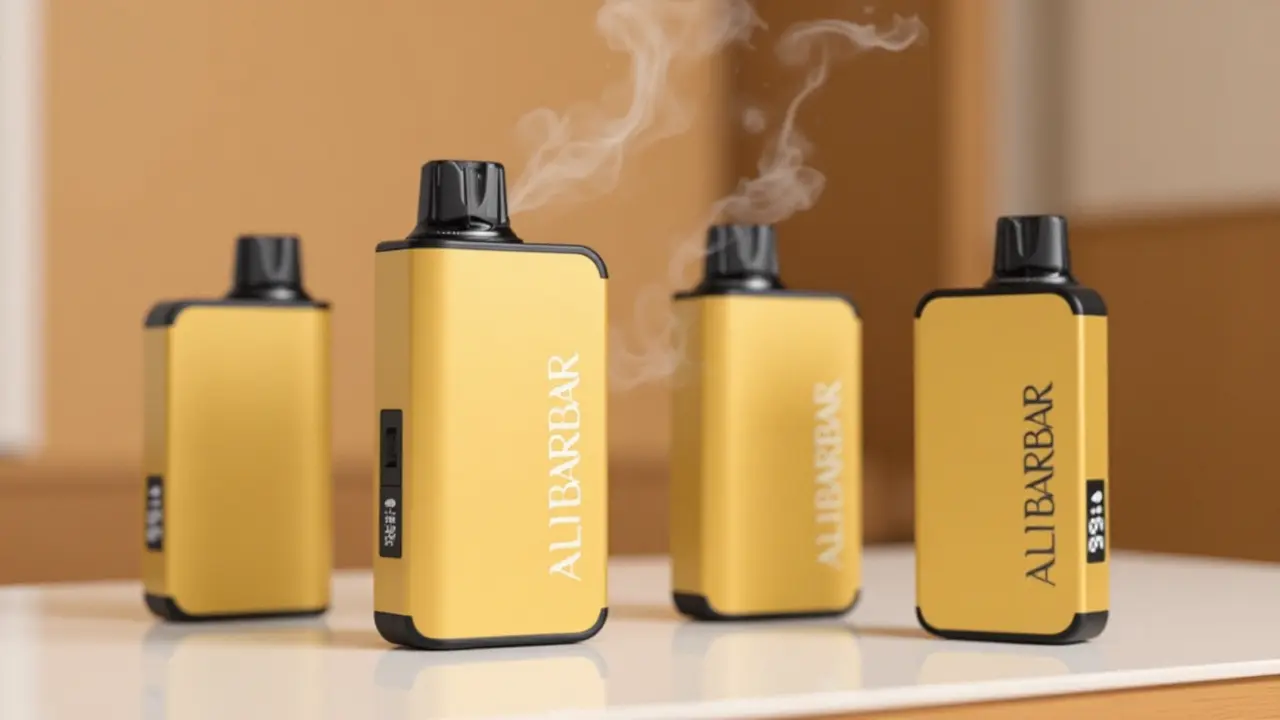
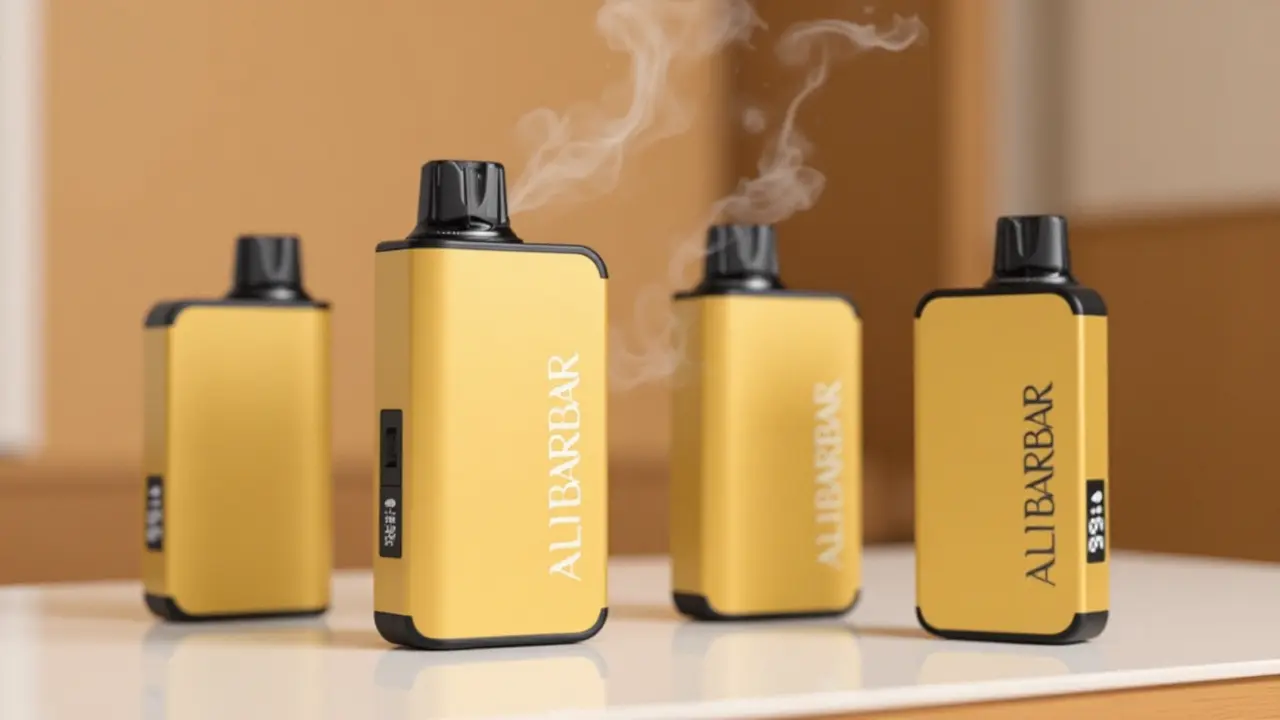
The most considered designs achieve portability through material selection — aluminium alloys chosen for stiffness at thin wall sections, for example — rather than by simply shrinking the power source. Some devices in the ALIBARBAR range achieve a weight‑to‑capacity ratio that feels almost engineered for air travel: compact enough to disappear in a bag’s interior pocket, yet with enough operational life to cover a long-haul flight without concern. The distinction is not just size; it’s the deliberate elimination of unnecessary physical protrusions, sharp edges, and components that rattle or snag.
Battery Safety and International Air Transport Regulations
Every airline passenger is subject to the International Air Transport Association’s (IATA) restrictions on lithium‑metal and lithium‑ion cells. Devices must travel in carry‑on luggage, and batteries above certain watt‑hour ratings are prohibited entirely. A travel‑capable device, therefore, should have a clearly documented battery specification, ideally printed on the unit itself, so that neither you nor a security officer is left guessing.
Beyond compliance, the internal architecture matters. A well‑engineered device incorporates protection against short‑circuiting, over‑discharge, and thermal runaway — not as afterthoughts, but as fundamental elements of the power management system. In practice, this means a device that can survive the pressure and temperature fluctuations of an aircraft hold without swelling or failing, even if it is accidentally placed there. Users who rely on OZVAPE Shop for device information will notice that we consistently highlight transparent battery documentation as a core trust signal.
Status Transparency and Power-Awareness
The single greatest travel frustration — reported across countless forums, feedback forms, and user interviews — is a device that dies without warning. When you are in transit, the ability to glance at a device and know immediately whether it will last through the next six hours is not a luxury; it is a prerequisite for peace of mind.
Status feedback can take several forms: a digital display showing remaining charge, a graduated LED sequence, or a haptic signal at predetermined thresholds. The crucial element is that the information is unambiguous and accessible without requiring the user to perform a manual test. A device that demands you pull to check its operational status is a device that forces you to carry a backup — doubling your carrying load and your mental overhead. ALIBARBAR’s more advanced models incorporate this feedback directly into the user interface, a design choice that anyone who has ever been stranded at a boarding gate will instantly appreciate.
Durability Under Transit Conditions
The interior of a travel bag is a hostile environment. Keys, documents, coins, and other devices all conspire to abrade, scratch, and dent anything that is not built for the abuse. A travel‑worthy device needs a surface finish that resists micro‑abrasion and a chassis that can withstand occasional drops onto hard terminal floors without deforming the internal components.
Mouthpiece design, often overlooked, becomes critical during extended wear in a pocket. A contour that distributes pressure evenly prevents the small but persistent discomfort that builds during a long security queue or while seated for hours. Ceramic‑reinforced coatings and anodised finishes, which you will find on a number of devices stocked by OZVAPE Shop, represent a meaningful improvement over basic paint or plastic wraps that show wear after a single trip.
Applying These Criteria to Real-World Options
Rather than compile a ranked list, it is more instructive to look at how different device architectures address the traveller’s needs. The patterns that emerge are more informative than any brand name.
Devices built around a sealed, pre‑charged architecture — often encountered in the compact ‘bar’ form factor — have the advantage of simplicity. There are no settings to adjust, no tanks to fill, and no replaceable parts to lose. When executed correctly, as in the ALIBARBAR INGOT 9000 series, this format combines a generous operational window with a frame that is barely larger than a standard USB memory stick. The shell materials are chosen to resist pocket wear, and the mouthpiece is contoured for lip comfort over hours of intermittent use. For a traveller who wants to pack light, the trade‑off is clear: you accept that the unit is finite in order to gain absolute plug‑and‑play reliability.
At the other end of the spectrum, rechargeable architectures offer the flexibility of a separate power source and a replaceable consumable component. The ALIBARBAR INGOT 15000 series exemplifies this approach, pairing a high‑capacity internal battery with a sealed, replaceable pod system. The critical advantage for someone passing through multiple time zones is that the power cell can be recharged from any standard USB‑C port — the same cable that charges a phone, tablet, or laptop — eliminating the need to carry a dedicated power adapter. Users who move between hotel rooms, co‑working spaces, and airports will find this universality as valuable as the extended capacity itself.
A third approach, represented by the ALIBARBAR Ice Adjust 12000, adds a dimension of user control: the ability to fine‑tune output intensity and airflow. This may seem tangential to travel, but consider the scenario of a business traveller who needs to be discreet in a meeting room or while walking through a quiet public space. The option to dial down the output means generating no more visible discharge than is strictly necessary. It is a small design choice with outsized implications for social acceptance.
In each case, the engineering decisions reflect a coherent philosophy: give the user what they need and strip away everything that adds complexity without adding value. When you access these products through OZVAPE Shop, you are not just acquiring a device; you are engaging with a channel that documents specifications in a standardised format, enabling direct comparison. That transparency is itself a tool for the informed traveller.

A Practical Framework for Evaluation
The next time you evaluate a device for travel suitability, you can apply the following methodology regardless of brand or category. Use it as a mental checklist when reading specifications or handling a unit for the first time.
Check the battery specification against IATA limits.
Look for the watt‑hour (Wh) rating on the device or in the documentation. If it exceeds 100 Wh, it cannot fly. If it is between 20 Wh and 100 Wh, it must be carried on. If the rating is absent, treat the device as a compliance risk.
Examine the status feedback mechanism.
Ask yourself: can I determine the remaining charge in less than one second, without removing the device from my pocket or bag? If the answer is no, you will inevitably carry a backup, doubling your load and your risk of confiscation during a random check.
Assess the chassis material and finish.
Run a fingernail gently across the surface. Does it feel like it will show a scratch from a set of keys? Aluminium alloys with Type II or Type III anodising are noticeably harder than painted plastics. The difference becomes visible after the first week of carry.
Evaluate the mouthpiece geometry for extended use.
Place the device between your lips without activating it. Hold it there for two minutes while reading. If you notice pressure points or excessive jaw tension, the design is not optimised for prolonged carry. The best designs distribute contact over a broad, gently curved surface.
Consider the power source and cable compatibility.
If the device is rechargeable, is the port USB‑C? This is now the de facto standard for international travel. Anything else means carrying an extra cable — a small but persistent annoyance that compounds over multiple trips.
Verify that the manufacturer provides clear disposal and end‑of‑life guidance.
A device that lacks any labelling about responsible disposal is a device whose maker has not thought through its full lifecycle. This is often a proxy for the overall depth of engineering thought that went into the product.
This framework does not require any special tools. It turns a subjective feeling about a device into a structured evaluation and, over time, it will train your eye to spot the small details that separate a product that supports travel from one that merely survives it.
Common Selection Errors and Industry Observations
Through years of analysing user behaviour and market feedback, several recurring patterns stand out — mistakes that are entirely avoidable yet profoundly affect the travel experience.
Overprioritising Capacity While Ignoring Weight
A high‑capacity device that adds 150 grams to your pocket feels like a burden within hours. Yet many buyers fixate on the largest number they can find, failing to account for the fact that a well‑balanced 70‑gram unit with 80% of the capacity will be carried far more consistently. The “best” device is the one that actually accompanies you on every trip, not the one that stays in the hotel room because it is too heavy.
Assuming Visual Similarity Implies Functional Equivalence
Two devices may share the same exterior colour and approximate shape, yet house entirely different battery chemistries, protection circuits, and output regulators. The market is rife with generics that copy the visual language of established designs but use inferior voltage regulation — a fault that manifests as fading output during a long session. At OZVAPE Shop, the insistence on factory‑certified inventory is a direct response to this problem. When every unit in the channel is traceable to its original manufacturing batch, the risk of encountering a lookalike with unpredictable performance drops to near zero.
Undervaluing Modularity in Long‑Term Cost Calculations
Sealed units appear cheaper at the point of sale, but a frequent traveller who consumes multiple units per month will quickly find that a rechargeable, pod‑based system reduces both physical waste and the number of units that must be packed. The arithmetic is straightforward, yet it is routinely ignored in favour of the lower shelf price. The ALIBARBAR product family spans both architectures precisely because different users have different cost‑per‑trip sensitivities.
Confusing Regulatory Terminology with Technical Specifications
A common legal prohibition on “vaping products” does not automatically apply to every device that houses a battery and a heating element. Some devices fall into legal grey zones depending on their intended use. However, attempting to exploit these ambiguities at a border crossing is never worth the risk. The industry has observed a steady tightening of definitions worldwide, and what passes today may not pass tomorrow. The safest strategy is always to comply with the strictest applicable interpretation and to select a device whose documentation is clear enough to prove compliance if challenged.
The Hidden Cost of Inadequate After‑Sales Support
Imagine a device fails on day three of a two‑week trip. A retailer with no local presence, no responsive contact channel, and no clear returns process leaves you with an inert piece of electronics and no recourse. This is not a hypothetical scenario; it is one of the most frequent complaints posted in user communities. Choosing a supplier that maintains a documented, local accountability structure — something OZVAPE Shop has built into its operating model — changes a potential travel disaster into a minor logistical hiccup.
Frequently Asked Questions
Q: Is it legal to bring a personal electronic vaping device into Hong Kong?
A: No. The importation of electronic smoking devices and their components into Hong Kong is prohibited by law. Even devices carried for personal use are subject to confiscation, and penalties may apply. This restriction applies to both carry‑on and checked luggage.
Q: Can I carry these devices in my hand luggage on an international flight?
A: In jurisdictions where the device is legal, international air safety regulations generally require that such devices, because they contain lithium batteries, be transported in carry‑on baggage only. Always check with your airline and the destination country’s customs authority before travel.
Q: What should I look for in a travel‑friendly device if I am in a region where use is permitted?
A: Prioritise a clearly marked battery capacity within IATA limits, a transparent status indicator (such as a digital display), durable materials that resist pocket wear, USB‑C rechargeability, and a mouthpiece designed for prolonged comfort. A documented, factory‑certified supply chain is equally important to avoid counterfeits.
Q: How can I verify that a device I have purchased is genuine?
A: Authentic devices typically carry a batch code or unique identifier that can be verified with the manufacturer. Retailers like OZVAPE Shop source from authorised distribution networks and provide standardised product documentation, which reduces the likelihood of encountering a counterfeit.
Q: What is the difference between a sealed unit and a rechargeable system for travel?
A: A sealed, pre‑charged unit is compact, simple, and requires no accessories, but must be disposed of at the end of its operational life. A rechargeable system with a replaceable pod offers longer total capacity per trip and reduces waste but demands that you carry a charging cable. The choice depends on trip length, access to power, and personal tolerance for carrying spares.
Q: Can I recharge my device with any USB‑C cable?
A: In most cases, yes. Devices that use the USB‑C standard are designed to work with standard compliant cables and power adapters. Using a high‑quality cable is recommended to ensure consistent charging rates and to avoid potential damage to the battery management system.
Q: What happens if my device fails while I am travelling?
A: If you purchased from a retailer with a responsive local support team, you can typically arrange a replacement or receive guidance on the nearest authorised point of service. Before purchasing, confirm that the retailer offers clear channels for after‑sales support — not just a generic contact form.
Q: Why do some devices last longer than others even when they share a similar shape?
A: The operational life of a device is determined by the quality of the battery cell, the precision of the voltage regulation circuitry, and the efficiency of the heating element. Visually identical exteriors can hide vastly different internal component grades. This is why technical documentation and third‑party verification matter so much.
Q: Is it safe to leave a device in a parked car during summer travel?
A: No. Extreme temperatures can degrade lithium‑ion cells and, in some cases, trigger thermal runaway. Always store your device in a climate‑controlled environment. If you must leave it in a vehicle, keep it in a well‑shaded, insulated part of the cabin and remove it as soon as possible.
Q: How long can I expect a rechargeable device to remain useful before I need to replace it?
A: A well‑maintained rechargeable device, charged with the recommended cable and stored at room temperature, can typically last for hundreds of charge cycles before the battery capacity degrades noticeably. Look for devices that provide transparent cycle‑life estimates in their specification sheets.
Conclusion
The question that opens this article — “Can I bring a vape into Hong Kong?” — has an unambiguous answer grounded in current legislation: no, you cannot, and attempting to do so carries real legal and practical consequences. For the adult who travels frequently, that single fact should shape every subsequent decision about which device to own, how to store it, and when to leave it behind.
Beyond the legal boundary, however, lies a deeper layer of practical wisdom. A device that serves you well in transit is not an accident; it is the result of deliberate choices made by its designers and informed choices made by you. The factors we have explored — portability, battery transparency, durability, status feedback, and after‑sales accountability — are not features to be taken on faith. They are criteria that can be tested, compared, and verified with the same rigour you would apply to any piece of equipment you depend on far from home.
At OZVAPE Shop, we have committed to documenting, standardising, and supporting these criteria through an authorised supply chain that respects both the letter of the law and the intelligence of the adult user. The right device for your travel pattern is the one that integrates so cleanly into your routine that you rarely think about it — and that only happens when the engineering is sound, the information is transparent, and the support is just a call away.
Your next step is not to chase the most feature‑laden product on the market. It is to take the evaluation framework we have provided, apply it to your own travel habits, and make a decision that keeps you legal, comfortable, and free from the small irritations that accumulate into genuine frustration. The agency remains, as it should, entirely in your hands.