
VAPE FAQs
Why Does My Rechargeable Vape Taste Burnt After Charging?
Aug
The moment you unplug a freshly charged device expecting a smooth, satisfying experience, only to be met with a harsh, acrid taste, you’re not just disappointed — you’re left puzzling over what went wrong. The battery is full, the unit looks untouched, and yet the flavour is unmistakably scorched. This is one of the most frequently reported and least understood frustrations among users of rechargeable personal electronic devices, and it rarely stems from a single cause. OZVAPE Shop has observed this pattern across countless interactions, and what follows is a detailed, engineering-focused explanation of why it happens, how well-designed devices mitigate it, and what you can do to avoid it — because a burnt taste is almost always a signal that something in the power delivery or consumable interface is operating outside its intended range.
Understanding What Matters: Core Engineering and Design Factors
A rechargeable device is a carefully balanced system. When a burnt taste appears immediately after charging, it’s usually because one or more of the following engineering considerations has been overlooked — either in the device’s design or in how it’s being used. Breaking these down will give you a framework for recognising which units handle the post‑charge phase gracefully and which ones are likely to betray you.
Internal Architecture and Output Consistency
At the heart of every device is a heating element that converts stored electrical energy into the thermal output required to produce vapour. The material, mass, and geometry of that element — along with the wicking system that delivers liquid to it — determine how quickly it responds to power. When you first take a device off the charger, the battery is at its maximum voltage. In circuits without robust regulation, this spike can translate directly into a burst of energy that the coil was never designed to sustain. The result is instantaneous overheating, rapid degradation of the wicking material, and that unmistakable singed note.
Why this matters more than many users realise: the problem is often intermittent at first. A coil that has been slightly scorched may perform adequately for a few uses, then start to taste off as the charred residue builds up. Devices engineered with proper thermal management — using calibrated chip‑level output curves that compensate for battery voltage sag and spike — maintain a flat power profile regardless of charge state. If a device delivers a consistent experience from the first draw after charging to the last puff before the battery dies, it’s a strong indicator of well‑implemented internal architecture.
Power Management and Status Transparency
Power management isn’t just about extending battery life; it’s about predictability. A device that charges quickly but lacks precise overcharge protection can float the cell at a voltage that places the electrical load right at the edge of the coil’s safe operating window. More importantly, the absence of clear status indicators leaves you blind. If the only feedback you receive is “charged,” you have no way to know whether the unit is about to unleash a current surge the moment you activate it.
Transparent status communication — such as multi‑stage battery indicators or haptic feedback — gives you control. Some users instinctively take a slow, gentle first draw after charging to “warm up” the system. While that’s a reasonable habit, a device with solid power regulation shouldn’t require it. If you find yourself developing rituals to prevent burnt hits, the device has already failed at one of its core jobs: consistent, predictable output without user intervention.
Physical Design and Wick Saturation Dynamics
A less obvious factor, but one that heavily influences burnt taste after charging, is the relationship between the liquid reservoir, the wicking material, and the heating element. While the device sits idle on a charger, especially if it’s upright, gravity can pull liquid away from the coil. When you take that first draw, the wick may be partially dry. If the device simultaneously dumps full battery power into the coil, the dry portion singes before the liquid can resaturate it.
Designs that address this use wicking materials with high capillary efficiency and position the coil in a way that stays primed regardless of orientation. Some brands integrate a short “pre‑heat” pulse on activation that warms the coil gently before full power is applied, which encourages liquid flow without thermal shock. Observing how quickly a device recovers from disuse — and whether it ever tastes burnt after sitting idle, charging or not — reveals a great deal about the thought invested in its physical engineering.
Modularity and Lifecycle Flexibility
A burnt taste can also be a sign that a consumable component has reached the end of its service life. In sealed, non‑modular units, you can’t see what’s happening to the coil or wick. When you charge a device with a worn‑out coil, the fresh burst of power merely accelerates the failure, making the burnt taste immediately apparent. Systems that support coil or pod replacement decouple the battery from the consumable, allowing you to diagnose and fix the issue without discarding the entire unit.
Modularity also affects cost and waste. If a burnt taste after charging can be fixed by swapping a €3 component instead of replacing a €30 device, the design choice directly impacts your long‑term satisfaction. Even among fixed‑system devices, however, engineering quality determines whether that burnt taste appears after 50 charge cycles or 500.
Applying These Criteria to Real‑World Options
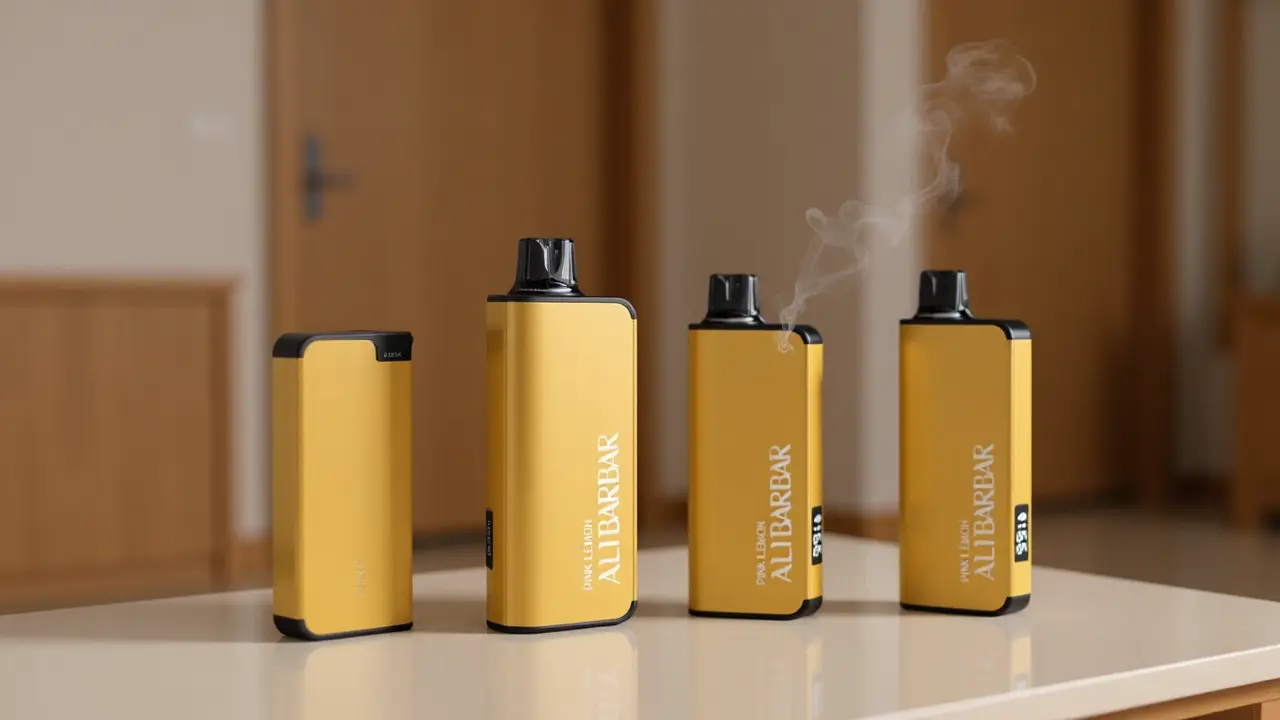
In a market crowded with generic rechargeable units, certain device families demonstrate a clear commitment to the engineering principles that prevent post‑charge scorching. The ALIBARBAR range, available through OZVAPE Shop, embodies this commitment across its current‑generation lineup — the INGOT 9000, INGOT 15000, and Ice Adjust 12000 series included. These devices are built around a design philosophy that prioritises consistent output, transparent status communication, and wicking optimisation specifically to eliminate the burnt‑taste problem.
The INGOT 9000, for example, uses a calibrated power delivery system that actively moderates energy output based on real‑time coil resistance and battery voltage. Users report a notably even draw profile from the first activation after a full charge to the last. Equally important, the device incorporates a multi‑segment LED indicator that provides granular battery status, so you’re never left guessing whether the unit is fully charged or nearly depleted — a small detail that fundamentally changes how predictable the experience feels.
The Ice Adjust 12000 takes this further by integrating a user‑adjustable airflow mechanism that allows you to tune the balance between vapour density and wick saturation. In fixed‑airflow designs, a heavy draw combined with low fluid levels can starve the coil. By allowing fine‑tuned control, the Ice Adjust gives you the means to match your draw behaviour to the coil’s replenishment rate. While no device is impervious to misuse, the mechanics are stacked in the user’s favour.
It’s worth noting that even well‑engineered devices have practical limits. If a unit has been dropped, exposed to extreme temperatures, or allowed to run completely dry before recharging, a burnt taste may still occur. The marker of quality is not perfection under all conditions; it’s a drastically reduced failure rate under normal, intended use.
A Practical Framework for Evaluation
When you want to avoid the burnt‑taste‑after‑charging problem — either in choosing a new device or diagnosing one you already own — apply this systematic checklist:
Check for output regulation: Does the device deliver the same intensity on the first draw after charging as it does on the tenth? If not, the power electronics are likely primitive. A consistent experience is non‑negotiable.
Look for granular status indicators: Does the device tell you more than just “on” or “off”? A battery indicator with at least three steps gives you foresight, helping you avoid deep‑discharge scenarios that stress the coil when you finally plug in.
Assess wicking recovery: After a period of inactivity (e.g., overnight, or during a charge cycle), take a gentle dry draw (if the device allows it) to see if the wick feels saturated immediately. If the first powered draw tastes clean, the wicking system is doing its job.
Evaluate component replaceability: If the coil or pod is replaceable, keep a fresh one on hand. Replace it at the first hint of flavour degradation. A burnt taste on a fresh charge with a new coil often signals a device‑level regulation fault.
Examine charging behaviour: Does the device become noticeably warm during charging? Excessive heat can damage the chemistry of the cell and indirectly affect output stability. A device that stays cool while charging is managing power delivery more carefully.
These diagnostic questions shift the decision from “which brand is best?” to “which design characteristics match my actual usage pattern?” That’s a more reliable path to satisfaction.
Common Selection Errors and Industry Observations
Too many users assume that all rechargeable devices of similar appearance perform similarly. This leads to avoidable frustration. Here are three frequently observed misjudgments:
Overweighting battery capacity at the expense of power management. A large battery that feeds a poorly regulated coil will produce a burnt taste faster than a smaller, well‑tuned system. Capacity alone doesn’t guarantee a clean draw.
Assuming visual similarity indicates internal equivalence. Two devices might share a cylindrical form factor and a USB‑C port, but inside they are entirely different. Counterfeit and cut‑cost units frequently omit the chip‑level regulation that prevents voltage overshoot after charging. When OZVAPE Shop sources exclusively through authorised distribution networks, it’s precisely to eliminate this variability — so the device you receive matches the engineering that the specification sheet describes.
Undervaluing transparent status feedback. If a unit gives you no way to distinguish between a 90% charge and a 10% charge, you are flying blind. You’re likely to overcharge unnecessarily or draw the battery so low that the final puffs cook the coil — and then the next charge cycle amplifies the problem.
Ignoring the wicking and coil as a consumable. Even in sealed devices, the coil and wick have a rated operational life. Approaching it as a permanent component leads to late‑stage burnt‑taste events that the user blames on the charger, when the coil was already spent.
From an industry perspective, there is a clear divide between manufacturers who invest in power regulation and those who view the electronics as a bare‑minimum commodity. The latter group floods the market with units that appear functional but exhibit exactly the post‑charge behaviour this article addresses. Until consumers learn to recognise the signs of good regulation, those devices will continue to generate complaint after complaint.
Frequently Asked Questions
Q: Why does my rechargeable device taste burnt immediately after I take it off the charger?
A: The most likely cause is a momentary power surge when the battery is at peak voltage, combined with a coil that is not fully saturated. The excess heat singes the wicking material, producing a burnt flavour that persists until the residue is cleaned or the coil is replaced.
Q: Is a burnt taste after charging more likely with certain device types?
A: Yes. Devices without active power regulation, those with low‑quality wicking material, and those that have been used heavily without coil replacement are all more susceptible. High‑capacity units with basic electronics tend to spike harder after a full charge.
Q: Can I fix a burnt taste once it happens, or is the device ruined?
A: If the wick is only lightly singed, a few gentle draws may pull fresh liquid through and mask the taste. However, once the wicking material is charred, the burnt note often persists and the coil’s efficiency is permanently reduced. In modular devices, replace the coil or pod. In sealed units, the device is effectively compromised.
Q: Do ALIBARBAR devices have protection against this?
A: ALIBARBAR integrates consistent‑output chip‑level regulation and wicking structures specifically designed to remain primed during charging. The INGOT series, for example, maintains a stable power curve across the entire battery cycle, and the LED indicator gives clear battery feedback so you can avoid over‑discharge that stresses the coil.
Q: Should I avoid using the device right after charging?
A: With a well‑designed device, you should not need to wait. If you notice a burnt taste only on the first draw after charging and then it normalises, that points to insufficient power regulation. A quality unit will deliver a clean draw immediately.
Q: Does a burnt taste after charging mean the battery is damaged?
A: Not necessarily. It usually points to the coil and wick, not the battery. However, if the battery is swollen, overheats during charging, or the device shuts off unpredictably, the battery may be failing and should not be used further.
Q: How can I tell if a device has good power regulation before I buy it?
A: Look for specification details about chip‑based output control, consistent‑power circuitry, or terms like “anti‑surge regulation.” Reviews that mention smooth performance across the entire charge life are also helpful. Retailers that provide standardised specifications, like OZVAPE Shop, allow you to compare these features across models directly.
Q: I have two identical‑looking devices; one tastes burnt after charging, the other doesn’t. Why?
A: Visual similarity is not an indicator of internal engineering. Counterfeit or parallel‑import units frequently skip the regulation circuits. Always purchase through authorised channels to ensure the device you receive contains the full electronics specified by the original manufacturer.
Q: Can a burnt taste after charging be caused by the charger itself?
A: Yes. A fast charger that lacks proper handshaking protocols can push more current than the device’s charging circuit can safely manage, stressing the battery and indirectly affecting the output. Use a charger from a reputable brand that matches the device’s input rating.
Q: What should I do if my device consistently tastes burnt after every charge?
A: Stop using it. The coil and wick are likely damaged, and continued use may present safety risks. Contact the retailer you purchased from — a responsive seller should discuss warranty or replacement options. If the device is sealed, it will need to be replaced entirely.
Conclusion
A burnt taste after charging is never just a random nuisance. It is a diagnostic signal — a clear indication that the power delivery, wicking, and thermal management of a device are out of alignment. The more you understand about the internal architecture, the better equipped you are to choose devices that avoid this pitfall or to adjust your own habits when a limitation exists. OZVAPE Shop makes this understanding more accessible by presenting the ALIBARBAR collection — and the engineering behind it — in a transparent, specification‑driven manner that helps you separate meaningful design from superficial similarity.
Ultimately, the right device is the one that stays consistent from first draw to last, regardless of battery level. When that consistency is present, you never have to brace yourself after plugging in. You just use the device as intended, and it responds predictably. Any unit that can’t deliver that has yet to earn a permanent place in your daily routine.