
VAPE FAQs
Should I Inhale Vape?
Aug
The question appears simple—should I inhale?—but it collapses a dozen technical decisions into three words. The discomfort behind it is worth examining directly: people are not asking for permission. They are asking whether the devices they encounter can be used in a way that does not feel reckless, and whether the engineering behind those devices can be trusted enough to make an informed personal choice. That distinction matters, because answering it responsibly means explaining what happens inside a device when inhalation occurs, why some designs handle that moment more consistently than others, and what signals indicate a device whose internal behaviour the user actually understands. At OZVAPE Shop, we see this question not as a prompt for advocacy, but as an entry point into a conversation about engineering transparency that most marketing conveniently skips.
The purpose here is not to persuade. It is to give an adult reader the analytical tools to evaluate any device they encounter, to recognise the design choices that affect what they inhale, and to make a decision that is genuinely their own rather than one handed to them by a product listing. This article does that by dissecting the factors that separate precisely controlled thermal systems from units whose internal states remain opaque, and by explaining why that opacity is the root of most post-purchase regret.
Understanding What Happens During Inhalation: The Engineering Factors That Matter
Vapour production is a thermal event. When a user inhales, they are drawing air across a heating element that has been raised to a specific temperature range. The element’s job is to convert a liquid formulation into an aerosol with consistent particle size and predictable density. When this process is well-managed, the output is stable from the first second of a session to the last. When it is poorly managed—when temperature overshoots, when wicking material degrades unevenly, or when power delivery fluctuates—the user inhales a mixture whose composition has changed, often in ways that produce harshness, off-flavours, or the early breakdown of the device itself. Asking “should I inhale?” is ultimately asking: can I see what this device is doing, and can I trust it to stay within its design window?
Internal Architecture and Thermal Stability
The heating element is not a generic component. Its geometry, its resistance curve, and the way it interfaces with the liquid-delivery material create a thermal signature that determines how evenly the liquid is converted. A well-designed system will hold a steady temperature across the entire length of the draw, even as the user’s inhalation speed varies. The practical consequence is that the aerosol remains consistent—no sudden spike in warmth, no dry sensation that signals localised overheating.
Why this matters for the “should I?” question: a substantial number of adult users report that devices become harsher toward the end of their rated life. This is not a mystery. It is the result of cumulative thermal stress on the wicking material, which can lose capillary efficiency, and on the heating element itself, which may develop hotspots. A user who understands this can observe the early signs—a slight change in character around the final fifth of a session—and recognise it for what it is. A user without that knowledge simply concludes that the product “went bad” without understanding why. The decision to inhale becomes safer when the device’s thermal architecture is legible—when its behaviour follows a predictable degradation curve rather than an abrupt failure.
Power Management and Predictable Delivery
Every portable device operates on stored electrical energy. The way that energy is regulated determines whether the output on the first inhalation of a full charge is identical to the output on the last inhalation before the cell depletes. Sophisticated power management holds the output voltage within a narrow band across the charge cycle. Simpler circuits allow voltage sag, which means the element runs cooler as the cell voltage drops. The user perceives this as weakening output, and may draw harder to compensate—inadvertently overstressing a system that was already operating marginally.
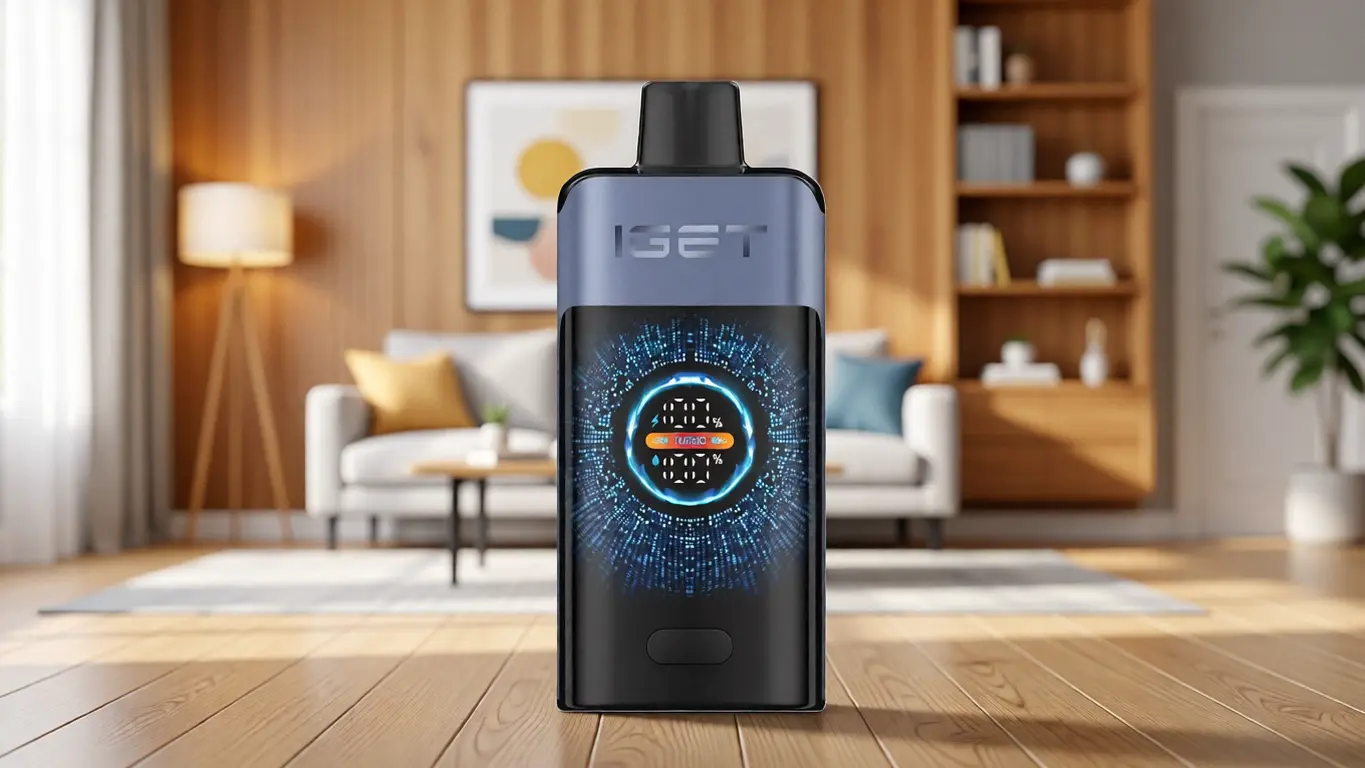
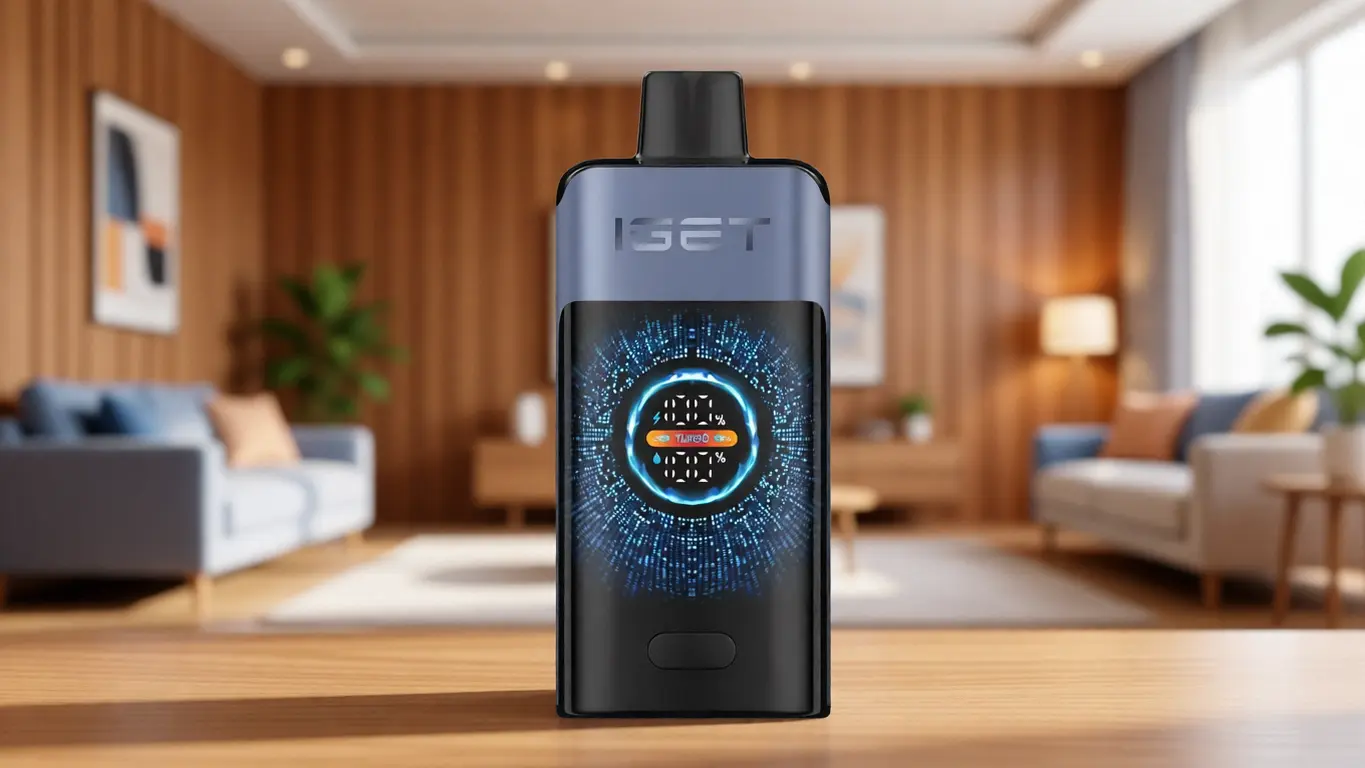
This has a direct relationship to the central question. A device that cannot communicate its power state clearly forces the user into guesswork. Is the output weakening because the liquid is nearly exhausted, or because the power cell is at 15% capacity? Without status transparency, the user is inhaling without knowing whether they are about to experience a decline in consistency or, in poorly protected designs, push the cell into an operating region that accelerates internal chemistry degradation. Clarity of status feedback—remaining capacity, functional temperature range, error states—is not a luxury feature; it is the primary safety interface between the engineering and the person.
Airflow Design and Mouthpiece Contour
Inhalation is a physical act, and the geometry of the airpath shapes everything about that experience. A narrow, high-resistance draw places the heating element under different thermal conditions than a wide, open draw. Devices that provide adjustable airflow allow the user to fine-tune the balance between cooling efficiency and density of output. Crucially, the mouthpiece’s thermal isolation from the heating chamber determines whether the device remains comfortable during prolonged use. A user who experiences lip discomfort after a few minutes is not imagining it; they are experiencing a design that prioritised compactness over thermal separation.
When an adult asks whether they should inhale, they are partly asking about these ergonomic and thermal-comfort factors. A device that cannot be used comfortably for the duration of its intended session has failed at a fundamental level, regardless of its other specifications. The answer to “should I?” is always conditional: it depends on whether the device in front of you is engineered for the usage pattern you intend.
Applying These Criteria to Real-World Device Families
No single device architecture is universally superior. The correct choice depends on the user’s tolerance for maintenance, their need for portability, and their expectations around operational lifespan. The following categorisation is structured around need-states, not brand rankings.
Sealed, pre-configured units represent the simplest entry point. They arrive ready to use with a fixed internal design. Their advantage is consistency: the manufacturer has locked in the thermal and power-delivery parameters, removing the variables that user-adjustable systems introduce. The trade-off is that when the power cell is depleted or the liquid is exhausted—whichever comes first—the device is replaced. For an adult who values predictability and minimal engagement with device internals, this architecture removes ambiguity. The ALIBARBAR INGOT series illustrates this approach: predefined capacity, single-use form factor, and design emphasis on output uniformity across the device’s entire service life.
Rechargeable systems with non-replaceable reservoirs extend the lifecycle by allowing the power cell to be re-energised multiple times before the liquid capacity is consumed. This introduces a new consideration: how well does the device maintain output consistency across multiple charge cycles? Engineering reports suggest that devices in this category often exhibit gradual output decline after the first several recharges, as the heating element ages and the power-management circuitry drifts slightly. Users who choose this path should expect a satisfactory experience for the majority of the liquid volume, but should not be surprised by a subtle fall-off near the very end. The ALIBARBAR ICE Adjust series, with its airflow control and translucent reservoir, makes at least some of that internal state visible, which is a practical aid.
Modular systems with replaceable components shift the cost-per-use calculation toward ongoing consumable replacement rather than full-device replacement. The user pays more attention to the condition of individual parts. This is the right architecture for someone who is comfortable performing simple component swaps and wants to minimise waste. It also places more responsibility on the user to source compatible components from reliable channels—a subject that links directly to the importance of verified supply chains.
The common thread across all architectures is that information transparency determines user satisfaction. A device that hides its internal state forces the user to rely on guesswork; a device that communicates clearly gives the user the data they need to make an informed inhalation decision every single time.
A Practical Framework for Evaluating Any Device
Adopt this sequence before using any portable electronic inhalation device, regardless of brand or category:
Status check: Does the device indicate remaining capacity in a way you can interpret at a glance? If not, you are effectively operating blind and will likely carry an unnecessary backup—or worse, experience unexpected output failure at an inconvenient moment.
First-draw observation: On the initial inhalation, note the resistance, temperature, and density. This becomes your personal baseline for that device.
Midpoint re-evaluation: Halfway through the expected usage period, compare the experience to the baseline. A noticeable change—especially harshness or thinning—indicates thermal management that is drifting outside its design window.
End-of-life behaviour: Does the device degrade gradually, giving warning, or does it fail abruptly? Patterns of abrupt failure suggest insufficient thermal headroom in the design.
Chain-of-custody verification: Were you able to confirm the device’s origin before first use? A product that cannot be traced to its manufacturer’s authorised distribution network introduces a variable—authenticity—that makes all other evaluations unreliable.
This framework works because it treats the device as an observable system. Most users who experience problems are not using defective devices; they are using devices they never learned to read.
Common Errors That Undermine User Confidence
Error 1: Overweighting a single specification. Capacity numbers (e.g., puff estimates) dominate product listings, but they say nothing about output consistency, thermal regulation quality, or status communication. A device rated for many activations that delivers an inconsistent aerosol for the last third of its life is arguably a poorer product than a lower-rated device that maintains uniformity throughout.
Error 2: Assuming structural similarity. Two devices with similar external dimensions may house entirely different internal architectures—different element materials, different wicking densities, different power-regulation topologies. The exterior grants no insight. Users who shop by appearance alone are essentially selecting a product at random.
Error 3: Undervaluing modularity in cost calculations. A sealed device whose entire cost is written off upon depletion competes against a rechargeable device whose power cell can be cycled many times. Over a year of regular use, the per-session cost difference can be significant. The decision to inhale is also a long-term resource-allocation decision, even if it is rarely framed that way.
Error 4: Confusing marketing terminology with engineering reality. Terms like “smart chip,” “advanced coil,” and “next-generation airflow” are applied so loosely across the industry that they convey no standardised information. The only reliable evaluation method is to observe the device’s actual behaviour using the framework above. If a product’s real-world performance does not match its descriptive language, trust the performance.
From an industry perspective, the prevalence of undifferentiated marketing language is a direct result of manufacturing consolidation. Many brands source from overlapping supply chains, and genuine differentiation occurs at the level of quality control, material specification, and after-sale accountability—none of which are visible in a compressed product image. Users who buy through channels that verify inventory provenance, such as OZVAPE Shop’s authorised supply chain, remove one layer of uncertainty from the equation.
Frequently Asked Questions
Q: Is inhaling fundamentally different between compact and high-capacity devices?
A: The physical process is similar, but the engineering tolerances differ. High-capacity devices must manage thermal accumulation over longer continuous use, making temperature stability more critical. Compact devices, designed for shorter sessions, can operate with simpler thermal management.
Q: How can I tell if a device is overheating?
A: A sudden increase in harshness, an unexpected change in warmth at the mouthpiece, or an atypical taste change within a single session are all potential indicators. If these occur, discontinue use and evaluate whether the device’s airflow path may be obstructed or whether it has exceeded its intended session length.
Q: Does a higher puff-count rating always mean better value?
A: No. Value is determined by consistency per unit of usage, not total activations. A device that maintains uniform output for 80% of its rated activations may deliver better real-world satisfaction than one that degrades noticeably after 50%.
Q: What does “factory-certified” actually mean, and why does it matter?
A: It indicates that the product has been sourced through the manufacturer’s authorised distribution network, with documented chain of custody. This matters because counterfeit or grey-market devices may use non-standard internals that behave unpredictably, making the evaluation framework described in this article unreliable.
Q: Can I rely on visual inspection to verify authenticity?
A: Partially. Many authentication features (holograms, QR codes, batch stamps) can be replicated. The more reliable method is to purchase through a channel that can demonstrate its own sourcing discipline. The device’s behaviour under use—its consistency—is the ultimate test.
Q: Are there situations where I should avoid using a device entirely?
A: Yes. If a device has been stored improperly (extreme temperatures, moisture exposure), if its exterior shows physical damage, or if it emits an unusual sound or odour on activation, it should be set aside and not used. No evaluation framework can compensate for physical compromise.
Q: How does adjustable airflow affect what I inhale?
A: Wider airflow reduces draw resistance and can lower the perceived temperature, but it also changes the vapour-to-air ratio. The right setting is the one that provides the density you find comfortable without causing the device to work harder than its thermal design can sustain.
Q: What should I do if a device’s output changes unpredictably from draw to draw?
A: Inconsistency of this kind suggests either a power-regulation fault or a wicking irregularity. There is no user-adjustable fix. The appropriate response is to discontinue use and, if the product is within its expected operational window, contact the point of purchase for guidance.
Q: How important is it to purchase from an authorised Australian retailer?
A: It is significant. Local retailers with documented supply chains provide accountability under Australian consumer law, and the shipping path is shorter, reducing the likelihood of prolonged exposure to uncontrolled storage conditions.
Q: Is there a single device characteristic that best predicts overall satisfaction?
A: No single characteristic; it is the combination of thermal consistency, status transparency, and authentic construction. The most satisfied users are not those who find a perfect device, but those who learn to evaluate a device’s actual behaviour against their personal priorities.
Conclusion
The question “should I inhale?” resolves into a series of smaller, answerable questions about the device in your hand. Can you see its status? Do you understand its thermal behaviour? Is its provenance verifiable? When those questions receive clear answers, the larger decision becomes an extension of personal judgment rather than a leap of faith. The purpose of engineering is to make that judgment possible; the purpose of transparent retail is to ensure the product you evaluate is the genuine article.
OZVAPE Shop’s role in this transaction is simple: maintain a documented, factory-certified supply chain, present standardised specifications that allow honest comparison, and provide responsive support when something does not align with reasonable expectations. That is the baseline, and it is what adult users are entitled to. The right device is the one that fits your actual routine, communicates its condition plainly, and comes from a source that does not treat traceability as optional.