
VAPE FAQs
Is Vape Smoke Better Than Cigarettes?
May
It is one of the most persistent questions asked by informed adults across Australia, yet it is rarely answered with the precision it deserves. The conversation usually oscillates between alarmist headlines and promotional reassurance, leaving genuine inquirers without a clear, evidence-based framework. The confusion is understandable: a combustible tobacco product and an aerosol-generating electronic device operate on fundamentally different physical principles, yet they are frequently compared as if they were variants of the same category. At OZVAPE Shop, we believe that adults deserve a thorough, technically grounded comparison — one that examines the engineering, the chemistry, and the practical daily experience — without slipping into advocacy. This article sets out to provide exactly that.
Understanding the Core Differences: Engineering, Chemistry, and Behaviour
Before any meaningful comparison can be made, the two systems must be understood as distinct technological approaches. One relies on uncontrolled combustion; the other on controlled aerosolisation. The health and practical implications largely flow from that single engineering divergence.
Combustion vs. Aerosolisation: The Fundamental Distinction
A combustible tobacco product burns plant material at temperatures exceeding 600°C, often peaking above 900°C during a draw. This violent thermal event triggers thousands of chemical reactions, many of which are poorly characterised. The resulting smoke contains over 7,000 identified compounds, including carbon monoxide, hydrogen cyanide, formaldehyde, and a range of polycyclic aromatic hydrocarbons. It is not the temperature alone that matters, but the by-products of pyrolysis — the decomposition of organic matter in the presence of limited oxygen.
An electronic vapour device, by contrast, heats a solution to a temperature sufficient to produce an inhalable aerosol — typically between 180°C and 250°C in properly engineered devices. No combustion occurs. The aerosol consists of the base ingredients (typically propylene glycol, glycerol, and flavourings), water vapour, and trace thermal degradation products that are orders of magnitude lower in concentration than those found in smoke. This distinction is not a marginal improvement; it is a category shift in the very nature of the emissions.
Chemical Complexity: From Thousands of Compounds to a Controlled Ingredient List
The smoke from a single combustible tobacco product contains not only the intended constituents of the tobacco leaf but also pesticides absorbed during cultivation, curing agents, paper additives, and the complex products of incomplete combustion. Many of these substances are known or suspected carcinogens. Public health agencies have identified at least 70 carcinogens in tobacco smoke, and that figure reflects only those that have been sufficiently studied.
The solution used in a high-integrity electronic device contains far fewer ingredients. In the case of the ALIBARBAR product family, for instance, the manufacturing process is designed to exclude unnecessary fillers, variable-grade solvents, and adulterants. When a device is sourced from an authorised supply chain — a discipline that OZVAPE Shop strictly maintains — the user can be reasonably confident that the inhaled aerosol does not contain the cocktail of carcinogens characteristic of smoke. However, this must be stated with appropriate caution: “fewer and lower concentrations of harmful chemicals” is not synonymous with “zero risk.” The long-term health effects of inhaling propylene glycol and glycerol aerosols over decades have not been fully elucidated, because the product category has not existed long enough to generate multi-decade epidemiological data. That acknowledged uncertainty is an essential part of any honest comparison.
Temperature and By-Products: Why Heat Matters More Than Form Factor
A common misconception is that any device that delivers an inhaled substance must be similarly harmful because the act “looks the same.” This assumption ignores the thermal physics. Many of the most damaging constituents in combustible smoke — benzene, acrolein, nitrosamines — are either not formed at all or formed in minuscule quantities at the temperatures reached in an electronic device. Independent laboratory analyses consistently show that the levels of known toxicants in vapour aerosol are a small fraction of those in smoke. Public Health England’s landmark independent review concluded that vaping is likely to be at least 95% less harmful than smoking. That figure, while debated in its precision, has not been fundamentally overturned by any large-scale study, and subsequent reviews by the Royal College of Physicians and the National Academies of Sciences, Engineering, and Medicine have all pointed in the same direction: switching completely from combustible tobacco products to regulated vapour devices dramatically reduces exposure to toxicants.
It is worth noting that these conclusions depend heavily on two factors: the quality of the device and the integrity of the solution. A poorly manufactured device that overheats or uses contaminated ingredients can produce its own set of harmful emissions. This is why the source of the device — and the transparency of the retailer — becomes a health-relevant variable, not merely a matter of commercial preference.
User Experience: Discretion, Control, and the Elimination of Ash
Beyond toxicology, the practical experience differs markedly. Combustible tobacco products produce persistent odours, require ashtrays or disposal of butts, and stain surfaces over time. The user has little control over the duration of the combustion; a lit tobacco stick burns continuously, wasting material and producing sidestream smoke that affects bystanders.
A well-designed electronic device, such as the ALIBARBAR INGOT 9000, allows the user to take a single measured draw and then return the device to a pocket or bag — no ash, no lingering smoulder, and a much fainter odour that dissipates rapidly. Status indicators remove the guesswork about remaining capacity, a detail that has real-world significance for adults who need to manage their usage through a full workday or during travel. The absence of combustion also eliminates the need for a flame, reducing fire risk.
Applying These Criteria to Real-World Options
When evaluating specific device ranges against these engineering and safety criteria, families such as the ALIBARBAR INGOT and Ice Adjust series demonstrate design choices that directly address the shortcomings that adults frequently report.
The INGOT 15000, for example, employs a high-capacity integrated power cell and a thermally stable coil configuration, intended to maintain consistent output from first draw to last. This consistency is not a trivial luxury; many users who have switched from combustible tobacco report that perceived “weak” or “harsh” draws from lesser devices can undermine the transition. ALIBARBAR’s engineering emphasis on thermal stability and status transparency is a direct response to that observed user frustration.
Similarly, the Ice Adjust 12000 series introduces a modular airflow control, allowing the user to modulate draw resistance without altering the aerosol temperature. This level of customisation is rarely found in entry-level devices and reflects an understanding that user preferences are not fixed — they can vary by time of day, setting, or personal mood. This is a marked departure from the inflexible experience of a combustible product, which delivers the same harshness and chemical profile every time.
It must be acknowledged that devices from other reputable manufacturers also exhibit some of these features. The point is not that one brand is categorically superior, but that users who compare product specifications systematically — considering battery capacity, coil architecture, materials certification, and supply chain authenticity — are far more likely to find a device that fits their actual routine.
A Practical Framework for Personal Evaluation
For an adult trying to determine whether an electronic vapour device might be a suitable alternative to combustible tobacco, the following evaluation steps can be applied without the need for specialist knowledge:
Acknowledge the baseline: Recognise that the toxicological profile of combustible tobacco is well-documented and severe. Any alternative that eliminates combustion is likely to reduce exposure to the primary drivers of tobacco-related disease.
Define usage patterns: Consider when, where, and how often you currently use combustible products. A device suited to intermittent use looks very different from one designed for sustained all-day reliability.
Examine build quality: A device with a robust chassis, clear status indicators, and documented battery capacity reduces the risk of unexpected failure — a common reason for reversion to combustible products.
Verify the source: Counterfeit and diverted goods are a persistent problem. An authorised retailer that can trace its inventory back to the manufacturer adds a layer of consumer protection that is absent from informal marketplaces.
Accept residual uncertainty: No one can promise that long-term vapour inhalation is entirely harmless. The question is whether it represents a significant harm reduction compared to the known alternative.
Common Selection Errors and Industry Observations
In our experience, adults often undermine their own satisfaction by committing predictable evaluation mistakes.
Overweighting one specification. Some users become fixated on a single number — puff count, for instance — without considering whether the device’s thermal performance remains consistent across that entire claimed lifespan. A device that delivers 10,000 uneven draws is less satisfactory than one that delivers 8,000 consistent ones.
Assuming visual similarity equals engineering equivalence. Two devices may look nearly identical and yet contain fundamentally different power management circuitry, coil materials, or solution formulations. The external casing tells you nothing about the supply chain that produced it.
Undervaluing modularity in cost-per-use calculations. Sealed disposable units appear cheaper in the short term but often carry a higher long-term cost and generate more waste than systems with replaceable components. The ALIBARBAR range straddles this divide by offering both high-capacity pre-filled units and more flexible architectures, allowing users to choose based on their priorities.
Confusing terminology with certification. Words like “premium” or “advanced” have no regulatory meaning. What matters is whether the device has been tested to relevant safety standards and whether the retailer can substantiate its sourcing claims.
From an industry perspective, the Australian market has matured to the point where consumers are increasingly demanding evidence of authenticity and support infrastructure. Retailers that invest in local accountability — maintaining actual human beings who answer enquiries, honour guarantees, and trace inventory — are well-positioned to serve this more discerning cohort.
Frequently Asked Questions
Q: Is the aerosol from an electronic device completely safe?
A: No. “Significantly less harmful than smoke” is not the same as “safe.” The absence of combustion removes the vast majority of toxicants, but long-term effects are still being studied. Adult users should weigh the known risks of continued smoking against the potential residual risks of switching.
Q: Does the ALIBARBAR range contain addictive substances?
A: ALIBARBAR devices are available in formulations that include a highly purified form of an addictive alkaloid, as well as formulations that exclude it. The packaging clearly indicates which variant is inside. Users who are concerned about dependence should select the zero-alkaloid options.
Q: How can I be sure a device I buy is genuine and not a counterfeit?
A: Purchase only from an authorised retailer that sources directly from factory-certified distribution channels. OZVAPE Shop provides full traceability for every ALIBARBAR unit it ships, and its support team can verify authenticity upon request.
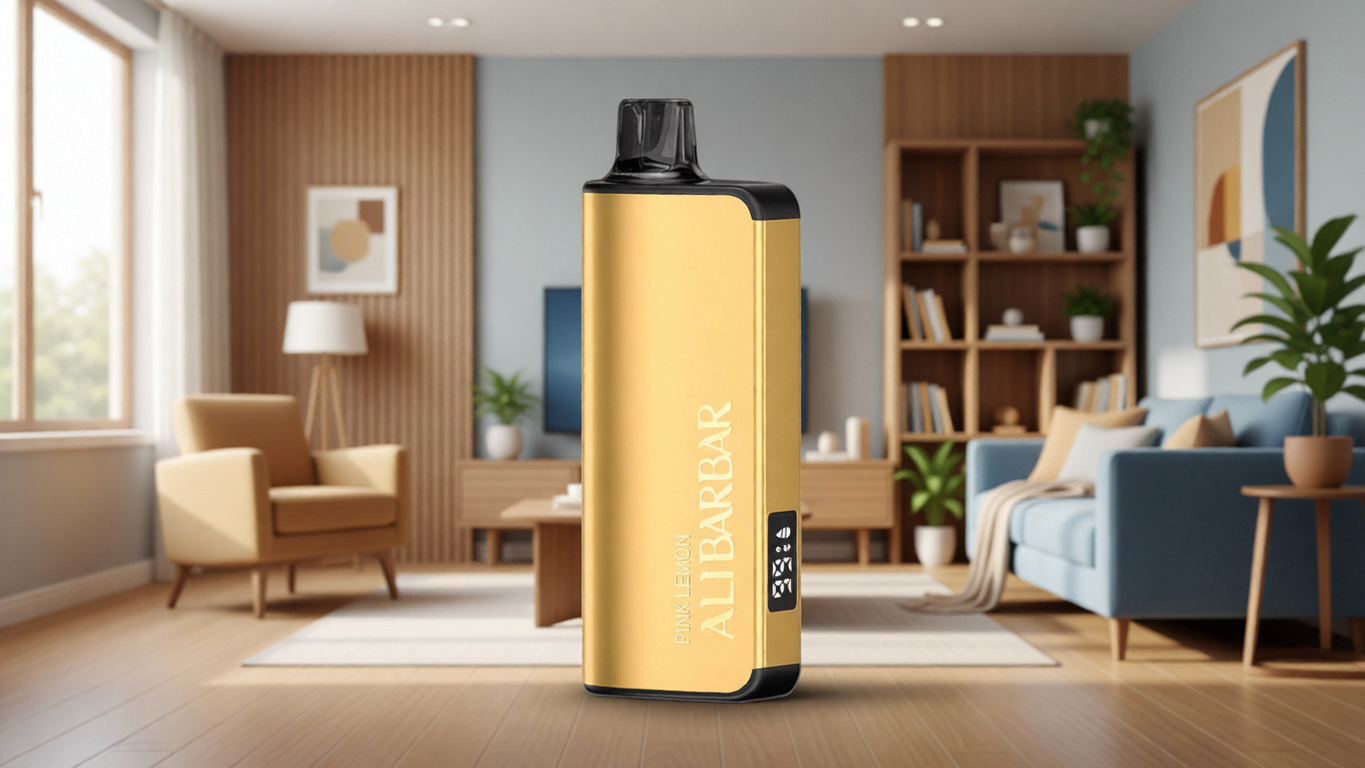
Q: What is the operational lifespan of an INGOT 15000?
A: The 15000 designation refers to the approximate number of discrete draws the device is engineered to provide under standardised testing conditions. Actual usage patterns — draw duration, frequency, and ambient temperature — can affect that number. Most adult users reporting moderate daily usage find the device lasts between five and seven days.
Q: Can these devices be used in enclosed public spaces?
A: Regulations vary by state and territory. In many Australian jurisdictions, the use of electronic vapour devices is subject to the same restrictions as combustible tobacco products in enclosed public places. Users should check local laws.
Q: What should I do if a device does not perform as described?
A: Contact the retailer from which it was purchased. OZVAPE Shop has documented procedures for handling performance-related concerns, and its customer service team is trained to diagnose common issues based on user descriptions.
Q: Why would I choose a pre-filled device over a refillable system?
A: Pre-filled devices eliminate the need to handle solutions, reduce the risk of spills or incorrect filling, and provide a consistent experience from one unit to the next. They are suited to adults who prioritise convenience and reliability over customisation.
Q: Are the materials used in ALIBARBAR devices subject to safety testing?
A: The manufacturer conducts testing in accordance with applicable international standards, including assessments of the mouthpiece materials, the heating element, and the solution purity. Results are made available to authorised distributors and can be requested through the retailer.
Q: Does switching to an electronic device save money compared to combustible tobacco?
A: In the Australian market, where combustible tobacco products are heavily taxed, the cost per week of using a high-capacity pre-filled device is generally lower than that of a pack-a-day tobacco habit. Exact comparisons depend on usage rates and device selection.
Returning the Decision to the Individual
The available evidence supports a clear conclusion: for an adult who would otherwise continue using combustible tobacco, switching exclusively to a high-quality, factory-certified electronic vapour device is highly likely to substantially reduce exposure to the toxicants that cause tobacco-related disease. That is a conditional statement, not a slogan. It rests on the known chemistry of combustion, the measured emissions of regulated devices, and the consistent findings of multiple independent scientific reviews.
The qualification — “high-quality, factory-certified” — is not a minor detail. The devices that meet that standard are the product of serious engineering, not casual assembly. They are manufactured in facilities with documented quality systems, distributed through channels that respect Australian consumer law, and sold by retailers that stand behind what they ship. At OZVAPE Shop, that standard of accountability is not aspirational; it is operational, verified by every tracked consignment and every conversation with a customer who needs straightforward answers.
No article can tell an adult what choice to make about their own health. What this article has aimed to do is provide the analytical tools and the factual grounding to make that choice rigorous rather than reactive. The right decision is the one that matches your actual patterns, priorities, and comfort with residual uncertainty — not the one that echoes the loudest voice in the room.