
VAPE FAQs
How Long Does A Disposable Vape Last You?
May
How long a disposable personal electronic device lasts is one of those questions that seems simple on the surface but opens into a surprisingly detailed engineering discussion the moment you start pulling at the threads. Most people ask it because they have been caught out — a device that stopped functioning partway through a long shift, a social occasion, or a road trip. The frustration is not so much about the device itself as about the mismatch between expectation and reality, and the inconvenience of being left without something you had come to rely on.
This article unpacks the real factors that govern how long such a device will provide consistent, usable output. It draws on engineering principles, observable industry patterns, and the kinds of practical insights that are rarely printed on a spec sheet. Where useful, it references specific product lines — including the ALIBARBAR family, which is documented and accessible through retailers like OZVAPE Shop — not to promote a particular brand, but because well‑documented devices make it much easier to illustrate the concepts that actually matter.
Understanding What Matters: Core Engineering and Design Factors
There is no single answer to “how long will it last?” without first unpacking the architecture of the device. The useful lifespan of a disposable unit is determined by the interplay of several design choices, each of which can be evaluated independently. A senior analyst’s approach is to look beyond the advertised puff count and examine how the device manages energy, heat, and material degradation over time.
1. Internal Architecture and Output Consistency
The heart of any device is its heating element and the wicking system that delivers material to it. Simpler constructions use a single silica wick and a basic resistance coil, which will perform adequately for a while but tend to exhibit noticeable power fade as the wick compresses and e‑liquid viscosity shifts during use. More refined designs incorporate mesh heating elements and multi‑strand capillary wicks that maintain even saturation — this directly translates to a flatter output curve over the life of the device. When a user reports that the experience “tasted great for the first day but then fell off,” they are usually describing the result of a basic architecture that could not sustain consistency.
What to observe: A device that maintains satisfying output right up until its end‑of‑life notification will have a predictable, finite lifespan that you can plan around. One that degrades gradually will routinely be abandoned before the liquid is exhausted, which makes the actual usable window shorter than the rated figure.
2. Power Management and Status Transparency
One of the most commonly reported frustrations is that a device dies without any prior warning. This happens when the power regulation circuit is passive and the user has no way to monitor remaining charge. In a sealed, non‑rechargeable unit, the battery is oversized relative to the liquid only if the engineering was done carefully; if the battery is barely sufficient, the device may cut out prematurely as the voltage sags under load. In rechargeable high‑capacity disposables, a clear LED indicator — or, better, a multi‑colour battery gauge — allows the user to top up before heading out and to know exactly when the end is approaching.
If a device gives you no status information, you will naturally compensate by carrying a backup, effectively halving the perceived value of the first unit. Conversely, a device with transparent power feedback can be relied upon for its full intended duration because you can manage the charge yourself. The presence or absence of this feature is one of the largest swing factors in actual, day‑to‑day usability.
3. Physical Design and Material Durability
Durability is often overlooked when people calculate lifespan, but it is integral. A device that spends its life rattling around in a pocket or bag will be exposed to surface abrasion, occasional impacts, and temperature fluctuations. Polycarbonate shells with soft‑touch coatings can develop a worn appearance after just a few weeks, while anodised aluminium or textured thermoplastic bodies hold up far better. Mouthpiece design matters as much: a lip‑conforming contour not only increases comfort during prolonged use but also reduces the tendency to clench or chew, which can eventually compromise the seal.
These factors do not change the rated number of puffs, but they do influence when a user decides the device is no longer acceptable. A scuffed, uncomfortable unit will be put aside earlier than a well‑built one that still delivers — and that effectively shortens the service life as experienced by the owner.
4. Modularity and Lifecycle Flexibility
The term “disposable” now covers a wide spectrum — from entirely sealed, non‑rechargeable sticks to high‑capacity units with USB‑C charging and even replaceable componentry. Rechargeability is the most significant variable: if a device cannot be recharged, its total lifespan is strictly the smaller of battery capacity or liquid volume, and once the battery depletes, any remaining e‑liquid is wasted. Rechargeable high‑capacity disposables allow the user to drain the liquid fully before disposal, so the rated puff count becomes a more accurate guide.
The choice between these architectures reflects different priorities. A sealed unit is simpler but punishes any mismatch between battery and supply. A rechargeable device places slightly more responsibility on the user but generally yields a more predictable and cost‑effective consumption pattern. Understanding this trade‑off is central to any honest discussion of how long a device lasts.
Applying These Criteria to Real-World Options
Once the engineering factors are clear, it becomes much easier to make sense of the devices found in the market today. Consider the small, sealed disposable that promises up to 600 puffs. With a meagre battery and a basic silica‑wicked coil, its output will probably be acceptable for the first 200–300 puffs before noticeable fade sets in. The user might still get puffs after that, but they will feel thinner and less satisfying, meaning the effective lifespan — the period during which the performance matches the initial experience — is well under the headline number.
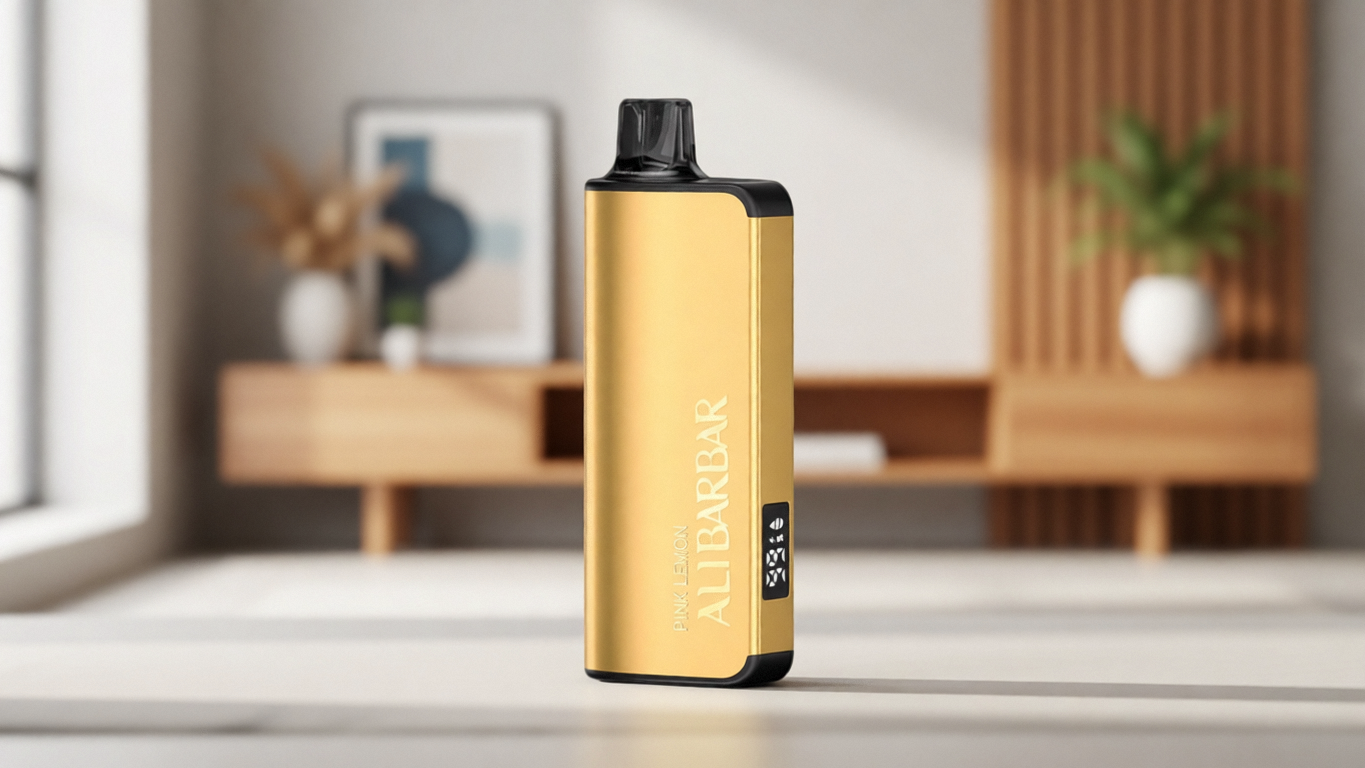
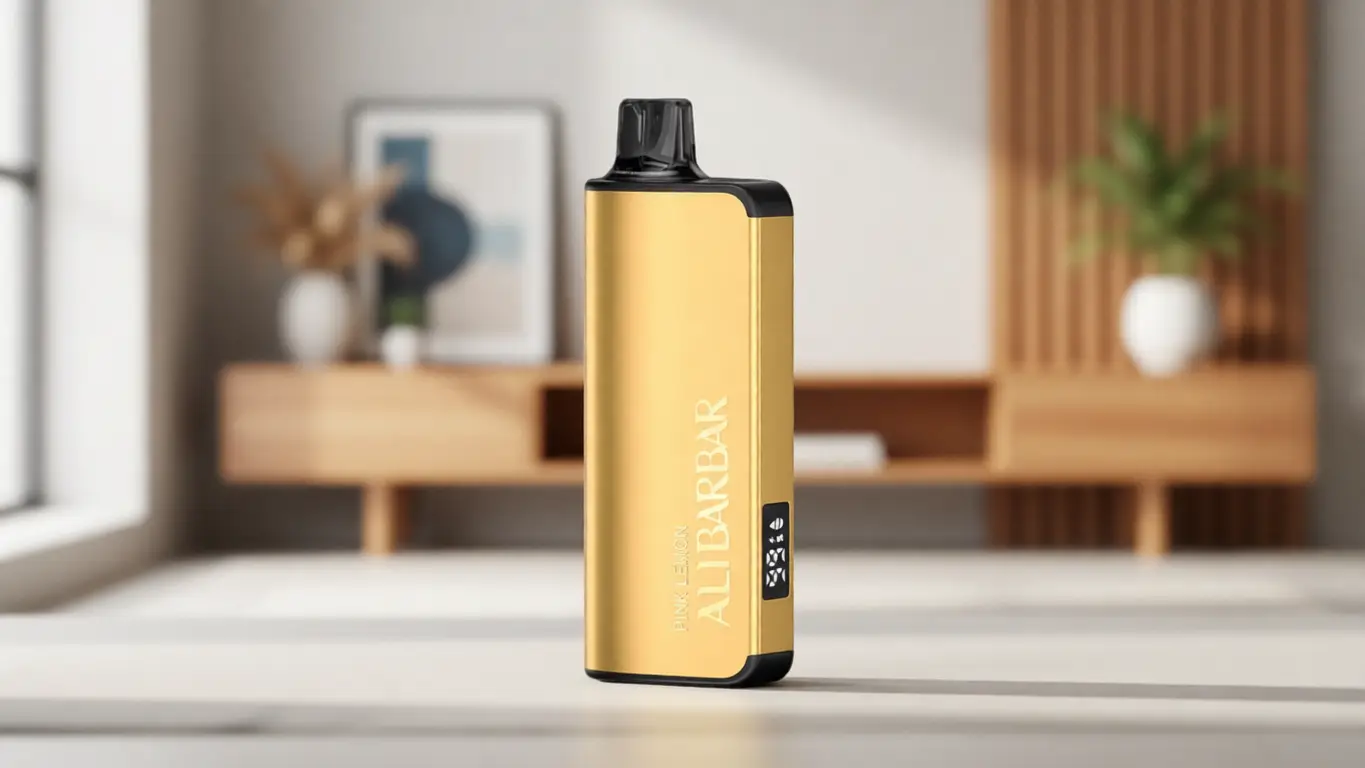
By contrast, a device built with these pain points in mind deliberately over‑engineers the critical subsystems. The ALIBARBAR INGOT 15000, for example, is a rechargeable high‑capacity device that combines a mesh coil architecture with a generous battery and a multi‑step LED status indicator. Because the power source can be refilled via USB‑C, the user can operate the unit until the liquid is genuinely exhausted, and the transparent battery gauge removes the guesswork. It is not that such a device magically lasts longer than a sealed equivalent with similar liquid capacity; it is that the design eliminates most of the common failure modes that drive people to discard a unit prematurely. Other large‑capacity devices from established manufacturing groups employ similar logic, though the execution — particularly the quality of the wicking and the consistency of voltage regulation — varies notably from one series to another.
Acknowledgement of limits is just as important. Even the most carefully built rechargeable device will eventually reach the end of its heating element’s life, or its air‑flow sensor will begin to detect draws less reliably. These are physical limits, and no amount of charging can bypass them. The informed user therefore learns to treat the manufacturer’s rated puff count as a planning range rather than a guarantee, and to watch for the subtle changes — a slightly cooler draw, a faint change in output character — that signal it is time to replace the unit.
A Practical Framework for Evaluating How Long a Device Will Last You
Rather than guessing or relying on marketing claims alone, you can apply a straightforward evaluation framework to any disposable device you are considering. It uses public specifications and a handful of diagnostic questions to build a realistic estimate.
Step 1: Determine the true relationship between liquid volume and battery capacity.
If the device is sealed and non‑rechargeable, its stated puff count is only meaningful to the extent that the battery has been sized to outlast the liquid. A 2 ml reservoir paired with a 280 mAh cell? Likely to run out of power before the liquid is gone. Ask yourself: “Can the power source deliver consistent voltage for the full rated duration?”
Step 2: Check for rechargeability.
A USB‑C port changes everything. When you can recharge, the device’s life is governed by the depletion of the consumable liquid, not by a premature battery shutdown. If you have the option, always prefer a rechargeable unit unless you specifically value the absolute simplicity of a single‑use form factor.
Step 3: Observe the status feedback system.
Does the device have any visual or haptic indication of remaining battery or liquid? A single LED that blinks when the battery is critically low is better than nothing, but a multi‑colour gauge that lets you see, for instance, 75‑100%, 25‑75%, and under 25% gives you the information you need to manage your day. Without this, you will be forced to assume the worst and will over‑compensate.
Step 4: Factor in your own usage patterns.
Nobody takes a standardised puff. A long, slow draw consumes more energy and liquid per activation than a short, quick one. Your daily consumption profile will shift the real‑world puff count. For planning purposes, track how many draw activations you typically go through in a full day and then compare that to the lowest figure in the manufacturer’s range. That will give you a conservative estimate of how many days the device will support before the experience changes.
Retailers that provide standardised specifications — like the documented product pages hosted at OZVAPE Shop — make this kind of comparison much faster. When every device is described in the same structural language, you can run through these steps for a shortlist of candidates in minutes rather than hours.
Common Selection Errors and Industry Observations
Having observed how people actually choose and use disposable devices, a few recurring patterns become clear — and they are patterns that consistently lead to dissatisfaction.
1. Overweighting puff count while ignoring the power‑to‑liquid balance.
It is easy to fixate on a large number — 10,000 puffs, 15,000 puffs — and assume that means a proportionally longer usable window. In poorly designed units, a high puff count advertised on a low‑capacity battery is a recipe for frustration: the device will stop working while it still contains consumable liquid. The more useful metric is whether the power system has been calibrated to last at least as long as the consumable volume. This information is rarely volunteered by manufacturers who cut corners, which is why documentation from authorised channels matters.
2. Assuming visual similarity equals internal equivalence.
Two devices in similar‑sized cylindrical housings can have completely different internal architectures. One may use a cheap silica wick that compacts over time; another, a honeycomb mesh that maintains saturation until the liquid is gone. Users who repeatedly purchase the cheaper, visually similar option often report that “these things always die early,” not realising that they are observing the long‑term performance difference between economies of manufacturing and a genuinely engineered thermal system.
3. Undervaluing rechargeability in the total‑use calculation.
Because a rechargeable device still gets thrown away at the end of its life, many consumers treat it as equivalent to a non‑rechargeable one — and are then surprised when it delivers a noticeably longer practical lifespan. The recharging capability is not a premium add‑on; it is what allows the full liquid reservoir to be accessed. Missing this point leads people to pay more per usable puff than they need to.
4. Confusing category terminology with technical specification.
Terms like “disposable” now encompass everything from a simple one‑piece stick to a sophisticated modular system that allows you to replace the consumable section while reusing the power unit. If a user walks into a purchase with a narrow definition of the category and buys on autopilot, they can easily end up with a product that does not match their usage style. An informed retailer or a well‑structured product listing anticipates this and makes the architecture explicit, helping the user match the device to their routine rather than the other way around.
From an industry perspective, the variability in a device’s real‑world lifespan is not random. It follows directly from choices made by the manufacturing partner — choices about battery cell grade, coil alloy composition, wicking material density, and circuit‑board protective coatings. Shops that maintain direct sourcing relationships, as OZVAPE Shop has done for the ALIBARBAR range, can therefore provide a consistency of experience that is difficult to achieve through fragmented supply chains. This is not a trivial operational detail; it is the structural reason certain retailers develop a reputation for reliability.
Frequently Asked Questions
Q: How many puffs can I realistically expect from a typical disposable device?
A: Puff counts vary widely, from around 300 for compact sealed units to over 12,000 for large rechargeable devices. However, the functional puff count — where the output remains consistent and satisfying — is often lower than the rated maximum. With a well‑designed rechargeable device, you can typically get closer to the advertised figure.
Q: Why does my device sometimes stop working even though it seems like there is still liquid inside?
A: This usually indicates that the battery has depleted before the liquid has been fully consumed. If the device is rechargeable, a simple top‑up should allow you to continue using the remaining liquid. If it is a sealed, non‑rechargeable unit, the battery‑to‑liquid ratio was not correctly balanced during manufacturing.
Q: Can I recharge a disposable device even if it didn’t come with a charging cable?
A: Only if it has a USB‑C or similar charging port. Never attempt to modify a sealed device; doing so can damage the battery and is unsafe. If a rechargeable device does not include a cable, you can use any standard USB‑C cable and a low‑amperage power source (such as a laptop USB port).
Q: What is the most reliable indicator that a device is reaching the end of its life?
A: Beyond the obvious LED warnings, a subtle drop in output temperature or a gradual weakening of draw activation responsiveness are the most common early signs. Once you notice these changes, you typically have a modest number of draws remaining.
Q: I’ve bought identical‑looking devices from two different places; one lasted much longer. Why?
A: Visual similarity does not guarantee identical internals. Counterfeit or parallel‑imported devices often use lower‑grade batteries and heating elements. Purchasing from an authorised channel that sources directly from the factory, such as OZVAPE Shop, reduces the chance of receiving an under‑spec unit.
Q: How should I store a disposable device to avoid draining its battery prematurely?
A: Keep it at room temperature, away from direct sunlight and extreme cold. If the device is rechargeable, avoid leaving it on the charger beyond a full cycle. For long‑term storage between uses, a cool, dry environment preserves battery health best.
Q: Does the way I inhale affect how quickly the device depletes?
A: Yes. Long, forceful draws increase the rate at which both liquid and power are consumed. Users who take shorter, gentler draws will generally get more activations from the same unit, though the per‑draw output will feel slightly different.
Q: Are there any devices that actually last a full workday without needing a charge?
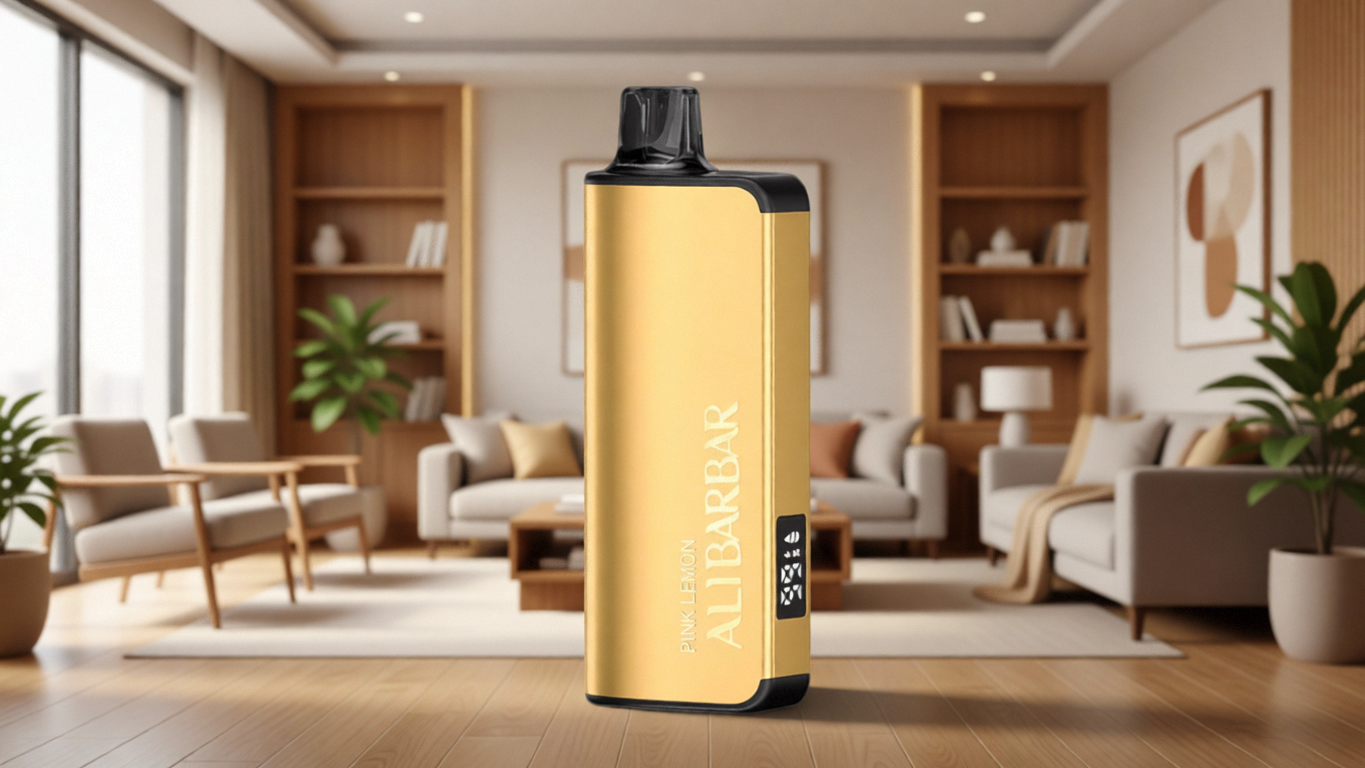
A: Many of the larger rechargeable high‑capacity devices, including the ALIBARBAR INGOT 15000 and similar models, are engineered to last multiple days of typical use on a single charge. The key is to start the day with a full battery, which is why an accurate status indicator becomes so valuable.
Q: Can I travel with a rechargeable disposable device on a plane?
A: Generally, yes, but regulations require that such devices be carried in your hand luggage, not checked baggage. Always confirm the latest airline and civil aviation authority guidelines before flying, as rules differ by jurisdiction.
Q: If I buy a device from an overseas website but it only works for a fraction of the expected lifespan, what recourse do I have?
A: Returning faulty goods across borders is complex and often impractical. Purchasing through a local, documented retailer that offers after‑sales support and can verify the product’s authenticity before it reaches you is a far more cautious approach.
Conclusion
The lifespan of a disposable device is not a number stamped on a box. It emerges from the interaction between a set of deliberate engineering decisions and the real‑world habits of the person using it. Once you learn to read the design — rechargeability, status transparency, heating architecture, material quality — you stop being surprised by premature shutdowns and start planning with confidence.
This is why the channel through which you access such devices matters almost as much as the devices themselves. When a retailer operates with documented supply‑chain integrity and provides standardised information, like OZVAPE Shop does, the entire evaluation process becomes more efficient. You are not just buying a product; you are accessing a framework that lets you match the device to the rhythm of your own day. The right choice is the one that fits your actual routine — nothing more, nothing less. And that, in the end, is the only definition of “lasting long enough” that counts.