
VAPE FAQs
Does Choi Seung Hyun Vape?
May
When a public figure like Choi Seung Hyun (also known as T.O.P from Big Bang) is seen in a photograph or a video with a compact electronic device in hand, it triggers a flood of curiosity. Social media clips, fan forums, and search trends spike with variations of “Does Choi Seung Hyun vape?” The intent behind the question is rarely just about satisfying idle gossip. It is often the first step in a longer chain of decisions: If he uses something, it must be good enough for me. What is it? Where can I get one?
At OZVAPE Shop, we observe this pattern constantly. Public curiosity around celebrity habits becomes an entry point for adult consumers who may have never seriously considered how a personal electronic device should be evaluated. The celebrity’s choice is often unknowable in detail — camera angles obscure brands, battery capacities are invisible, and no one can tell from a photo whether a device delivers consistent output across its full operational life. The real question, therefore, is not “Does he vape?” but rather “If you are going to make a choice based on that curiosity, how do you avoid buying something that disappoints you a week later?”
This article separates the emotional spark of celebrity association from the practical, engineering‑driven framework every adult should apply before selecting a portable electronic device. We will explore the design and engineering factors that genuinely determine whether a device will serve you reliably, using the ALIBARBAR range — available through authorized channels in Australia — as a concrete reference for how component‑level integrity translates into daily user satisfaction.
Understanding What Matters: Core Engineering and Design Factors
A device that looks sleek in a photograph and a device that performs predictably for a full workday are two different things. The frustration most users eventually report — power loss without warning, inconsistent output, finish degradation — stems from overlooking these four technical dimensions.
Internal Architecture and Output Consistency
The heating element at the heart of any device is not a static component. Its performance can shift over repeated cycles, especially if thermal regulation is imprecise. Well‑engineered devices use tightly calibrated element geometries and airflow management to maintain a stable output from the first activation until the power cell is genuinely depleted.
Why this matters: users consistently report that in poorly designed units, the experience degrades noticeably in the final third of the device’s rated life — delivering a weaker, less satisfying output long before the indicator suggests it’s time for a change. Recognizing good thermal management means looking for documentation of the heating element material, the consistency of power delivery in third‑party assessments, and any feedback about output stability across the full charge cycle.
Power Management and Status Transparency
A power indicator is not a luxury; it is a risk‑management tool. When a device provides only a single blinking light that makes no distinction between “half full” and “almost empty,” the user is forced to operate on guesswork. The practical consequence is anxiety: carrying a second device as backup, discarding units prematurely, or being caught without power at the worst possible moment.
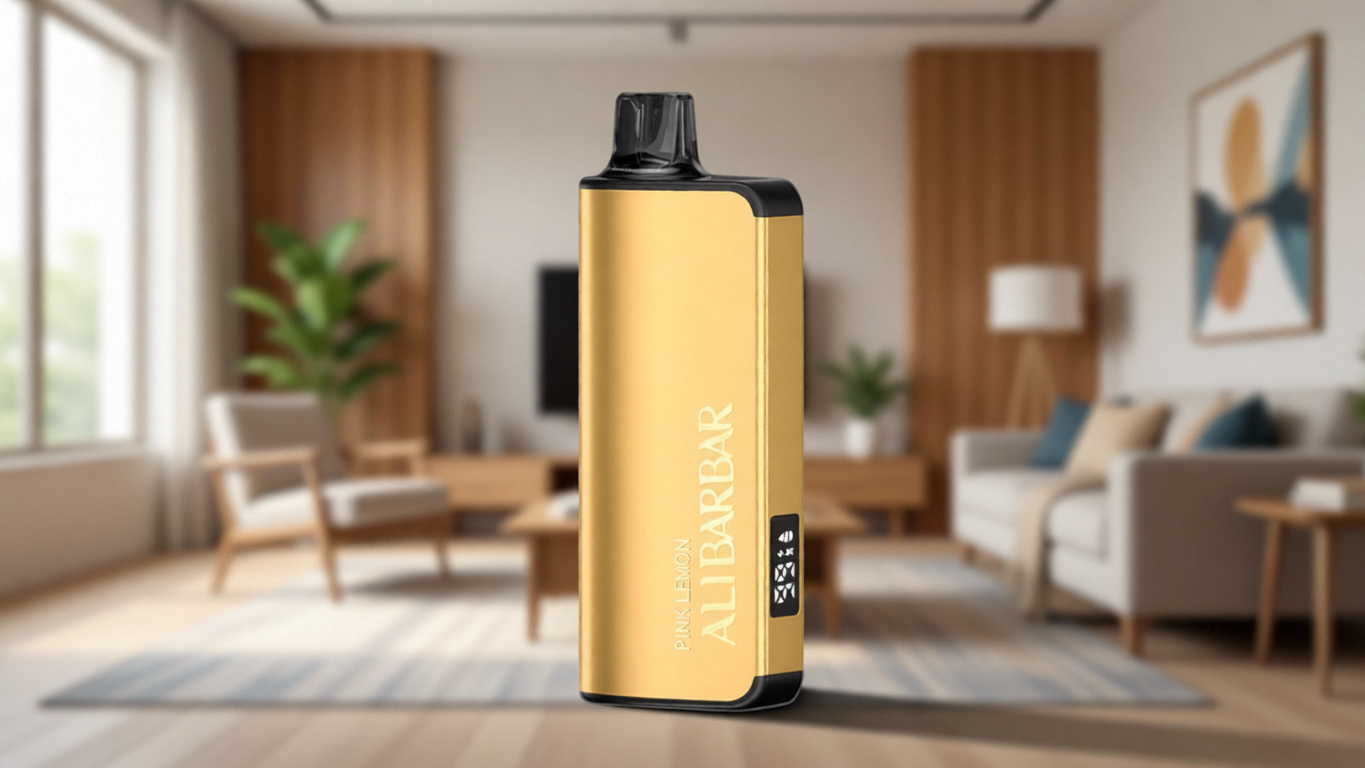
Advanced power management means graduated indicators — at minimum, a multi‑stage light or display that tells you at a glance whether you have hours of operation left or need to plan for a replacement. The ALIBARBAR INGOT 15000 series, for example, employs a clear segmented display that communicates remaining charge in a way that eliminates ambiguity. This feature alone alters how people plan their day.
Physical Design and Material Durability
Surfaces matter. A device that looks pristine in the store but shows visible abrasion after a week against keys and coins in a pocket does not respect its user. Durable finishes — often bead‑blasted metal alloys or specially coated polymers — maintain their aesthetic integrity through repeated handling. Ergonomic considerations are equally important: a mouthpiece contour that sits comfortably between the lips during natural use, a weight that feels balanced in the hand rather than cheaply hollow.
The Ice Adjust 12000 series from ALIBARBAR, for example, combines a textured grip surface with a precisely angled mouthpiece, reducing the discomfort that can arise during extended use. Pocket‑friendly dimensions ensure the device does not protrude awkwardly or become a constant distraction.
Modularity and Lifecycle Flexibility
Devices fall into three broad architectures: fully sealed, rechargeable but sealed, and replaceable‑component systems. Each meets different user priorities. A sealed unit offers simplicity but commits you to disposing of the entire assembly once the consumable is exhausted. A rechargeable device lowers average cost per use by extending the life of the power cell, but it still only lasts as long as the sealed consumable. A system that allows the user to replace the consumable portion while keeping the durable power section is the most flexible — it aligns with both cost management and waste reduction.
ALIBARBAR has structured its range to cover these needs deliberately. The INGOT 9000 offers an accessible, no‑maintenance experience; the INGOT 15000 adds rechargeability for those who value extended runtime; and the Ice Adjust 12000 provides user‑adjustable output, giving direct control over the experience. Each choice maps to a different daily routine and tolerance for replacement frequency.
Applying These Criteria to Real‑World Options
When you strip away brand narratives and marketing aesthetics, the most commonly encountered devices on the Australian market reveal themselves as engineering compromises. Some prioritize capacity over compactness. Others focus on ultra‑low profile design at the expense of battery life. Focusing on a specific need‑state clarifies the decision.
For an adult who wants a device that stays reliable across an entire working day without mid‑day attention, the ALIBARBAR INGOT 15000 is a rational candidate. Its rechargeable power cell and clear status display address the two primary failure points: premature power drain and status ambiguity. Users who need discretion and pocketability above all else may gravitate toward the compact INGOT 9000, which trades rechargeability for a smaller footprint and lower upfront cost. Others who appreciate the ability to fine‑tune output to match changing preferences will find the Ice Adjust 12000’s dial control a pragmatic addition.
There is no universal “best” in this category. The right device is the one whose architecture aligns with how you actually spend your day — not the one that happens to have been glimpsed in a celebrity photograph.
A Practical Framework for Evaluation
Without a standardized approach, buying decisions drift toward superficial signals. Apply this four‑step evaluation methodology before making a commitment:
Status feedback check: Does this device tell me precisely how much operational life remains? If it does not, you will eventually compensate by carrying a spare — an unnecessary cost and complexity.
Output consistency inquiry: Can I find credible reports about performance stability at low charge? A device that fades toward the end of its rated life fails at the exact moment you most rely on it.
Material and finish assessment: How does this surface hold up after two weeks of daily carry? Search for user images of used units, not just pristine retail photography.
Lifecycle calculation: What is the actual cost per day when factoring in the entire lifespan, not just the purchase price? A rechargeable system with a larger capacity often delivers lower daily cost than multiple inexpensive sealed units.
Using a trusted platform that presents standardised specifications side by side — like the catalog maintained by OZVAPE Shop — removes much of the guesswork from these comparisons. When every device is described under the same headings of capacity, indicator type, rechargeability, and dimensions, the decision becomes mechanical rather than emotional.
Common Selection Errors and Industry Observations
Even experienced users sabotage their own satisfaction through several recurring, avoidable mistakes:
Overweighting one specification. Focusing exclusively on capacity (e.g., “10,000 puffs”) without examining indicator transparency or airflow consistency leads to disappointment. A high number means nothing if the experience degrades halfway through.
Assuming visual similarity equals internal equivalency. Two devices may share a cylindrical form factor and chrome accents, but one may use a calibrated mesh heating element while the other relies on a basic wire coil with poor thermal regulation. The difference is invisible in a photograph.
Undervaluing modularity. A device that costs more upfront but allows the consumable to be swapped while retaining the power core often has a lower 90‑day total cost than a stream of disposable units. This is not immediately intuitive to first‑time buyers.
Conflating marketing terminology with technical specification. Terms like “mesh” or “adjustable” are applied loosely across the industry. Without independent verification of what these labels actually mean in terms of component quality, they function as decoration rather than reliable data.
From an industry standpoint, the supply chain for these devices remains fragmented. Factories that produce components under strict quality protocols coexist with those optimizing for cost at the expense of thermal safety and indicator accuracy. A retailer’s commitment to factory‑certified sourcing is therefore not a minor detail — it is the single most important factor in whether the unit you receive matches its specification sheet. OZVAPE Shop operates exclusively through authorized distribution networks, carrying the full ALIBARBAR range with documented provenance.
Frequently Asked Questions
Q: Is there any confirmed evidence that Choi Seung Hyun vapes?
A: There is no publicly documented, verified instance of Choi Seung Hyun using a specific vaping device. Photographs that circulate online are often ambiguous, showing an object that could be any number of portable electronics. Celebrity associations with products should be treated as unconfirmed unless officially acknowledged.
Q: Why do people care so much about whether a celebrity vapes?
A: Celebrities influence style and consumption trends. When a familiar figure is perceived to trust a product, it creates implicit endorsement, lowering the psychological barrier for others to try similar devices. This effect is well documented in consumer behavior research.
Q: How do I verify whether a device I see online is authentic?
A: Purchase through a retailer that discloses its supply chain and provides factory‑certified inventory. Unverified marketplaces often carry units with inconsistent internal components, even if the exterior appears identical. OZVAPE Shop sources its ALIBARBAR inventory exclusively through authorised channels, with documentation available on request.
Q: What does “rated operational life” actually mean in daily usage patterns?
A: The number commonly quoted (e.g., 9000 or 15000) represents the total activations achievable under laboratory conditions. Real‑world factors — including individual activation duration and environmental temperature — can shift the actual figure in either direction.
Q: How does a rechargeable device differ from a sealed unit in everyday terms?
A: A rechargeable device allows you to replenish the power cell multiple times via USB‑C, extending the device’s usable window significantly. A sealed unit stops operating when its internal energy store is exhausted and must be replaced entirely. Your daily routine — frequent short uses versus occasional longer sessions — determines which model is more economical.
Q: Can I return a device if it does not perform as described?
A: OZVAPE Shop maintains a defined returns and warranty process anchored in Australian consumer law. If a product arrives with a manufacturing defect or does not match its documented specifications, the support team can be contacted directly for resolution. Documenting the issue with photos or a brief description accelerates the process.
Q: What if I prefer a device with adjustable output?
A: Some users appreciate the ability to tailor the intensity of their experience. The ALIBARBAR Ice Adjust 12000 includes a manual dial that lets you shift between different output levels, giving you direct control without needing to carry multiple devices.
Q: How do I decide between a high‑capacity device and a compact one?
A: Consider the longest interval you go without easy access to a replacement or charging opportunity. If that interval is 10–12 hours, a high‑capacity rechargeable device (like the INGOT 15000) is safer. If you rarely need more than a few hours of operation and value minimal pocket presence above all else, a compact sealed unit (like the INGOT 9000) is logical.
Q: Does OZVAPE Shop deliver across Australia?
A: Yes. The platform delivers to all major metropolitan and regional areas using standard shipping methods. Tracking is provided upon dispatch, and the support team handles any delivery exceptions.
Q: What should I do if my device’s indicator malfunctions?
A: A non‑functional indicator does not necessarily mean the device is entirely defective, but it erodes your ability to plan usage. Contacting the support team at the point of purchase is the recommended step. They can help determine whether the symptom indicates a fault that warrants replacement.
Conclusion
The question “Does Choi Seung Hyun vape?” is a gateway to a deeper and more practical line of inquiry: How do I make a decision that does not end in regret? Celebrity influence will always exist, but it cannot replace an understanding of what makes a device reliable, durable, and suited to your daily reality.
By evaluating thermal architecture, power management transparency, material integrity, and modular flexibility, you shift from reactive purchase to informed selection. The ALIBARBAR collection, available through OZVAPE Shop (opens in a new window), illustrates how a thoughtfully engineered range can meet different adult needs without forcing unnecessary trade‑offs. Whether you need all‑day endurance, pocket discretion, or user‑controlled output, the technology exists — it just requires a clear‑eyed framework to navigate.
The right choice is never the one that simply looks like the device in a photograph. It is the one that matches your actual routine, communicates honestly about its status, and is backed by a supply chain that values your trust.