
VAPE FAQs
How To Do An O With A Vape?
May
No single visual signal confirms that someone has truly mastered control over their device quite like a clean, stable O‑ring. The frustration for anyone starting out is palpable: you watch a friend form a perfect spinning doughnut of vapor with what appears to be minimal effort, yet every attempt of your own collapses into a shapeless puff. What is seldom explained is that the ring does not result from a secret trick but from a precise physical choreography — and that your equipment can either vanish as a variable or keep pulling the rug from under your practice. While technique will always carry most of the weight, a vapor production tool that behaves repeatably lets you isolate what your lips, tongue, and lungs are actually doing. That is where the range of devices offered through OZVAPE Shop enters the conversation: a stable, factory‑certified unit removes the guesswork about whether the machine is holding you back.
The Physics Behind a Vapor Ring – What You Are Actually Building
Before any technique can be applied, it helps to understand that an O‑ring is a visible toroidal vortex — a self‑sustaining loop of rotating fluid. When a dense, slow‑moving mass of suspended particles is expelled through a circular opening with a sharp, short impulse, the inner surface travels faster than the outer, creating a rolling motion that keeps the ring intact. Any turbulence introduced by the device’s internal pathway or by irregular exhalation tears the vortex apart before it can travel. Therefore, two conditions are non‑negotiable: the vapor must be dense enough to hold visible structure, and the expulsion must be a clean, single‑pulse event with minimal interference from ambient airflow. Most learners fail not because they lack coordination, but because they are unknowingly fighting one of these variables.
Optimizing Your Device for O‑Ring Performance
Internal Architecture and Vapor Consistency
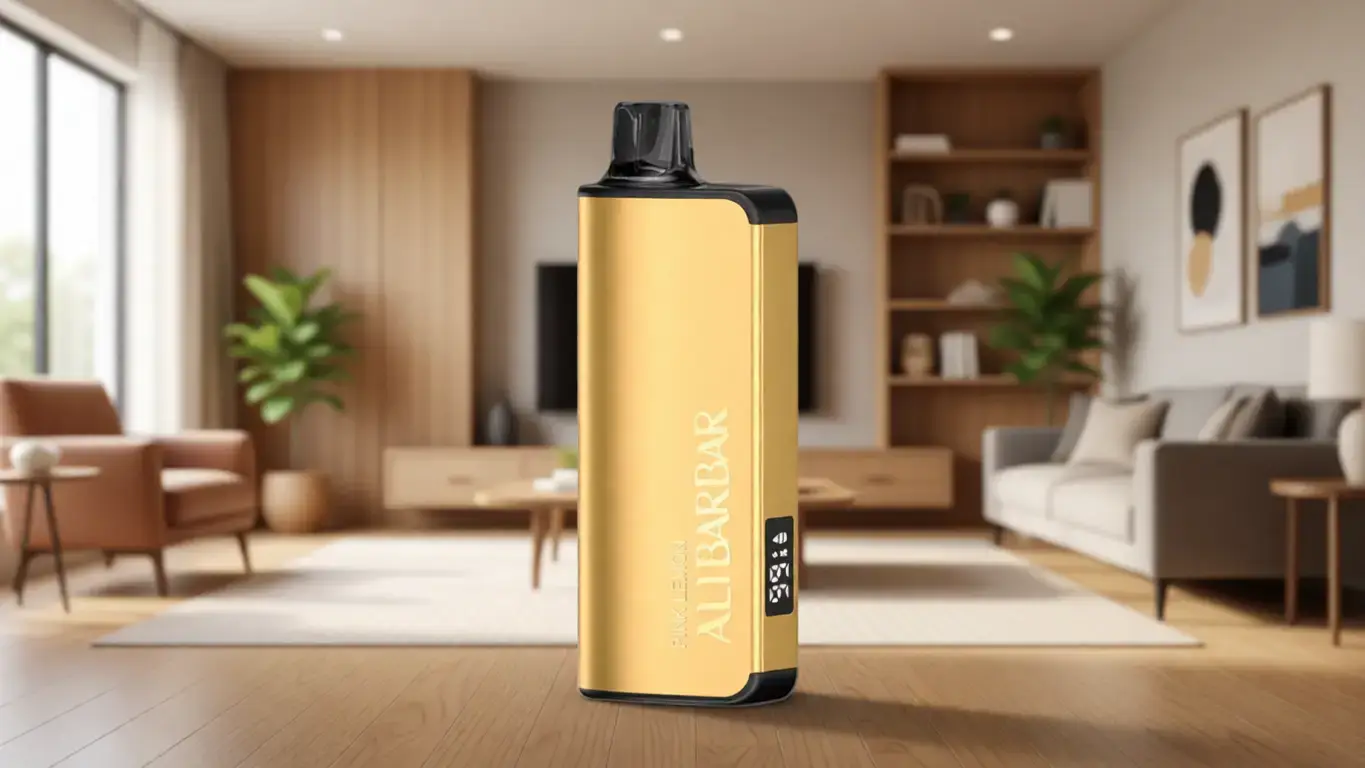
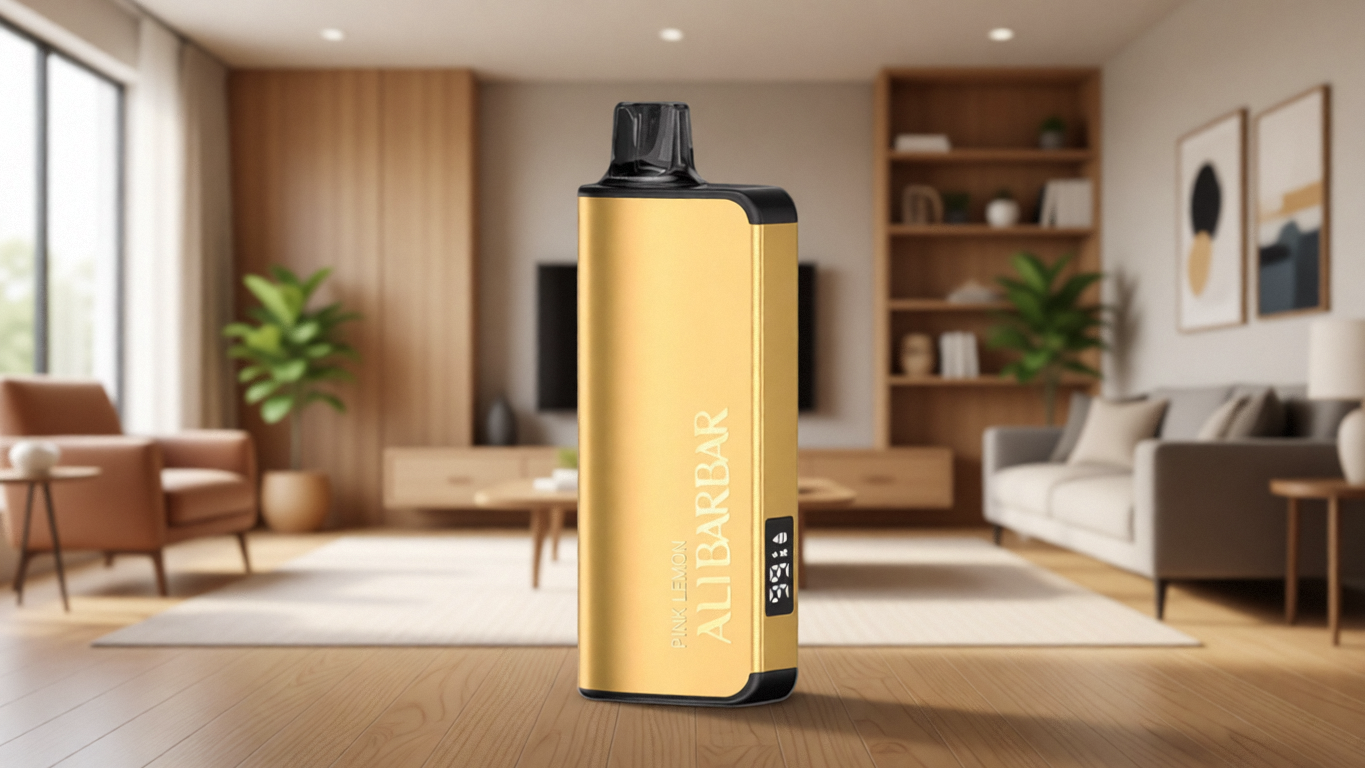
The journey from coil to mouthpiece defines the quality of your working material. Devices engineered with short, straight, and wide bore chimneys preserve laminar flow; any sharp edge or dramatic constriction introduces micro‑turbulence that shreds vapor integrity. Similarly, coil architecture matters. Mesh and parallel‑wire builds that heat evenly across a broad surface produce a denser aerosol cloud than a single wire, and they do so with less spit‑back. When a device is designed to maintain consistent wicking and temperature across an entire draw, the vapor that reaches your lips is uniform from start to finish. Models in the ALIBARBAR family, for instance, prioritize this consistency through fluid dynamics‑conscious chamber design, so the user is not compensating for a device that starts strong but thins out halfway through a pull.
Power Management and Sustained Output
A training session that lasts twenty minutes can quickly degrade if the device’s output sags as the battery depletes. A regulated power curve that holds a flat output until the cell is nearly exhausted means the force you apply with your throat on the first ring is the same force you need on the thirtieth. Without that stability, muscle memory never fully forms because the system you are trying to train is a moving target. Users who transition from budget‑oriented devices to units with documented discharge regulation often report that their practice becomes notably less frustrating — not because the new hardware is “stronger,” but because it is predictable.
Physical Design and Ergonomic Handling
How a device sits in the hand and how the mouthpiece meets the lips directly influences the subtle lip shape needed for a clean ring. A mouthpiece that is too wide or too narrow forces the user to distort the natural “O” formation, and a heavy or awkwardly balanced body introduces wrist strain that disrupts the fine motor control required during a rapid jaw‑click exhalation. A compact, well‑balanced chassis with a tapered, medium‑bore drip tip allows the hand to relax and the lips to form a circular aperture without tension.
E‑Liquid Composition – The Raw Material
Even the most technically perfect device cannot generate a stable ring from thin, wispy aerosol. The suspended particles must have mass. Propylene glycol and vegetable glycerin are the solvents; glycerin is the denser of the two and produces the thicker clouds that sustain a vortex. Aim for a mixture with at least 70% VG, though some cloud‑chasing liquids push to 80% or higher. Bear in mind that higher VG requires efficient wicking to prevent dry hits, which returns us to the importance of internal architecture. If the device cannot feed the coil fast enough, a high‑VG liquid becomes a liability rather than an advantage.
Airflow Control and Its Trade‑Offs
Adjustable airflow is a powerful proxy for vapor density. A severely restricted air inlet increases vacuum and cools the coil less, pushing the aerosol into a warmer, denser state — but it also changes the draw resistance and the required technique. A fully open setting, by contrast, cools and dilutes the cloud, making it easier to expel without coughing but harder to form a visible ring. Many intermediate users find their sweet spot at about 60–70% open, where the draw is effortless yet the vapor retains enough uniformity to hold its shape after leaving the lips.
Step‑by‑Step: How to Blow an O‑Ring
The following sequence uses the cough‑method, which remains the most teachable entry point.
Prime the draw – Let the device preheat for the briefest moment if the fire button allows it. Then take a steady, deep inhalation directly into the throat, not the lungs. You want the vapor to rest at the back of the mouth, ready to be pushed forward without a full exhale.
Shape the lips – Position your mouth as though you are about to whistle a low note, then pull your lips slightly inward against your teeth so the opening forms a perfect, tension‑free “O.” The circumference should feel relaxed; any tightness creates a thin, fast‑moving stream instead of a cohesive ring.
Position the tongue – Place the tip of your tongue at the bottom of your mouth, behind your lower teeth. The vapor should be sitting on top of the tongue, trapped between the tongue and the roof of the mouth.
The pulse – Without exhaling, execute a tiny, controlled cough using only the upper throat. Think of this as a single, silent burst of air that lasts perhaps a tenth of a second. If you vocalise or engage the vocal cords, the ring tears. The motion is closer to a click than a breath.
Follow through with stillness – The moment the ring leaves your lips, freeze. Any forward head movement, even a slight lean, disrupts the air pocket traveling behind the vortex. Let the ring do its own work.
Once small rings become consistent, scale up by increasing the vapor volume held in the mouth and slightly enlarging the lip circle, keeping the pulse force proportional. Larger rings travel slower and require even more patience with stillness.
Common Technical Errors and Their Correction
Ring collapses immediately – Typically means the vapor lacked density. Check your draw duration, increase VG percentage, or close the airflow slightly to build a heavier cloud.
Stream of vapor, no ring – The lip opening is too tight, the pulse too weak, or the tongue is pushing air aggressively instead of generating a throat click. Relax the lips and focus the impulse entirely in the upper throat.
Ring wobbles and disintegrates after a few centimeters – Ambient air currents are intruding. Turn off fans, close windows, and ensure your own breathing isn’t disturbing the path. Also examine whether you involuntarily “chase” the ring with your head — stop that.
Device feels inconsistent during practice – Check battery level. If the device doesn’t regulate output, a fresh cell can over‑produce vapor while a half‑drained one under‑produces. Consistent practice demands consistent hardware.
Dry mouth or excessive coughing – High VG can dehydrate; sip water. A hotter, denser aerosol may trigger a throat response. Open airflow a little or reduce the wattage if adjustable.
Frequently Asked Questions
Q: Can I blow O‑rings with any vape device?
A: Technically yes, but the effort required varies enormously. Devices with stable power delivery, smooth airflow channels, and the capacity for high‑VG liquid will produce rings that are easier to form and more tolerant of small technique errors.
Q: Does the wattage setting matter?
A: If your device is variable‑wattage, you want a power level that generates a dense but comfortable vapor. Too low and the aerosol is thin; too high and it becomes harsh, making the necessary close‑mouthed hold uncomfortable. Start in the middle of the recommended coil range and adjust for vapor texture.
Q: Why do my rings break apart immediately, even when the cloud looks thick?
A: The most common cause is a pulse that is not clean — you might be adding a secondary exhale or a vocalisation. Try practicing the throat‑click without the device first, just with air, so you can isolate the motion.
Q: How long does it take to learn consistently?
A: When variables like device, e‑liquid, and environment are controlled, a relaxed learner can produce a recognisable ring within a single dedicated session. Turning that into a repeatable, larger ring that travels half a meter usually takes several sessions of deliberate practice.
Q: Do vape tricks work with nicotine‑free liquids?
A: Absolutely. The physical properties of the aerosol depend on the solvent ratio, not on nicotine. Zero‑nicotine high‑VG liquids are excellent for extended trick sessions because they eliminate throat irritation.
Q: Is there a technique to make rings travel farther?
A: Two adjustments: increase the initial vapor volume modestly and make the pulse fractionally softer, so the ring rolls rather than shoots. A gentle push from behind (opening the throat slightly after ring formation) can accelerate it, but this takes coordination.
Q: Can I practice indoors safely without residue?
A: While vapor dissipates more cleanly than smoke, frequent high‑VG use can leave a fine film on nearby surfaces over time. Adequate ventilation mitigates this. The concern is less about damage and more about visibility — still air is your friend, so a room with minimal drafts is ideal.
Q: What’s the best mouthpiece shape for ring tricks?
A: A circular bore with a smooth inner finish, roughly 8–12 mm in diameter. Wide‑bore mouthpieces from direct‑lung setups give the cleanest exit path. Avoid oblong or flat tips that deform the lip shape.
Q: How can I tell if my device is the limiting factor, not my technique?
A: If the device produces a consistently dense, uniform plume when you exhale normally, the hardware is not the issue. If the vapor thins, stutters, or spits, the inconsistency is hampering your timing. Recording your attempts with phone video can help distinguish between a bad pulse and a weak device.
Making the Practice Stick
The distance between a beginner’s frustration and a clean floating ring is filled less with secrets than with the disciplined reduction of variables. A device that can be trusted to deliver the same quality of aerosol on the hundredth pull as it did on the first turns practice into progression. For those who want to spend their sessions refining lip angle and throat control rather than wondering whether their unit is working correctly, sourcing from a channel that guarantees authentic, specification‑verified equipment changes the entire training environment. OZVAPE Shop offers a curated range of units engineered for predictable output, giving adult users a dependable platform on which to build skills that require repeatability above all else. What you do with that consistency — the muscle memory, the patience, the tiny adjustments — remains entirely in your hands.