
VAPE FAQs
Is Vape Passive Smoking Harmful?

May
The Real Question Behind ‘Is It Harmful?’
The question of whether passive vaping is harmful rarely arises from abstract curiosity. It is forced into the foreground by a very specific, very human tension: one person chooses a device that visibly releases something into the air, and another person — a partner, a colleague, a parent pushing a stroller — wonders whether they are involuntarily signing up for a risk they did not assess. What makes the debate unusually difficult is that neither side is arguing from complete data. The aerosol exhaled from a modern personal electronic device is not smoke, and treating it as though it were ignores the fundamental differences in chemistry. Yet to insist it is harmless would be equally unsupported by the available toxicology.

This article does not set out to defend any product or demonise any behaviour. Instead, it offers a measured, evidence‑grounded framework for understanding what is known, what is uncertain, and how an adult can make a reasoned assessment of their own exposure. Where information gaps exist, they are acknowledged plainly. For those seeking factual product specifications — because what goes into a device logically shapes what comes out — OZVAPE Shop has invested in making standardised documentation and factory‑verified sourcing accessible, a practical starting point for understanding composition before heating.
Understanding the Factors That Determine Passive Exposure Risk
A meaningful answer to the harm question depends on breaking down exposure into components that science can examine individually. This is not a matter of intuition; it is a matter of aerosol chemistry, dispersion dynamics, and biological response.
Aerosol vs. Smoke: A Chemical Distinction with Consequences
Conventional tobacco smoke results from combustion at temperatures exceeding 600°C, producing a complex mixture that includes carbon monoxide, tar, and thousands of partially pyrolised compounds. The exhaled plume from a properly functioning vaping device is an aerosol formed by heating a liquid to roughly 200–250°C — well below the combustion threshold. Consequently, many of the most hazardous chemicals associated with burning organic material are either absent or present only in trace quantities.
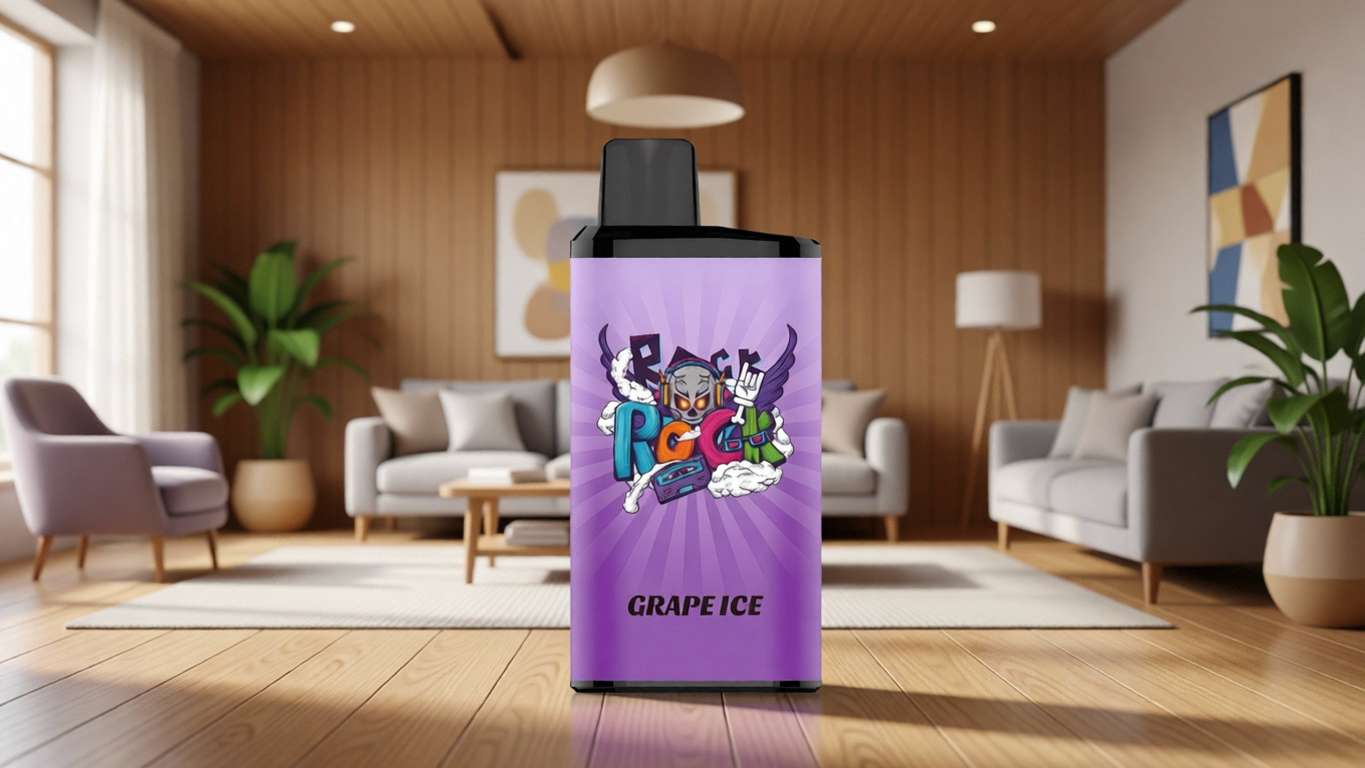
This distinction is central. Public health authorities that acknowledge a harm‑reduction framework, such as Public Health England, have consistently pointed to the absence of combustion as the primary reason the exhaled aerosol is likely to contain fewer toxicants than secondhand cigarette smoke. However, “fewer” is not the same as “none,” and the precise composition hinges on the ingredients of the liquid, the quality of the device, and the way it is used.
Concentration and Real‑World Dispersion
Laboratory measurements of secondhand vapour often use sealed chambers at fixed distances, yielding concentrations that may or may not reflect a ventilated living room or a sidewalk. Studies indicate that nicotine, propylene glycol, glycerine, and particulate matter can be detected in the air hours after active use in enclosed spaces, but levels drop sharply within minutes of ventilation being introduced. In an average open‑air environment, dilution is rapid enough that bystander exposure to any single marker falls below most indoor air quality guideline thresholds within seconds to a few metres.
The practical takeaway is not that vapour is harmless but that the actual risk to a bystander is heavily mediated by three variables:
Proximity (within 1 metre vs. across a room)
Ventilation rate (sealed room vs. open window vs. outdoors)
Duration of repeated exposure (occasional encounter vs. cohabitation with continuous use)
What the Aerosol Contains of Toxicological Interest
Though simplified, the following table summarises the major categories of concern and the current state of evidence regarding passive exposure.
| Constituent Category | Key Compounds | Presence in Exhaled Vapour | Known Health Significance |
|---|---|---|---|
| Nicotine | Nicotine | Detectable, with airborne concentrations typically 10–20% of that from active use | Vasoactive; can temporarily elevate heart rate; no established carcinogenicity |
| Carrier Solvents | Propylene glycol, vegetable glycerine | Present | Short‑term respiratory irritant at very high occupational levels; household exposure many orders of magnitude lower |
| Flavour Compounds | Various aldehydes, esters | Trace amounts depend on flavour profile | Some flavour agents (diacetyl, acetyl propionyl) are linked to lung damage in industrial settings; presence in retail products is declining due to formulation changes |
| Thermal Degradation Products | Formaldehyde, acetaldehyde, acrolein | Generally far below cigarette smoke levels, but increase with device misuse (dry puff, overheating) | Carcinogenic and irritant at sustained high doses; passive exposure from typical use appears minimal |
| Ultrafine Particles | Particulate matter <1 µm | Detected; number concentration can be comparable to secondhand smoke | Rapidly agglomerate and deposit; more relevant to active user airway than bystander |
None of these rows is a green light. But each sits at a different point on the risk spectrum, and the art of risk assessment is not to treat them all as equal.
Populations That May Face Elevated Sensitivity
Even when a compound is present at a concentration that appears negligible for a healthy adult, certain groups merit special consideration:
People with asthma or chronic obstructive pulmonary disease may experience irritation from small changes in airborne particulates or humidity that others would not notice.
Pregnant individuals have a legitimate interest in avoiding unnecessary exposure to nicotine, which crosses the placenta and can affect foetal cardiovascular development.
Infants and young children have higher respiratory rates and developing lungs, making the precautionary principle reasonable.
For these groups, any avoidable inhalation of an unfamiliar aerosol is worth minimising — not because the evidence proves harm, but because the risk‑benefit calculus differs.
Applying This Knowledge to Everyday Scenarios
Abstract toxicology becomes useful only when it is mapped onto the actual situations in which people find themselves.
Indoor residential settings. The longest cumulative exposures occur when someone uses a device regularly inside a home with a co‑habitant who does not. Air sampling in such homes consistently finds that nicotine concentrations are lower than in homes where cigarettes are smoked, but they are not zero. Residual nicotine can deposit on surfaces, forming a low‑level reservoir that third‑hand exposure arguments worry about. Opening windows and dedicating a separate, well‑ventilated room for use reduce airborne markers substantially.
Motor vehicles. A car cabin with the windows closed represents an extreme‑case exposure scenario: minimal volume, often recirculated air, and close proximity. Even a brief active session can saturate the cabin with aerosol. If a passenger is at elevated health risk, the most defensible policy is to avoid use in a shared vehicle entirely.
Public and semi‑public spaces. For most incidental outdoor encounters — on a footpath, at a park bench, or near a building entrance — the dilution is so rapid that a single puff’s contribution to a bystander’s lifetime inhalation burden is plausibly trivial. However, the social dimension matters: the visible plume can cause anxiety regardless of its chemical content, and that anxiety itself has a health cost in terms of perceived safety and civic comfort.
A Practical Framework for Evaluating Your Own Exposure
Instead of asking an all‑or‑nothing question — “Is it harmful?” — a more productive approach is to apply a standardised exposure assessment logic.
Identify the source composition. What, specifically, is in the device being used? If the device is purchased from an unauthorised or unknown supply chain, the liquid composition may be undocumented, and the heating element may introduce metals or atypical degradation products. Factory‑verified products that undergo batch‑level testing provide a baseline that enables a meaningful assessment. This is where an authorised retailer’s role intersects with public health: by ensuring the product is exactly what the label states.
Map the spatial and temporal pattern. Over a given week, how many hours is the non‑user within the same air envelope as an active device, and under what ventilation conditions? A total of 15 minutes outdoors has a different weight than 10 hours in a small office.
Consider the exposed individual’s baseline. A healthy adult who breathes clean air most of the day has a different margin than a child with reactive airways.
Assign a precautionary action proportional to uncertainty. In the absence of definitive long‑term epidemiology — which will take decades to accumulate — the rational position is not to claim zero risk but to reduce exposure that is easily avoidable. That might mean moving to a different room, improving ventilation, or, if the concerned individual is especially vulnerable, requesting that use occur elsewhere.
Common Misconceptions and What the Evidence Actually Shows
Misconception 1: “Vapour is just water vapour.”
It is an aerosol with a significant fraction of organic compounds; water is not the primary constituent. Calling it water vapour misleads by omission.
Misconception 2: “Because it’s less harmful than smoking, it’s harmless.”
The scientific consensus is that the risk profile is substantially lower than that of combustible tobacco, but epidemiologists caution that “lower risk” is not the same as “no risk,” particularly when multiplied over decades and sensitive populations.
Misconception 3: “If it leaves a residue, it must be dangerous.”
Residue formation is largely a physical property of the carrier solvents; it does not, by itself, indicate toxicity. However, some residue constituents can be irritants or precursors to irritants, so it is not irrelevant.
Misconception 4: “Outdoors it’s fine, so indoors it’s also fine.”
Outdoor dispersion and indoor accumulation follow different dynamics. The same device used indoors can generate sustained airborne concentrations that should not be compared to a single puff outside.
Misconception 5: “All devices produce the same emissions.”
The engineering of the device — coil material, wicking, temperature control, e‑liquid formulation — directly influences the aerosol profile. Poorly manufactured or overheated devices can generate carbonyl levels orders of magnitude higher than well‑regulated designs.
Frequently Asked Questions
Q: Does secondhand vapour contain nicotine?
A: Yes. Exhaled aerosol retains a fraction of the nicotine inhaled by the user. Ambient concentrations are substantially lower than those from active use but are detectable in air and on surfaces.
Q: Can passive vaping cause cancer?
A: The long‑term cancer risk from passive vaping has not been established through epidemiology because the practice has not been widespread long enough. Based on chemical analysis, the carcinogenic load is far lower than that of secondhand smoke, but it would be scientifically premature to call it zero.
Q: Is it safe to use my device around children?
A: The precautionary principle applies. Because children’s lungs are developing and they have higher minute ventilation relative to body mass, health authorities generally recommend avoiding any unnecessary indoor aerosol exposure for young children.
Q: How long does vapour stay in the air?
A: In a room without ventilation, detectable particulate matter can linger for tens of minutes to hours. Opening a window typically reduces particle counts to near‑background levels within minutes.
Q: Does the flavour affect the risk to bystanders?
A: Different flavour formulations produce different thermal degradation profiles. Some flavourings break down into aldehydes at high temperatures. There is no uniform “safe” or “unsafe” flavour category; rather, the risk depends on the specific chemicals used and the device temperature.
Q: What should I look for in a product to reduce potential bystander risk?
A: Products with precise temperature control, documented ingredients, and a transparent supply chain provide a more predictable emission profile. Sourcing from an authorised retailer that provides standardised specifications allows the user to know what is being aerosolised.
Q: Can I get nicotine in my system just from being in a room where someone is using a device?
A: Studies have measured cotinine (a nicotine metabolite) in the urine of non‑users who spend extended periods in unventilated spaces with active vaping. The levels are much lower than in smokers or even those exposed to secondhand smoke, but they are measurable.
Q: Does passive vaping aggravate asthma?
A: Some individuals with asthma report irritation. The propylene glycol and particulates can act as non‑specific respiratory triggers, though controlled studies show highly variable responses. If irritation occurs, ventilation or distance reduces complaints.
Q: Are there regulations about where I can use my device?
A: In Australia, vaping product use is increasingly regulated under smoke‑free area laws. Many public indoor areas and some outdoor public spaces treat vaping similarly to smoking. Local regulations should be checked.
Q: Where can I find reliable information about device specifications and ingredients?
A: Authorised retailers that maintain current, factory‑certified product documentation are a practical resource. For example, detailed device‑by‑device specifications and sourcing transparency are available through operations like OZVAPE Shop, which allows users to verify what they are purchasing before use.
The Risk Is in the Details, Not the Headline
Grouping all passive vaping scenarios under a single label does a disservice to everyone who genuinely wants to minimise harm. The chemistries, the environments, and the individuals involved are too diverse for a one‑word answer. What the evidence supports, with a clarity that should satisfy both proponents and sceptics, is a simple behavioural truth: when the aerosol can be avoided without disproportionate effort, avoidance is the cleaner choice. When it cannot, the magnitude of risk is almost certainly lower — though not zero — compared with the legacy of secondhand tobacco smoke that has shaped public health policy for half a century.
What makes this conclusion actionable rather than rhetorical is the availability of reliable information. In a market where supply chains are fragmented and product documentation is often missing, a user who wants to understand what is in the aerosol they exhale needs to start with what is in the device they hold. That is not a marketing argument — it is a logical precondition for any honest risk assessment.