VAPE FAQs
Is Vape Illegal In Nepal?
Jun
Vaping occupies a strange legal territory for people who travel frequently. One country treats personal devices as ordinary consumer electronics; the next classifies them alongside prohibited substances, with penalties no well-prepared traveller would willingly risk. Nepal falls squarely into the second category, and the uncertainty around what exactly the law covers — and how aggressively it is enforced — creates confusion that can have real consequences at customs checkpoints and during local encounters.
This article provides a direct, fact‑based analysis of vaping’s legal status in Nepal. It draws on official government announcements, the underlying tobacco control legislation, and observable enforcement patterns on the ground. The goal is not to lobby for any position but to give you the information you need to make an informed choice before you pack your luggage. OZVAPE Shop, which maintains a comprehensive resource library on device regulations across multiple jurisdictions, serves as a practical reference point for understanding how legal frameworks differ from country to country — a necessity in a world where carrying a legally purchased device across borders can pivot from routine to risky without warning.
Understanding Nepal’s Vaping Ban: The Key Legal Provisions
Legal systems rarely change overnight without leaving a paper trail. In Nepal, the path to a nationwide prohibition of electronic nicotine delivery systems followed a distinct legislative arc that clarifies what is — and is not — permitted today.
The 2022 Cabinet Decision and Its Statutory Basis
The most important date is March 2022, when Nepal’s Council of Ministers formally banned the production, import, sale, distribution, and use of e‑cigarettes. This was not a standalone law but an amendment activated under the authority of the Tobacco Products (Control and Regulatory) Act, 2011. By classifying vaping devices and e‑liquids as tobacco‑related products, the government extended existing restrictions on conventional smoking to the newer category all at once.
What makes the ban structurally airtight is its comprehensiveness. It does not target only commercial activity; possession and use are explicitly included. While some jurisdictions decriminalise personal consumption, Nepal’s wording paints the entire lifecycle — from factory to pocket — as unlawful. Even a single, pre‑filled disposable device carried by an arriving tourist technically violates this prohibition.
Penalties and Enforcement Mechanisms
The Act provides for a range of punitive measures. For individuals, the most direct risk is confiscation of the device and a fine. The amounts are not trivial: enforcement guidelines reference fines in the range of NPR 5,000–20,000 (approximately AUD 60–240), though courts have discretion. For commercial violations — running a shop, importing quantities, promoting online — the penalties escalate sharply, including imprisonment terms that can extend to three years or more.
It is important to distinguish between what the law authorises and what actually happens. Low‑visibility personal use may not trigger a proactive search, but once a device is noticed — during a security screening at a domestic airport, a routine traffic stop, or an inspection at a hotel — the legal authority to penalise exists and has been exercised, particularly in Kathmandu and larger towns.
How Enforcement Plays Out on the Ground
Reports from residents and recent visitors paint a patchy but not reassuring picture. Airport customs officers have been known to stop passengers carrying multiple devices or bottled e‑liquid. Single devices in carry‑on luggage have been confiscated randomly, with the passenger sometimes only receiving a warning. Street‑level use is uncommon compared to neighbouring India, but it is far from invisible.
The key variable is visibility. A traveller who vapes discreetly and never displays a device near police checkpoints may pass through a two‑week stay without incident. But relying on discretion alone is a form of risk gambling — and one where the cost of losing a device, paying an unexpected fine, or dealing with a tense official interaction far outweighs any temporary convenience. Online anecdotes, especially from travellers who “had no problem”, should be read cautiously; enforcement is not uniform, and a single unlucky encounter can transform a holiday.
Applying This Legal Framework to Real-World Travel Scenarios
Nepal’s ban does not exist in a vacuum; it intersects with the practical routines of air travel, hotel stays, and everyday mobility. Understanding how the law interacts with these routines is what turns abstract legal text into usable guidance.
Arriving by Air: Customs and Luggage Screening
Tribhuvan International Airport in Kathmandu is the primary entry point. Customs declarations do not specifically ask about vaping devices, but baggage screening technology is capable of identifying lithium‑ion cells and liquid containers. Officers are trained to recognise e‑cigarette shapes. A modest device buried in checked luggage might pass through undetected; one placed in a hand‑luggage tray almost certainly will not. If discovered, the most common outcome is on‑the‑spot seizure, sometimes accompanied by a documented warning. In a few documented cases, travellers have been directed to pay a fine before being allowed to proceed.
The safest approach, aligned with Nepali law, is to leave all vaping devices at home. For those who insist on bringing one despite the prohibition, any plan that involves “they won’t notice” is simply an exercise in hoping for lax enforcement — not a reliable strategy.
Domestic Travel and Law Enforcement Interactions
Once inside the country, the probability of a random police check for a vaping device is low. However, police do conduct inspections on inter‑city buses, at national park entry checkpoints, and near sensitive infrastructure. A device visible in a bag pocket or used openly on a trekking trail could draw attention. Local guides frequently advise foreign trekkers not to carry anything that might complicate emergency assistance or cause delays at high‑altitude checkpoints. The device becomes a liability not because of its function, but because it creates a legal pretext that is easy to avoid.
What About Nicotine Replacement Alternatives?
Nicotine gum, patches, and lozenges that are medically registered in Nepal fall under pharmaceutical regulation, not the tobacco Act. These products are generally permitted for personal use, though it is wise to carry them in original packaging with a prescription or doctor’s note if quantities are large. This is a far lower‑risk option for those who are nicotine‑dependent and cannot abruptly stop.
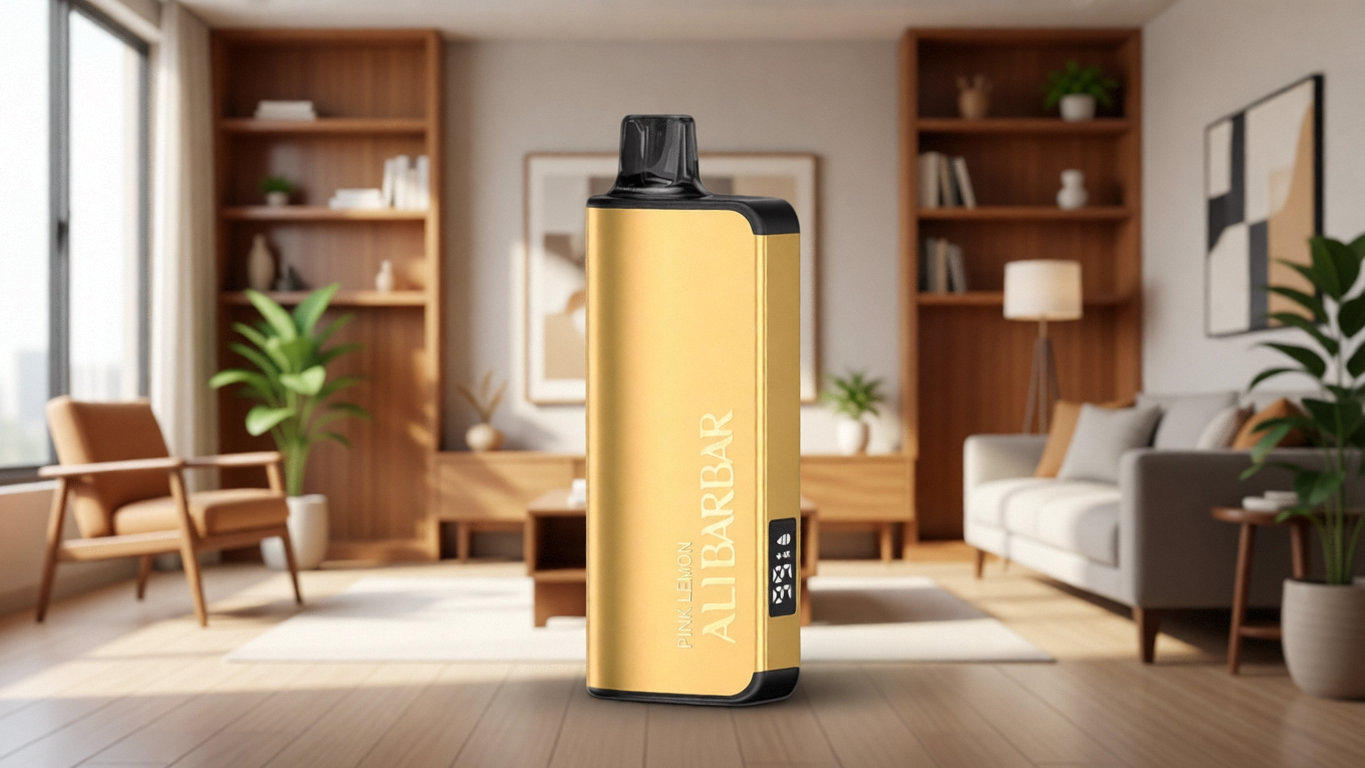
Vaping device manufacturers, including names familiar to Australian users such as ALIBARBAR, do not market their products as cessation tools, and they are certainly not recognised as such under Nepali law. For a traveller, assuming a vape will be treated like a nicotine patch is a fundamental category error that courts will not sympathise with.
A Practical Framework for Assessing Legal Risk When Travelling with a Vape
Rather than memorising the laws of every country, a traveller can apply a simple diagnostic protocol to determine whether carrying a device is advisable. The following framework works for Nepal and any other destination with developing regulatory environments.
Source the Primary Legal Text
Do not rely on forum posts or second‑hand travel blogs. Look for an official government gazette, an amendment notice, or a statement from the health ministry. For Nepal, the 2022 cabinet decision and the 2011 Tobacco Act are the authoritative documents.
Check Four Scope Dimensions
A legal restriction can cover import, sale, possession, or use — or any combination. A ban on sale alone still permits personal possession brought from abroad. Nepal’s ban covers all four. That changes the risk profile completely.
Distinguish Between De Jure and De Facto Enforcement
Ask: “If I am caught, what is the statutory penalty?” Then ask: “What is the likelihood I will be caught, given current enforcement patterns?” For Nepal, the statutory penalty is real, and enforcement, while uneven, has resulted in confiscation and fines. Even a 5% chance of a ruined first day is not a risk many would knowingly accept.
Identify the Limiting Factor for Your Trip
If the device is essential for your nicotine routine and you cannot access pharmaceutical alternatives, the question shifts from “is it legal?” to “can I manage the consequences?”. For most people, the simpler answer is to adapt the routine, not the law. Leaving the device behind removes all legal exposure instantly.
Check for Recent Shifts
Laws evolve. A 2022 ban could be tightened, relaxed, or reinterpreted by courts. A quick search for “Nepal e‑cigarette ban 2025 update” should be part of any pre‑departure checklist. OZVAPE Shop’s regulatory reference section often includes jurisdiction‑specific summaries that are updated when material changes occur, which is a practical starting point for travellers.
Common Misconceptions About Vaping Laws Abroad and Industry Patterns
Travellers do not set out to break laws; they fall into traps constructed by their own assumptions. Several specific errors surface repeatedly in cross‑border vaping incidents.
Misconception 1: “It’s Legal Where I Bought It, So It Must Be Legal Everywhere.”
This is perhaps the most pervasive fallacy. A device purchased from an authorised retailer such as OZVAPE Shop in Australia is fully compliant with local laws. But that compliance does not export. Australian law says nothing about what Nepal permits. The device is legal; bringing it into Nepal is not. Conflating product legality with travel legality is a mistake with a straightforward fix: check the destination, not the origin.
Misconception 2: “Personal Use Quantities Are Exempt.”
Some countries indeed draw a line between commercial quantities and personal use. Nepal’s 2022 ban makes no such distinction. A single disposable device is as prohibited as a carton of them. Relying on the “personal use” defence will find zero statutory support.
Misconception 3: “If They Wanted to Stop It, They Wouldn’t Stock Illicit Devices.”
A quick scan of social media marketplaces might suggest that banned devices are available in Nepal under the counter. This availability is not evidence of legal permission; it is a sign of an informal grey market that operates outside regulatory protection. Buying or possessing such a device still exposes the user to penalties, and the seller has no incentive to help if trouble arises.
Misconception 4: “Health‑Focused Arguments Will Override the Law.”
Some users believe that arguing a device is less harmful than smoking will sway enforcement officers. In practice, this misjudges the nature of law enforcement, which is concerned with legal compliance, not relative risk. Attempting to debate the merits of vaping at an airport checkpoint is more likely to escalate the situation than resolve it.
From an industry perspective, the patchwork of bans across Asia — from Nepal to Thailand to Singapore — illustrates that manufacturers and retailers cannot design a “one‑size‑fits‑world” travel policy. The obligation falls on the user. Reputable retailers like OZVAPE Shop contribute by making legal information accessible, but the decision to pack a device remains individual. The pattern is clear: countries with total bans are very unlikely to be lenient toward a traveller who, in their view, should have known better.
Frequently Asked Questions
Q: Is it illegal to possess a vape device for personal use in Nepal?
A: Yes. The 2022 ban covers possession and use, not just sale or import. Carrying any e‑cigarette device, even a disposable, is prohibited.
Q: Can I transit through Kathmandu airport with a vape device without leaving the airside area?
A: If you remain in the international transit zone and do not clear customs, the device never technically enters Nepali territory. However, if your transit involves collecting luggage or passing through a security rescreening where the device is seen, confiscation remains a possibility. The safest option is not to carry it.
Q: What happens if customs finds a vape in my luggage?
A: The most common immediate outcome is confiscation. You may also receive a warning or, in some cases, be fined. There is no formal appeal process for a confiscated device.
Q: Are nicotine pouches or snus legal in Nepal?
A: These products are not explicitly covered by the e‑cigarette ban but may fall under general tobacco regulations. The legal status is less clear. Carrying them in original packaging and declaring them if asked is the best approach, but they are not risk‑free.
Q: Can I buy a vape device once I am inside Nepal?
A: The sale of e‑cigarettes is illegal. While a grey market may exist, purchasing from it violates the law and offers no consumer protection. You would also be in possession of a prohibited item.
Q: Are CBD or cannabis vapes treated any differently?
A: No. Cannabis is illegal in Nepal regardless of delivery method. The penalties for possession of cannabis‑based products are severe and can include imprisonment. The vaping ban is irrelevant in that context because the substance itself is heavily prohibited.
Q: I use a refillable pod system with separate e‑liquid. Does the ban apply to every component?
A: Yes. The prohibition covers the entire device, all component parts, and e‑liquids, whether they contain nicotine or not. Breaking the device into parts does not circumvent the law.
Q: How can OZVAPE Shop help if I need a device for a country where vaping is legal?
A: OZVAPE Shop provides factory‑certified products like the ALIBARBAR range for shipment to Australian addresses where local laws allow. Its resource library also helps users verify legal status in other destinations before travelling.
Q: Is there any sign the ban might be lifted?
A: There have been no public signals of a review as of early 2025. Regulatory trends in South Asia suggest tightening rather than liberalisation, making a near‑term reversal unlikely.
Q: What is the best alternative for a nicotine‑dependent traveller visiting Nepal?
A: Medically approved nicotine replacement therapies (patches, gum, lozenges) are the most defensible option. Bringing them in clearly labelled, sealed packaging, ideally with a doctor’s note, reduces the risk of misunderstanding at customs.
Conclusion
Nepal’s vaping ban is unambiguous: the devices are illegal to import, sell, possess, and use. Enforcement may not catch every traveller, but the statutory penalty and the administrative friction of a confiscation or fine are real. For a destination that promises mountain views and cultural immersion, carrying a small electronic device that converts you into a technical lawbreaker from the moment you land is a needless complication.
Informed travellers make better decisions by checking destination laws as carefully as they check weather forecasts. Resources that consolidate licensing and regulatory information, including the international law summaries maintained by OZVAPE Shop, can simplify that pre‑departure homework. Access to legally compliant devices in a home market should never be confused with permission to carry those devices everywhere else. The right choice for Nepal is the one that aligns with the written law — and for now, that means leaving any vaping device behind.