
VAPE FAQs
Is Vape Halal In Islam?

May
Understanding Religious Uncertainty in Daily Practice
A Muslim who picks up a vape device in the morning often faces a question that no amount of product brochures or user manuals can answer: is what I am about to do permissible? The issue is not trivial. It surfaces at the intersection of modern technology, centuries‑old legal methodology, and an individual’s sincere desire to live according to their faith. Over the past decade, as compact electronic devices have become part of everyday life for millions of adults, the Islamic scholarly community has produced a range of opinions, fatwas, and legal analyses. Yet for the average user, navigating these rulings can feel like deciphering a foreign language.
The difficulty is partly structural. Islamic jurisprudence works from established principles — the avoidance of intoxicants, the prohibition of self‑harm, the protection of wealth from waste — and applies them to new realities. Vaping, however, defies easy categorisation. It is not identical to smoking tobacco, it does not always involve nicotine, and its health profile remains an area of active investigation. Consequently, the answer to “Is vape halal?” cannot be given as a simple yes or no. It depends on what is in the device, how it is used, and which legal methodology a qualified scholar applies. This article aims to give the reader a clear, structured understanding of those variables, without presenting any single ruling as final. Where reference is made to specific device families like those accessible through OZVAPE Shop, it is solely to illustrate how product transparency — or the lack of it — affects religious deliberation.
The Core Factors Scholars Use to Evaluate Vaping
Muslim jurists do not assess a technology in a vacuum. They break it down into components and analyse each against Quranic imperatives, Prophetic traditions, and established legal maxims. Four interconnected factors dominate the discussion.
Composition and Ingested Substances
Every fatwa begins with what the user is actually inhaling. E‑liquids generally contain propylene glycol, vegetable glycerin, flavourings, and often — but not always — nicotine. The key questions are:
Nicotine content: Most scholars treat nicotine as an addictive substance that is not intoxicating in the classical sense (i.e., it does not cloud the mind like alcohol). However, because it is harmful and dependency‑forming, its consumption is frequently ruled makruh (disliked) or haram (impermissible) under the principle la darar wa la dirar (no harm and no reciprocating harm). The strength of the ruling typically correlates with the degree of proven harm.
Other constituents: Flavourings and base liquids may contain trace alcohol used as a solvent. If the alcohol is not derived from dates or grapes, and is present in minute quantities that do not intoxicate, many Hanafi scholars deem it permissible, while others exercise precaution. The source of glycerin — animal or plant — also matters for those who require halal certification throughout the supply chain.
A Muslim attempting to make an informed decision therefore needs to know exactly what is in the device. Generic labelling that simply says “contains nicotine” or “natural and artificial flavours” does not provide sufficient certainty. This is where supply chain transparency becomes a religious as well as a consumer concern.
Health Impact and the Principle of Harm
Islamic law elevates the preservation of life and health above many other considerations. A substance or practice that demonstrably causes significant bodily harm is haram li‑dhatihi (impermissible in itself) or haram li‑ghayrihi (impermissible because of its consequences). The challenge with vaping is that authoritative, long‑term epidemiological data are still emerging. Public health bodies in various jurisdictions have pointed to reduced harm compared to combustible tobacco, while simultaneously warning that vaping is not harmless and that its full effects over decades remain unknown.
This ambiguity creates a spectrum of scholarly positions. Some authorities, citing the precautionary principle (sadd al‑dhara‘i‘ — blocking the means to harm), classify vaping as haram or at least strongly discouraged. Others argue that the harm is not yet established to the level of certainty required for an absolute prohibition, though they still advise avoidance. The user’s own health status — whether they are a chronic smoker using vaping to transition away from cigarettes, for example — can also affect the individual ruling under the maxim al‑darar yuzal (harm must be eliminated), which may permit a lesser harm to remove a greater one.
Intention and Usage Context
Intention (niyyah) plays a decisive role in Islamic legal rulings on acts that are not inherently sinful. If a man vapes purely for social conformity or because he thinks it looks fashionable, scholars are likely to consider the practice wasteful (israf) or a form of imitation (tashabbuh) of a practice that carries negative health associations. Waste of wealth on something that brings no benefit, and may bring harm, is itself prohibited. Conversely, if the same individual is using a precisely dosed nicotine device as a stepwise reduction tool under medical guidance, a different legal assessment may apply — though still with caution, because the intention does not wholly cancel the objective elements of the act.
This factor also intersects with the principle of addiction. Many jurists hold that any substance that leads to dependency, even if not mind‑altering, is at least makruh because it compromises human dignity and self‑control. A device engineered for heavy, sustained use — one with a high puff count and no transparent usage tracking — might cross that line more easily than a modest, limited‑cycle unit.
Manufacturing Integrity and Halal Certification
A less discussed but increasingly relevant factor is the production environment. If the e‑liquid or the device’s mouthpiece is manufactured or filled in a facility that handles najis (ritually impure) substances, cross‑contamination could render the product impermissible for a Muslim who observes such rules strictly. Some e‑liquid producers have sought formal halal certification, covering everything from glycerin sourcing to cleaning protocols. For the end user, the ability to verify such claims — or at least to know the factory’s location and whether it holds any food‑grade safety certifications — can be the decisive piece of information.
Applying the Rulings to Different Device Categories
The contemporary vaping market spans a wide range of product architectures, and the Islamic legal analysis cannot be applied identically to all of them. Understanding the differences helps the user apply the criteria with precision.
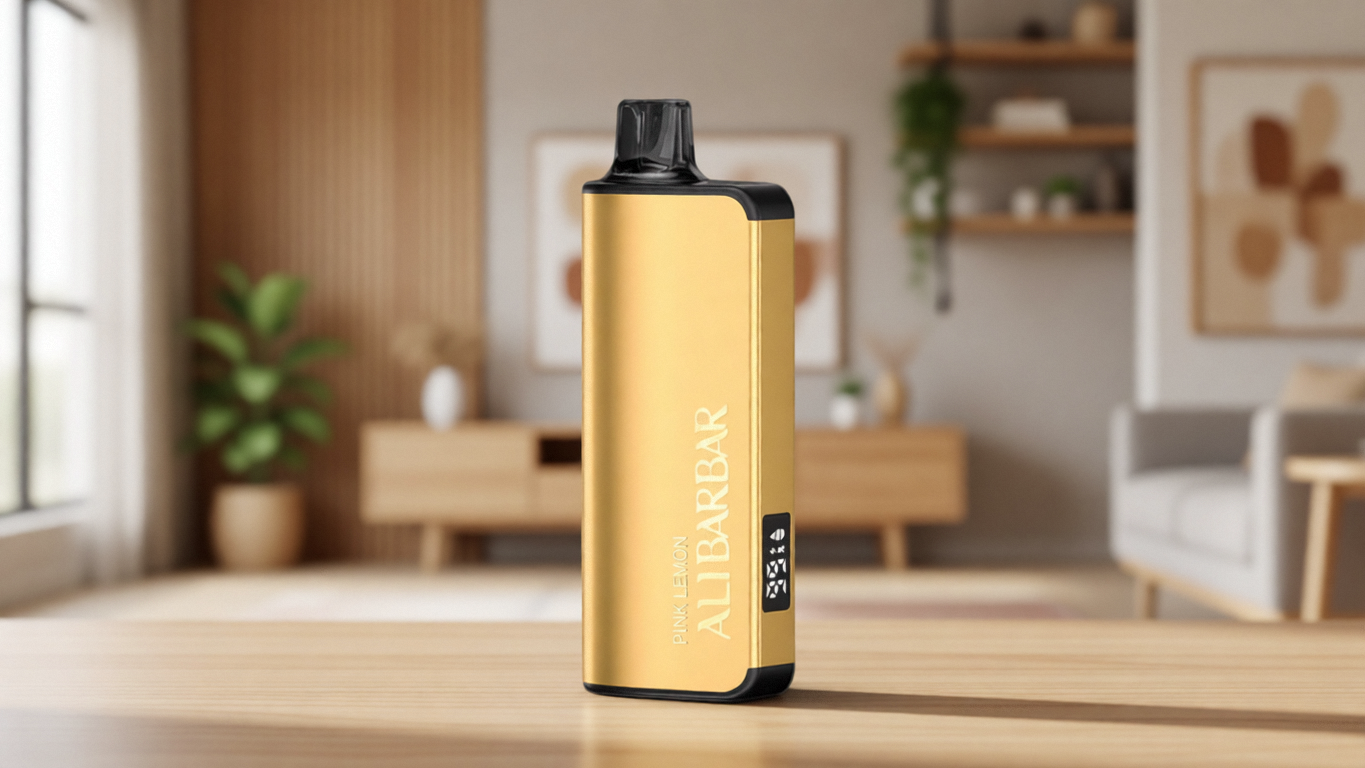
Pre‑filled, closed‑system devices: These units come with the e‑liquid sealed inside by the manufacturer. The user cannot alter the contents. From a halal assessment standpoint, the advantage is certainty — the advertised ingredient list is, in theory, fixed. However, this also means the user is entirely dependent on the manufacturer’s disclosure. A brand that publishes full safety data sheets and has its supply chain independently audited provides a clearer basis for a religious decision than one that reveals next to nothing. For instance, products like those in the ALIBARBAR range, distributed through channels that maintain documented, authorised supply chains, offer at least a starting point for ingredient verification. A retailer such as OZVAPE Shop, which publishes standardised specifications, allows the user to answer the basic question “What am I inhaling?” before then proceeding to the juristic question.
Open, refillable systems: Here the user selects and pours the e‑liquid themselves. This introduces maximum flexibility — one can source halal‑certified, nicotine‑free e‑liquid — but also maximum responsibility. The same tank, if filled with a high‑nicotine, untraceable liquid, moves the act into a different legal category. The open system is neither halal nor haram in itself; it is a tool whose ruling follows the substance it delivers.
Nicotine‑free devices: Some adult users prefer devices that produce only vapour and flavour, without any nicotine. The absence of an addictive, potentially harmful compound removes one of the strongest arguments for prohibition. Yet the health effects of inhaling heated flavourings are still under study, and the question of waste and social custom remains. Many scholars would still recommend caution, but the legal weight against nicotine‑free usage is considerably lighter than against nicotine‑containing use.

The practical lesson is clear: a responsible Muslim cannot make a blanket judgement about “vaping.” They must interrogate the specific device, its contents, and their own purpose. A source that provides reliable, unembellished product data — rather than marketing copy — is therefore a necessary tool, not a luxury.
A Practical Framework for Personal Assessment
For the Muslim who genuinely wishes to evaluate his or her own situation, the following step‑by‑step methodology can bring order to what otherwise risks becoming an emotional or cultural decision. None of these questions replaces a fatwa from a qualified scholar, but they prepare the ground for an informed conversation.
Identify the exact chemical contents.
Does the device contain nicotine? If so, at what concentration? What are the other constituents, and have they been screened for animal‑derived ingredients or alcohol? If the manufacturer does not disclose this, you are operating in a zone of doubt (shubha), which the Prophet ﷺ advised believers to avoid.
Assess the health evidence honestly.
Do you have a compelling medical reason to use this product (e.g., as part of a structured smoking cessation programme overseen by a physician)? Or are you using it recreationally, knowing that the long‑term effects are uncertain? The strength of the obligation to avoid harm increases with the clarity of the evidence.
Calculate the actual daily cost.
How much does this habit cost you each month? Multiply that number by twelve. If the amount is substantial, ask whether you are spending disproportionately on something that brings no undeniable benefit. Islamic law does not set a rigid poverty line for waste, but sustained, non‑essential expenditure that exceeds one’s means or crowds out family obligations is clearly problematic.
Check the manufacturing trail.
Is the e‑liquid produced in a facility that holds any recognised certification — ISO, GMP, halal, or even kosher? If the answer is no, you are trusting a supplier without any external verification. A distributor that traces its inventory back to an authorised factory network at least narrows the unknowns.
Monitor your own dependency.
Can you go a full day, or even a full working week, without the device and experience no significant distress? If the answer is no, you are dealing with a dependency that, while not intoxication, may still fall under the category of mukhaddir (stupefying agent) in some scholarly traditions.
If a user works through these points and still feels uncertain, the default in Islamic ethics is to abstain until clarity is attained. Rushing into a questionable practice on the grounds that “no one has definitively proven it is haram” reverses the traditional order of precaution.
Common Misconceptions That Derail the Discussion
Conversations about vaping and Islam tend to become stuck in a handful of repeated errors. Recognising them keeps the analysis grounded.
Equating vaping with cigarette smoking in every respect.
The harms of combustible tobacco are documented beyond dispute. Vaping removes the combustion process, which eliminates many of the carcinogens. This does not make vaping safe, but it means the legal analogy (qiyas) is not perfect. Failing to acknowledge this difference leads to rigid rulings that intelligent auditors can easily challenge, undermining the credibility of the scholarly position.
Assuming that a fatwa from one legal school applies globally.
A Shafi‘i ruling based on alcohol content in flavours may differ from a Hanafi ruling based on purity of intention. Both are valid within their methodological frameworks. Presenting one as the definitive Islamic position creates confusion among laypeople who do not know how to weigh schools of law. Acknowledging pluralism is not weakness; it is doctrinal honesty.
Ignoring the significance of traceability and product controls.
A surprising number of people who seek a religious answer have never inspected the packaging for a batch code, manufacturer address, or ingredient breakdown. They treat the device as a black box and want a ruling on the box. Islam requires its adherents to be reasonably informed about what they consume. The market now offers devices backed by documented supply chains — and consumers who ignore this transparency bear part of the responsibility for their own ignorance.
Conflating vaporisation with inhalation of water vapour.
The output is an aerosol, not steam. This matters because the biological interaction with lung tissue is fundamentally different, and the legal discussion must rest on physiological facts, not metaphors. A Muslim who thinks they are simply inhaling flavoured steam has not understood the technology and is ill‑equipped to apply the relevant legal maxims.
Frequently Asked Questions
Q: Is vaping absolutely haram according to all scholars?
A: No. Most scholars rule on a case‑by‑case basis, considering ingredients, harm, and intention. Some declare it categorically haram; many others say it is makruh or conditionally permissible only for harm reduction. There is no single, universal consensus.
Q: Does nicotine automatically make a device haram?
A: Not automatically. Nicotine is not an intoxicant like alcohol, but it is harmful and addictive. Many jurists rule that its consumption is haram because of the established harm, while others distinguish between degrees of harm and intent. A medically supervised, time‑limited use to quit smoking may be treated differently from recreational use.
Q: Can a vape product be halal‑certified?
A: Yes. Some manufacturers have obtained halal certification for their e‑liquids, verifying that all ingredients are plant‑derived or synthetic, alcohol is below permissible limits, and the facility meets Islamic purity standards. However, certification does not address the health‑harm question, so it is only one part of the evaluation.
Q: If I use a nicotine‑free device, am I automatically on safe ground?
A: Not completely. The health effects of inhaling heated flavourings over years are still unclear, and the ruling on waste and social custom still applies. Most scholars would view nicotine‑free vaping as far less serious than nicotine‑containing use, but they would still advise caution, particularly for young, healthy individuals with no medical necessity.
Q: What should I look for on the packaging to help me decide?
A: A full ingredient list, a batch number, the manufacturer’s name and address, any safety or quality certifications (such as ISO or GMP), and clear nicotine content statements. If this information is absent, you cannot adequately apply Islamic legal criteria.
Q: Is it enough to follow a fatwa I found online?
A: A fatwa is a non‑binding legal opinion. Its applicability to your specific situation depends on your circumstances, your madhhab, and the scholar’s knowledge of the actual product. It is wiser to take the fatwa as a starting point and then discuss your particular usage with a local imam or scholar who can account for the details.
Q: Does the method of use matter — for example, direct‑to‑lung versus mouth‑to‑lung?
A: The inhalation technique does not affect the core legal analysis, which focuses on what is inhaled and the resulting effects. However, devices designed for intense, frequent draws may deliver more substance per session, potentially increasing harm and dependency, which in turn can affect the ruling.
Q: If I bought the device from a retailer that sources only from authorised factories, does that help religiously?
A: It helps by reducing the ambiguity around what is actually in the device. Counterfeit or parallel‑market products often have misrepresented ingredients. A documented, transparent supply chain does not make something halal, but it removes a layer of doubt that can complicate the religious assessment.
Q: Can I give a vape device as a gift to a Muslim friend?
A: This depends on your friend’s personal understanding and the type of device. If you are unsure of their view, giving a device could be seen as encouraging a practice they consider harmful or religiously objectionable. Caution and prior conversation are strongly advised.
Q: Where can I find detailed, verifiable product information before consulting a scholar?
A: Retailers that maintain published, standardised specification sheets for every device they stock are a practical starting point. Such documentation allows you to bring concrete data into your discussion with a religious authority, rather than vague generalities.
Making an Informed Choice
The question “Is vape halal in Islam?” cannot be answered in a single word because it is actually a constellation of questions about ingredients, harm, intention, waste, and transparency. Muslims who approach the matter seriously will find that the strongest scholarly opinions — regardless of their ultimate conclusion — are those that demand a fact‑based assessment of the specific device and the individual’s circumstances. Religious responsibility, in this area, is inseparable from factual responsibility.
A user who knows the precise composition of the e‑liquid, understands the current state of medical evidence, and reflects honestly on their own dependency is in a completely different position from someone who simply assumes the practice is either harmless or forbidden. Product transparency is therefore not just a consumer right; for the believer, it is a necessary condition for discharging religious duty. Resources that provide verifiable, unadorned technical data — such as the information available through OZVAPE Shop — can support that process, even though they do not substitute for a scholar’s ruling. The final choice remains personal, accountable, and — one hopes — deliberate.