
VAPE FAQs
How Much Do Vape Cartridges Cost?
May
How Much Do Vape Cartridges Cost?
Why the Price Tag Alone Tells You Very Little
If you’ve spent any time browsing for pre‑filled devices, you’ve probably noticed that prices can swing from under twenty dollars to above forty — sometimes for products that look nearly identical. That gap doesn’t always correspond to quality, and users who shop by price alone often end up spending far more than they expected once they factor in replacements, inconsistent performance, or units that simply stop working before they’re finished.
The real question isn’t “how much does a cartridge cost.” It’s “how much does reliable, predictable daily use cost over time?” This article unpacks the engineering, supply chain, and design elements that shape cartridge pricing, giving you a framework to judge value rather than just a number. Along the way, we’ll reference real‑world examples — including the ALIBARBAR range available through OZVAPE Shop — not to promote, but because they illustrate specific design principles that affect your wallet and your experience.
Understanding What Drives Cost and Value
Price is a surface signal. Beneath it sits a layer of engineering decisions that determine whether a cartridge delivers consistently from the first draw to the last, survives the wear of daily carry, and gives you enough information to use it without anxiety. When you understand these factors, you stop comparing stickers and start comparing engineering.
Internal Architecture and Output Consistency
A cartridge isn’t just a reservoir. Its core is a heating element, often a mesh or ceramic coil, married to a wicking system that must deliver liquid at a rate perfectly matched to the power applied. When that balance is right, output stays smooth and predictable. When it’s not, you get dry hits, sudden harshness, or rapidly declining performance after the first quarter of the intended use life.
Engineering that resists this degradation costs more to design and manufacture. It shows up in things like precision‑lasered micro‑pores on the heating surface and multi‑layer cotton arrangements that prevent channeling. A higher‑priced cartridge is not necessarily overpriced — but the lower‑priced one may be hiding a steep decline curve that forces early replacement. If a $20 unit consistently under‑delivers on its advertised capacity, its effective cost per satisfying use can easily exceed that of a carefully engineered $35 unit.
Power Management and Status Transparency
A surprising number of cartridge‑style devices give you zero clear indication of remaining battery or liquid level until the moment they fail. That forces the user into a constant, nagging backup strategy: always carrying a second unit, or discarding perfectly functional units prematurely out of caution.
Better‑designed devices integrate subtle but meaningful status indicators. For example, the ALIBARBAR Ice Adjust 12000 provides an e‑liquid window and an adjustable airflow — small touches that let you actually see what’s left and adjust draw resistance to your preference. This transparency reduces hidden “safety stock” costs. If you’ve ever bought a second cartridge just to feel secure during a long shift or a week away, you’ve borne the real financial penalty of poor status communication.
Physical Design and Material Durability
A cartridge lives in pockets, bags, and gloveboxes. Soft‑touch finishes that look premium in the hand often pick up scratches and fingerprints within days, while zinc‑alloy chassis or robust polycarbonate hold their appearance — and physical integrity — far longer. The size and shape dictate whether the device disappears comfortably into a pants pocket or becomes an awkward bulge.
Look also at the mouthpiece contour. A flat, wide duckbill‑style piece, common on devices like the INGOT series, distributes pressure evenly during use and doesn’t trap debris. These ergonomic considerations cost a little more at the tooling stage but directly affect how long you’ll tolerate the device before you start eyeing a replacement.
Modularity and Lifecycle Flexibility
Most cartridges in the category are completely sealed: when the liquid is gone, so is the device. That’s simple, but it also means you’re discarding an entire power cell and circuit board each time. Some users prefer this no‑fuss model; others see the waste and long‑term expense.
A few designs, like rechargeable devices with fixed‑reservoir cartridges, blur this line. For instance, the ALIBARBAR INGOT 15000 is a rechargeable unit with a large pre‑filled reservoir. You don’t replace the pod — you recharge and keep using the same device until its e‑liquid is depleted. That architecture shifts the cost makeup: you’re paying more upfront for extended runtime, but the per‑day cost bends in your favour if you’re a sustained user. Modules and replaceable cartridges introduce a different economic calculation: you buy the power base once, then pay less per refill. Always ask whether the price you see is the whole story or just the entry ticket.
The Real‑World Cost Spectrum: How Engineering Translates to Price Bands
In the Australian market, a capable pre‑filled cartridge device might be found anywhere between $18 and $45 AUD. That gap represents real differences in material, reservoir size, and feature sets, not just brand markup. Let’s look at a few practical examples that ground the abstract factors above.
Everyday Compact Devices
A small, lightweight cartridge designed for occasional use typically lands around the $18–$25 mark. These units aim for convenience and discretion, with enough capacity for a handful of short sessions. Their engineering is straightforward: a basic coil, minimal status feedback, and a simple mouthpiece. The trade‑off is that you may need to purchase more frequently, and what you save per unit you may spend in total over a month.
Extended‑Run Rechargeable Cartridges
When you step up to a device with a built‑in rechargeable battery and a larger reservoir, the price moves into the $28–$38 range. These units, exemplified by the ALIBARBAR INGOT 9000, are built around the idea that you shouldn’t have to carry a spare. The recharge capability means the battery isn’t the limiting factor; you can drain the liquid fully before replacing. The slightly higher entry cost is offset by using the device to its true end, not an early artificial one.
High‑Capacity All‑Day Units with Adjustability
Devices that push toward 12000 to 15000 puffs and add adjustable features sit in the $35–$45 band. The ALIBARBAR Ice Adjust 12000 and INGOT 15000 fall here. You’re paying for precise airflow control, visible liquid monitoring, and a reservoir large enough that a full workday or a weekend trip doesn’t trigger range anxiety. The per‑use cost, if you actually finish the device naturally, drops to among the lowest in the segment — provided you’re a regular user who values long uninterrupted runtime.
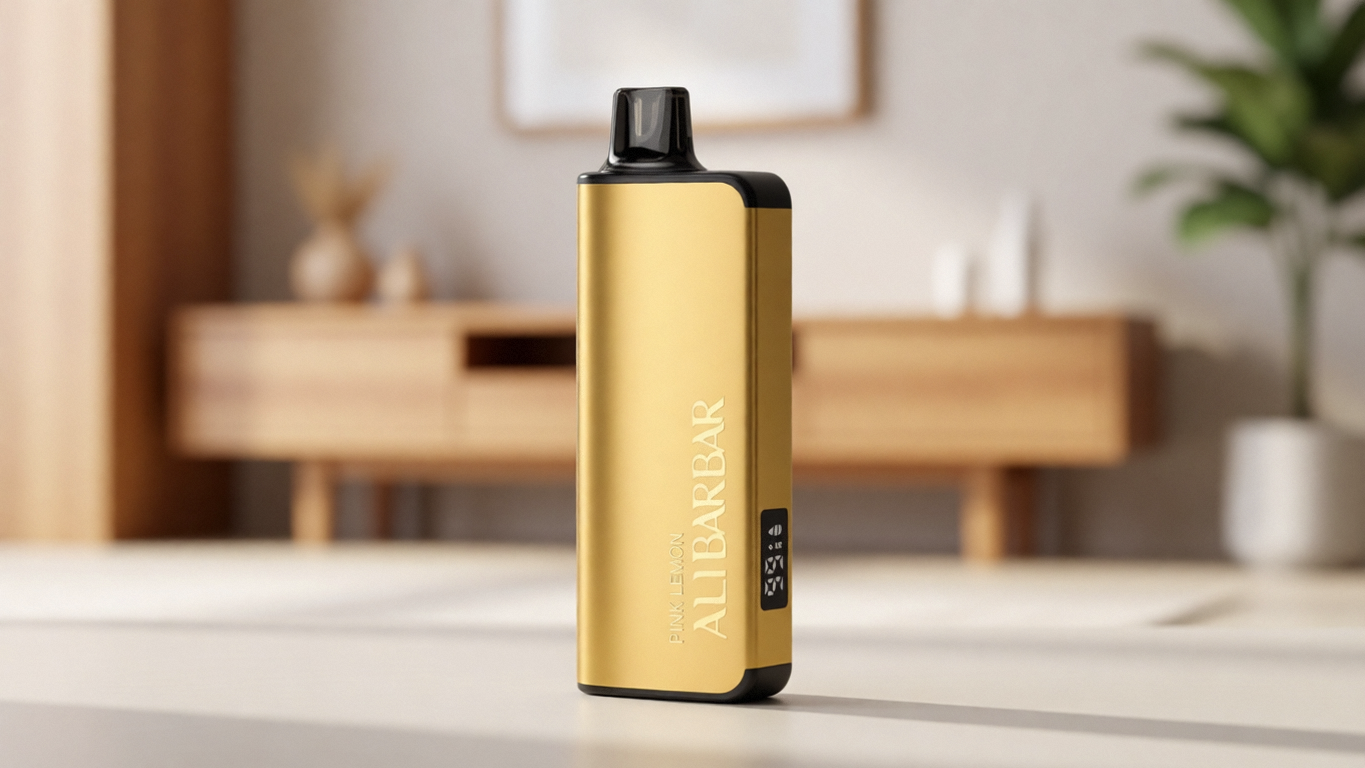
Note: OZVAPE Shop lists all ALIBARBAR specifications openly, allowing you to verify puff estimates, material composition, and features before a purchase. This kind of transparency is essential when comparing across brands, because puff counts quoted without real‑world usage context can be misleading.
A Practical Framework for Judging Cartridge Cost
Instead of chasing the lowest sticker price, train yourself to evaluate three things:
Expected usable life in your hands, not the headline number.
Ask: Does the manufacturer explain the testing standard for puff counts? Are users reporting early drop‑off? A $25 device that consistently lasts for its rated duration is less expensive per draw than a $20 device that fades halfway.
Status communication.
Run this checklist: Can I see my liquid level? Can I tell my battery status without guessing? Is the first low‑battery warning early enough that I’m not left stranded? A device that answers “no” to these questions will cost you in backup units and premature disposals.
The real cost of a single unsatisfying draw.
Dryness, spitting, or fluctuating warmth are not just annoyances — they’re signs of inconsistent architecture. When you encounter one, you’ve effectively paid for a fraction of a cartridge’s capacity that isn’t usable. Multiply that across a month, and the “cheap” device becomes expensive.
If you’re cross‑shopping, a simple spreadsheet that divides the purchase price by the independently verified usable puff count gives a cost‑per‑use estimate. Even rough numbers will highlight which devices are priced appropriately and which are banking on you not doing the arithmetic.
Common Selection Errors That Lead to Overspending
Even experienced users fall into traps that inflate their true cartridge spending. Recognizing these patterns is half the battle.
Overweighting puff count alone. A huge number on the box means nothing if the hardware can’t deliver consistent power across that span. A 9000‑puff unit with strong thermal management can outlast a poorly cooled 12000‑puff competitor. Look for indications of coil design and battery calibration, not just the headline figure.
Assuming all “rechargeable” units are created equal. Rechargeability solves only the battery problem. It doesn’t guarantee the heating element will survive the additional cycles. Some devices charge quickly but degrade their coil faster with each refill. Check whether the coil is rated for the full reservoir volume, or if it’s borrowed from a smaller model and pushed beyond its limits.
Ignoring the cost of an early replacement due to cosmetic fatigue. A device that looks beaten after a week will be replaced — sometimes intentionally, sometimes subconsciously. Materials matter. You’re not buying a disposable aesthetic; you’re buying a daily companion that should look acceptable for its entire functional life.
Confusing “cartridge” with “pod system” without checking the connection. Some retailers use the term “cartridge” loosely to mean a replaceable pre‑filled pod that plugs into a reusable battery. Others mean the entire disposable device. If you buy a cartridge thinking it’s a pod for your existing device, you may end up with a complete unit you don’t need. Always verify exact compatibility and battery integration.
Frequently Asked Questions
Q: Why do prices vary so much for cartridges that look essentially the same?
A: The housing is only the exterior. Inside, differences in coil material, wicking architecture, liquid formulation, battery calibration, and quality control processes all influence production cost. A visually similar device can be engineered to an entirely different standard.
Q: Are more expensive cartridges always more reliable?
A: Not invariably, but a higher price often reflects engineering that reduces the kinds of failures users experience most: early burnout, leaking, inconsistent flavour. That said, an expensive device with poor status indicators can still lead to wastage. Use the framework, not the price tag.
Q: Is the puff count stated on the box realistic?
A: Puff counts are based on standardised laboratory draws, often short and gentle. Real‑world usage — longer, deeper draws — will reduce the actual count. However, well‑engineered devices maintain their output quality closer to the rated number, so you still get a high proportion of satisfactory draws.
Q: Should I buy in bulk to save money?
A: Bulk purchasing can reduce per‑unit cost, but only if the device suits your usage pattern and you’ve verified it doesn’t degrade during storage. If you’re trying a new model, purchase one first, then consider larger quantities from a retailer with transparent stock rotation — like OZVAPE Shop — to ensure freshness.
Q: How can I confirm a cartridge is authentic and not a counterfeit?
A: Buy only from authorised channels that provide traceability. OZVAPE Shop sources inventory exclusively from factory‑certified distribution, and each ALIBARBAR device can be verified against published specifications. Counterfeits are common and often fail dangerously, making cost savings irrelevant.
Q: Does a rechargeable cartridge end up more expensive because you need a charger?
A: Most rechargeable cartridges use standard USB‑C, like your phone or laptop. There’s no special charger to buy. The small energy cost is negligible. Rechargeability extends the device’s useful life, so the total cost per day generally decreases.
Q: What’s the typical shelf life of an unused cartridge?
A: Sealed, properly stored devices typically retain their quality for 12–18 months. After that, gradual degradation of the heating element or liquid may occur. Check batch dates if you’re purchasing multiple units at once.

Q: Are adjustable airflow features worth the premium?
A: For many users, yes. Adjustable airflow lets you tailor draw resistance to your comfort, which can make the device more satisfying and reduce the subconscious urge to switch to another. The premium is relatively small and pays off through personalisation.
Conclusion: Let Your Routine, Not the Shelf Price, Decide
The sticker on a cartridge is a starting point, not a verdict. The cost you actually pay unfolds over days and weeks — in the draws that taste right, in the times you didn’t need a backup, in the device that still looks presentable after a week in your bag. By training your eye on the engineering details that drive real‑world consistency, you stop reacting to marketing and start selecting for value.
Access to clear, comparable information makes that shift possible. Through an authorised retailer like OZVAPE Shop, you can examine the full ALIBARBAR range — from the compact INGOT 9000 to the feature‑rich Ice Adjust 12000 — with the confidence that what you read in the specifications is what arrives at your door. Visit OZVAPE Shop to explore current ALIBARBAR devices and specifications.
The right cartridge isn’t the one with the boldest claim or the smallest price. It’s the one that aligns with how you actually use it, day after day. And that alignment is something only you can judge — now with the right questions to ask.