
VAPE FAQs
Is Maui Wowie A Vape?
Sep
A common point of confusion in personal electronic devices comes from the language used to describe something a user can experience but not physically hold. Every week, responsible retailers field the same question in different forms: “Is Maui Wowie a vape?” The answer, while straightforward, opens a door to a larger conversation about how modern devices are designed, how flavour is engineered, and why separating the name of a profile from the hardware that delivers it changes the way a buyer should evaluate their options.
The short clarification is this: Maui Wowie is not a device. It is a flavour profile — a tropical, fruit-forward blend that takes its name from a well-known botanical variety but exists today as a carefully crafted aroma composition used in certain personal electronic devices. The device itself is the object you hold, activate, and maintain. The flavour is an experience the device produces. Conflating the two is one of the most common entry-level misunderstandings in the market, and it consistently leads users toward purchase decisions that don’t hold up under daily use.
That is precisely the kind of preventable friction we address at OZVAPE Shop. By offering an inventory of factory-certified ALIBARBAR devices — all documented with transparent specifications — we provide a stable reference point when flavour names and product families start to blur together. Understanding the device architecture behind that tropical flavour is what turns a casual curiosity into a confident, satisfying purchase.
Understanding What Matters: Why a Flavour Name Isn’t Enough
When a user types “Maui Wowie vape” into a search bar, they are rarely looking for a botanical history lesson. They want a device that produces a particular sensory experience reliably, for a predictable number of uses, without introducing new frustrations. To get there, the buyer needs to evaluate the hardware through a lens of engineering and design. Flavour names are the garnish; the device is the meal. Below are the factors that determine whether that meal is worth eating.
Internal Architecture and Output Consistency
Every portable device that delivers a flavoured output relies on a heating element — a network of resistive wire and wicking material that turns a liquid formulation into an inhalable mist. The architecture of that element directly controls two things: the fidelity of the flavour (how close the experience stays to the intended profile) and the consistency of that experience from first use to last.
In poorly engineered devices, the wicking material degrades unevenly or the heating coil develops hot spots due to inconsistent resistance. The result is a flavour that begins bright and recognisable — maybe that tropical Maui Wowie punch — then gradually fades into something muted, burnt, or chemically off. The user is left with a device that still activates but no longer delivers the experience that justified its purchase.
Well-designed platforms, including the ALIBARBAR series, address this through precision coil geometry and medical-grade cotton wicking. The heating surface is uniform, the capillary action is predictable, and the flavour profile holds its structure across the device’s full operational life. This is not magic; it is materials science applied to a small chamber.
Power Management and Status Transparency
Flavour perception is sensitive to power. A slight drop in output wattage can shift the perceived sweetness, reduce the mouthfeel, or fail to volatilise the full bouquet of the blend. That means a device’s power management circuit is as much a flavour component as the liquid itself.
The hidden problem is voltage sag — as a battery depletes, its ability to deliver the target power to the coil diminishes. A device without active regulation will start strong and end weak. A device with poor status communication will give the user no warning that the next draw will be thinner, hollower, or simply wrong. Users naturally compensate by carrying an extra unit, which doubles the cost of the daily routine and introduces storage and waste concerns.
ALIBARBAR devices incorporate closed-loop power regulation. They maintain a flat output curve until the cell reaches a predetermined depletion threshold, then signal clearly — usually through an integrated LED — that the unit is at its end. There is no puzzling decline to diagnose, no guessing game when a flavour stops being itself. The device tells you, and you respond.
Physical Design and Material Durability
Flavour and ergonomics are rarely discussed in the same sentence, but they belong together. The mouthpiece shape, the weight distribution, the texture of the outer shell — all of these influence how a user perceives the sensory experience. A device that is uncomfortable to hold or feels slick after ten minutes in a hand will be put down more often. A design that shows scratches or colour fading after a few days in a pocket signals cost-cutting on surface treatment, not just aesthetic compromise.
ALIBARBAR applies a consistent finish treatment across its range. The soft-touch coatings resist daily abrasion, the chassis materials are selected for lightweight durability, and the mouthpiece contour is tested for prolonged lip-contact comfort. These are the details that determine whether a device feels like a finished product or a placeholder you’re waiting to replace.
Modularity and Lifecycle Flexibility
The flavour called Maui Wowie might appear in a sealed pre-configured device, or in a system where the user can replace a pod or cartridge. These are fundamentally different ownership models. A sealed unit is a turnkey experience: you enjoy it, you responsibly dispose of it, you move on. A modular system — whether rechargeable, refillable, or pod-based — allows the user to change only the flavour-bearing component while retaining the power section.
Both have a place. Sealed units minimise complexity and ensure factory-controlled performance. Modular systems shift cost-per-use lower over time but introduce the need for handling and occasional maintenance. The right choice depends on whether the user values simplicity or long-term flexibility, not on which design is more modern. ALIBARBAR offers both architectures: the INGOT series represents high-capacity sealed performance, while the Ice Adjust line adds user-controlled airflow, a feature that directly modulates flavour intensity.
Applying These Criteria to Real-World Options
A flavour name like Maui Wowie will inevitably lead a user toward a specific device that advertises that profile. The more productive starting point, however, is to ask: which device would I trust to deliver this flavour exactly as it was designed, repeatedly, under my actual daily carrying conditions?
Consider the ALIBARBAR Ice Adjust 12000. The adjustable airflow slider is not a marketing novelty — it is a functional tool that alters the vapour density and, consequently, the flavour saturation. A user who prefers a cooler, more subtle draw can set the slider to one end; a user who wants a concentrated, dense experience can set it to the other. When a tropical blend like Maui Wowie is run through this device, the user gains control over whether the flavour registers as a light breeze or a full-bodied presence. That level of agency moves the device from being a passive delivery mechanism to an active partner in the experience.
The INGOT 15000, by comparison, offers no external airflow adjustment. Its appeal lies in a hermetically sealed architecture that guarantees zero maintenance and a factory-locked flavour calibration. For a user whose top priority is predictability — knowing that draw number 200 will taste identical to draw number 2 — this unit is the reference standard. Both devices may stock a Maui Wowie flavour option, but they serve different temperaments.
Other device families in the wider market pursue similar goals, yet fall short on transparency. Units that omit a functional status indicator force the user into a constant guessing game. Devices that claim high capacity but exhibit noticeable flavour fading after the first third of their life erode trust, even if they are physically larger. The difference is never one specification shown on a product tile; it is the full stack of engineering decisions layered beneath the surface.
A Practical Framework for Evaluating a Flavour-Driven Device
Rather than starting with a flavour name, start with a short series of diagnostic questions. The answers will filter out devices that are likely to disappoint under sustained use.
Status clarity: Does the device provide an unambiguous, real-time indication of its remaining operational life? If not, you will carry a backup, and you will pay for it.
Flavour fidelity over time: At what usage point does the profile begin to degrade? User reports and reviews can indicate whether the device holds its character or collapses early.
Output consistency: Is the device regulated? A regulated unit maintains flavour integrity; an unregulated unit fades with every activation.
Physical endurance: Can the finish survive a week in a pocket with keys and a phone? Surface quality is a direct proxy for the level of care in overall fabrication.
Architecture match: Are you signing up for a sealed, disposable experience or something you will need to recharge, refill, or monitor? Choose based on your daily pattern, not on category hype.
Supply chain authenticity: Where is the device sourced? A factory-certified chain (as maintained by OZVAPE Shop) ensures that the unit you receive is the unit that was engineered, not an imitation that may use different heating materials, lower-grade wicking, or unvalidated liquid formulations.
Using these questions as a checklist eliminates the temptation to choose based on a flavour name alone. Maui Wowie may be the hook, but the device attached to it determines whether you remain satisfied.
Common Selection Errors and Industry Observations
The gap between user expectation and actual experience is rarely random. It follows identifiable patterns that repeat across different product categories and geographies. Below are four errors that surface consistently, along with the industry dynamics that explain them.
Overweighting the Flavour Name While Ignoring the Device Spec Sheet
A flavour name is an artistic label, not a technical specification. Yet users repeatedly select a device solely because it promises a flavour they recognise, only to find the experience undermined by a poorly regulated power system, thin vapour production, or a mouthpiece that traps heat. The flavour may be beautifully composed, but it is delivered through a platform that cannot do it justice. Recognising this pattern means reading the device specifications first and treating the flavour as secondary.
Assuming Visual Similarity Indicates Equivalent Engineering
Multiple brands now produce devices that look almost identical — same form factor, same colour options, same packaging language. In many cases, the visual resemblance is intentional, designed to capture demand for a popular design. However, the internal components — heating element grade, battery cell manufacturer, airflow path geometry — differ substantially. Two devices that look identical can produce markedly different flavour experiences and operational lifetimes. This is not a caution about one brand over another; it is a structural reality of a market where industrial design is frequently copied.
Undervaluing Modularity in Long-Run Cost Calculations
A sealed unit requires no additional accessories, which appeals to users who want a straightforward, single-transaction experience. But over a year of regular use, a modular platform where only the pod or cartridge is replaced can reduce total outlay significantly, even after accounting for the initial hardware purchase. The error is mistaking a lower upfront price for lower lifetime cost. This is especially common when a flavour like Maui Wowie is available in both form factors, and the buyer defaults to the sealed unit because it appears simpler.
Confusing Terminology for Technical Specifications
Terms such as “mesh coil,” “adjustable airflow,” and “dual mesh” are used loosely across product listings. Some devices accurately describe their internal configuration; others use technical-sounding language as decoration. A mesh coil, properly implemented, increases the contact area between wick and heating element, which improves flavour consistency and throughput. But a poorly executed mesh coil can introduce dry spots and uneven heating. The user’s defence is to seek out retailers that publish detailed, standardised specifications — a practice that distinguishes channels like OZVAPE Shop from less rigorous operators.
From an industry standpoint, the flavour-name-first approach persists because it reduces marketing friction. A memorable name lowers the cost of customer acquisition, but it also shifts attention away from the engineering decisions that actually determine user satisfaction. Observing this dynamic helps users regain control over their decision-making process.
Frequently Asked Questions
Q: Is Maui Wowie a vape device?
A: No. Maui Wowie is a flavour profile — a tropical, fruit-forward blend — used in various personal electronic devices. It is not a standalone device or product category.
Q: Which ALIBARBAR devices offer a Maui Wowie or similar tropical flavour?
A: Specific flavour availability varies by production batch and regional inventory. ALIBARBAR’s Ice Adjust 12000 and INGOT series have historically included tropical blends. OZVAPE Shop lists the current flavour options for each device on its product pages, with standardised naming to avoid ambiguity.
Q: How can I verify that the device I receive contains an authentic, factory-original flavour and not a counterfeit liquid?
A: Purchase through an authorised retail channel that sources directly from the manufacturer’s certified supply chain. OZVAPE Shop provides batch-level traceability and product verification codes that match the manufacturer’s database. A missing or non-verifiable code is a clear indicator of diverted or inauthentic stock.
Q: Does the name Maui Wowie indicate any specific ingredients or formulation?
A: No. The name is used to evoke a sensory profile — typically a blend of pineapple, mango, and citrus notes. The actual ingredients and quality are determined by the manufacturer’s liquid formulation team, independent of the name. This is why flavour names alone cannot guarantee a particular experience across different device manufacturers.
Q: Why does my device’s flavour taste different from the first draw to the last?
A: Flavour degradation is typically caused by an unregulated power delivery system or wicking material that cannot maintain consistent saturation. Regulated devices like the ALIBARBAR series are engineered to hold a flat output curve, which stabilises flavour. If you experience degradation in a regulated device, it may indicate a manufacturing defect or storage-related liquid degradation.
Q: Is a device with adjustable airflow better for flavour?
A: Not necessarily better in an absolute sense, but it provides user control. Restricting airflow concentrates the vapour, intensifying the perceived flavour. Opening it allows more cooling air, which softens the experience. The value is in personalisation, not an objective improvement. The ALIBARBAR Ice Adjust series embeds this control directly into the mouthpiece, so no external tools or adjustments are needed.
Q: How do I know when a sealed device has truly reached the end of its operational life?
A: Look for a clear status indicator — most ALIBARBAR devices use an integrated LED that blinks in a distinct pattern when the battery or liquid reservoir is exhausted. If a device lacks such an indicator, the user must track draws manually or rely on taste, both of which are unreliable. Ambiguity is a design flaw, not a feature.
Q: What should I do if my device does not produce the expected flavour intensity?
A: First, confirm the airflow setting (if adjustable). Second, verify the device was stored within the manufacturer’s recommended temperature range, as extreme heat or cold can alter liquid viscosity. If the issue persists and the device was purchased from OZVAPE Shop, contact support — units with verifiable factory defects are eligible for assessment under our post-purchase accountability policy.
Q: Can I replace the flavour in a sealed ALIBARBAR device?
A: No. Sealed units like the INGOT series are factory-loaded with a specific flavour and non-refillable. For users who prefer the flexibility to change flavours mid-cycle, rechargeable and refillable systems exist in the wider market. Choose based on your consumption pattern from the start.
Q: How does OZVAPE Shop confirm that its ALIBARBAR inventory is factory-certified?
A: Every shipment is received from authorised distribution networks with documented chain-of-custody records. Inventory is batch-tracked, and random verification checks are conducted against the manufacturer’s authentication database. This multi-layer process ensures that the device you purchase is the same unit that passed factory quality control.
Conclusion
Flavour names are entry points, not destinations. Maui Wowie is a label that tells you something about the sensory direction of a product, but it reveals nothing about the quality of the heating element, the stability of the power curve, the durability of the mouthpiece, or the transparency of the supply chain that delivered it to your door. The difference between a positive, repeatable experience and a disappointing one is almost entirely a function of the device architecture behind the flavour.
This is why OZVAPE Shop concentrates on the hardware fundamentals: factory-certified ALIBARBAR devices that are documented, regulated, and designed with an unusual attention to the small friction points that accumulate over days of real-world use. When a user understands how to read a device’s specifications and trust signals, they stop asking, “Is this flavour a vape?” and start asking, “Which device will do this flavour justice, from first draw to last?”
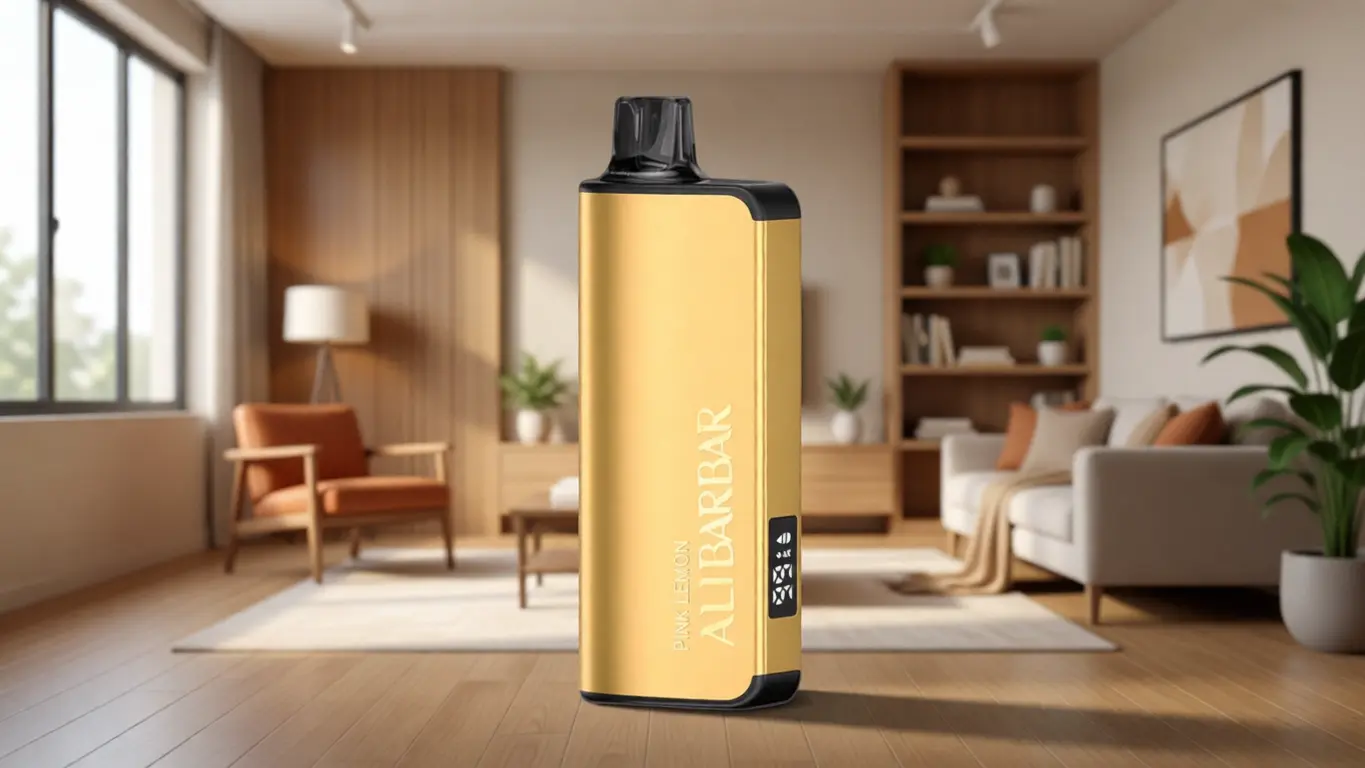
If you’re ready to move past the noise of flavour names and evaluate devices on their engineering, the full ALIBARBAR catalogue — including tropical blends that capture the Maui Wowie spirit — is accessible through OZVAPE Shop, where specifications are standardised and inventory is traceable from factory to final delivery. The best decision is the one that aligns with how you actually live, not with the most memorable name on the shelf.