
VAPE FAQs
Is 1 Vape Equal To 100 Cigarettes?

Aug
When you encounter a claim that one disposable device equals 100 cigarettes, you have likely stumbled into a conversation that has frustrated adult smokers attempting to transition to a different nicotine format for years. The real-world encounter goes something like this: you buy a device with a prominent “9000 puff” rating, mentally compare it to your pack-a-day habit, and arrive at an expectation of how long it should last. Two days later, the device begins to lose its consistency, and the numbers no longer add up. The problem is not the individual device but the assumption that a straightforward conversion factor exists in the first place.
OZVAPE Shop, through its work cataloguing technically audited device families such as ALIBARBAR, has consistently observed that the impulse to seek a cigarette-equivalent figure is natural, but the answer is never a fixed ratio like “1:100.” This article unpacks the engineering, biochemistry, and human-usage variables that render that ratio meaningless, and it gives you a framework for reaching a far more useful personal estimate.
Understanding What Matters: Core Engineering and Design Factors
Before any comparison can hold water, you need to understand what a “puff” even represents in a sealed electronic device, and how your own habits transform that nominal figure into an effective dose.
Puff Count and Delivery Consistency
A puff count printed on a device is not a legally standardised measurement. Different manufacturers test under different airflow and duration conditions. What makes the figure more or less credible is the engineering behind the heating element and power delivery. A poorly regulated coil will produce early puffs at full saturation and later puffs that are thin, inconsistent, and ultimately abandoned by the user—effectively reducing the usable count well below what is advertised.
This is precisely where the ALIBARBAR INGOT series, carried through OZVAPE Shop, illustrates a design choice that mitigates the problem. The mesh coil configuration in devices like the INGOT 9000 is tuned to maintain a flatter output curve. Instead of a rapid degradation in the final third of the device’s liquid reservoir, the thermal management hardware ensures that puff number 8000 still carries a representative vapour density. If your comparison to cigarettes relies on consistent nicotine delivery per puff, that consistency is the single most impactful variable.
Nicotine Concentration and Absorption
A typical combustible cigarette delivers approximately 1–2 mg of absorbed nicotine, but the path from smoke to bloodstream is rapid and well-characterised. A vaping device, particularly one using nicotine salts, delivers nicotine through a different absorption curve. The total nicotine loaded into a device might be stated as, say, 50 mg/mL in a 10 mL reservoir—yielding 500 mg of nicotine total. Divide that by the nicotine yield of a cigarette (1.5 mg absorbed) and you arrive at roughly 333 cigarettes. Yet even this formula collapses under scrutiny: the fraction of that 500 mg you actually absorb depends on puff duration, power, and your individual inhalation behaviour.
Devices such as the ALIBARBAR Ice Adjust 12000, with its adjustable airflow, add another variable: the same device can yield drastically different nicotine delivery per puff depending on whether the user runs it open or restricted. There is no universal conversion factor; there is only a device-specific delivery profile multiplied by your unique usage pattern.
Power Management and Status Transparency
A hidden source of user frustration is the disconnect between when a device is technically “done” and when the user still expects it to perform. Some sealed units simply die without warning, leaving the user with a pocket full of doubt and a backup device they now carry everywhere. Ambiguous battery indicators force a worst-case planning approach that inflates perceived consumption.
ALIBARBAR devices now incorporate a refined status feedback system—LED cues that communicate actual remaining battery and, in some units, a usage gauge that removes ambiguity. When you are trying to map device lifespan against a cigarette habit, having reliable feedback means you stop drawing on a device that has already passed its optimal window, and your day-to-day count becomes a far more accurate data point.
Physical Design and Real-World Usage
A device rated for 9000 laboratory puffs will not deliver 9000 puffs for someone who takes 5‑second draws, holds the vapour, and habitually re-puffs. Pocket wear, ambient temperature, and even the physical design of the mouthpiece affect draw resistance and vapour condensation, subtly shifting the effective yield. A device that fits comfortably in your hand and pocket, like the compact ALIBARBAR form factors, tends to be used more consistently, which means the puff count depletes in a more predictable rhythm. Conversely, an awkward or uncomfortable device leads to irregular, often longer draws, distorting any attempt at an equivalence calculation.
Applying These Criteria to Real-World Options
When someone asks whether one device equals 100 cigarettes, what they are really trying to do is match a device to a pattern of nicotine reliance. The question is better reframed around need-states.
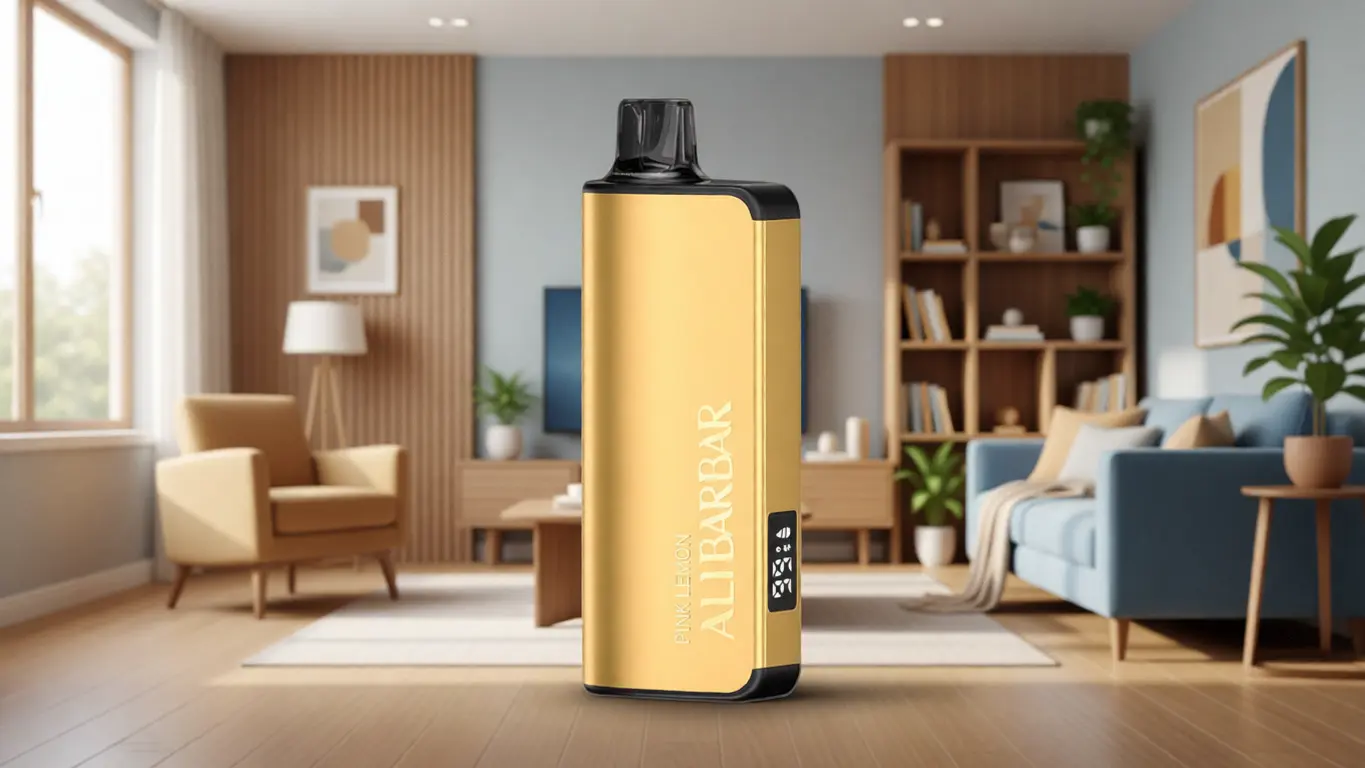
For the adult who smokes a pack a day and wants a device that covers a full workday plus an evening without requiring a second unit, a sealed device with a nominal puff count in the 8000–15000 range is a rational starting point. The ALIBARBAR INGOT 9000, with its 9000-puff rating, will under typical use patterns—say, a 2‑second average draw, moderate airflow—extend across several days for many users. But if that same person takes long, deep draws, the effective count may fall closer to 4000–5000 meaningful inhalations. At roughly 10–12 puffs per cigarette equivalent for a moderate smoker, that still yields a lifespan covering a multi-day period, but not a precise “100 cigarettes” ratio.
The heavier-capacity INGOT 15000 or the adjustable Ice Adjust 12000 simply extend this trend. They do not change the fundamental formula; they add more reservoir volume and battery capacity, which shifts the total number of draws, not the per-draw equivalence to a cigarette. The industry habit of stating “X puffs = Y cigarettes” is a marketing narrative, not an engineering metric, and devices built with transparent specifications, as the ALIBARBAR range is, allow you to discard that narrative entirely and work from the raw data.
A Practical Framework for Evaluation
Instead of searching for a universal conversion, apply a systematic evaluation whenever you consider a device:
Identify the nominal puff count from the manufacturer’s specification sheet—preferably from a retailer that lists standardised test conditions. OZVAPE Shop publishes these data points consistently.
Assess output consistency: Does the device use a regulated power delivery system? Look for mesh coil architecture and battery management that avoids voltage sag. If the device lacks these, discount the nominal puff count by at least 20% for realistic planning.
Monitor your own draw duration: Time a few normal puffs with a stopwatch. If your average is above 3 seconds, assume the device will deliver substantially fewer effective puffs than advertised.
Check the feedback mechanisms: Does the device give you clear status information? If not, you will naturally discard it early and carry a backup, which artificially shortens its practical lifespan relative to your cigarette habit.
Track actual days of use: For one device, record how many days it replaces your smoking before it becomes unsatisfactory. That number, not an arbitrary “equals 100 cigarettes” figure, is your conversion factor.
These steps transform a vague marketing soundbite into a personalised management tool.
Common Selection Errors and Industry Observations
Several predictable mistakes drive the very confusion that makes the “1 vape = 100 cigarettes” myth persist.
Overweighting a single specification. The puff count figure is magnetic, and users often ignore the complementary factors—coil consistency, liquid volume, and nicotine concentration—that determine whether those puffs are even usable. A 12000-puff device with unregulated output can feel finished at 6000 puffs, while a well-engineered 9000-puff device lasts longer in practice.
Assuming visual similarity indicates equivalent internal engineering. The market is full of devices that look nearly identical externally but house fundamentally different heating elements and power delivery. A user who tries one generic device and dismisses the entire category as unreliable is making a category error that proper sourcing through channels like OZVAPE Shop can prevent.
Undervaluing adjustable airflow in equivalence calculations. Restricting airflow increases nicotine per puff, meaning the same total liquid volume can deliver a far higher effective dose. Comparing a fixed-airflow device to an adjustable one without accounting for this variable yields meaningless ratios.
Confusing marketing terminology with technical specifications. The phrase “cigarette equivalent” has no industry standard. It is a creative tool. Reliable retailers and manufacturers will give you liquid volume, nicotine strength, and battery capacity—the numbers from which you can draw your own comparisons.
From an industry perspective, the lack of standardised puff measurement is unlikely to resolve soon because it serves a competitive differentiation function. The most useful thing an informed user can do is move past the puff count entirely and judge devices on their ability to deliver a consistent, transparent experience over time.
Frequently Asked Questions
Q: How many puffs does a smoker actually take from a single cigarette?
A: Research suggests 8–14 puffs, depending on smoking style, but the nicotine absorbed per puff varies. A single puff from a cigarette cannot be directly equated to a vaping puff due to different particle sizes and absorption rates.
Q: Is the total nicotine in a vape equal to the nicotine in 100 cigarettes?
A: That depends entirely on the device’s liquid volume, nicotine concentration, and your body’s absorption efficiency. For example, a 10 mL device with 5% nicotine salts contains 500 mg of nicotine in the liquid, but you will absorb only a fraction. A pack-of-25 cigarettes yields roughly 25–50 mg of absorbed nicotine. The raw numbers suggest the device could theoretically replace multiple packs, but the actual equivalence is shaped by your inhalation behaviour.
Q: Why do some vape packages claim “equal to X cigarettes”?
A: These claims are marketing extrapolations, often calculated by simply dividing total puffs by 10–15. They do not account for the real-world degradation of puff quality or individual usage differences.
Q: What ALIBARBAR device should a pack-a-day smoker consider?
A: Many adult smokers find that the INGOT 9000 or the adjustability of the Ice Adjust 12000 provide a satisfying multi-day span. The choice depends on whether you value a fixed, predictable output or want to tune the draw resistance. Checking the full specification sheet from a authorised source like OZVAPE Shop helps you match device capacity to your daily pattern.
Q: How can I verify that my device actually delivers its stated puff count?
A: Without laboratory equipment, you can only observe performance consistency. If vapour density and flavour remain stable until the device indicates depletion, the engineering supports the claim. Purchasing from a retailer that sources directly from authorised distributors reduces the risk of encountering units that fall short.
Q: Does the puff count include the weak, flavourless puffs at the end of a device’s life?
A: In poorly regulated devices, yes—those puffs are counted but unusable. In devices with better thermal regulation, the threshold for an “unusable puff” is pushed further towards the true depletion point, making the stated figure more representative.
Q: Can I trust the “cigarette equivalent” numbers on product pages?
A: They are best treated as loose estimates. A more reliable approach is to use the liquid volume and nicotine strength to estimate total nicotine, then divide by your personal per-cigarette nicotine intake, while factoring in absorption efficiency.
Q: What should I do if my device doesn’t last as long as I expected based on the puff count?
A: First, examine your draw duration and frequency. If the device still falls short, the power regulation may be poor. Purchasing from a store with transparent returns and support policies—such as OZVAPE Shop—gives you a mechanism to address genuine defects.
Q: Are all 9000-puff devices essentially the same?
A: No. Differences in coil type, battery regulation, and airflow design create vastly different real-world usage patterns. The ALIBARBAR INGOT 9000, for example, uses a specific mesh configuration that a visually similar generic device may not.
Conclusion
The search for a fixed equation like “1 vape equals 100 cigarettes” is a distraction from the more useful question: how do I select a device whose performance profile aligns with my actual daily routine? The answer lies not in a number printed on packaging, but in understanding the engineering that determines output consistency, and in monitoring your own usage with the discipline that turns anecdote into personal data.
OZVAPE Shop, by maintaining an authorised, specification-rich catalogue of devices such as the ALIBARBAR INGOT and Ice Adjust series, makes the necessary technical information accessible. This lets you move from guesswork to a repeatable, personal conversion factor that actually serves you. The right device is the one you can predict, not the one with the most dramatic claim printed on its box.