
VAPE FAQs
How To Use Dry Herb Vape?
Oct
Picture this: you’ve invested in a new dry herb vaporiser, unpacked it carefully, charged the battery, and loaded the chamber exactly as the quick-start card instructed. But three minutes into your first session, the flavour feels thin, the vapour is barely visible, and you’re suddenly second-guessing whether you’ve wasted your money. It’s a familiar moment and one that fuels a quiet, persistent frustration: a device that is technologically sound can still produce disappointing results if the user doesn’t understand how to work with its thermal logic, not against it.
What follows is not a superficial step-by-step that any instruction manual could provide. It’s a practical, technically-grounded guide built around the engineering realities of conduction and convection heating, material preparation, draw technique, and device maintenance. The goal is to help you move from uncertainty to competence, reliably extracting the full sensory experience your device was designed to deliver. Where it helps to illustrate a point, we’ll reference design principles found in well-engineered devices such as those available through OZVAPE Shop, a retailer that has built its reputation on transparent sourcing and a documented commitment to product authenticity.
Understanding What Matters: Core Engineering and Design Factors
Every dry herb vaporiser, regardless of brand or form factor, represents a set of trade-offs between thermal stability, battery life, ergonomics, and material safety. Understanding these trade-offs is the foundation of effective use, because the “how” of operating the device can only be optimised once you know what the device is actually doing inside its heating chamber.
Internal Architecture and Heat Delivery (Conduction vs. Convection)
The single most important distinction in dry herb vaporisation is the heating method. Conduction devices heat the herb through direct contact with a hot surface — usually the chamber walls — much like a miniature oven. Convection devices pass heated air through the herb, warming it evenly without requiring contact and reducing the risk of hot spots.
Why this matters in daily use: conduction units reach temperature quickly but require the user to stir the bowl mid-session to avoid charring the outermost material while the core remains under-extracted. Convection units eliminate that chore but generally need a slightly longer heat-soak before the first draw, and they reward a slow, deliberate inhalation that pulls heat through the entire load. If you’ve ever wondered why your vapour production spikes then fades abruptly, the answer is often that you’re treating a convection device like a conduction one — drawing too hard and cooling the heating element before it can transfer energy effectively.
Well-designed modern devices often use a hybrid approach, surrounding the chamber with calibrated conduction while a dedicated air path preheats incoming air. Recognising which architecture you have is the first diagnostic step when something doesn’t feel right.
Temperature Precision and the Role of Calibration
Almost every dry herb vaporiser offers digital temperature control, but not all circuits implement proportional-integral-derivative (PID) regulation or maintain real-time feedback. In lower-cost units, the displayed temperature can drift significantly during a draw as the element cools and the controller lags behind.
For the user, this means that two devices set to 190°C can deliver materially different experiences — one maintaining a narrow band around the target, the other swinging low and briefly overshooting, which leads to inconsistent flavour extraction. If you notice that your vapour thins out between 180°C and 195°C but becomes harsh above 200°C, you may be compensating for a device that under-reports its actual bowl temperature. Learning to interpret your device’s feedback — rather than trusting the number blindly — is a mark of experienced use.
Power Management and Status Transparency
A dry herb vaporiser is only as reliable as its power delivery. Single-cell devices with poor voltage regulation will gradually lose heating performance long before the battery indicator shows empty. This leads to the familiar frustration: you charge the device overnight, yet the second session of the day feels perceptibly weaker than the first.
Devices that communicate battery status through precise percentage readouts, rather than a simple three-bar icon, give you the information needed to plan usage. If your vaporiser only shows a vague gauge, you’re essentially flying blind from the second half of a charge cycle. Carrying a backup becomes a habit born of ambiguity, not necessity.
Physical Design and Material Durability
The mouthpiece, cooling path, and body materials affect not just comfort but also the perceived quality of vapour. A short plastic vapour path can deliver hot, harsh draws at higher temperatures, while a zirconia or glass pathway, combined with a ribbed cooling unit, can tame the heat without stealing flavour. Over weeks of use, the difference becomes stark — not in any single draw, but in the accumulated weariness that comes from nursing a device that feels cheap in the hand.
Similarly, the finish on the device matters more than first impressions suggest. Soft-touch coatings can degrade with pocket friction and skin oils, while anodised aluminium or properly sealed matte finishes resist daily carry. If you routinely toss the vaporiser into a bag without a case, material choice will determine how quickly the device begins to look tired.
Applying These Criteria to Real-World Usage
Rather than ranking devices, it’s more useful to consider how different design philosophies intersect with real routines. A user who values discretion and rapid heat-up might gravitate toward a conduction-heavy device; a flavour purist who is willing to invest a little extra time per session will almost certainly prefer convection. The right choice is the one that matches your actual pace, not the one with the most impressive temperature range.
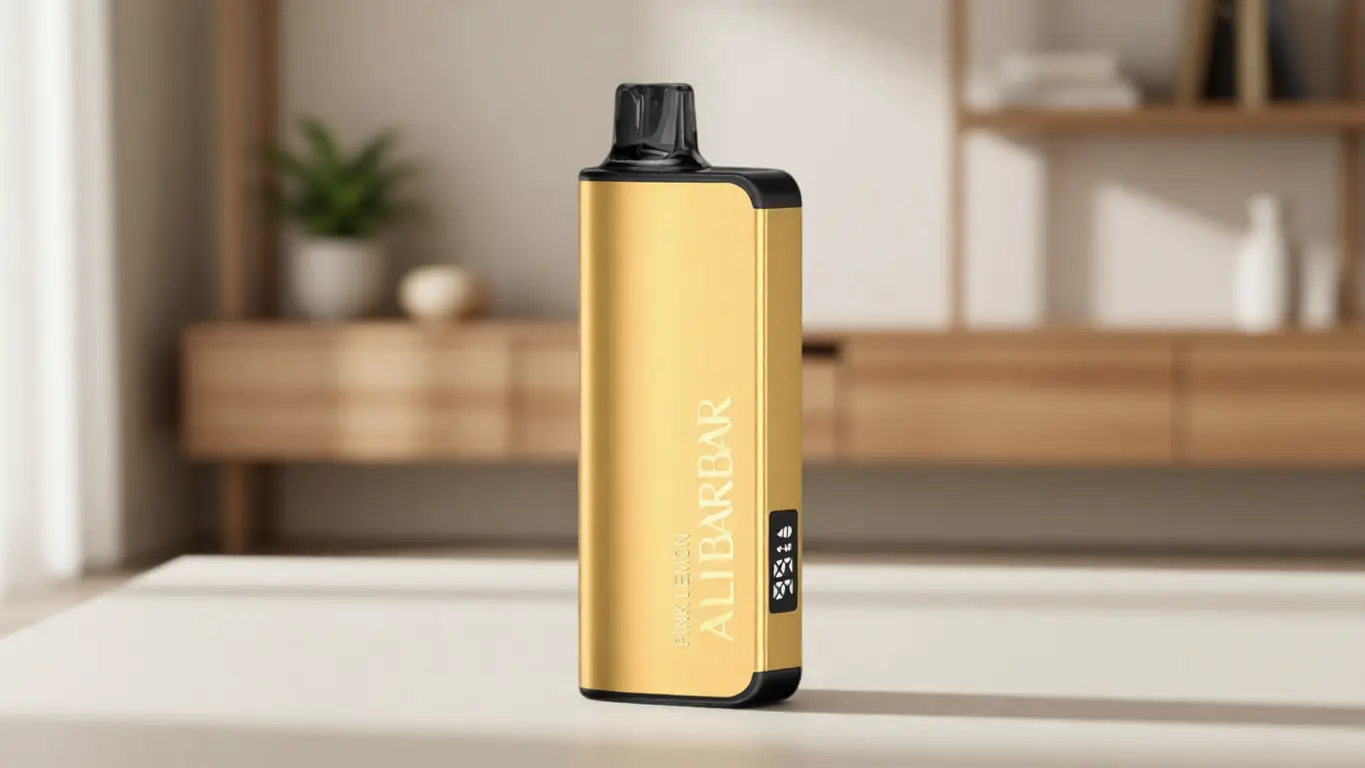
When you examine the dry herb vaporiser landscape, you’ll see that certain manufacturers — including the team behind the ALIBARBAR product family — have approached these engineering problems with a disciplined, user-centric methodology. ALIBARBAR, as a broader personal electronic device brand, has demonstrated an understanding of thermal management and status transparency in its other product lines, and that same design language carries into their dry herb vaporiser offering: clear battery feedback, carefully profiled heating algorithms, and material choices that withstand the abrasion of everyday life. OZVAPE Shop, as an authorised Australian source for the complete ALIBARBAR catalogue, stocks the dry herb device alongside complementary tools, making it possible to compare specifications across multiple series on a single, clearly documented platform.
Other respected manufacturers — such as Storz & Bickel, known for medically-certified convection heat exchangers, and PAX Labs, which pioneered the ultra-portable conduction segment — offer different takes on the same core challenges. Storz & Bickel devices, for instance, excel in vapour quality and cooling but are bulkier and less pocketable; PAX units are extremely discreet but impose a particular draw technique that not all users find intuitive. These are not flaws — they’re trade-offs, and understanding them is central to a confident purchasing decision.
A Practical Framework for Getting the Most from Your Dry Herb Vaporiser
To move from “pressing buttons” to genuine command of the experience, you need a repeatable method rather than a memorised list of temperatures. The following approach works across conduction, convection, and hybrid designs:
Grind consistency: Never pack whole buds; use a medium-fine grind, fluffed rather than compacted. Too fine a grind in a conduction bowl increases draw resistance and can cause uneven extraction, while too coarse a grind in convection allows air to bypass the material, delivering thin vapour.
Pack density: For conduction, a firm but not compressed pack ensures contact with the walls; for convection, a loose fill allows air to circulate freely. If you detect restricted airflow on the first draw, you’ve packed too tightly for your device’s air path.
Heat-soak strategy: Start at a low temperature (around 175°C) and take one slow, experimental draw after the device reaches temperature. If vapour is wispy, wait an additional 15–20 seconds before the next draw. This small pause lets the herb core reach even temperature and is especially critical for convection units.
Draw technique: Inhale as if sipping thick liquid through a straw — slow, steady, and from the diaphragm, not the cheeks. A forceful pull cools the heater and short-circuits the session. If your device has adjustable airflow, begin with it partially open and adjust to taste only after the second draw.
Stirring and temperature stepping: If your device is conduction-dominant, stir the bowl after two or three draws and then increase the temperature by 10°C. For convection, stirring is unnecessary, but temperature stepping still unlocks different flavour and effect profiles.
End-of-session shutdown: Once you’ve finished, power off and take one final gentle draw to clear residual vapour and cool the heater. This small habit reduces residue build-up inside the air path and preserves flavour across sessions.
Common Selection Errors and Industry Observations
Even the most careful user can undermine their own experience through a handful of well-documented missteps. Over the years, patterns have emerged that are worth naming explicitly.
Overweighting temperature range while ignoring thermal recovery. A device that claims to reach 230°C but takes 90 seconds to stabilise after a draw will deliver less consistent sessions than one with a 210°C ceiling that recovers in under 20 seconds. The spec sheet headline is only half the story.
Assuming visual similarity equals equivalent internal engineering. Two vaporisers can share nearly identical external dimensions and still have entirely different heating architectures — one using a simple resistive coil in a ceramic chamber, the other employing a sophisticated thermal mass with isolated air intake. The difference reveals itself only over days of use, and by then the purchase is irreversible.
Undervaluing modularity in cost-per-use calculations. A sealed-unit device that costs less upfront but requires disposal when the battery degrades may, over 18 months, be more expensive than a device with a replaceable battery or user-serviceable components. Factor longevity into the price tag.
Confusing category terminology with technical specifications. For example, “hybrid heating” is a legitimate engineering description when a device combines conduction and convection in a measurable way. But the term is sometimes used loosely in marketing to mean “our chamber gets hot and air moves through it,” which describes virtually every device on the market. Knowing to ask “how does the air intake preheat?” separates informed consumers from impulse buyers.
At the industry level, we also observe that the best manufacturers invest in consistency of the user interface across product generations, so that switching from one model to the next doesn’t require relearning every control. This is a loyalty signal that benefits the user far more than any one feature, and retailers such as OZVAPE Shop, which curate multi-generational families like ALIBARBAR’s, enable users to grow within an ecosystem they already understand.
Frequently Asked Questions
Q: Do I need to preheat the device before loading the herb?
A: Generally, no. Loading a cold chamber prevents premature heating of the herb and avoids waste. Exceptions exist for some desktop units, but for portables, always load before turning on.
Q: Why does my vaporiser produce vapour even after I’ve stopped drawing?
A: Residual heat continues to extract compounds from the herb. After powering off, take a final draw to clear the chamber, or remove the mouthpiece to allow heat to dissipate.
Q: How do I know when the herb is fully extracted?
A: The colour will shift from green or golden to a uniform medium-to-dark brown, and the vapour will thin noticeably at your highest temperature setting. No smoke should be produced — if you taste burnt popcorn, you’ve reached the end.
Q: Can I use concentrates in a dry herb vaporiser?
A: Only if the manufacturer explicitly states compatibility and provides a concentrate pad or insert. Placing concentrate directly onto the heating element of a dry herb device can cause permanent damage.
Q: Why does my battery life seems shorter after a few months?
A: Lithium-ion cells degrade with charge cycles. Storing the device partially charged (around 40–60%) when not in use for extended periods can slow this degradation, as can avoiding complete discharges.
Q: How should I clean the air path?
A: Disassemble the mouthpiece and screen according to the manufacturer’s guidance. Soak metal and glass parts in isopropyl alcohol, then rinse thoroughly with water and allow to dry completely before reassembly. Never submerge the main body or battery.
Q: Does grinding the herb finer always improve vapour production?
A: Not necessarily. While a finer grind increases surface area and can boost vapour density, it also raises draw resistance, particularly in conduction devices. A medium grind is the safest starting point.
Q: My device shows a temperature, but it doesn’t feel hot enough. What’s happening?
A: The displayed temperature may refer to the heating element, not the actual bowl surface. Additionally, the sensor may be positioned away from the herb. This is why feel and draw feedback are more reliable indicators than the number alone.
Q: How do I verify that the device I’m purchasing is genuine?
A: Buy from an authorised retailer that sources directly from the manufacturer or their certified distributor. OZVAPE Shop, for example, documents its supply chain and provides verification support for every ALIBARBAR product, ensuring you receive factory-certified inventory, not a grey-market unit.
Q: Can I return a dry herb vaporiser if I’m not satisfied?
A: Many retailers have hygiene-related restrictions on returns after use. Before purchasing, read the seller’s return policy carefully. Authorised channels generally offer clearer post-purchase support than third-party marketplaces.
Conclusion
Mastering a dry herb vaporiser is not about discovering a single magic setting; it’s about understanding the physical interactions between heat, airflow, and plant material, then adjusting your technique to the specific engineering of the device in your hand. Once you internalise that relationship, the experience stabilises, the guesswork evaporates, and you stop wondering whether you’ve been using it wrong.
That kind of confidence depends equally on the device you choose and the source you trust to provide it. When you buy through a retailer that takes verification, transparency, and after-sales support seriously — like OZVAPE Shop — you’re not just purchasing hardware; you’re securing access to a documented chain of accountability that stands behind the specifications. The right vaporiser for you is the one that fits your daily rhythm without demanding constant accommodation. Treat it as a tool, learn its language, and it will reward you with the consistency that drew you to dry herb vaporisation in the first place.