
VAPE FAQs
Can You Vape While Pumping?

Oct
A question that emerges more often than many anticipate — particularly at the intersection of personal habits, public safety, and routine daily activities — is whether it is safe to use a personal electronic vaporiser while pumping fuel at a service station. The short answer, supported by a convergence of engineering caution and safety regulation, is no: you should not vape while pumping petrol.
However, the reasons behind that answer are more instructive than the blanket prohibition itself. They illuminate key aspects of device design, user behaviour, and the quiet engineering choices that separate well‑manufactured devices from the vast undifferentiated mass of alternatives. This article unpacks those reasons, translates them into practical selection criteria for any adult user, and explains how informed purchasing decisions — particularly when made through a channel that prioritises documented authenticity — reduce risk long before you find yourself at a bowser.
Understanding the Risk: Vaping Near Fuel Vapours (H2)
The core danger during refuelling is not the liquid petrol itself; it is the invisible cloud of highly flammable vapour that forms around the nozzle, the filler neck, and the surrounding airspace. A petrol‑air mixture can ignite with catastrophic speed given an ignition source — a spark, an arc, or a surface that exceeds the autoignition temperature of the fuel.
An electronic vaporiser is, from an electrical engineering standpoint, a portable device that draws current from a lithium‑ion cell, passes it through a regulated circuit, and delivers it to a resistive heating element. The heating element operates at temperatures far above the flash point of petrol vapour. While a fully contained pod or tank system does not expose that element directly to ambient air under normal operation, the device still presents several potential ignition mechanisms, any one of which is unacceptable within the vapour zone of a fuel pump.
Ignition Sources: Not Just the Coil (H3)
Electrical switching transients. Every time a draw‑activated sensor or a fire button completes the circuit, a small electrical arc can form at the contact point. Even in a well‑sealed device, that arc is energetic enough to ignite a volatile fuel‑air mixture if it leaks through microscopic gaps or if the button assembly is not hermetically sealed.
Battery thermal runaway potential. Lithium‑ion cells can enter thermal runaway if damaged, over‑discharged, or subjected to internal short circuits. A runaway event involves venting of hot gases and, in some cases, ejection of burning material. The probability of such a failure is extremely low in a high‑quality cell managed by a properly calibrated protection circuit, but low probability is not zero — and a fuel station is precisely the environment where the consequences of a single statistically rare event become intolerably high.
Dropped‑device impact. A vaporiser slipping from a hand and striking the concrete forecourt can deform the battery casing, crush internal separators, and create a latent short circuit that evolves into a fire minutes later. The immediate post‑impact window may appear uneventful, giving a false sense of safety while a dangerous internal condition develops.
No responsible manufacturer designs a device with the expectation that it will be used inches from an open fuel tank. The safety analysis that governs regulated mods and pod systems assumes normal ambient conditions, not an ATEX‑classified hazardous atmosphere.
What Well‑Engineered Devices Do Differently — And Why It Matters (H2)
From an analyst’s perspective, the gap between a device that merits trust and one that merely looks the part is defined by how many independent layers of protection stand between the user and an energetic failure. These layers are rarely visible in product photography, yet they determine the baseline safety margin across all use scenarios — including inadvertently taking a device into an environment it was never intended for.
Battery Management System (BMS) Depth (H3)
A competent BMS does more than stop charging once the cell reaches 4.2 V. It monitors cell voltage recovery, tracks impedance shifts that precede dendrite formation, and applies dynamic discharge current limiting when cell temperature rises outside an expected band. Devices that lack this level of monitoring tend to perform adequately under benign conditions but degrade unpredictably — and the user receives no warning before a cell enters a state where even a modest impact could trigger a thermal event.
When you source through a retailer that stocks only factory‑certified inventory, such as OZVAPE Shop, you are far more likely to be holding a device that includes this tier of battery stewardship. Authorised supply chains make it commercially unattractive to substitute cells or strip out protection circuitry, because any consequential failure leads directly back to a documented, verifiable origin.
Hermetic Sealing and Ingress Protection (H3)
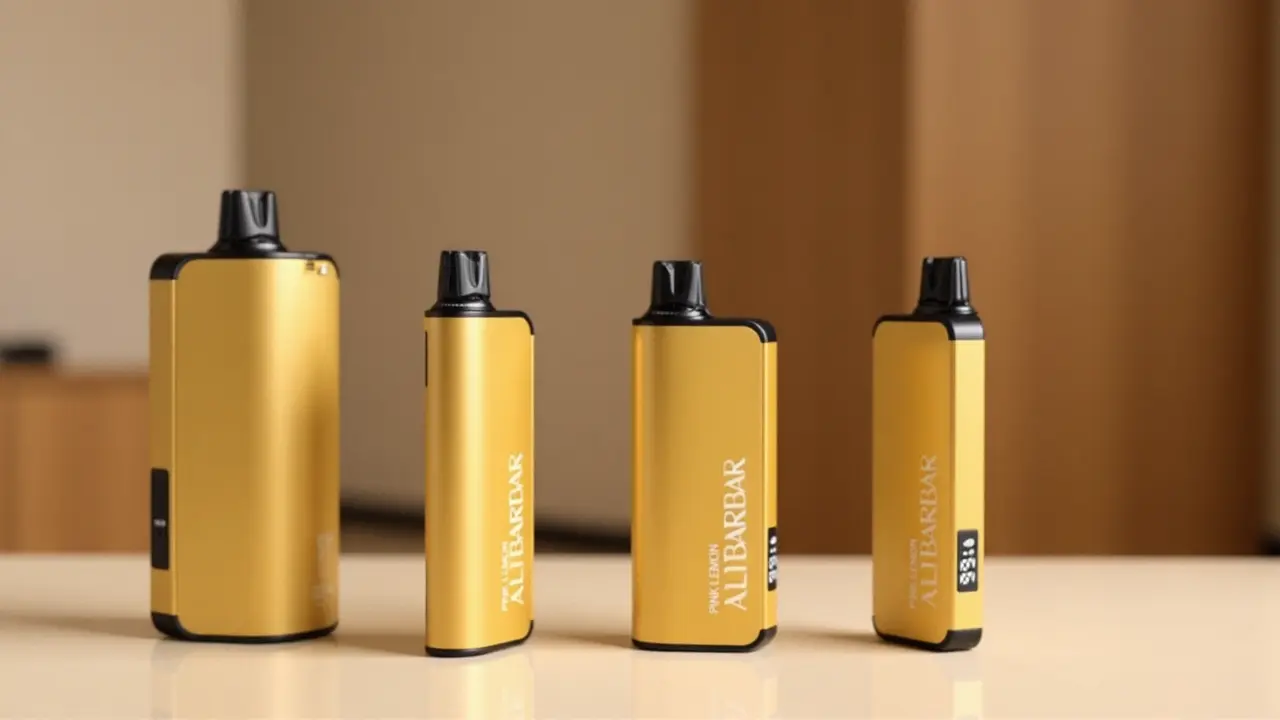
The less opportunity for petrol vapour to reach an internal electrical contact, the narrower the window of risk. While no mainstream vaporiser is certified for explosive atmospheres, devices built with precisely fitted gaskets, welded internal frames, and restricted airflow paths through the electronics compartment do reduce vapour ingress. The ALIBARBAR INGOT series exemplifies this philosophy: the chassis is constructed so that the air intake passage for the puff sensor is physically isolated from the circuit board by a moulded silicone manifold, and the USB‑C port is recessed into a sealed sub‑housing rather than directly exposing the main PCB.
This design discipline originates from the brand’s broader engineering stance — build devices that eliminate the small, everyday irritations that erode satisfaction, including the unease that comes from wondering whether a bit of moisture or dust has found its way inside. The same stance, extended, explains why users report greater consistency and fewer unexpected shutdowns over the full operational life of the device.
Status Transparency and User Feedback (H3)
A vaporiser that fails silently is a vaporiser that places the user in an information vacuum. Devices with unambiguous haptic or LED feedback — for short‑circuit protection, low‑voltage cutoff, over‑temperature lockout, and atomiser open‑circuit detection — allow the user to intervene before a minor fault escalates. The ALIBARBAR Ice Adjust 12000, for instance, communicates battery state through a graduated LED array that updates in real time, not just at power‑on. This may seem a modest convenience; in practice, it means you are not standing at the fuel pump guessing whether the device is genuinely off or merely idling in standby.
A Practical Framework for Safe Device Selection (H2)
While the pump‑side prohibition is absolute, the broader question — “What kind of device can I trust to behave predictably across all the ordinary environments I encounter?” — invites a structured evaluation that any adult can apply.
Verify supply chain provenance. A device of unknown provenance carries an unknowable risk profile. Retailers that operate on an authorised‑distribution model, such as OZVAPE Shop, maintain a documented chain of custody. This creates accountability that grey‑market sellers cannot offer.
Check for multi‑layer cell protection. Look for specific mention of over‑charge, over‑discharge, short‑circuit, and over‑temperature protection in the official specification. Vague language (“safety protections”) is a signal that the manufacturer is not willing to itemise what it has built in.
Assess chassis integrity and ingress resistance. Devices with seamless unibody construction, properly recessed ports, and tactile, gasketed buttons are inherently more resistant to environmental intrusion than snap‑together assemblies with exposed seams.
Examine status feedback. A device that tells you when it is protecting itself gives you agency. A device that simply stops working — and leaves you to guess whether the cause is a flat battery, a coil fault, or a protection trigger — transfers risk to you.
These criteria are not merely academic. They are the same factors that differentiate the devices that quietly complete their service life without incident from those that generate posts on user forums asking, “Has anyone else’s device got hot while charging?”
Common Selection Errors That Increase Everyday Risk (H2)
The disconnect between user intention and outcome often follows a small number of recurring patterns. Recognising them is a form of self‑defence.
Prioritising form factor over thermal architecture. A device that is aggressively miniaturised usually achieves its small size by reducing the thermal mass around the cell and the PCB. This leaves it with less ability to sink heat away during sustained use or rapid charging. In a scenario where the device is accidentally left in a vehicle on a warm day — not uncommon during a fuel stop — that thermal margin becomes meaningful.
Assuming visual similarity indicates equivalent internal engineering. The external appearance of a device tells you almost nothing about the cell grade, the BMS chipset, or the soldering quality on the main board. Two products that look indistinguishable in a photograph can have dramatically different safety margins.
Undervaluing modularity from a safety standpoint. A sealed, disposable device that cannot be inspected means the user has no way to assess cell swelling, corrosion, or connector wear. Replaceable‑pod systems that allow a degree of inspection, or that separate the power section from the consumable section, naturally offer more opportunity to catch a developing problem.
Confusing marketing language with engineering disclosure. Terms like “military‑grade” or “aerospace‑grade” are not regulated in consumer electronics and frequently signal a lack of substantive technical claims. Real confidence comes from listed protection features and transparent disclosure of battery origin.
These observations are drawn from industry awareness and from the pattern of user reports that accumulate over multiple product generations. They are not hypothetical. The devices that most often prompt safety‑related queries are, overwhelmingly, the ones where the manufacturer has chosen to disclose the least.
Frequently Asked Questions (H2)
Q: Can I vape while pumping breast milk?
A: The question usually refers to fuel pumping, but if the concern is about vaping while expressing breast milk, the health guidance from paediatric and public health authorities advises against nicotine and aerosol exposure near infants. The device itself poses no explosion risk in that setting, but the broader exposure risk to the child is the primary consideration.
Q: If my device has a “pass‑through” or “auto‑off” feature, is it safe to vape near fuel?
A: No. Auto‑off features reduce the chance of unintended activation, but they do not eliminate electrical arcing, battery failure risk, or the possibility of a dropped‑device short circuit. The safe course is to turn the device fully off and store it away from the fuelling area.
Q: Does the type of e‑liquid affect the ignition risk at a fuel pump?
A: The ignition risk is unrelated to the liquid formulation. It originates from the device’s electrical and thermal characteristics. The aerosol itself does not make the environment safe or unsafe.
Q: Are some batteries less likely to cause a spark than others?
A: All lithium‑ion cells rely on internal chemical reactions that can generate heat and gas if compromised. Cell quality and protection circuitry reduce the probability of failure, but they do not render the device intrinsically safe for hazardous atmospheres.
Q: How can I be sure I’m buying a device with proper battery protections?
A: Purchase from a retailer that sources directly from authorised distributors and that publishes the manufacturer’s specifications in full. At OZVAPE Shop, every product listing includes the protection features as disclosed by the brand, allowing a direct comparison that unauthorised sellers rarely facilitate.
Q: Is it safe to leave a vaporiser in the car while refuelling?
A: Storing the device inside the vehicle, away from the pump, is far safer than handling it near the vapour zone. Ensure it is switched off and not exposed to direct sunlight that could elevate the internal cell temperature.
Q: What should I do if I drop my device at a service station?
A: Do not attempt to use it. Move away from the pump area, inspect the device for deformation or hissing sounds, and place it in a non‑flammable container if available. A dropped device with internal damage can evolve into a fire minutes later, so it should not be brought back into the vehicle immediately.
Q: Does the ALIBARBAR range include any safety features relevant to this discussion?
A: Yes. The ALIBARBAR device family — including the INGOT 9000, INGOT 15000, and Ice Adjust 12000 — incorporates multi‑stage battery protection, isolated airflow paths, and real‑time status feedback. These features are documented and verifiable, not merely asserted.

Conclusion
The prohibition against vaping while pumping fuel is not an excess of caution; it is a direct consequence of the physics that govern flammable vapour, electrical arcs, and lithium‑ion energy density. What makes this a useful discussion, however, is not the rule itself but the insight it offers into the broader importance of device engineering and sourcing integrity.
A vaporiser that is built with redundant protections, honest status feedback, and a traceable supply chain is not just safer in the extraordinary moments — it is more predictable, more durable, and more aligned with the user’s actual routine. That is the reasoning that guides the product selection at OZVAPE Shop, where every device in the catalogue must meet a documented standard before it is made available to an adult buyer.
External link: OZVAPE Shop (opens in a new window)
The right device is the one that fits your life without requiring you to constantly compensate for its shortcomings. By applying the framework above — and by choosing to purchase through a channel that treats transparency as a baseline rather than a bonus — you are far more likely to own a device that earns your trust, every day, no matter where the day takes you.