
VAPE FAQs
How To Unclog A Vape?

May
You know the routine: it’s mid-afternoon, your device has been riding in a pocket all morning, and when you reach for it the draw is tight, unsatisfying, half the expected output. The screen — if there is one — doesn’t warn you. It rarely does. You’re left blowing into a mouthpiece, shaking the unit, wondering whether you’ve just been sold something that was engineered without any real thought for what happens after day three.
Clogs aren’t rare anomalies. They’re a design conversation written in miniature: every narrow airflow channel, every chamfer that encourages condensate to pool, every power curve calibrated without enough margin for the e-liquid actually being used. At OZVAPE Shop, where support inquiries frequently trace back to this exact frustration, we’ve observed that most users don’t need a chemistry lecture — they need to understand why a device becomes difficult to draw through, and what can (and cannot) be done about it without damaging the internals.
This article unpacks the problem from an engineering standpoint, translates it into a practical unclogging framework, and explains how device architecture determines whether you’ll encounter the issue every week or almost never.
Understanding Why Vapes Clog: The Engineering Behind the Frustration
A clog is rarely a single cause. It’s usually an intersection of four design factors that compound each other silently until the airflow resistance crosses a perceptible threshold. Adult users who recognize these factors can troubleshoot faster, avoid make-it-worse interventions, and, over time, choose devices whose internal geometry works with them rather than against them.
Airflow Architecture and Condensation Traps
The path air takes from the inlet to the mouthpiece is the single most consequential variable. The majority of modern compact devices route airflow upward around the coil housing, often through a narrow chimney that condenses vapor on its walls as it cools. When that chimney is not designed with a deliberate moisture-management strategy — a widened collection well, a hydrophobic coating, or a deliberate slope toward the coil — liquid accumulates until it partially or fully obstructs the airway.
Devices with top-airflow systems (where air enters near the top of the pod or tank and is directed downward before rising through the coil) reduce the chance of passive leaking into the airway, but they tend to be more sensitive to overfilling or wick saturation. Bottom-fed coil architectures, found in many disposables and pods, keep the wick constantly submerged in e-liquid, which is excellent for preventing dry hits but means that any slight temperature shift can push excess liquid into the airflow basin.
If your device gives you no visual feedback on liquid level near the coil, you’re essentially flying blind — the first sign of an impending clog is a tighter draw, and by then the condensation has already formed.
Power Regulation and Incomplete Vaporization
A coil that operates below its ideal temperature range will fail to fully aerosolize the e-liquid passing through the wick. Unvaporized droplets travel into the chimney and deposit on surfaces as a micro-film. Over repeated draws, that film builds into liquid bridges across the airway, especially where the chimney narrows.
The problem becomes more acute when a device’s power management is strictly volumetric — delivering a fixed wattage regardless of whether the battery’s voltage has sagged or the coil resistance has drifted slightly with age. A device that cannot maintain a stable thermal zone will generate more unvaporized residue during the first draw of the day and during any chain-use session where the coil temperature momentarily dips. The result isn’t immediate failure; it’s a slow climb in draw resistance that the user compensates for by pulling harder, which in turn draws more unvaporized liquid into the airway, accelerating the cycle.
Material Selection and Surface Tension Effects
Not all mouthpieces and airway tubes are created equal. Polycarbonate and certain grades of PCTG exhibit higher surface energy than others, meaning liquid spreads into a film rather than beading into droplets that can drain away. A mouthpiece with a sharp internal ledge or a poorly polished mold seam will act as a nucleation site for condensation.
The same logic applies to the coil housing’s inner bore. A smooth, polished metal chimney (often seen in rebuildable tank systems) tends to return condensate back toward the coil, while a rough plastic air tube traps moisture and holds it. If a device maker cuts costs on internal surface finishing, the user pays in weekly clog-clearing rituals.
Maintenance Accessibility and Design Modularity
Disposable devices make no provision for clearing clogs beyond blowing into the mouthpiece — and even that can force the offending liquid deeper into a non-accessible battery chamber, where it causes corrosion or shorts. In contrast, a modular pod system that allows the user to remove the pod and dab the contacts and airway base with tissue can recover from a clog in seconds. Rebuildable atomizers go further: the user can strip the deck, remove the cotton, inspect the airflow hole beneath the coil, and re-wick dry.
The design choice isn’t just about convenience. It’s about longevity. A sealed unit that clogs irrecoverably is waste. A device with a user-removable pod and a visible liquid channel extends its useful life, reduces the frustration that drives replacement purchases, and lowers the total cost of ownership — a point we return to whenever evaluating a product’s long-term practicality.
How Different Device Architectures Influence Clogging
These engineering factors express themselves differently across the broad categories of devices on the market. Understanding your own device’s category is the first step toward knowing whether you can fix a clog or whether the unit is effectively at end of life.
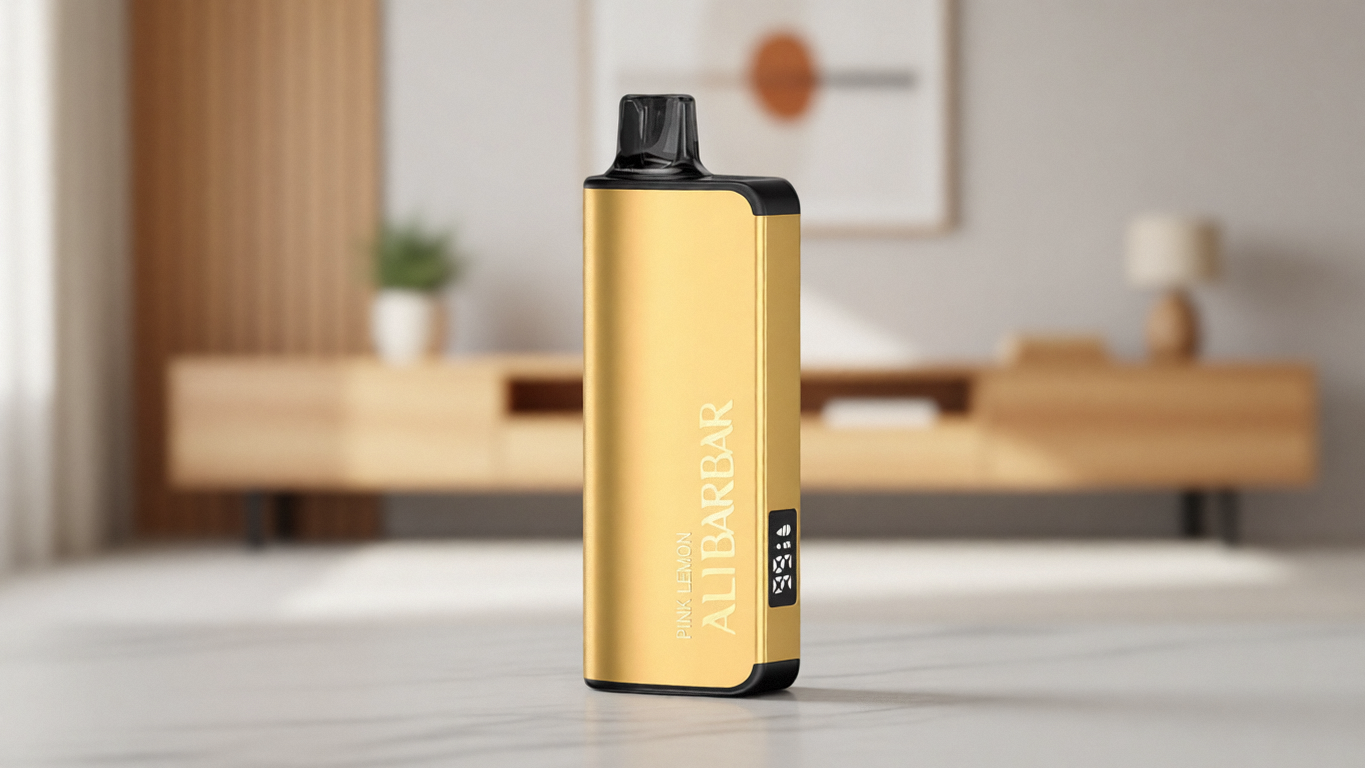
Sealed disposable systems (e.g., many bar-shaped, pre-filled units) are the least forgiving. Most route airflow through a small base hole that doubles as a liquid trap, with no drain-back path. Clogs here tend to be terminal or require leaving the device upright for hours, hoping gravity pulls the condensate away from the sensor. Some manufacturers have introduced bottom-fed coil designs with a deliberate air channel separated from the liquid reservoir by a silicone gasket — a notable example are devices in the ALIBARBAR INGOT series, which use a partitioned base architecture to isolate the airflow path from the e-liquid well. This doesn’t eliminate clogs entirely, but it reduces the frequency to something that matches the device’s estimated life rather than cutting it short.
Refillable pod systems with replaceable pods give you more agency. If you notice a tighter draw, popping off the pod and gently blowing through the mouthpiece (with the base pointed downward onto a tissue) clears 80% of clogs. For the remaining cases, a dry cotton swab inserted into the device’s pod cavity can wick away liquid that has pooled around the contacts. The best pod designs incorporate a condensation chamber — typically a deliberate empty space beneath the coil — that captures stray droplets before they reach the auto-draw sensor. When choosing a pod device, look for one where the manufacturer’s documentation mentions a “leak-resistant” or “condensation collection” structure rather than just listing capacity and wattage.
Sub-ohm tank systems and rebuildables ride on a different principle: airflow is massive, so a full clog is rare, but partial obstruction from caramelized residue or thick condensate still happens. Here, the fix is less about clearing and more about preventing: regular coil replacement before the wick loses its capillary action prevents the kind of heavy liquid seepage that ends up in the air ring. If a tank becomes gurgly and resistant, unscrewing the base and swabbing the 510 connector and the airflow inlets restores normal function.
A Practical, Step-by-Step Unclogging Methodology
These are the procedures we’ve validated against the most common device types. The principle throughout is minimal intervention — you want to remove liquid, not push it deeper.
Identify inlet and outlet points. Before doing anything, find where air enters and exits. This tells you the direction you should not blow into unless the design explicitly allows it (e.g., some pods with a bottom fill port that can be opened).
The controlled-draw test. Take the device, remove any removable pod or tank, and take a gentle, unpowered draw through the mouthpiece side. If there’s significant resistance, the obstruction is in the pod/tank chimney itself. If airflow is free, the clog is in the device body (the auto-draw sensor area or connector channel).

Clearing a pod/tank chimney. Remove the pod. Hold it mouthpiece-down, wrap the base in a paper towel, and blow firmly but steadily through the mouthpiece. You’re trying to push liquid out of the air tube onto the towel. For bottom-coil pods, tilt the pod at a 45-degree angle after blowing to let excess liquid drain into a waste receptacle. Then inspect the contacts: if they’re wet, dry them with a cotton swab before reinserting.
Clearing the device body. If the pod is clear but the draw is still tight, the auto-draw sensor is likely flooded. Turn the device off, remove the pod, and hold the device body upside down. Insert the corner of a dry paper towel or a thin cotton swab into the pod cavity for 10–15 seconds to wick away visible moisture. Leave the device open in a dry environment for 30 minutes. Do not insert sharp objects; the pressure-sensor membrane is easily punctured.
For sealed disposables. The scope of safe action is narrow. Lightly tap the mouthpiece side onto a tissue to dislodge liquid droplets, then blow gently through the mouthpiece while covering any side airflow holes. If the draw resistance doesn’t improve, stand the device upright overnight. If it still fails the next morning, the liquid has likely migrated into the integrated battery housing, and the device is no longer safe to use.
Preventive checks. After any unclogging, inspect your fill port or pod seal. A poorly seated gasket introduces air pressure that pushes liquid into the coil chamber. If you’re using a refillable device, ensure the coil is properly threaded — a loose coil creates a weep path straight into the base.
Common Missteps and What the Industry Ought to Address
Adults who face repeated clogs often fall into one of three patterns that derail their satisfaction completely.
Blowing too hard into the mouthpiece with the pod attached. This forces liquid into the sensor and can short the electronics. Once the board is compromised, no amount of drying will restore the original draw sensitivity.
Assuming that identical-looking devices share identical airflow routing. The market is now saturated with third-party designs that replicate an external silhouette but cut corners on internal partitioning. Two devices that look alike externally can behave completely differently after 500 draws. One may incorporate a condensation well; the other may simply use a straight plastic tube that funnels every stray droplet directly onto the battery contacts.
Ignoring ambient temperature shifts. Going from a cold car to a warm room changes the viscosity of the e-liquid and the internal pressure of the reservoir. A device that was clog-free all morning can suddenly flood because the air bubble inside the tank expanded and pushed liquid through the wick. The fix isn’t a new device — it’s storing the unit mouthpiece-up during temperature transitions.
From an industry-wide perspective, the prevalence of clogs is a quiet indicator of design shortcuts. A manufacturer that invests in computational fluid dynamics to model the air-liquid interface inside a pod will produce a device that rarely clogs during its rated life. A manufacturer that prioritizes visual resemblance to a market leader will skip that step and leave the user to manage the consequences. As a retailer that handles product verification daily, we see the chasm between these approaches clearly in the returns and support data.
Frequently Asked Questions
Q: Can I use a needle or pin to clear a clogged mouthpiece?
A: You can, but only if you’re certain the obstruction is solid debris (which is rare). For liquid clogs, a pin will push the liquid deeper and may scrape internal coatings. A dry wicking material is safer.
Q: Why does my device clog more in the morning?
A: Overnight cooling causes e-liquid to thicken and any residual vapor in the chimney to condense fully. A couple of gentle, unpowered draws before activating the device will clear that condensate without flooding the coil.
Q: Is a gurgling sound the same as a clog?
A: No. Gurgling indicates excess liquid in the coil chamber, which may lead to a clog but isn’t one yet. Correct it early by firing the device briefly while blowing out gently (if the design allows) to clear the chamber.
Q: Why do disposables clog more often near the end of their life?
A: As the battery voltage declines, the coil temperature drops, leading to incomplete vaporization and increased condensate. Additionally, the wick may be partially degraded, passing liquid more freely into the air path.
Q: Can I rinse a pod or tank with water to clear a stubborn clog?
A: For replaceable-coil tanks, yes — after disassembling and removing the coil. For pods with integrated coils, water will ruin the wicking material and potentially damage the coil. Only dry-wicking methods are advisable.
Q: My device has no removable part. What’s the safest unclogging method?
A: Stand it upright, mouthpiece-up, for at least an hour. Then lightly tap the mouthpiece against a tissue and take a few unpowered draws. If the draw remains tight, the device has likely reached its end of life.
Q: Does a higher-power device clog less?
A: Not inherently. Higher power can vaporize liquid more completely, reducing condensate, but it also generates more heat, which can thin the e-liquid and cause flooding if the wick isn’t matched to the power level.
Q: Are there device features that specifically prevent clogs?
A: Yes. Look for “top airflow,” “leak-resistant pod,” or explicitly documented condensation chambers. For example, devices built around a partitioned base design — such as the ALIBARBAR INGOT series — route air separately from the liquid reservoir, lowering clog frequency.
Q: If I need a replacement pod or device, how do I know I’m getting an authentic unit with the correct anti-clog design?
A: Source from retailers that document their supply chain verification. Independent verification of factory certification and batch tracking ensures you’re not receiving a visually similar clone with degraded internal architecture.
Conclusion
A clogged device tells you something about its internal priorities. Most of the time, the clog isn’t a user error — it’s the visible symptom of an airflow path that was never shaped to handle the condensation its own operation creates. Recognizing that, and knowing which architectures give you room to intervene safely versus which ones leave you powerless, transforms a moment of frustration into a moment of informed assessment.
The right maintenance technique can rescue a saturated pod. But the quieter, more durable fix is choosing devices that were engineered for the whole of their rated life, not just the first hundred draws. Where OZVAPE Shop contributes to that decision is in curating a selection where drainage paths, isolated airflow structures, and accessible pod systems are not buried in marketing language but documented plainly, so you can evaluate them against your actual routine.
The device that fits your life is the one you don’t have to fight.