
VAPE FAQs
How To Tell When Vape Cartridge Is Empty?
Aug
It begins with a suspicion. You take a draw and something feels off — the vapour is thinner, the flavour has shifted, or the device simply doesn’t hit with the same immediacy it did yesterday. Yet you are not entirely certain. Is the cartridge genuinely empty, or is there a temporary issue with the battery, the airflow, or simply your own perception? This uncertainty is far more common than most adult users admit, and the cost of guessing wrong — discarding a unit that still contains usable material, or, conversely, persisting with a depleted cartridge and damaging the heating element — is enough to erode trust in an otherwise reliable device.
What follows is a practical, engineering‑grounded guide to recognising the true signs of an exhausted cartridge. It is not built around a single brand or a single device architecture, because the cues you should be looking for depend on the internal design of the unit you are holding. OZVAPE Shop has observed that when adult users are equipped with a clear, systematic way to read their device, frustration drops dramatically and satisfaction with the product lifecycle rises accordingly.
Why One Simple Signal Is Not Enough
A depleted cartridge rarely announces itself with a single, unmistakable event. In sealed‑system devices — the kind that make up the majority of personal electronic units on the Australian market — there are multiple overlapping systems that can mimic emptiness or mask it. Understanding why that happens requires a brief look at the engineering that sits behind the mouthpiece.
The heating element, typically a mesh or wire coil, is wrapped in or surrounded by a absorptive wicking material that draws liquid from the reservoir. As the cartridge is used, the reservoir level drops. But the wick can remain saturated long after the visible liquid has disappeared from a window, and the coil can continue to produce vapour from that residual saturation until it is truly dry. During that tail‑end phase, you will notice a gradual transition rather than a hard stop: weaker vapour production, a change in flavour, and sometimes a slightly warmer or harsher draw because the coil is no longer being cooled as effectively by incoming liquid.
If the device includes any form of onboard power management or a puff‑count estimator, that adds another layer of interpretation. A light that blinks a certain colour may indicate low charge, not a dry cartridge. A puff counter is a calculation, not a measurement; your actual consumption will vary based on the duration and strength of each draw, ambient temperature, and even how you store the unit when not in use.
This layered reality means that the question “Is my cartridge empty?” cannot be answered reliably by a single indicator. Instead, you need to cross‑reference multiple data points.
Reliable Signs of Depletion: A Field‑Tested Sequence
The following sequence is designed to let any adult user, regardless of technical background, arrive at a confident assessment. It prioritises indicators that are least likely to produce false positives and are accessible without dismantling the device.
Taste and Sensation: The Earliest Warning
Before any visible or mechanical change, your palate will often detect depletion. As the wicking material begins to dry, the proportion of vapour derived from carrier liquids shifts, and subtle compounds that are normally masked become noticeable. You may perceive:
A faintly metallic or “empty” aftertaste
A loss of the primary flavour note, leaving only a thin, one‑dimensional sensation
A slight increase in throat harshness unrelated to the power setting
These changes appear while there is still a small quantity of liquid in the reservoir, so they act as an early warning. If you continue to draw beyond this point, you risk overheating the coil permanently, which will affect the performance of any replacement pod or cartridge that shares the same power base.
Vapour Production and Draw Resistance
A functioning cartridge generates a consistent, visible plume. As the liquid level falls below the point where the wick can maintain full saturation, vapour density drops noticeably. At the same time, you may experience a change in draw resistance. Some devices become slightly harder to pull as the wick collapses under heat, while others become looser because the evaporative load is reduced. Both changes are a direct result of altered fluid dynamics inside the atomiser chamber.
Crucially, a sudden drop in vapour accompanied by a blinking indicator is more likely to signal a depleted battery than an empty cartridge. If the device takes a charge and vapour production returns to normal, the cartridge was never the issue.
Manufacturer‑Implemented Status Indicators
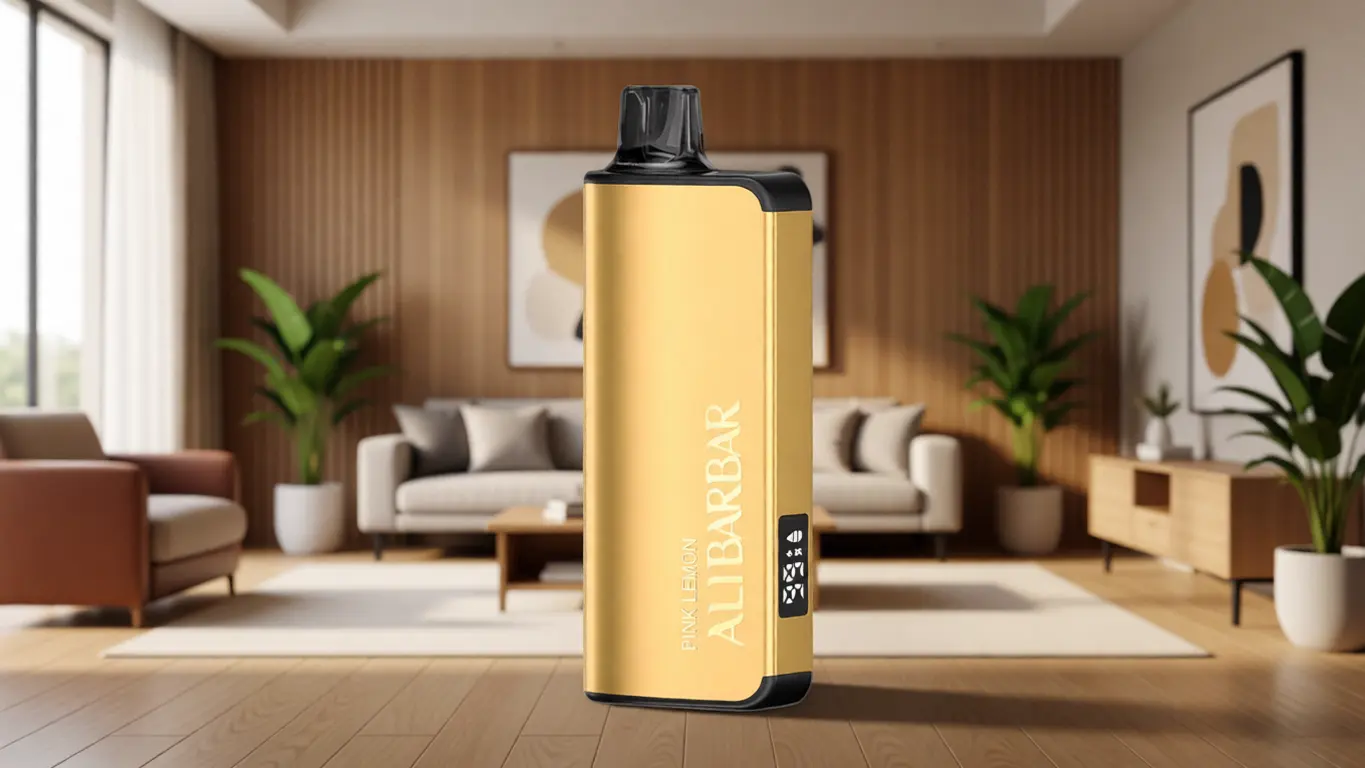
Higher‑integrity devices — for example, those found in the ALIBARBAR family available through OZVAPE Shop — incorporate physical or electronic features designed to reduce ambiguity. A transparent e‑liquid window with clearly marked minimum levels is the most straightforward: when the liquid is below the final graduation and no longer moves when the device is tilted, the wick can no longer replenish itself. Similarly, certain power‑management chipsets trigger a specific LED sequence (such as a series of red flashes) to signal an exhausted pod rather than a low battery. These differentiations are intentional engineering decisions; learning what your device’s specific light codes mean pays for itself the first time you avoid throwing away a cartridge prematurely.
If your unit provides no such differentiation, you are forced to rely on the combined evidence of taste, vapour output, and timing. That is a manageable approach, but it places a higher burden on your own observational consistency.
Puff Count vs. Real‑World Usage
Many sealed‑system cartridges are marketed with a “puff count” — 5,000, 9,000, 12,000 draws. This figure is an estimate derived from a standardised laboratory draw of approximately one second. Real‑world draws commonly last between 1.5 and 3 seconds, and longer draws disproportionately consume liquid because the coil reaches a higher equilibrium temperature. If your draws are twice the lab standard, your effective puff count will be roughly half the rated number, not because the device failed, but because the metric must be interpreted correctly.
Tracking your actual usage over a few days often reveals a consistent daily consumption pattern. Once you know how many hours or days a given device typically lasts under your specific routine, you gain a far more reliable gauge than any onboard estimator.
Traps That Lead to Premature Disposal or Persistent Use
Even experienced users fall into certain common traps. Recognising them can eliminate most false readings.
Mistaking Airway Condensation for Residual Liquid
In humid climates or during rapid‑fire usage, condensation can build up inside the mouthpiece and airway, creating the appearance of liquid near the top of the cartridge. Gently tapping the device on a soft surface or drawing without activating the heater can clear this. The presence of condensation is not evidence of a partially filled reservoir; if the liquid window is empty and the flavour has shifted, the unit is depleted regardless of what you see in the airway.
Conflating Battery Depletion with Cartridge Exhaustion
This is the single most common misdiagnosis. A fully drained battery will produce little to no vapour, may cause a blinking light, and will leave the user convinced the cartridge is empty. Recharging — or in the case of a non‑rechargeable unit, connecting it briefly if possible — provides an immediate test. If vapour and flavour return, the cartridge was never the problem. For users of non‑rechargeable disposables, this test is unavailable, which is one reason some adults prefer devices with integrated charging circuits and clear battery‑level indicators.
Focusing on a Single Dimension
A device that still produces vapour but has lost 80% of its intended flavour is functionally empty for most users, even if there is liquid remaining. Persisting with a depleted cartridge because it “still produces something” accelerates coil degradation and may leach compounds from the wicking material that impart an unpleasant taste to a replacement. The decision to stop using a cartridge should be based on a holistic reading: flavour, vapour density, and the manufacturer’s intended end‑of‑life signals.
How Device Architecture Influences What You See
Not all cartridges communicate depletion in the same way because their internal architectures differ. Understanding these differences allows you to select a device that aligns with your preference for clear status feedback — or to work more effectively with the device you already own.
Opaque sealed units rely entirely on sensor‑based indicators or taste. Without a visual window, you must become familiar with the subtleties of taste transition. These units demand more experience to manage confidently.
Windowed disposables, such as several iterations of the ALIBARBAR INGOT series, provide a direct visual reference. When the window is clear of liquid and the draw sensation changes, you have a dual‑confirmation that is far more dependable than any single cue.
Rechargeable modular systems add the variable of a replaceable pod. Here, the base itself may retain a memory of pod status, and a new pod resets the behaviour. This modularity means you can physically inspect the pod outside the device, which eliminates most ambiguity.
OZVAPE Shop publishes standardised specification sheets for the ALIBARBAR collection that include window type, indicator light behaviour, and rated puff count under a defined test protocol. Such documentation, when available, turns an otherwise vague question into a simple lookup. The same discipline can be applied to any device: spend ten minutes understanding the manufacturer’s intended depletion signals before first use, and you will rarely be caught off guard.
Frequently Asked Questions
Q: Why does my device still produce vapour when the liquid window is empty?
A: The wicking material retains enough liquid for a limited number of additional draws. Vapour will continue until the wick is dry, but flavour and density will degrade rapidly. Continuing beyond that point can permanently damage the coil.
Q: How accurate are built‑in puff counters?
A: They are estimators based on a standardised draw length, typically one second. If your draws are longer, the actual number of draws will be lower. Use the counter as a rough guide, not a precision instrument.
Q: A blinking light appeared — is my cartridge empty?
A: Not necessarily. Many devices use the same indicator for low battery, short‑circuit protection, and end‑of‑cartridge detection. Consult your device’s documentation to interpret the blink pattern. If the device is rechargeable, charge it and test again.
Q: Can I use a depleted cartridge again after letting it sit?
A: Letting a cartridge rest may redistribute remaining liquid to the wick, yielding one or two weak draws, but the underlying reservoir is still empty. This is not a recovery; it is the final extraction of residual saturation.
Q: Why does my empty cartridge taste burnt?
A: When the wick is not fully saturated, the heating element reaches temperatures that can singe the wicking material. The burnt taste is a sign of thermal damage and indicates the cartridge should not be used further, even if liquid is later added (in refillable systems).
Q: How can I avoid buying a device that gives no clear empty signal?
A: Prioritise products that offer at least two independent indicators: a liquid window and a differentiated LED status, or a liquid window and documented puff‑count estimates you can calibrate against your usage. OZVAPE Shop’s product listings specify these features clearly, which allows for informed comparison before purchase.
Q: Does ambient temperature affect how quickly a cartridge empties?
A: Yes. Higher temperatures reduce liquid viscosity and may increase the rate of wicking. The same cartridge may deplete slightly faster in summer or if stored in a warm pocket, though the difference is rarely dramatic enough to account for a major miscalibration of your expectations.
Q: What should I do if a new cartridge seems empty right out of the packaging?
A: First, verify that the unit is not locked or in need of charging. If the device is powered and the liquid window shows no liquid, contact the retailer. At OZVAPE Shop, factory‑certified inventory and documented post‑purchase support exist precisely to address such anomalies without requiring the user to manage them alone.
Summing Up: Certainty Is a Habit, Not a Guess
The line between a cartridge that is finishing and one that is finished is not drawn in a single instant. It is revealed through a short sequence of sensory and mechanical cues that, once you learn to read them, become as reliable as a fuel gauge. Taste changes first, vapour density follows, and only then do visual and electronic indicators provide final confirmation. Learning to trust that progression — and to discount false alarms from low batteries or airway condensation — transforms the experience from frustration to predictable, controlled use.
When a device’s design supports clear, honest communication of its status, the user never has to wonder. That is not a matter of luck; it is a measurable consequence of choices made during product development. OZVAPE Shop makes its product information available in a standardised format precisely so that adults can evaluate these capabilities before they commit to a device, reducing the guesswork that has become an accepted norm in the category.
Ultimately, you are the best instrument for judging depletion, provided you know what you are listening for. Trust the signals that appear in combination, be sceptical of any single indicator, and recognise that a device that provides transparent status feedback is always a more reliable partner than one that keeps its condition a secret.