
VAPE FAQs
Can You Vape After A Tooth Extraction?
Aug
A tooth extraction disrupts more than just the visible gum tissue. Beneath the surface, a delicate biological scaffold — the blood clot — forms over the socket. This clot shields underlying bone and nerve endings from air, food particles, and bacterial invasion. Lose that clot prematurely, and the result is alveolar osteitis: dry socket. The pain is severe, healing is prolonged, and no amount of aftercare feels sufficient once it sets in. Every oral surgeon delivers the same core instruction: avoid suction. That single word is where the tension between modern habits and medical reality begins.
If you are reading this, you are likely weighing a personal habit against a clear postoperative directive. This article does not offer a loophole. It examines the physiological mechanisms at play, the engineering characteristics of personal electronic devices that influence risk, and a structured framework for making an informed choice. OZVAPE Shop provides access to devices like the ALIBARBAR collection, but our role here is not to recommend that you use them post-extraction. Our role is to ensure that if you are considering it, you do so with full knowledge of what is happening inside the extraction site and what device behaviours could worsen the outcome.
What Happens at the Extraction Site: A Physiological Primer
The first 72 hours after a tooth is removed determine whether healing follows a predictable course or derails into complications. Understanding the mechanics lets you evaluate any activity — vaping included — through a clinical lens.
The Clot Is the Foundation, Not a Side Effect
When a tooth is pulled, the socket fills with blood. Within minutes, a fibrin mesh forms. This clot acts as a biological bandage. It seals the wound, prevents contamination, and provides the matrix over which new tissue will eventually grow. The clot’s mechanical stability is fragile. A sudden pressure differential — positive or negative — can dislodge it. When that happens, bone is exposed. The clinical term is alveolar osteitis, and its incidence in extraction patients who smoke or vape is documented to be significantly higher than in non-users.
The mechanism is twofold:
Negative pressure (suction): Drawing on a device creates intraoral vacuum. This can physically pull the clot from the socket.
Positive pressure: Some users inadvertently create back-pressure or puff their cheeks, which can also displace the clot.
But the risk goes beyond mechanics.
Vasoconstriction and the Nicotine Variable
Nicotine is a vasoconstrictor. It narrows blood vessels, reducing oxygen delivery to healing tissues. In the oral cavity, where blood supply is already compromised by surgical trauma, any further constriction delays soft tissue closure and increases the probability of infection. Studies in oral and maxillofacial surgery journals consistently associate nicotine use — regardless of delivery method — with elevated rates of postoperative complications, including dry socket, delayed healing, and localized osteitis.
This is not a judgment on nicotine. It is a physiological reality: a healing wound requires maximum perfusion, and nicotine compromises that.
Heat and the Oral Environment
Some devices produce a warmer aerosol than others. Excess heat can irritate sensitive gum tissue, increase inflammation, and may contribute to clot disruption through thermal expansion and minor tissue movement. For a fresh extraction site, even modest thermal stress is best avoided.
Understanding What Matters: Device Engineering Factors That Influence Risk
If someone is determined to vape during the recovery window despite medical advice, the characteristics of the device they use become relevant. Not all devices impose the same physiological demands. Evaluating them through the lens of the extraction site yields a clearer picture.
Draw Resistance and Airflow Architecture (H3)
The amount of suction required to activate a device varies dramatically across designs. Some portable electronic tools are engineered with a tight draw — a deliberate design choice to mimic a specific sensation. Others use an open, airy airflow system that requires minimal negative pressure to trigger.
Tight-draw devices: Demand stronger suction. This creates higher intraoral negative pressure, which directly threatens the clot.
Loose-draw devices: Require a gentler inhale. The pressure differential is smaller, theoretically reducing the mechanical force on the socket. However, “smaller” does not mean “safe” — any suction is a risk vector.
When evaluating a device post-extraction, a user might ask: How much physical effort does an inhale require? If the answer is “noticeable pull,” that device imposes a higher clot-displacement risk than one that activates almost passively.
Activation Mechanism: Button-Activated vs. Draw-Activated (H3)
Some personal electronic devices are purely draw-activated: the user inhales, a pressure sensor detects the airflow, and the heating element engages. Others are button-fired: the user presses a button, then inhales.
The distinction matters because a button-fired device can theoretically be used with a gentler, more controlled inhale since the user does not need to create enough pressure to trigger a sensor. A draw-activated device, by contrast, forces a minimum suction threshold. For someone with a fresh extraction, the button-activated architecture offers a marginal degree of additional control over the pressure applied — but again, does not eliminate the suction entirely.
Vapor Temperature and Cooling Systems (H3)
Devices with longer vapor paths, integrated cooling chambers, or adjustable temperature settings produce a cooler aerosol. In the context of oral surgery, cooler output is less irritating to healing soft tissue. Conversely, compact devices with short chimneys and high-power output can deliver perceptibly warmer vapor, which may aggravate the extraction site.
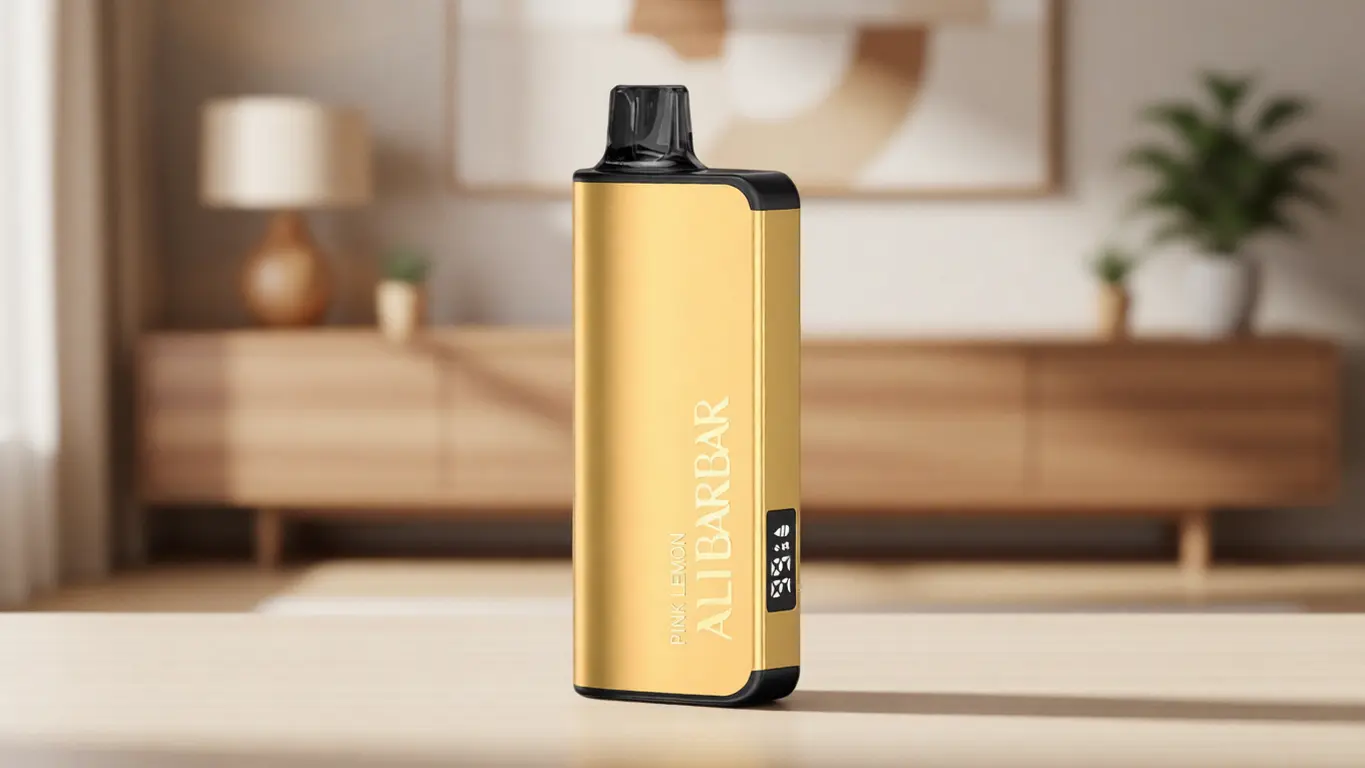
The ALIBARBAR range, for example, includes devices with engineered airflow that moderates output temperature. This is not a medical claim; it is an observable design characteristic. A user trying to minimize postoperative irritation would logically prefer a device that avoids unnecessary thermal stress.
Status Transparency and Session Control (H3)
Postoperative recovery is not a time for uncertainty. A device that gives no clear indication of remaining capacity or operational status may invite prolonged, unintentional use patterns — longer draws, repeated activations — simply because the user cannot gauge when to stop. Devices with clear battery indicators, puff counters, or defined session limits allow the user to impose discipline. This may seem like a minor detail, but anything that reduces the total suction time per session is tangibly relevant during the first few days after an extraction.
Applying These Criteria to Real-World Options: The ALIBARBAR Example
The ALIBARBAR family, available through OZVAPE Shop, illustrates how different engineering choices intersect with post-extraction concerns. This is not a recommendation to vape after surgery; it is a technical analysis for readers who have already made that personal decision and are seeking the least suboptimal approach.
ALIBARBAR INGOT 9000 and 15000 Series
These devices employ a draw-activated mechanism. The airflow design is calibrated for a balanced draw — not as tight as some ultra-compact units, but requiring intentional inhalation. From a clot-displacement perspective, they sit in a middle-risk category: less demanding than a tight-draw competitor, but still generating the negative pressure that oral surgeons uniformly warn against.
Where they offer a tangible advantage is in their status transparency. A clear, visible indicator communicates remaining capacity. This helps the user avoid prolonged, fruitless pulls on a depleted device — a scenario where someone might repeatedly suck on an inactive unit without realizing it has reached its end, subjecting the socket to unnecessary negative pressure cycles with no purpose.
ALIBARBAR Ice Adjust 12000
The Ice Adjust series incorporates an adjustable airflow control. In its most open setting, the draw resistance is notably reduced. This means the user can achieve activation with a gentler inhale compared to fixed-airflow alternatives. Additionally, the cooling mechanism integrated into the mouthpiece means the aerosol arrives at a lower perceived temperature — a minor but real benefit for tissue comfort.
Again, none of this makes vaping safe after an extraction. But for someone weighing device options, these engineering distinctions are the difference between a high-risk choice and a slightly-less-high-risk choice. The responsibility for that decision rests entirely with the user.
A Practical Framework for Evaluating Your Own Device Post-Extraction
If you are determined to use a personal electronic device during recovery, apply this systematic evaluation before every session. It is not a green light. It is a risk-auditing checklist.
1. Can you use it without generating suction?
Some devices allow a very gentle mouth-to-lung draw that barely registers as negative pressure. If you can inhale as gently as breathing, the mechanical threat to the clot is lower — but not zero.
2. Does the device give you clear feedback about activation?
If the device lacks an LED indicator that lights on draw, you may find yourself pulling harder to confirm it is working. That reflexive extra pull is exactly what the socket does not need.
3. Is the vapor noticeably warm?
Place your hand in front of the mouthpiece and feel the temperature. If it feels warm on your skin, it will feel warmer on healing mucosa. A device with cooling technology or a longer air path is preferable.
4. Can you set a hard limit on session duration?
Commit in advance: “I will take two gentle draws and stop.” Devices that count puffs or display clear battery status help enforce that limit. Devices that keep activating indefinitely invite overuse.
5. Have you confirmed the nicotine content?
If you are using nicotine, the vasoconstrictive effect is independent of the inhalation method. The socket receives less oxygen regardless of how gently you draw. Consider this reality honestly.
6. Are you pain-free enough to assess your own behaviour?
Pain is a signal. If the extraction site hurts, do not override it. Any additional irritation — mechanical, thermal, or chemical — is compounding the problem.
Common Selection Errors and Industry Observations
In conversations with adult users across Australia, OZVAPE Shop has observed patterns of reasoning that, while understandable, lead to worse postoperative outcomes.
Error 1: Assuming “Gentle Draw” Means No Risk
A user will say, “I’ll just take a very soft pull.” That soft pull still generates negative pressure inside a closed oral cavity. Physics does not negotiate. The clot does not care how gentle you feel you are being; it responds to the pressure differential you create. If the socket is on the side of the draw (ipsilateral to the device mouthpiece), the local effect is magnified.
Error 2: Overweighting Nicotine Delivery Route
Some users switch to devices that deliver nicotine more efficiently, reasoning that they will need fewer draws and thus reduce total suction time. While the logic has surface appeal, it ignores the non-linear relationship: one strong draw may impose more peak negative pressure than three gentle draws. The number of draws is a less meaningful metric than the draw intensity and the cumulative vasoconstriction.
Error 3: Ignoring Healing Timelines Beyond 72 Hours
Many people believe the danger passes after three days. Clinically, the risk of dry socket is highest between days 3 and 5, when the clot begins to organize and is still poorly attached. The mucosal closure takes 7–10 days. The underlying bony remodeling takes months. Early resumption of any suction-generating activity catches the socket at its most vulnerable phase.
Error 4: Trusting Visual Similarity
Two devices that look identical on the outside may have fundamentally different draw sensors, heating element designs, and airflow characteristics. Relying on brand familiarity rather than evaluating the specific device’s engineering is a recipe for misjudgment. This is precisely why we emphasize specification transparency at OZVAPE Shop — so the decision is informed, not assumed.
Frequently Asked Questions
Q: How long should I wait after a tooth extraction before using a personal electronic device?
A: Oral and maxillofacial surgeons generally recommend a minimum of 72 hours, and ideally 7–10 days, before any activity that generates intraoral suction. The clot is most vulnerable during the first five days. Waiting longer reduces the probability of dry socket.
Q: Does using a button-fired device eliminate the risk of dry socket?
A: No. A button eliminates the need to generate suction to trigger a sensor, but you are still inhaling, and the act of inhaling creates negative pressure. The risk is reduced relative to a tight-draw, draw-activated device, but it is not eliminated.
Q: Can I vape through my nose to avoid the socket?
A: This is a question that appears in forums with some regularity. The nasal passages are not designed for this, the irritation risk is high, and you still generate some degree of connected pressure change in the oral cavity via the nasopharynx. It is not a medically recognized solution.
Q: Will a nicotine-free device still increase my risk of dry socket?
A: The mechanical suction risk remains. You avoid the vasoconstrictive effect of nicotine, but the pressure differential can still dislodge the clot. The absence of nicotine reduces only one of multiple risk vectors.
Q: My extraction was a simple, non-surgical one. Does the same guidance apply?
A: Surgical extractions (impacted molars, sectioned teeth) carry a significantly higher dry socket risk, but even a simple extraction leaves an open socket that needs a stable clot. The basic instruction — avoid suction — applies regardless of extraction complexity.
Q: I vaped after 24 hours and felt fine. Does that mean I am in the clear?
A: Dry socket typically presents between the third and fifth day. Feeling fine at 24 or 48 hours is not an indicator that the risk has passed; it means the complication has not yet manifested. Continue to exercise caution.
Q: Can rinsing with salt water compensate if I do vape?
A: Salt water rinses help keep the socket clean and can reduce bacterial load, but they do nothing to stabilize a clot against mechanical suction. Rinsing is recommended as part of standard aftercare; it does not offset the risks of vaping.
Q: Does OZVAPE Shop provide medical advice regarding device use after surgery?
A: No. OZVAPE Shop provides product information and technical specifications. Medical advice should come exclusively from your treating dental surgeon. Our role is to ensure that the information you receive about device engineering is accurate, so you can discuss your specific situation with your clinician from a position of knowledge.
Q: Are some ALIBARBAR devices designed for post-surgical use?
A: No personal electronic device is designed or marketed for post-surgical use. The design focus of ALIBARBAR products is on consistent performance, status transparency, and user comfort under normal conditions, not within a clinical recovery context.
Q: If I absolutely must use a device, what is the single most important feature to look for?
A: The lowest possible draw resistance, ideally combined with a button-activated mechanism that separates the heating element trigger from the inhalation force. This configuration gives you the most control over the pressure applied. But the most important feature remains patience: waiting until the socket has clinically closed.
The Decisive Factor Is Not the Device, It Is the Healing
Every extraction site follows its own timeline. Some individuals clot robustly within hours. Others experience oozing for a day and fragile clot formation for several days thereafter. Variables include the tooth’s position, the surgical technique, the patient’s age, and underlying health factors. No device specification alters these biological realities.
What a careful device evaluation can do — and what we have attempted to provide here — is give you a structured way to think about your own behaviour if you have already decided not to follow the recommended abstinence. OZVAPE Shop stocks the ALIBARBAR range because its engineering reflects attention to consistent, predictable, and transparent operation. In ordinary circumstances, those qualities matter. In the extraordinary circumstance of a healing extraction socket, they still matter — but they cannot override the fundamental instruction that every dental professional delivers: do not create suction in your mouth until you are healed.
The right choice is not the device that promises the gentlest draw. The right choice is the one that gives your body the uninterrupted week it needs to seal a wound you cannot see but should never underestimate. If you choose otherwise, do so with clear eyes and the honest acknowledgment that you are accepting a risk no product feature can fully mitigate.
For those who are past recovery and simply seeking reliable devices backed by clear documentation and local accountability, OZVAPE Shop provides the ALIBARBAR collection through an authorised, transparent supply chain.