
VAPE FAQs
Can You Take A Vape Into Bali?
Aug
Can you take a vape into Bali? The question appears straightforward, yet the answer sits at the intersection of Indonesian national law, local enforcement discretion, and the specific characteristics of the device you carry. Misinformation circulates freely — much of it outdated, some of it dangerously oversimplified. Travelers who act on incomplete advice can find themselves surrendering a valuable device at customs, paying an unexpected duty, or, in rare cases, facing more serious scrutiny.
This article presents a clear-eyed assessment of what the available laws, enforcement patterns, and practical travel experience indicate as of mid‑2025. It does not offer legal counsel, nor does it celebrate one destination over another. Instead, it equips adults traveling to Bali with an analytical framework for evaluating their own devices and travel plans. As a retailer that maintains a direct, documented supply chain for factory‑certified personal electronic devices, OZVAPE Shop encourages every traveler to verify the current regulations through official sources before packing — our role here is simply to aggregate the relevant facts as they stand today. [1]
Understanding Bali’s Regulatory Landscape for Personal Electronic Devices
For most travelers, the confusion begins not with the law itself, but with the patchwork of national legislation, provincial implementations, and airport‑level enforcement that shapes daily experience in Bali. Understanding these layers is the foundation of any sensible packing decision.
The Legal Status of Vaping in Indonesia
Indonesia has a long history of accommodating the use of personal electronic vaporisers, and they remain legally available throughout the country, including Bali. However, classification matters. Under Government Regulation No. 109 of 2012, as subsequently amended, e‑cigarettes are treated as tobacco products for excise and regulatory purposes. This means they are subject to import duties, packaging and labeling requirements, and restrictions on public use similar to those for conventional cigarettes.
Crucially, the legal framework distinguishes between devices designed for nicotine‑containing liquids and those intended for nicotine‑free formulations. Nicotine‑containing e‑liquids attract a higher excise rate and face tighter import limitations. Devices that arrive without any clear labeling or those bundled with unmarked e‑liquid containers are particularly vulnerable to inspection, simply because they offer the customs officer no immediate way to verify compliance.
Customs and Import Regulations for Personal Devices
Indonesia permits travelers to bring a personal electronic vaporiser and a reasonable quantity of accompanying e‑liquid for personal use. However, the term “reasonable” is deliberately undefined in the customs regulations, which grants significant interpretive authority to the officer at the point of entry. Field reports consistently suggest that bringing:
One or two devices, and
A total e‑liquid volume not exceeding 100–120 ml, in manufacturer‑sealed containers,
rarely attracts attention provided everything is packed in carry‑on luggage (as lithium batteries cannot go in the hold). Conversely, individuals who arrive with multiple devices still in retail packaging, large bottles of unlabelled liquid, or any indication that the goods might be for resale face confiscation and potential fines.
All e‑liquid, regardless of nicotine content, is subject to import duties if it exceeds the personal use exemption threshold. The customs department can levy an excise stamp fee retroactively on the spot. Being able to present proof of purchase and a clear itemised specification of the liquid’s contents — including nicotine concentration in mg/ml — shifts the interaction from adversarial to administrative.
Enforcement Realities at Ngurah Rai Airport
Written policy and airport practice are not always aligned. Bali’s Ngurah Rai International Airport sees a massive volume of international arrivals, and customs officers operate with a degree of practical discretion. The most frequently reported outcome — even for travelers who unwittingly exceed the suggested thresholds — is confiscation without further penalty. Still, the risk of a more formal procedure increases if the device appears counterfeit, the liquid packaging suggests home‑compounding, or the traveler reacts belligerently.
What gets flagged most often, according to multiple first‑hand accounts, are devices with no visible manufacturer name, model number, or safety markings. Customs officers are trained to identify non‑compliant imports, and a device that lacks basic traceability will be treated as suspect irrespective of its actual quality. This is where the provenance of the device stops being a consumer preference and becomes a border‑control concern.
Choosing a Travel‑Ready Device: What Makes a Difference
The engineering characteristics of a personal vaporiser influence more than just user satisfaction — they directly affect how the device is perceived during a customs inspection. A traveler who understands this can select equipment that minimises friction.
Legible Branding and Certification Information
A device that plainly displays the manufacturer’s name, model number, and relevant compliance marks (such as CE, RoHS, or the Australian RCM) communicates immediately that it has passed through a recognised quality‑assurance process. Counterfeit devices — which are rampant in the secondary market — rarely bother with accurate safety markings. When customs officers cannot confirm that a device meets basic electrical safety standards, they are far more likely to pull it aside.
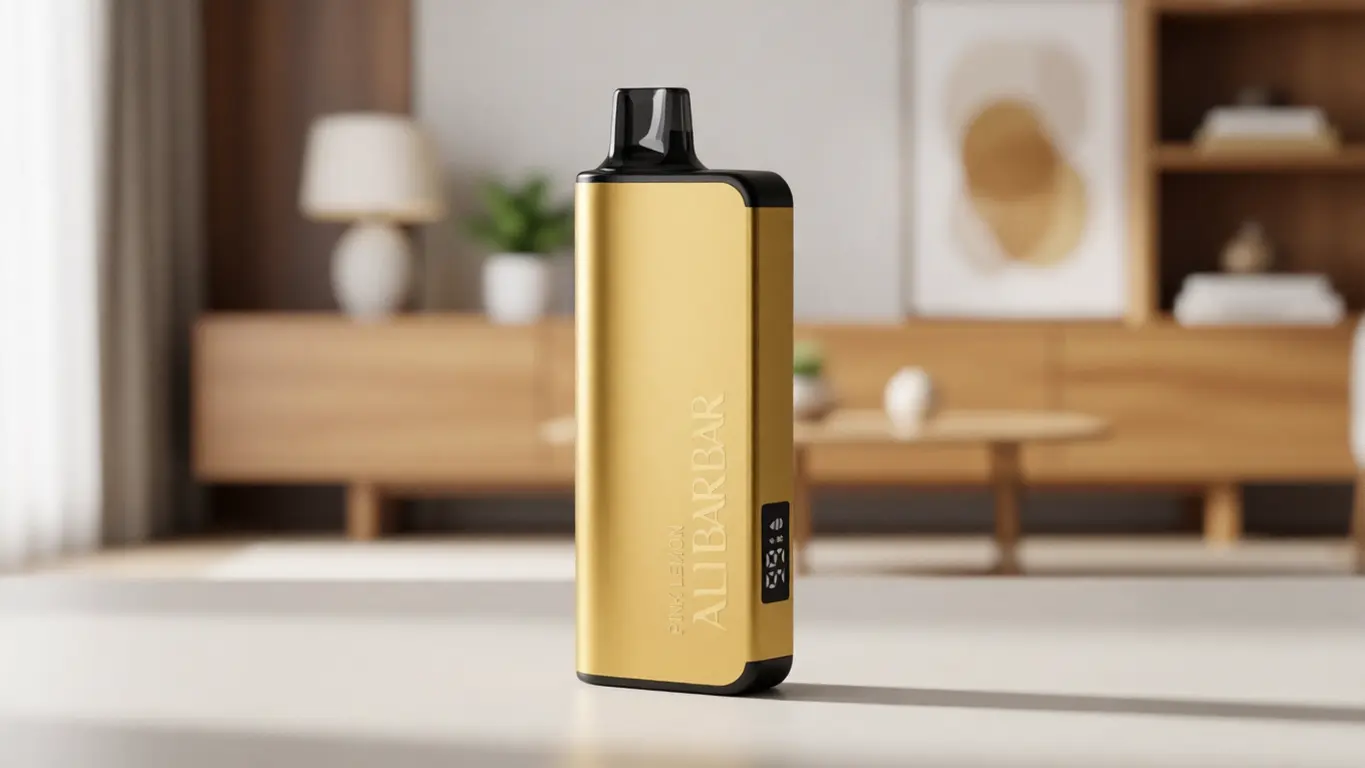
At OZVAPE Shop, every ALIBARBAR unit arrives with factory‑applied labeling that includes the model identifier and compliance symbols exactly as required for the Australian market. This traceability extends from the device’s exterior to the internal documentation, which means a traveler can confidently point to the manufacturer’s specifications if questioned.
Compact Architecture and Battery Clarity
Devices with integrated, non‑removable lithium batteries are easier to account for at security checkpoints because they present no ambiguity about the battery type or capacity. When a device uses a replaceable 18650 cell, the traveler must also prove that the spare battery is protected from short‑circuit in a dedicated case — an extra item of concern that simply does not arise with a sealed‑body unit such as the ALIBARBAR INGOT 9000 or INGOT 15000.
These devices also provide unambiguous battery‑life feedback through a graduated LED array, eliminating the anxiety of an unexpected shutdown at a security desk. An officer who sees a device displaying a clear status light is more likely to process it quickly than one dealing with a unit that appears dead and may need to be manually inspected.
Liquid Visibility and Authenticity
For travelers carrying a refillable device, a transparent or partially translucent tank that allows the officer to see the liquid level and colour without opening the unit reduces inspection time. In all cases, e‑liquid should be in its original, sealed container with the factory label intact. The ALIBARBAR Ice Adjust 12000 series, for example, is pre‑filled at the factory and permanently sealed, which eliminates the need to carry separate e‑liquid bottles entirely. While a sealed, disposable device will not suit every user, for a short trip it can dramatically simplify the customs interaction.
Practical Travel Preparation Checklist
The following steps are intended as a self‑audit, not as a guarantee. They reflect patterns observed across dozens of traveler accounts and align with the logic of Indonesian customs enforcement.
| Step | Action | Why It Matters |
|---|---|---|
| 1 | Research current import allowances | Regulations shift; check the Indonesian Customs (Bea Cukai) website or contact the consulate within two weeks of travel. |
| 2 | Choose devices with clear manufacturer markings | Devices without identification are automatically suspicious and more likely to be detained. |
| 3 | Limit devices to one or two, packed in carry‑on | Lithium batteries are prohibited in checked luggage, and multiple retail‑packed units suggest commercial intent. |
| 4 | Restrict e‑liquid to factory‑sealed containers under 100 ml each | Homemade or refilled bottles cannot be verified, increasing the chance of confiscation. |
| 5 | Carry proof of purchase and product specifications | If the duty is payable, a receipt helps determine value; a specification sheet justifies the device’s authenticity. |
| 6 | Respect local usage rules | Vaping is prohibited in many indoor public spaces and on public transport; check for designated areas. |
This framework asks no special privilege. It simply applies the logic that a customs officer will use: when documentation and labelling reduce ambiguity, the interaction is shorter and less intrusive.
Common Pitfalls and Misconceptions
Experience shows that a small number of avoidable errors account for the majority of negative outcomes. Recognising these patterns is more useful than memorising a long list of rules.
Assuming all vapes are treated identically. A device that contains nicotine‑based liquid and one that uses a nicotine‑free formulation are legally in different categories. If you cannot document the nicotine content, the officer will apply the stricter standard. An unmarked bottle of 50 mg/ml nicotine salt liquid poses a very different customs challenge from a factory‑sealed, zero‑nicotine pod.
Overlooking carry‑on restrictions for batteries. Many travelers are still unaware that spare lithium batteries, including those loose inside a bag, are prohibited in the aircraft hold. A device with an integrated battery solves this; a device with a removable battery requires careful advance packing.
Equating visual similarity with source authenticity. Counterfeit vaporisers now closely mimic authentic models in appearance while cutting corners on electrical safety and material quality. A device purchased from an unauthorised reseller may lack the internal over‑charge protection and proper insulation that customs expect. This is not merely a consumer‑protection concern — in a customs context, a substandard device raises red flags about the traveler’s overall cargo.
Undervaluing traceable provenance. Border agencies operate on documented evidence. If you cannot show where a device was manufactured and that it meets international safety standards, the officer can assume non‑compliance by default. Sourcing from a retailer that maintains a certified, single‑chain supply network shifts the burden of proof in your favour. OZVAPE Shop’s inventory, for example, is acquired exclusively through the manufacturer’s authorised distribution network, a structure that supports auditable traceability from factory to end user.

Frequently Asked Questions
Q: Is vaping actually legal in Bali?
A: Yes, personal use of vaporiser devices is legal for adults across Indonesia, including Bali. The devices are regulated as tobacco products and must comply with packaging, labelling, and excise rules.
Q: How many disposable vapes can I bring to Bali for personal use?
A: There is no formally published numeric limit, but field experience suggests one or two devices are unlikely to be challenged. Bringing a large quantity, especially if still in retail packaging, risks confiscation under suspicion of commercial intent.
Q: Can I put my vape in checked luggage?
A: No. International aviation regulations require lithium battery‑powered devices to be carried in the cabin. Placing them in checked bags creates a fire‑risk and is strictly prohibited.
Q: What happens if customs confiscates my device at Bali airport?
A: In most reported cases, confiscation occurs without additional penalty. The device is surrendered, and the traveler is permitted to proceed. However, if the device is considered an undeclared import or a counterfeit good, fines and further investigation can follow.
Q: Do I need to declare my vape and e‑liquid at customs?
A: Items within the personal use exemption do not require a formal declaration. If you are carrying quantities above the exemption or if the customs officer specifically asks, you must declare them. The exemption for e‑liquid is generally interpreted as up to a few small bottles, not exceeding roughly 100–120 ml total.
Q: Are there any areas in Bali where I cannot use my vape?
A: Yes. Vaping is prohibited in most indoor public spaces, government buildings, healthcare facilities, and on public transportation. Many hotels and restaurants designate outdoor smoking areas; if you are unsure, ask staff before using the device.
Q: Can I buy vape products once I am in Bali?
A: Vape shops exist in larger tourist areas, but the source and authenticity of products sold in unregulated outlets cannot be assumed. Travelers who rely on purchasing locally may end up with a counterfeit device that functions poorly or fails entirely.
Q: What documentation should I carry to prove my device is authentic?
A: A printed or digital copy of the purchase receipt showing the model name, retailer details, and date of purchase is sufficient. A product specification sheet or a photo of the compliance marks on the device itself adds a useful second layer of evidence.
Q: Does the nicotine strength of my e‑liquid matter at customs?
A: Yes. Higher nicotine concentrations face stricter excise scrutiny. A factory‑sealed container with a clear nicotine content declaration is far less likely to cause issues than an unmarked bottle.
Q: What should I do if I am unsure about the latest regulations before my flight?
A: Contact the Indonesian Directorate General of Customs and Excise or the nearest Indonesian embassy in your country of residence. Regulations can change without broad public notice, and an official update is the only authoritative source.
Conclusion
The question of whether you can take a vape into Bali has a clear answer, but that answer is shaped by details that many travelers overlook. The legal path exists; whether you walk it without incident depends on the state of your documentation, the physical characteristics of your device, and your patience with a system that values written evidence over verbal assurance.
The travelers who report the smoothest experiences are not the ones who attempt to game the rules, but those who arrive with modest, manufacturer‑marked equipment and enough paperwork to answer any reasonable inquiry. That is not a marketing statement — it is a pattern that emerges from hundreds of traveler accounts and the observable incentives that drive customs enforcement.
For adults who value certainty, the most practical step is to begin the journey with a device that was designed for traceability and supplied through a channel that maintains factory‑certified inventory. OZVAPE Shop operates such a channel for the full ALIBARBAR range, ensuring every unit comes with the visible compliance markings and documented provenance that can turn a potential inspection from an adversarial event into a brief formality. [2]
The right choice is never about the most feature‑laden device or the headline specification. It is about the device that aligns with your travel routine, your tolerance for ambiguity, and your willingness to do the quiet preparatory work that makes the difference between a holiday remembered for its sunsets and one remembered for an unnecessarily stressful customs hall.