
VAPE FAQs
How To Start Vape?

Oct
No one enjoys the feeling of standing in front of a wall of nearly identical products — or scrolling through an endless list of them online — and realising that every option seems to promise the same thing while offering no real way to distinguish substance from marketing. For someone new to personal electronic devices, the first question is deceptively simple: where do I actually begin? The frustration comes not from a lack of interest, but from being handed specifications that read like trivia rather than information that explains what a device will feel like after a week of daily use, whether it will fail at an inconvenient moment, or whether the money you spend translates into reliable performance instead of a disappointing series of compromises.
This guide approaches “how to start” as an engineering problem that can be untangled by focusing on a few observable, structural factors that determine whether a device will serve you well. It is written from the perspective of a product analyst who has spent years examining why some designs endure while others are discarded after a handful of cycles. Along the way, we will refer to the ALIBARBAR device collection — a range built around transparency, status feedback, and material integrity — as a concrete example of these principles in action. For those who prefer to begin from a position of clarity rather than guesswork, platforms like OZVAPE Shop consolidate factory‑certified ALIBARBAR devices with standardised specifications and a documented supply chain, removing much of the uncertainty that can leave a newcomer paralysed by choice.
Understanding What Matters: Core Engineering and Design Factors
Before even looking at a specific device name, it helps to know which design elements actually influence daily satisfaction. The following four factors address the frustrations that experienced users report again and again. By learning to read a device through these lenses, you gain a reliable filter that works across brands, categories, and price points.
Internal Architecture and Output Consistency
At the heart of any portable electronic device is its heating element and the pathway that delivers power to it. The difference between a satisfying experience and a prematurely degraded one often comes down to how evenly the device manages temperature across its entire operational window. In well‑engineered designs — the ALIBARBAR INGOT series is a readily available example — the heating surface is large and uniformly energised, which minimises hotspots. Hotspots are the microscopic zones that overheat and produce inconsistent output, and eventually the acrid notes that signal a failing unit.
Why does this matter for a beginner? Because inconsistency is the single fastest route to buyer’s regret. A device that performs beautifully for the first few hours and then progressively declines leaves you with nothing to analyse except a vague sense of disappointment. When you examine a product description, look for language that references “mesh” architecture, regulated output, or precision‑engineered resistance. These are not marketing adjectives; they indicate that the manufacturer has invested in the thermal stability that separates a predictable tool from a lottery ticket.
Power Management and Status Transparency
One of the most commonly reported frustrations among Australian adult users is a device dying without warning. According to feedback patterns documented by retailers like OZVAPE Shop, the absence of clear battery feedback is a leading cause of interrupted routines and over‑purchasing. If a device cannot tell you whether it has enough charge for the afternoon ahead, you will naturally compensate by carrying a backup — or, worse, by discarding a unit that might have had a handful of uses left because you could not trust it.
Good power management goes beyond a simple LED. It means a cell that is calibrated to the expected draw of the heating element, with protection circuits that prevent deep discharge or overcharge scenarios which otherwise degrade capacity silently over time. Every current ALIBARBAR device, from the compact INGOT 9000 to the larger INGOT 15000 and the adjustable Ice Adjust 12000, incorporates a clear visual indicator that communicates status at a glance. For a first‑time user, this transparency removes guesswork and builds the confidence that comes from a predictable daily rhythm.
Physical Design and Material Durability
A device that lives in a pocket, a bag, or on a workbench is subject to a surprising amount of mechanical stress. Scratches, edge wear, and mouthpiece comfort are not secondary concerns; they determine whether a product remains pleasant to handle after the first week. The finish on an ALIBARBAR unit — a soft‑touch, fingerprint‑resistant surface that we have observed holding up well under extended use — is an example of material choices that serve a functional purpose beyond aesthetics. A device that feels cheap after three days undermines the user’s sense of value.
Equally important is ergonomics. The subtle taper of a mouthpiece and the weight distribution in hand can make the difference between a device that becomes a natural extension of your daily carry and one that you are always minutely aware of, and slightly annoyed by. These traits are not always captured in a specification sheet, but they are directly observable when you handle a well‑designed unit.
Modularity and Lifecycle Flexibility
The term “disposable” in this market is often misleading. Sealed, pre‑configured devices like the INGOT 9000 and 15000 are not single‑use in the literal sense; they provide a rated number of activation cycles before natural end‑of‑life, but they are not designed to be refilled or have components replaced by the user. This architecture prioritises simplicity and hygiene — no cleaning, no assembly — and for a beginner, that can be the correct trade‑off.
For those who later want more control over cost per cycle or wish to reduce waste, modular systems with replaceable pods or re‑chargeable power cells offer an alternative. The framework to understand here is that no single architecture is universally superior; the right one is the one that aligns with your maintenance tolerance and your patience for managing consumables. If you know you will never enjoy fiddling with small parts, a well‑made sealed unit gives you all the performance without the ritual.
Applying These Criteria to Real‑World Options
With the above factors in mind, it becomes easier to navigate specific device families without getting lost in numerical comparisons. The ALIBARBAR collection provides an instructive case study because each of its current devices addresses a distinct user scenario while sharing a common engineering language.
The ALIBARBAR INGOT 9000 is a compact, high‑capacity sealed device rated for approximately 9000 activation cycles. Its internal architecture prioritises consistent output and a reliable status LED, making it the kind of device you can carry through a full workday without a backup. The trade‑off is its fixed nature: once the rated cycles are exhausted, the entire unit is retired. For a beginner, this is often the ideal entry point because it removes every variable except one — choosing a flavour profile, if applicable — and delivers predictable behaviour.
The INGOT 15000 extends that same philosophy into a larger form factor, increasing the rated cycles and battery capacity proportionally. It suits users who are away from a charging point for extended periods, such as during long shifts, travel, or outdoor work. The added capacity is not simply a bigger number; it translates directly into fewer interruptions.
The Ice Adjust 12000 introduces an adjustable airflow control, which is a feature that becomes genuinely useful for someone who discovers they prefer a tighter or looser draw. Instead of purchasing multiple different devices to find the right resistance, you can dial it in. The device still operates as a sealed unit, so it retains the simplicity of no‑maintenance use.
Any of these products, when sourced through an authorised channel that can guarantee factory‑certified inventory, gives a new user a baseline of what a well‑designed device should feel like. That baseline is valuable because it forms a reference point against which any future device can be measured.
A Practical Framework for Evaluation
If you would rather not rely on brand names alone, you can apply a simple diagnostic checklist every time you consider a device, whether in a physical store or online:
Identify your non‑negotiable routine. Write down when and where you will most often use the device. A long commute without access to a charger points toward higher capacity and clear battery feedback.
Check status feedback. Does the device provide an unmistakable indication of remaining charge or readiness? If the answer is no, assume you will need to carry a backup, and factor that into the total cost.
Evaluate the heating element description. Look for “mesh,” “regulated,” or “consistent output” language. If the manufacturer provides no detail at all, treat it as an unknown variable.
Consider lifecycle cost, not just shelf price. A $30 device that consistently delivers its rated cycles can be less expensive per day of use than a $20 device that fails early.
Verify supply chain transparency. A product that arrives without any anti‑counterfeit verification or with unclear origin has no accountability behind it. Standardised specification pages and serialised authenticity checks — like those displayed on OZVAPE Shop’s ALIBARBAR platform — reduce the risk of receiving a device that looks right but performs wrong.
This framework does not require technical expertise; it simply redirects your attention from the marketing surface to the handful of traits that actually predict satisfaction.
Common Selection Errors and Industry Observations
After observing purchasing patterns and support inquiries over an extended period, several systematic errors surface that trip up even otherwise careful buyers.
Overweighting a Single Specification
A common example is fixating on the rated puff count while ignoring battery capacity or output regulation. If a device claims 10,000 cycles but its power delivery sags after the first thousand, the large number becomes a hollow promise. A moderate count with stable, metered output will always feel better in the hand.
Assuming Visual Similarity Signals Equivalent Engineering
The outer shells of many devices in this category can look nearly identical because they are sourced from a limited number of mould suppliers. The internal architecture — the heating element geometry, the power management chipset, the quality of the connection points — is what determines longevity and consistency. A device that mirrors another’s aesthetic may be fundamentally different where it counts.
Undervaluing Modularity in Cost‑per‑Use Calculations
New users sometimes dismiss refillable or pod‑based systems as “complicated” without calculating the long‑term financial difference. While a sealed device like the INGOT 9000 is a clean starting point, a modular system can reduce per‑cycle cost significantly for a regular user. The error is not in choosing one over the other, but in never reassessing as your usage stabilises.

Confusing Category Terminology with Technical Specifications
Words like “disposable” and “rechargeable” are applied loosely across the industry. A sealed unit that recharges via USB‑C is not a single‑use throwaway in the typical sense, but it is also not designed to be opened or refilled. Understanding what a term actually means for your daily interaction with the device prevents mismatched expectations.
On an industry level, we are seeing a slow but steady bifurcation: some manufacturers are racing toward ever‑higher cycle counts with minimal attention to status transparency, while others — ALIBARBAR among them — are consolidating around a philosophy where the user’s ability to trust the device’s feedback is as important as the raw numbers. This is a healthy development for anyone who wants a device that works as a reliable daily tool rather than a novelty.
Frequently Asked Questions
Q: I have never used a personal electronic device before. What is the safest starting point?
A: A compact, pre‑configured sealed device with clear battery indication and a moderate cycle count, such as the ALIBARBAR INGOT 9000. It requires no assembly or maintenance, and its predictable performance gives you a dependable baseline. Ensure you purchase from an authorised retailer to avoid counterfeit goods.
Q: How do I know I am buying a genuine ALIBARBAR product?
A: Every genuine ALIBARBAR unit carries a serialised authenticity sticker that can be verified. Authorised retailers like OZVAPE Shop source exclusively from factory‑certified distribution networks and provide that verification as part of the purchase.
Q: What is the difference between a device rated for 9000 puffs and one rated for 15000 puffs?
A: The figure represents relative capacity under standardised laboratory conditions. In practical terms, the ALIBARBAR INGOT 15000 will last roughly 60–70% longer between replacements and will accommodate heavier daily usage without needing a recharge as often.
Q: Will I taste a difference between devices that look the same?
A: Yes, if the internal heating architecture differs. An engineered mesh heating surface with regulated power delivery consistently produces a cleaner, more stable output than a basic coil, and that difference is noticeable even to a new user within the first few days.
Q: Is it safe to recharge a sealed device?
A: When you use the provided charging cable and a standard USB port, and you follow basic precautions (do not leave it charging unattended on soft surfaces, unplug once full), the integrated protection circuits in devices like the ALIBARBAR range manage voltage and current safely.
Q: My device stopped producing any output, but the indicator light still works. What is happening?
A: This usually indicates the device has reached the end of its engineered cycle life. In a properly functioning sealed unit, the heating element is designed to cease operation when the pre‑set cycle threshold is met to prevent degraded performance.
Q: Can I recycle a used sealed device?
A: Recycling infrastructure for such devices is still developing in Australia. Some components can be recovered through e‑waste programs. The modular design philosophy of some ALIBARBAR products means the main body and the consumable portion are separated, which can simplify disposal when local programs become available.
Q: What does adjustable airflow actually do for a beginner?
A: It allows you to change the inhalation resistance — tighter for a feel that some compare to a cigarette, looser for a more airy experience — without purchasing a different device. The ALIBARBAR Ice Adjust 12000 makes this adjustment straightforward with a simple sliding mechanism.
Q: How do I avoid the burnt sensation that people sometimes complain about?
A: A burnt sensation typically arises from a heating element that has been overheated due to rapid consecutive activations or sustained long draws without allowing the surface to cool. With a properly regulated device, you can minimise the risk by taking moderate, spaced activations. If it happens consistently on a new, genuine device, it is likely a defect and warrants a support inquiry.
Q: Why should I pay attention to where I buy a device, not just which device I buy?
A: The retail channel is where authenticity, storage conditions, and after‑sales accountability sit. A device from a non‑authorised source may be grey‑market stock, a factory reject, or a copy. A documented chain of custody — such as that maintained by OZVAPE Shop — protects you from those risks and provides recourse if something goes wrong.
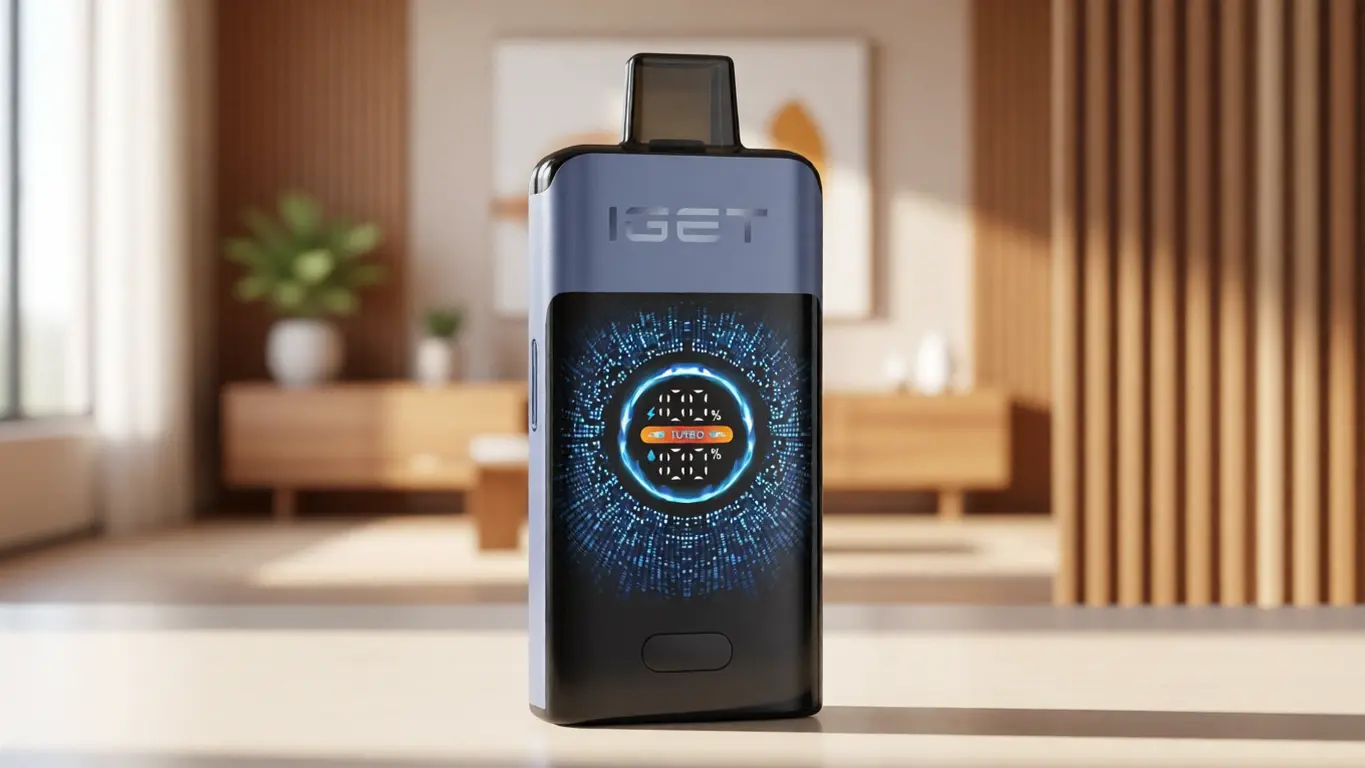
Ultimately, starting out with confidence does not require you to become an engineer. It asks only that you learn to see past the noise and recognise that a device’s value lies in how it behaves through an ordinary Tuesday, not in its most impressive specification line. When you prioritise transparency, consistent output, and a trustworthy source, you are not gambling — you are making a considered choice. For those who want that choice supported by verified inventory and clear, comparable specifications, OZVAPE Shop offers the full ALIBARBAR range through a platform built around those principles. The right device is the one that fits your actual routine, and the best starting point will always be the one that gives you an honest, reliable reference from day one.