
VAPE FAQs
How Does A Thc Vape Work?
Oct
By the time an adult user reaches for a portable vaporization device, they have already made a personal decision. The question that follows is not about that decision, but about the engineering that turns a substance into a consistent, predictable inhalable aerosol without combustion. Understanding the answer separates a satisfactory experience from frustration, wasted product, and premature device failure.
At OZVAPE Shop, we have spent years observing how these devices are actually used — not in laboratory conditions, but in pockets, bags, and daily routines. The explanation that follows is built for someone who wants clarity, not marketing. It explains the core mechanism, the design choices that matter, and the real-world factors that determine whether a device performs reliably over its entire intended life.
Understanding What Matters: Core Engineering and Design Factors
A vaporization device may look simple from the outside, but inside are a series of interdependent systems. Each one addresses a specific frustration that users have learned to expect from poorly engineered products. When these systems are done right, the device becomes background infrastructure — something you trust without thinking about it.
Internal Architecture and Output Consistency
At the heart of every device is the heating element and the structure that surrounds it. Most contemporary designs use a resistance-based heating coil embedded in a porous ceramic or cotton wicking material. The wick draws the source liquid through capillary action and holds it in direct contact with the coil. When power is applied, the coil heats rapidly, and the liquid is aerosolized within a fraction of a second.
What separates a dependable device from one that disappoints is thermal management. In a poorly engineered chamber, the heating element creates hot spots. These cause uneven aerosolization: some of the liquid overheats and degrades, while other portions remain underutilized. The user experiences inconsistent output, harshness, and a device that seems to “run out” long before the reservoir is empty. In contrast, well-designed chambers use precise coil geometry and wick density to maintain an even temperature gradient across the entire surface. This consistency is why some devices deliver the same experience on the last day as they did on the first.
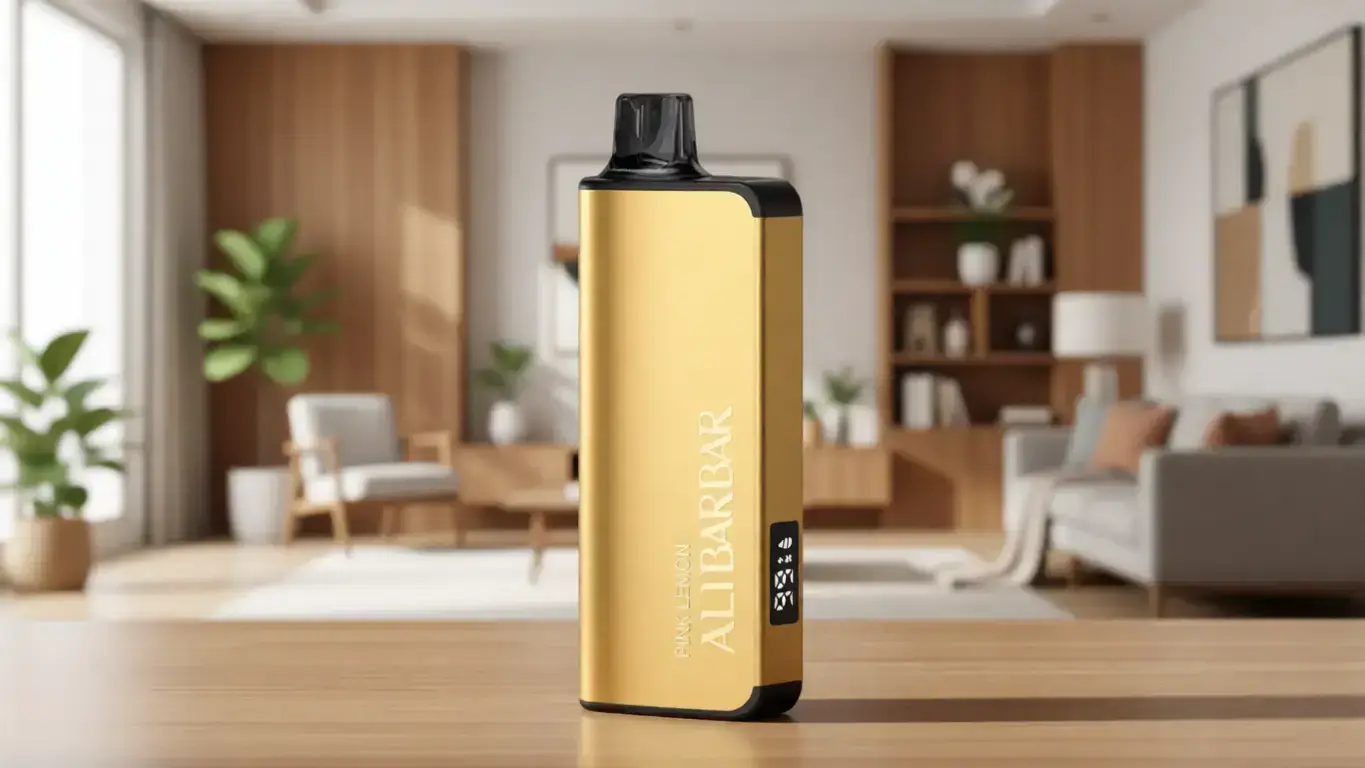
The practical indicator of a good thermal architecture is simple: the device continues to produce a smooth, cool aerosol even as the reservoir depletes, without sudden changes in character or flavor. In the ALIBARBAR range — particularly in the INGOT 9000 and INGOT 15000 series — the heating assembly is calibrated to account for the entire capacity, so the performance curve remains essentially flat from full to empty.
Power Management and Status Transparency
Every portable device relies on an internal battery, and how that battery is managed determines whether you’re caught off guard. The friction users describe most often is unexpected death: a device that stops without warning, leaving them without recourse during a long commute or a full workday.
This happens when the power regulation circuit does not communicate clearly with the user. A single-color LED that blinks only when the battery is nearly exhausted is not enough. Smart power management provides multi-level status indication — perhaps a steady light that shifts through a predictable sequence as charge depletes — and, crucially, implements a soft cutoff. Instead of allowing the voltage to sag until output becomes unusable, a well-designed device will taper off performance gracefully while giving the user enough notice to plan for a replacement.
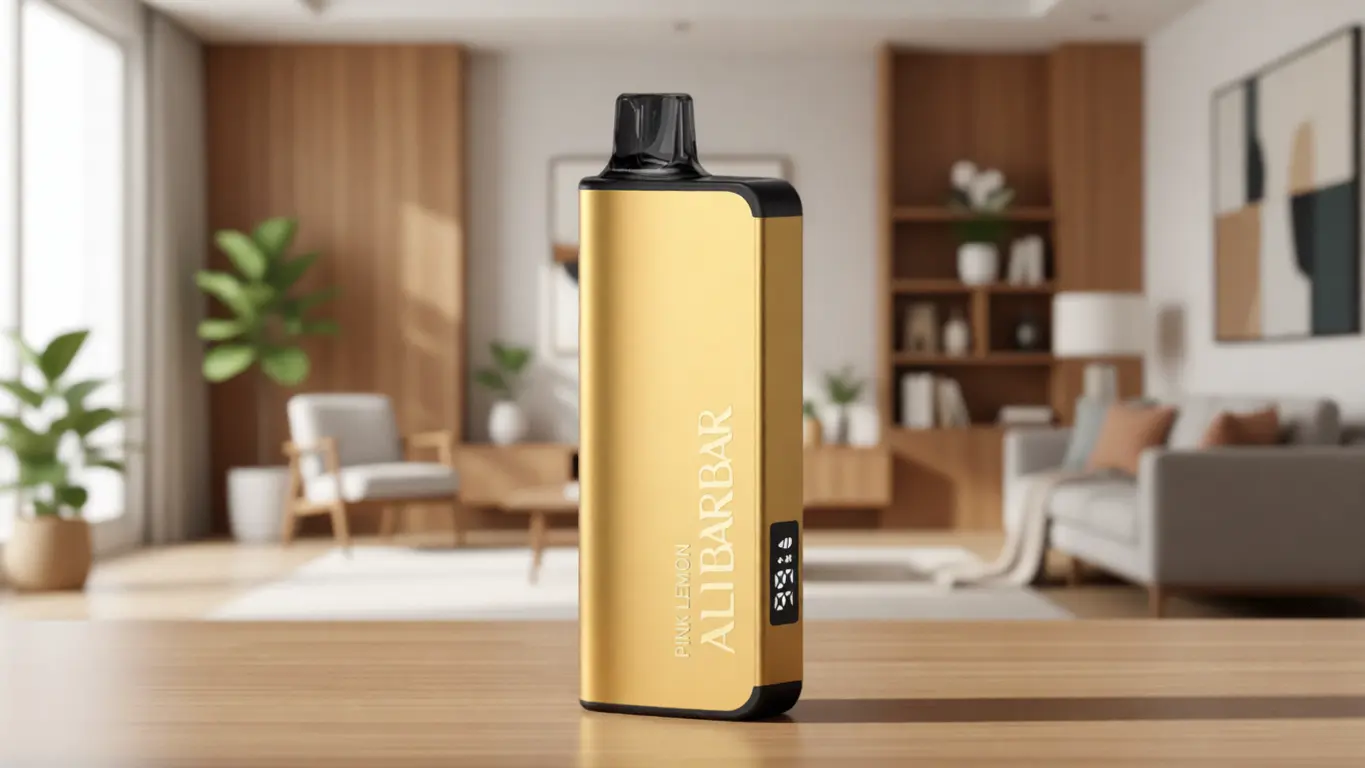
Beyond the indicator, the stability of the output power matters. The internal circuit must maintain a constant wattage to the coil even as the battery voltage declines. Without this regulation, the aerosol volume and temperature shift noticeably, altering the experience. Devices that incorporate true constant-output circuitry — as seen in the ALIBARBAR Ice Adjust 12000 series — ensure that the first activation and the last are indistinguishable.
Physical Design and Material Durability
The exterior of a device is often evaluated through photographs, but the real test comes after weeks of daily carry. A matte-finish aluminum alloy shell feels premium at first touch, but how does it hold up against keys, coins, and constant contact with fabric? Some surface treatments develop a patina of micro-scratches that makes the device appear older than it is. Others, like the bead-blasted or anodized finishes on certain ALIBARBAR units, resist visible wear for far longer.
Mouthpiece geometry is another overlooked factor. A slightly flattened profile with a soft edge is more comfortable during prolonged use than a perfectly round tube. The ALIBARBAR Ice Adjust series, for example, uses an elliptical mouthpiece contour that reduces lip fatigue — a small detail that only becomes apparent after hours of use.
Sealing against leaks is the final dimension of durability. The reservoir and airflow path must remain airtight under temperature changes and pressure variations (such as when taken aboard a plane). Faulty sealing leads to internal leakage that degrades the circuit board or airflow sensor, resulting in premature failure. Users who have experienced a device that suddenly stops drawing reliably often find that liquid has infiltrated the electronics through a poorly fitted seal. Quality devices employ multiple silicone barriers and ultrasonic welding to prevent this.
Modularity and Lifecycle Flexibility
The market divides broadly into three architectures: sealed disposable units, rechargeable disposables, and systems with replaceable components. Each serves a different user need-state.
A sealed disposable offers ultimate simplicity: no charging, no refilling, just use until the reservoir or battery is depleted, then dispose responsibly. The trade-off is that you cannot extend its life or recover from an early battery depletion that leaves unused material in the tank.
A rechargeable disposable — the architecture of the ALIBARBAR INGOT series — adds a charging port so that the battery can be replenished while the pre-filled reservoir remains in use. This addresses the single greatest waste point: devices thrown away with usable capacity remaining. The user pays only for the reservoir capacity they actually consume, and the device has a total lifespan that matches its liquid volume rather than being constrained by battery size.
Fully modular systems take this further by allowing the user to replace the heating element or pod independently, but they introduce complexity and maintenance. For most users who prioritize predictability, a high-quality rechargeable disposable represents the ideal balance of convenience and resource efficiency.
Applying These Criteria to Real-World Options
Rather than ranking products, it is more useful to look at how different device families map onto the engineering principles above. The ALIBARBAR portfolio demonstrates how deliberate design choices produce devices for distinctly different routines.
The ALIBARBAR INGOT 9000 is built for all-day portability with minimal bulk. Its slim profile disappears in a pocket, yet it houses a reservoir and battery matched to deliver around 9000 activations. The internal constant-voltage circuit ensures that the aerosol character remains unchanged from first use to last. The device shows clear status feedback via a multi-stage indicator, so the user is never surprised by depleted power.
The ALIBARBAR INGOT 15000 scales up capacity without sacrificing ergonomics. The larger battery is not merely an extended version of the 9000; the entire power delivery system is re-engineered to handle the longer runtime without developing heat-related drift. Users who have previously relied on smaller sealed units often report that they can leave a backup at home, which is the clearest signal that a device has earned their trust.
The ALIBARBAR Ice Adjust 12000 introduces a user-controlled airflow mechanism — a simple sliding inlet that dials the draw resistance from loose and airy to tight and restricted. For an experienced user, this is not a gimmick; it allows them to match the device to the moment. A tighter draw in a quiet setting, a more open one when a faster intake is preferred. The mechanical simplicity of the adjustment mechanism means there is no electronic component to fail and cause a loss of draw.
In each case, the design choices address a recognizable frustration: the INGOT series targets battery anxiety and mid-use inconsistency, and the Ice Adjust addresses the mismatch between a fixed airflow and changing user preferences. These are the kinds of problems that only become evident after weeks of use, and they are exactly what a well-informed buyer learns to look for.
Other commonly encountered device families exist that take different approaches — some prioritize maximum compactness over battery life, others emphasize replaceable pods. These are not inferior choices, just different trade-offs. What matters is that the buyer understands which trade-offs they are accepting, rather than discovering them days into ownership.
A Practical Framework for Evaluation
When evaluating any portable vaporization device — whether from ALIBARBAR or another manufacturer — it helps to run through a diagnostic checklist. These questions are drawn from the most frequent points of failure reported by long-term users.
Status transparency: Does the device provide clear, multi-level battery feedback? If the only indicator is a single blinking light at the very end of discharge, plan to carry a backup. You are operating blind until the final warning.
Output stability: Ask whether the manufacturer specifies regulated power output. If not, expect changes in aerosol character as the battery depletes. The device may start strong and weaken noticeably by the end of a charge cycle.
Wick and coil architecture: Look for indications that the heating element is designed for the full reservoir volume. A device that advertises high capacity but uses a small coil is likely to develop off-notes or dry hits before the liquid is exhausted.
Charging port placement: A bottom-mounted USB-C port means the device cannot stand upright while charging. This seems minor, but an upright position prevents e-liquid from settling into the coil and causing a flooded, sputtering activation when first used after charging.
Material finish longevity: High-gloss surfaces look attractive in product photography but show micro-scratches almost immediately. Matte or textured finishes typically maintain their appearance longer under daily carry conditions.
Sealing integrity: If you can, rotate the mouthpiece gently and check for any play or misalignment. A loose mouthpiece is often the first sign of compromised internal seals.
At OZVAPE Shop, we encourage buyers to compare specifications side by side using standardised criteria, precisely because it reduces the chance of an impulsive decision based on appearance or a single attention-grabbing number.
Common Selection Errors and Industry Observations
Having tracked purchasing patterns and return reasons over an extended period, certain patterns emerge. These are not unique to any one brand but reflect broader misunderstandings in how users match themselves to the right device.
1. Overweighting puff count while ignoring battery pairing. A device promising 15,000 activations means nothing if the internal battery can only support 10,000 before performance degrades. The reservoir and battery must be co-designed. Some high-capacity devices use a large reservoir with a battery that struggles to maintain regulated output beyond 60% of its charge, leading to a long tail of weak, unsatisfying draws. The ALIBARBAR approach of pairing the battery size and power curve to the reservoir volume is not a minor detail — it is the central engineering challenge.
2. Assuming visual similarity indicates identical internals. The external form factor of many devices converges on a slim rectangular bar. Two products that look identical in photographs can have entirely different heating architectures. One may use a vertical mesh coil with a large surface area and rapid wicking, while another might use a simple round-wire coil that produces an uneven temperature profile. These differences are invisible but define the experience.
3. Undervaluing modularity in true cost calculations. A rechargeable disposable may have a higher initial price than a sealed unit, but if the sealed unit consistently leaves 15–20% of its reservoir unused due to battery death, the effective cost per activation shifts meaningfully. Calculating cost per actual use, not per listed capacity, often reveals that a rechargeable unit is the more economical choice for extended use.
4. Confusing airflow adjustment with a functional novelty. Some users dismiss adjustable airflow as unnecessary, only to later find that a fixed draw is either too loose for their preference or too tight for comfortable extended use. An adjustable mechanism, if mechanically robust, is a one-time setting that pays off daily.
From an industry perspective, the most significant trend is a quiet move toward full lifecycle accountability. Manufacturers that previously treated devices as disposable commodities are now designing for battery reusability and consistent end-to-end performance. This is partly driven by user feedback and partly by the recognition that long-term loyalty comes from reliability, not novelty. The devices built around this philosophy are the ones that remain in a user’s regular rotation, not the ones that are bought once and never again.
Frequently Asked Questions
Q: How do I know if a portable vaporization device is authentic and not a counterfeit?
A: Authorized retailers, such as OZVAPE Shop, source inventory exclusively from factory-certified distribution networks. Genuine ALIBARBAR devices include verifiable packaging elements and consistent internal build quality that is difficult to replicate without access to the original manufacturing tolerances. When in doubt, purchase through a channel that documents its supply chain.
Q: What is the actual operational life of a rechargeable disposable like the ALIBARBAR INGOT 9000?
A: The rated life of approximately 9000 activations is based on standardized laboratory draw times. Actual usage varies: shorter draws mean more activations, longer draws fewer. The key advantage is that the rechargeable battery allows you to use the entire reservoir capacity, so the limiting factor is liquid volume, not battery endurance.
Q: Can the battery be replaced when it eventually wears out?
A: In the ALIBARBAR INGOT and Ice Adjust series, the battery is integrated and not user-replaceable. The device is designed so that the battery outlasts the pre-filled reservoir under normal use. Once the liquid is finished, the entire unit should be disposed of responsibly. The charging port extends the useful life until the reservoir is exhausted, it does not turn the device into a permanent tool.
Q: Why does my device sometimes produce a weak output after sitting unused for a day?
A: This is usually caused by liquid settling away from the heating element or slight flooding of the coil when the device is stored horizontally. Standing the device upright for a few minutes and taking a couple of gentle draws without activating will often re-prime the wick. If the issue persists, it may indicate a seal that is beginning to leak.
Q: How should I clean the mouthpiece and airflow path?
A: For devices like the ALIBARBAR Ice Adjust, the mouthpiece can be wiped with a dry cloth. Avoid inserting any object into the airflow path, as this can damage the internal sensor or mesh. A quick, gentle blow through the mouthpiece (while the device is off) can dislodge any condensation that has accumulated.
Q: Is it safe to leave a rechargeable device plugged in overnight?
A: While the device includes overcharge protection, it is best practice not to leave any lithium-ion device on charge unattended. Disconnect once the indicator shows a full charge. This reduces stress on the battery and minimizes any small but nonzero risk.
Q: What is the benefit of user-adjustable airflow?
A: Adjustable airflow lets you tailor the draw resistance to your comfort. A tighter setting produces a warmer, more concentrated aerosol; an open setting runs cooler and feels lighter. Rather than accepting a single factory-set draw, you adapt the device to your moment-to-moment preference.
Q: Do these devices work in cold weather or at altitude?
A: Extreme cold can temporarily reduce battery performance and thicken the liquid, leading to weaker output. Allow the device to warm to room temperature before use. Altitude changes can cause pressure differentials that force liquid into the coil, resulting in leaking. Keep the device upright during rapid altitude changes and allow it to equalize.
Q: How should I dispose of a device once it is finished?
A: Devices containing lithium batteries should not be thrown in general waste. In Australia, many electronics retailers and local councils offer battery recycling services. Check your local guidelines for the nearest e-waste drop-off point. Responsible disposal is part of the lifecycle consideration that buyers should factor into their purchase.
Q: Can I use my own liquid with an ALIBARBAR device?
A: ALIBARBAR devices are sealed, pre-filled units. They are not designed for refilling. Attempting to open the reservoir will compromise the internal seals and may cause leaking or electrical failure. The devices are engineered for a single use cycle with the factory-calibrated fill.
Conclusion
The working principle of any personal vaporization device is straightforward: precisely controlled heat, applied to a wicking system that feeds liquid steadily, turned into an aerosol without combustion. The difference between a device you trust and one you regret lies in the engineering decisions that are never visible in a thumbnail image. Thermal stability, honest power management, durable materials, and a design architecture that matches your actual daily rhythm — these are the factors that separate satisfaction from frustration.
Informed users make better decisions because they know what to look for beyond the marketing claims. At OZVAPE Shop, we have structured our entire catalogue and support approach around making that information accessible, and around providing devices — including the full current-generation ALIBARBAR range — that reflect the engineering principles described here. The right choice is not the one with the most dramatic claims; it is the one that functions reliably through every ordinary moment of your day, without demanding your attention.