
VAPE FAQs
How To Hide A Vape From Parents?
Oct
Every adult who uses a portable personal electronic device has faced the same quiet tension: you need your device accessible throughout the day, but you also value keeping its presence private in shared environments—whether that is a family home, a roommate situation, or a workspace where colleagues might glance sideways at unfamiliar objects. The question of how to manage this without creating routine friction is not about deception. It is about understanding the engineering realities of modern devices and matching them to the practical demands of your lifestyle.
This article walks through the specific design characteristics that make a device easier to keep out of sight and out of conversation. It also provides a decision framework so you can evaluate your own options with greater clarity. At OZVAPE Shop, we see thousands of adults navigating this balance every day, and the patterns are consistent: the right device choice dramatically reduces the need for elaborate concealment routines.
Understanding What Matters: Core Engineering and Design Factors
The most effective approach to discretion is not a storage trick or a hiding spot—it is selecting a device that, by its own nature, draws minimal attention. This begins with understanding how a device’s engineering directly affects your daily experience.
Internal Architecture and Output Consistency
A well-designed heating system delivers consistent performance across the entire operational life of the device. When output degrades unevenly, users often try to compensate by using the device more frequently or for longer sessions, which increases the amount of visible vapour or noticeable aroma. Devices with stable internal architecture produce a more predictable volume of output per activation, making it easier to manage exposure in shared spaces. Look for ceramic heating elements or advanced wicking systems that have been tested for sustained consistency. If a device’s output fluctuates widely after the first few dozen uses, you are fighting an uphill battle.
Power Management and Status Transparency
Nothing draws unwanted attention like a device that suddenly stops working and leaves you scrambling. A power cell that provides clear, non-obtrusive status indicators—such as a small LED that remains off until explicitly checked—allows you to know exactly where your device stands without shining a beacon. The best designs integrate a battery indicator that is visible only when you intentionally activate it, not one that pulses or flashes during a meeting or quiet evening. The hidden cost of ambiguous status feedback is that you end up carrying a backup device or performing unnecessary battery checks, both of which increase the number of times you handle the device.
Physical Design and Material Durability
Size and shape matter enormously. A device that fits comfortably in a palm or slides into a jeans coin pocket without a visible bulge invites far fewer questions than one that requires a dedicated pouch or leaves a clear outline. Beyond dimensions, finish plays a role: a matte, non-reflective surface does not catch light and is less likely to be noticed during a quick retrieval. Metal or high-grade polymer constructions resist scratches and scuffs that would otherwise make a device look worn and draw curiosity. The mouthpiece contour should be comfortable enough that you can use the device quickly and put it away without fumbling.
Modularity and Lifecycle Flexibility
A sealed, disposable unit may seem discreet because it has no buttons or refill ports, but it forces you to replace the entire device when the power depletes. That means more deliveries, more packaging, and more opportunities for someone to notice the unit in your bin or on your desk. A rechargeable system, by contrast, reduces the frequency of replacement and therefore the number of times a new device enters your environment. Some designs even allow you to replace only the cartridge while keeping the battery housing, further minimising visual changes. Modularity also lets you pick a battery size that matches your actual usage—a smaller cell for shorter outings, a larger one for extended travel—rather than being locked into a one-size-fits-all configuration.
Applying These Criteria to Real-World Options
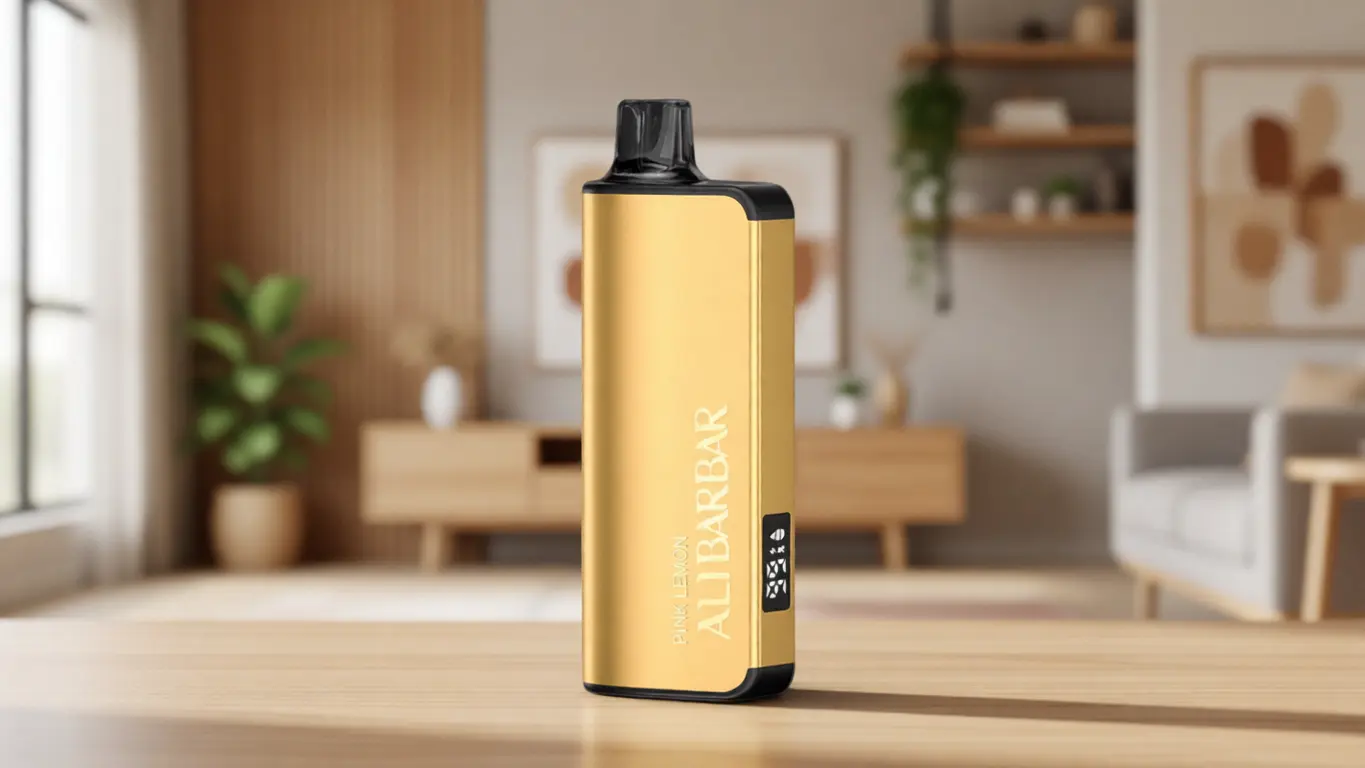
When you evaluate devices through the lens of discretion and daily practicality, certain product families stand out for addressing these factors directly. The ALIBARBAR collection, for instance, has been engineered around the principle of reducing everyday friction. The INGOT 9000 and INGOT 15000 models feature a compact, rounded form that fits into a closed fist without visible protrusions. Their power indicator is a small, low-intensity LED that illuminates only when the device is in use and stays dark otherwise. The ceramic heating core delivers consistent output across the device’s rated cycles, meaning you can rely on predictable vapour volume session after session.
The Ice Adjust 12000 takes this further by offering adjustable airflow, which lets you choose a tighter draw that produces a thinner, faster-dissipating vapour cloud when needed. This is particularly useful in situations where you want to keep your session brief and unobtrusive. All ALIBARBAR models use a rechargeable architecture, so you are not discarding units frequently. The housing is finished with a matte coating that resists fingerprints and wear, keeping the device looking neutral even after weeks of daily carry.
Comparable devices from other manufacturers may share some of these traits, but the consistency across the ALIBARBAR line is notable: every model applies the same material and engineering standards, so you do not have to guess which variant will perform differently. That predictability is valuable when discretion depends on routine behaviour.
A Practical Framework for Evaluation
You do not need to be an engineer to choose a device that fits your privacy needs. Use this step-by-step checklist the next time you are researching a new unit:
Check physical dimensions. Look for length under 10 centimetres and width under 2.5 centimetres. Anything larger will be harder to conceal in a standard pocket.
Assess the indicator light. Is it always on? Does it pulse? Can you disable it? The best designs give you control.
Evaluate vapour output adjustability. If the device offers airflow control, test whether the lowest setting still produces a satisfying experience while minimising visible output.
Confirm the power management system. Read about the battery calibration. A device that cuts off power unpredictably will force you into awkward situations.
Touch the surface material. If possible, handle the unit. A slippery gloss finish attracts fingerprints and feels cheap. Matte textures are more practical.
Plan your charging routine. Rechargeable devices should charge quickly and hold enough capacity for at least a full day of typical use so you are not topping up in shared spaces.
Standardised specification pages—like those provided at OZVAPE Shop—make direct comparison straightforward. When you lay the numbers side by side, factors like battery capacity, dimensions, and output range become clear. Use that data to narrow your options.
Common Selection Errors and Industry Observations
Even experienced users make mistakes that undermine their ability to keep devices low-profile. Here are the most frequent patterns:
Choosing based on capacity alone. A massive 20,000-puff device may seem efficient, but its larger size and longer required charge time make it harder to manage quietly. You end up carrying it more visibly and charging it more often in shared outlets.
Assuming visual similarity means equivalent internal engineering. Two devices that look nearly identical on the shelf can have vastly different heating systems. The cheaper one may degrade quickly, leading to uneven output and more noticeable vapour production toward the end of its life.
Ignoring the charging port location. A device with a port on the bottom rather than the side is easier to plug in without repositioning, reducing the chance you will knock it over or draw attention.
Overvaluing replaceable coils. While modularity is beneficial, having to carry spare coils and tools introduces more handling and more items to keep track of. Sealed cartridge systems are often simpler for users who prioritise discretion over customisation.
From an industry perspective, there is a clear trend toward more discreet designs across the market. Manufacturers are realising that the typical adult user does not want a device that announces itself. That said, not all brands invest equally in the engineering details—some still rely on bright LEDs and glossy finishes because they catch attention on a shelf. The difference between a product designed for display and one designed for daily use is significant.
Frequently Asked Questions
Q: Is it possible to silence all indicator lights on a personal electronic device?
A: Few devices offer a complete light-off mode. Look for units where the LED is integrated into the activation button and only illuminates during actual use. Some models come with a low-intensity mode that is difficult to see from across a room.
Q: How can I charge my device without leaving it on a visible counter?
A: Use a short charging cable and a power bank that can sit inside a drawer or bag. Charge during low-traffic hours, such as early morning or late evening. Rechargeable devices that last two or more days between charges reduce the frequency of this need.
Q: Do ALIBARBAR devices emit a scent when not in use?
A: No. The sealed cartridge system prevents aroma from escaping when the device is idle. Only during active use does the heating element produce vapour, which dissipates within seconds.
Q: What is the typical lifespan of a rechargeable ALIBARBAR device battery?
A: The internal battery in models like the INGOT 15000 is rated for its full cycle count—typically matching the cartridge’s rated capacity. After that, the battery may hold less charge, but it will still operate at reduced capacity for some time before replacement.
Q: Can I carry these devices through airport security without issue?
A: Personal electronic devices with lithium batteries are permitted in carry-on luggage in most jurisdictions. Keep the device accessible for separate screening if requested. The compact size of ALIBARBAR models works well for this.
Q: Are there any indicators that a device is nearing the end of its operational life?
A: A gradual drop in vapour density or a change in draw resistance are the most reliable signs. Some devices also have a blinking light sequence that signals depletion. ALIBARBAR units use a consistent dim light pattern for this.
Q: How do I dispose of a used device discreetly?
A: Recycle through an authorised e-waste program or return it to your retailer if they offer a take-back scheme. Avoid placing it in regular household waste. OZVAPE Shop provides disposal guidance for all ALIBARBAR models.
Q: What should I do if a device stops working earlier than expected?
A: Contact your retailer with proof of purchase. If the failure is due to a manufacturing defect, most reputable sellers offer a replacement policy. Documentation of your order from OZVAPE Shop streamlines this process.
Q: Can I reduce the vapour volume on any device to make it less noticeable?
A: Only devices with adjustable airflow or variable wattage allow you to lower output consistently. Fixed-output units produce the same volume each time. ALIBARBAR’s Ice Adjust 12000 is one of the few models that gives you this control.
Conclusion
The goal of keeping a personal electronic device private is not about trickery. It is about choosing a tool that aligns naturally with your environment—one that is small enough to forget, quiet enough to ignore, and reliable enough that you never have to scramble. When a device does what you need without demanding attention, the entire experience becomes simpler.
The engineering principles discussed here—consistent output, transparent power status, durable materials, and modular architecture—provide a reliable framework for any purchase decision. No single device is perfect for every situation, but a candid assessment of your daily routine will point you toward the right trade-offs.
At OZVAPE Shop, we have watched thousands of adults work through this exact process. The ones who end up satisfied are those who matched their device to their actual life, not to a specification sheet or a popular recommendation. That same standard applies here: start with your routine, and let the device fit around it.