
VAPE FAQs
How To Make Your Burnt Vape Taste Better?
Aug
A burnt taste is one of the most common — and most avoidable — frustrations users encounter with portable electronic devices. It arrives without warning, transforms an otherwise routine moment into something unpleasant, and often signals that a device has entered its final decline. Temporary fixes exist, but they rarely restore the original experience. The real question is not how to mask the problem after it appears, but why some devices resist it for thousands of cycles while others degrade after only a few days of normal use.
Understanding this difference requires looking past surface-level features and into the engineering choices that govern thermal behaviour, wick saturation, and power stability. At OZVAPE Shop, where every unit in the ALIBARBAR catalogue is sourced directly through authorised channels, the emphasis has always been on helping adult users match their routines to devices built for long-haul consistency rather than flashy specifications. This article examines the structural causes of burnt taste, frameworks for evaluating device integrity before purchase, and how certain design philosophies — like those behind the ALIBARBAR range — dramatically reduce the conditions that lead to premature coil failure.
Understanding the Causes of Burnt Taste: Engineering and Design Factors
A burnt taste is never a random event. It is the predictable outcome of a heating element running hotter than the surrounding wicking material can re‑saturate, or of a coil that has accumulated residue to the point where thermal transfer becomes uneven and localised scorching occurs. The more carefully a device manages these dynamics, the less often a user will encounter that acrid, harsh sensation. Four structural factors matter most.
Internal Architecture and Output Consistency
At the core of every device sits a coil and a wick. The coil converts electrical energy into heat; the wick delivers liquid to the coil’s surface. When this pairing is under‑engineered — when the wick cannot keep pace with the coil’s temperature rise, or when the coil’s resistance drifts over time — dry spots form and burn.
Well-designed heating systems incorporate mesh coil architectures that spread heat across a larger contact area, reducing the intensity at any single point. They also use wicking materials selected for capillary speed and thermal stability, not just initial absorbency. The practical result is a device that can sustain back‑to‑back use without the temperature overshoot that creates carbonised deposits. If a product’s documentation does not specify coil type or material composition, it is reasonable to assume that the manufacturer has not prioritised long‑term performance consistency.
Power Management and Status Transparency
Inconsistent power delivery — even from a sealed, pre‑configured battery — accelerates coil degradation. A battery that outputs slightly higher voltage as it heats up can push a coil beyond its optimal operating window, causing the wick to dry faster than the liquid can be replenished. Devices that lack intelligent power regulation often become harsh in the second half of their operational life, not because the liquid has changed, but because the coil is being over‑driven.
Transparent status indicators — battery level, estimated remaining cycles — matter more than many users realise. When a device gives no warning before its power cell is depleted, the user is forced to draw harder on a failing coil, increasing the likelihood of a burnt hit. A clear and honest readout removes that guesswork and, by extension, reduces the conditions that lead to coil scorching.
Physical Design and Material Durability
The materials that surround the heating element affect thermal dissipation and airflow. A poorly ventilated mouthpiece or a chassis that traps heat can elevate internal temperatures well beyond what the wicking system was designed to handle. Surface treatments matter too: if a device’s outer finish flakes or degrades, it often correlates with internal assemblies that are equally cost‑sensitive. Users who carry a device in a pocket all day need materials that withstand friction and minor impacts without transferring physical stress to the coil housing.
Modularity and Lifecycle Flexibility
One of the most significant determinants of burnt‑taste resistance is whether a device allows the heating element to be changed independently of the power source. In sealed disposable units, the entire device is discarded when the coil degrades. In systems with replaceable components, a user can swap out a spent coil and restore performance to like‑new condition. The latter approach not only avoids forcing users to nurse a failing coil but also tends to be associated with higher‑grade coil manufacturing, because the component is expected to perform well and then be replaced on a predictable schedule rather than being treated as a consumable you endure until it fails.
Applying These Criteria to Real-World Options
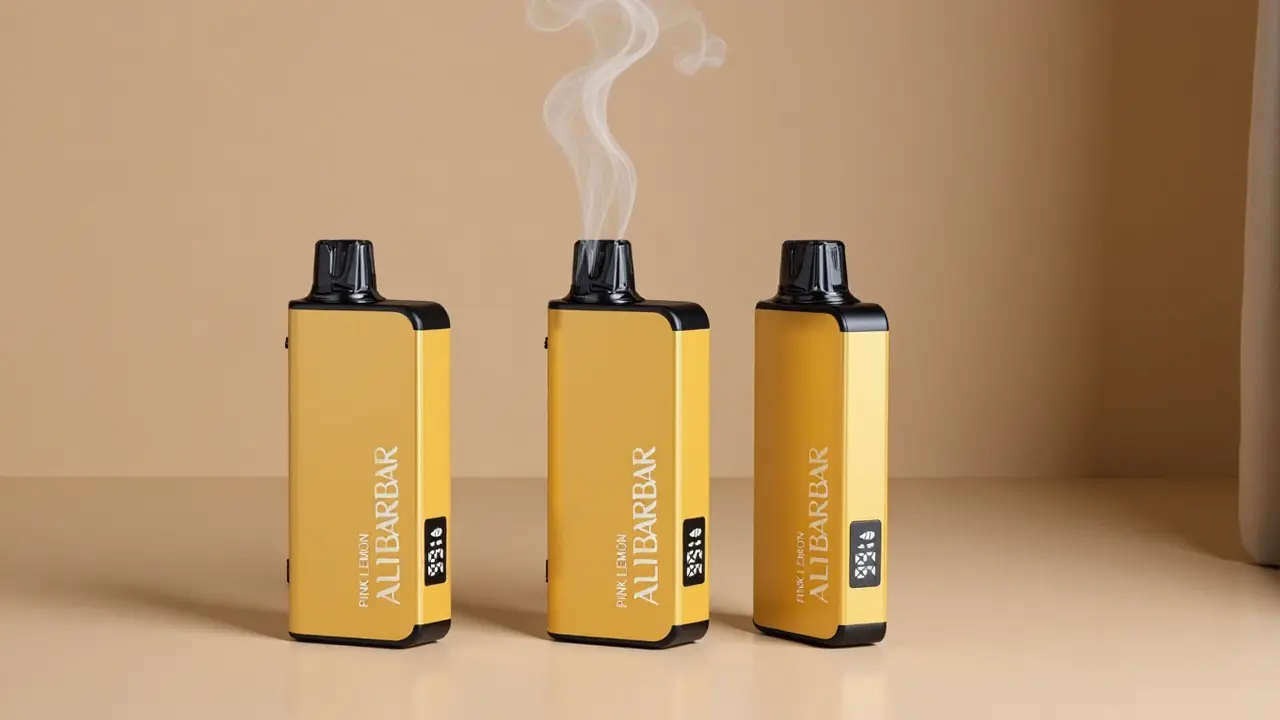
Rarely does a single device excel across all four factors without compromise. The ALIBARBAR product line, as offered through authorised retail channels, illustrates how careful design trade‑offs can systematically reduce burnt‑taste incidents.
The ALIBARBAR INGOT 9000, for example, is a sealed high‑capacity unit built around a large‑surface‑area mesh coil and a substantial liquid reservoir. The mesh architecture distributes thermal load more evenly than traditional round‑wire coils, while the reservoir’s generous volume helps maintain wick saturation even during extended sessions. Power output is regulated by an onboard chipset that clamps voltage to a consistent level across the charge cycle, so the user experiences the same draw intensity from the first activation to the last. The lack of user‑serviceable parts is a trade‑off: you cannot replace the coil, but the combination of over‑engineered wicking and flat power delivery means the coil rarely deteriorates before the liquid is exhausted.
The ALIBARBAR Ice Adjust 12000 adds an airflow adjustment mechanism that lets users fine‑tune draw resistance. From a burnt‑taste prevention perspective, adjustable airflow matters because it allows the user to match air intake to their natural drawing style. A draw that is too tight can starve the coil of cooling airflow, while one that is too open can cause the user to inhale harder and longer, pulling more liquid than the coil can aerosolise efficiently. By giving this control to the user, the Ice Adjust 12000 reduces the unintended strain that often causes sporadic burnt hits.
Other device families in the market may prioritise extreme compactness or novelty form factors, but often at the cost of thermal headroom and wicking capacity. An observant user can compare specification sheets side‑by‑side and quickly identify which designs have invested in coil surface area and power regulation versus those that have not.
A Practical Framework for Evaluation
Before committing to any device, adult users can apply a short diagnostic checklist that surfaces the engineering factors most relevant to avoiding burnt taste:
Coil specification: Does the manufacturer clearly state mesh coil dimensions and material? Vague language such as “high‑quality coil” often hides entry‑level components.
Power regulation claims: Look for references to constant‑voltage output, smart chipsets, or over‑discharge protection. If these are absent, expect performance to drift.
Status feedback: Does the device show remaining capacity in a meaningful way? If not, ask yourself: “Will I notice the coil failing before it burns, or will the first warning be a horrible taste?”
Design for sustained use: Evaluate liquid capacity and airflow path geometry. A device that is comfortable during a long conversation or a full workday without needing to be set aside to cool down is a device with adequate thermal management.
Availability of replacement components: If extending device life matters, favour systems that let you swap coils or pods. Even when choosing a sealed unit, check whether independent user reports mention burnt taste as a pattern — a single report may be an anomaly; a trend is a thermal‑management problem.
Using this checklist while browsing a catalogue like the one maintained at OZVAPE Shop allows you to compare devices not on brand sentiment but on observable engineering decisions.
Common Selection Errors and Industry Observations
Many users inadvertently increase their exposure to burnt taste by making one of several well‑intentioned but flawed decisions:
Over‑indexing on puff count: A high puff‑count rating without corresponding coil surface area often means the coil has been stretched beyond its comfortable lifespan. The device may technically deliver the rated number of draws, but the last several hundred will taste unpleasant. A better metric is coil surface area per rated puff.
Assuming visual similarity equals identical internals: Two devices shaped alike may contain completely different heating elements. The unmarked white‑label market is full of housings that conceal the cheapest available coils, while manufacturer‑branded lines like ALIBARBAR commit to specific coil architectures that are consistent across a product series.
Ignoring the value of authorised distribution: Counterfeit or grey‑market units frequently substitute lower‑grade coils and batteries that fail unevenly. An authorised chain, such as the one OZVAPE Shop operates within, preserves the factory‑intended thermal profile and delivers the reliability that the manufacturer designed.
Treating burnt taste as a maintenance problem, not a design flaw: If a device tastes burnt within its first few days of use, the issue is almost never user error; it is a coil that was not sized for the device’s power profile. Temporary interventions like pausing between draws or tilting the unit can delay the inevitable, but the underlying thermal imbalance remains.
From an industry standpoint, the widening gap between manufacturers who invest in mesh coil R&D and those who prioritise cosmetic differentiation is becoming increasingly apparent. As the market matures, the devices that endure will be those where the heating system is treated as the product’s core intellectual property, not a commodity component.
Frequently Asked Questions
Q: Can I fix a burnt taste once it has already started?
A: Short‑term measures — such as letting the device rest for several minutes, using a gentle draw, or, on refillable systems, priming a new coil — may temporarily reduce harshness. However, once the wicking material has been carbonised, the damage is permanent. The taste will return, and continuing to use a burnt coil can produce compounds that are best avoided. The only reliable solution is to replace the heating element or the entire device if it is a sealed unit.
Q: How can I verify that an ALIBARBAR device is genuine and not a counterfeit that might burn prematurely?
A: Every ALIBARBAR unit distributed through OZVAPE Shop features scannable authentication codes linked to the manufacturer’s central registry. Checking this code on the brand’s official verification portal confirms provenance. Avoid any seller who cannot provide un‑tampered packaging with intact authentication mechanisms.
Q: Does a higher puff count always mean a longer‑lasting coil?
A: Not necessarily. Puff count is a function of liquid volume and coil efficiency. A device can carry a large liquid reserve but use a coil that begins to degrade well before the liquid is depleted. Focus instead on the combination of coil type and liquid capacity. Mesh coils with ample wicking surface area tend to outlast conventional wire coils at equal liquid volumes.
Q: What should I do if a device tastes burnt right out of the packaging?
A: Stop using it. A burnt taste from the first draw typically indicates either a defective coil, a dry wick from extended storage, or a unit that has been exposed to temperature extremes during transport. Contact the retailer immediately, providing batch codes and proof of purchase. A legitimate operation, like OZVAPE Shop, will have a clear process for authorisation checks and replacement.
Q: Are some e‑liquid formulations more likely to cause premature coil burning?
A: Heavily sweetened liquids can leave residue on coils faster, shortening useful life. However, with well‑designed mesh coils and consistent power delivery, the effect is less pronounced than on smaller coils. ALIBARBAR devices are pre‑filled with formulations balanced for their specific coil architecture, which is one reason a factory‑matched system often runs cleaner than a generic refillable setup.
Q: How important is airflow adjustment for preventing burnt taste?
A: Very. Airflow controls the cooling of the coil and the draw velocity. A setting that is too restrictive increases internal temperature; one that is too open encourages harder, longer pulls. A device like the Ice Adjust 12000 that gives you control over this variable allows you to calibrate the experience to your own cadence, significantly reducing hot‑spot formation.
Q: Can I store a device in a hot car without damaging it?
A: No. Temperatures above 40°C can thin e‑liquid, causing it to flow past seals or flood the coil, and can destabilise battery chemistry, leading to inconsistent power delivery. Both conditions increase the likelihood of subsequent burnt hits. Always store devices in a cool, dry place.
Q: What is the role of the retailer in ensuring a device won’t taste burnt?
A: A responsible retailer maintains inventory rotation so units are not sitting on shelves beyond their intended shelf life, inspects for counterfeit infiltration, and offers transparent post‑purchase support when a device does not perform as expected. OZVAPE Shop’s documented process of stock freshness monitoring and direct factory‑certified sourcing removes several variables that can cause a perfectly good design to disappoint in the field.
Q: Does a burnt taste indicate a safety issue?
A: A single burnt hit from a dry wick is primarily a quality‑of‑experience issue. Repeated exposure or using a device with a severely degraded coil may generate undesirable byproducts. The prudent course is to retire any unit that consistently produces a burnt sensation, regardless of how much liquid remains.
Q: How do I select a device that resists burnt taste for all‑day use?
A: Prioritise devices with documented mesh coils, regulated power output, and liquid capacities above 10 mL if you use continuously. Review independent feedback for mentions of flavour consistency over time, not just initial impressions. And when possible, choose a modular or easily verifiable platform so that a single failed coil doesn’t force a complete replacement.
Conclusion
Burnt taste is not a mystery, nor is it an inevitable cost of device ownership. It is a direct consequence of under‑engineered heating systems, inconsistent power delivery, and wicking paths that cannot keep up with real‑world usage patterns. The devices that evade this problem are those where the manufacturer has treated thermal management as the central design challenge, not an afterthought.
An informed user, armed with a simple evaluation framework and access to authentic product information, can sidestep the frustration entirely. The ALIBARBAR range — built around mesh‑coil consistency, regulated output, and, in models like the Ice Adjust 12000, user‑adjustable airflow — demonstrates that long‑cycle satisfaction is achievable when engineering leads and marketing follows. For adults who value a predictable, clean draw from first activation to final use, matching their daily rhythm to a device built with that priority makes all the difference.
Retailers that honour the manufacturer’s intent by maintaining an unbroken chain of authenticity become a critical link in that chain. OZVAPE Shop serves as one such point of access, ensuring that what reaches the user is exactly what the design team specified. The right choice is never the one with the most attention‑grabbing claims; it is the one whose internal architecture aligns with your actual routine.