
VAPE FAQs
How To Make A Vape Hit Harder?
Aug
Your device hasn’t changed, but the quality of each draw has slowly eroded. Mornings that once began with a satisfying, dense exhale now feel hollow. You’ve swapped coils, charged the battery fully, maybe even tried a different e-liquid — yet something is missing. That creeping sense of unpredictability, of carrying a backup just in case, is exactly what drives people to search for ways to make a device hit harder. In most cases, the fix isn’t about one secret trick; it’s about understanding the interplay of half a dozen engineering and material factors that determine how effectively your device converts energy into vapor.
This article unpacks the science and practical technique behind generating a stronger, more consistent hit. It’s written for adults who want control over their experience, who are tired of guessing, and who value safety alongside performance. Throughout, you’ll find references to tools and platforms that help you apply these principles — including OZVAPE Shop, which curates devices designed with transparency and predictable output in mind. But the real value here is the framework itself. Once you understand what makes a hit hard, you’ll never need to rely on marketing terms again.
Understanding the Factors That Determine Hit Intensity
Before you change any setting or buy any accessory, it helps to frame the problem correctly. A “hard hit” isn’t a single sensation. It’s a composite of throat impact, vapor density, warmth, and the speed at which those sensations build. Each element is governed by a different component of your device. Overlooking even one can lead to wasted effort or, worse, damage.
Power Delivery and Coil Architecture
At the centre of every device is a heating element — either a simple round‑wire coil, a mesh strip, or a ceramic‑encased element. How that element behaves under load defines everything. The relationship between resistance (measured in ohms), applied voltage or wattage, and coil mass determines heat flux: the rate at which thermal energy transfers to the wicking material. Lower resistance pulls more current at a given voltage, generating higher wattage, but a coil with a large mass will need more power just to reach the same temperature as a smaller one. Users who blindly chase low ohms without considering coil mass often end up with a lukewarm, airy draw.
If your device reads coil resistance but doesn’t let you adjust power, it’s likely using a fixed voltage output. You can calculate approximate wattage with Ohm’s law, but the real limitation is that you’re stuck with whatever the processor decides is safe. Moving to a device with adjustable wattage is the single biggest lever you can pull to increase hit intensity — provided your coil and battery can handle it.
Airflow and Dilution
Air performs a dual role: it cools the coil and dilutes the vapor stream. More airflow generally increases vapour production by feeding oxygen to the coil, but beyond a certain point it thins out the aerosol, reducing perceived throat hit and warmth. The key is balance. Closing down the airflow can concentrate vapor and raise the temperature of the draw, making it feel harder, but too little air will starve the coil and produce a harsh, unsaturated hit. If you’re tasting metallic notes or dry hits, you’ve gone too far.
Well‑engineered devices include an airflow control ring with distinct detents or smooth, gradual adjustment. If your device’s airflow slider is loose or imprecise, you’ll struggle to find a repeatable sweet spot. That mechanical detail is often overlooked during purchase but becomes front and centre when you’re trying to dial in a stronger hit.
E‑Liquid Composition and Nicotine Strength
Every e‑liquid consists of a base of propylene glycol (PG) and vegetable glycerin (VG), flavour concentrates, and optional nicotine. PG is a thin liquid that carries flavour well and contributes to the sharp throat sensation many users equate with a “hit.” VG is thick, sweet, and produces dense clouds but softens the throat impact. A 70% VG e‑liquid in a device designed for high‑PG liquids will wick slowly, leading to dry hits and muted vapour. Conversely, a 50/50 blend in a sub‑ohm tank will feel thin and overly harsh.
Nicotine strength matters enormously. Freebase nicotine at 12–18 mg/mL delivers a pronounced throat hit, while lower concentrations (3–6 mg) feel much smoother. If you’re chasing a hard hit, increasing nicotine concentration is often the simplest variable to adjust, but only up to the tolerance of your throat and your device’s coil. High‑nicotine e‑liquids in a high‑power setup can become overwhelming or even unsafe. The rule is: higher resistance, lower power devices pair with higher nicotine; low resistance, high power devices pair with lower nicotine to avoid over‑exposure.
Device Architecture and User Control
Devices fall broadly into three categories: closed‑system pods with fixed output, open‑system pods or tanks with adjustable wattage, and fully rebuildable atomisers on mechanical or regulated mods. The further you move along that spectrum, the more influence you have over hit intensity.
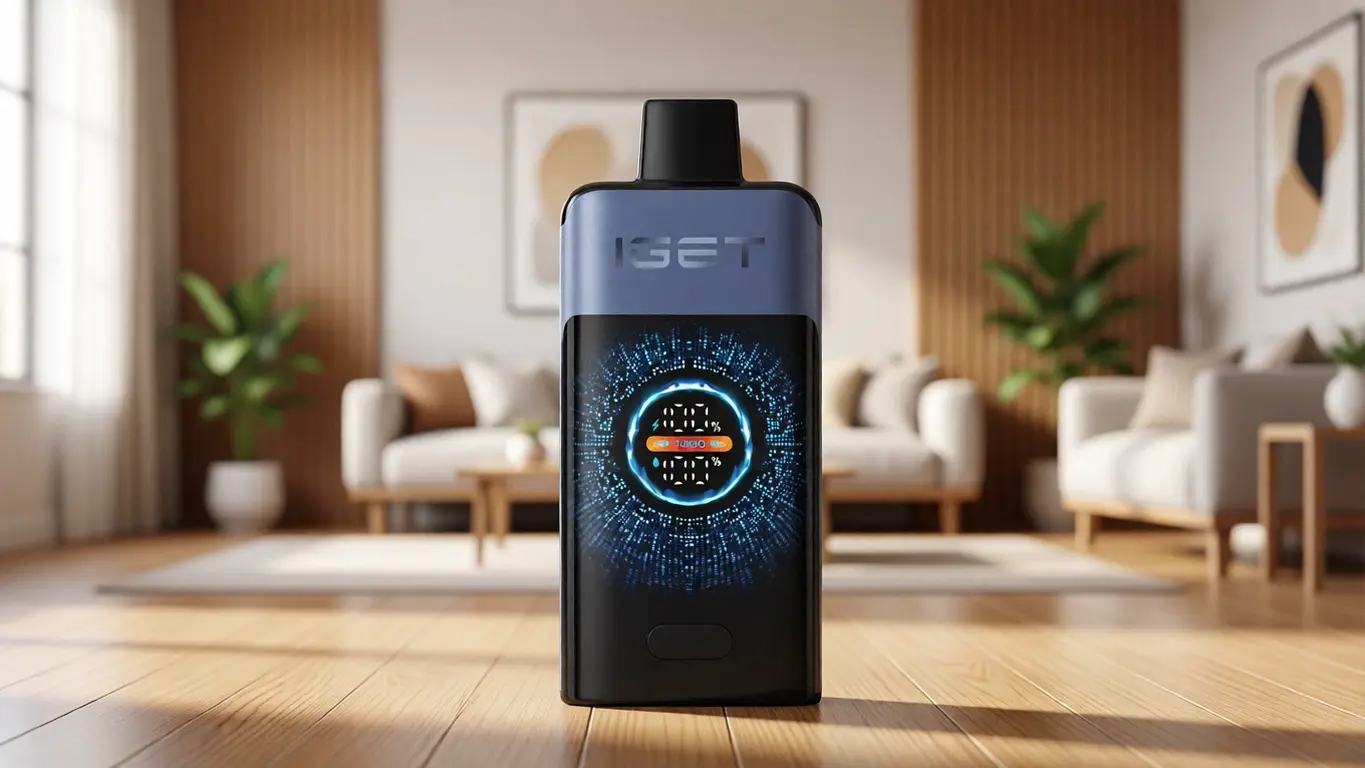
A pre‑filled sealed unit offers almost no adjustability; what you get out of the box is what you’ll always get. Refillable pod systems with fixed airflow and no wattage control sit one step above, allowing some experimentation through coil resistance selection. But genuine control starts with a device that lets you set wattage, gives you real‑time resistance readout, and includes battery voltage monitoring. Without those, you’re operating blind, and trying to force a harder hit by chain‑drawing or blocking airflow can lead to premature coil death or thermal runaway.
Applying These Principles to Common Device Categories
Every device design involves trade‑offs. Knowing where yours fits helps you decide what’s achievable.
Pre‑Filled and Low‑Power Pod Systems
These are built for simplicity, not for heavy customisation. Their coils are typically high resistance (above 1.0 ohm) and run at low wattage — often under 12 W. You can still maximise hit strength by choosing the lowest‑resistance coil available for that platform, selecting a 50/50 e‑liquid with 12–18 mg freebase nicotine, and closing down the airflow as far as comfortable. But there’s a ceiling. If you regularly find yourself taking long, multiple draws just to feel satisfied, the device is undersized for your needs. That’s not a failure of the product; it’s a mismatch.
Adjustable Pod Mods and AIOs
These sit in the sweet spot for many users. They allow you to swap between coil resistances (say, 0.6 ohm and 0.8 ohm), set wattage manually up to about 30–40 W, and fine‑tune airflow. When optimised, they can produce a dense, warm vapour that rivals much larger tanks. The most common user error is failing to prime a new coil adequately. Even a high‑performance mesh coil needs 10–15 minutes of soaking before it can handle full power without scorching. If you’re chasing a harder hit and immediately crank the wattage on a fresh coil, you’ll likely burn the cotton and lock in a persistent charred taste.
Sub‑Ohm Tanks and Rebuildable Atomisers
These are the engines for high‑power vapour. A 0.15‑ohm mesh coil at 70 W with 80% VG e‑liquid can deliver enormous clouds and significant warmth. Here, hit intensity is a function of coil surface area, airflow alignment, and wicking efficiency. Rebuildables add another layer: users can install dual‑coil builds, twisted wire, or Clapton configurations that increase surface area and ramp‑up time. But with that power comes greater responsibility. Battery safety is not optional. A 0.15‑ohm build on a mechanical mod draws over 28 amps at 4.2 V — well above the continuous discharge rating of many 18650 cells. Without a regulated circuit, the only protection is your own knowledge. If you’re unsure, stay within regulated devices.
A Practical Step‑by‑Step Method for Increasing Hit Strength
You don’t need to buy a new device immediately. Work through your current setup first.
Verify battery health and charge level. A weak hit is often just a depleted cell. Even if the indicator shows a couple of bars, voltage sag under load can drop output significantly. Swap to a fresh, properly rated battery.
Check the coil’s rated wattage range. If your device displays resistance, ensure the wattage you’re setting falls within the manufacturer’s recommended window. Running a coil below its minimum can gum it up; above its maximum will char it.
Adjust airflow incrementally. Start fully open, take a draw, then close it by a quarter. Repeat until the vapour feels denser and warmer without a dry hit taste. That’s your optimal setting.
Increase nicotine concentration moderately. Move up one strength tier — for example, from 6 mg to 9 mg — not a double jump. The goal is a more pronounced throat hit, not irritation.
Try a thinner PG ratio. If you’re on a 70 VG blend, experiment with a 60/40 or 50/50. The increased PG will boost throat impact and carry nicotine better, provided your coil can wick thin liquids without leaking.
Ensure proper coil saturation. Prime a new coil by dripping e‑liquid directly onto the cotton openings, then let it sit in a filled tank for at least 15 minutes. Start at the low end of the wattage range and gradually increase over 20 puffs.
Consider coil material. Stainless steel coils can be used in temperature‑control mode, which prevents dry burns and allows you to run at higher temperatures safely, resulting in a consistently dense hit. Ni80 or Kanthal are wattage‑only, but tend to ramp up faster at the same resistance.
If after all this you still can’t get the hit you want, the device itself may be limiting you. Look for something with user‑adjustable wattage, a clear battery meter showing voltage under load, and coil options that extend beyond the manufacturer’s standard cartridge. Retailers like OZVAPE Shop maintain spec sheets that make this kind of comparison straightforward, so you spend less time guessing and more time fine‑tuning.
Common Mistakes and Industry Observations
1. Confusing visible cloud volume with throat hit.
A huge, airy cloud can look impressive but feel empty. Many users who chase “harder hits” actually want a sharper throat sensation, which comes from nicotine and PG, not from enormous wattage alone. If you’re sub‑ohming high‑VG liquid with 3 mg nicotine, you’ll get clouds but no bite. Instead of cranking wattage further, increase nicotine or switch to a higher‑PG blend.
2. Ignoring battery voltage sag.
As a lithium‑ion cell discharges, its voltage drops from 4.2 V down to around 3.2 V under load. On a mechanical or unregulated device, that directly reduces heat output. A hit that’s strong on a fresh battery becomes weak by the 50th puff. Regulated mods compensate by boosting voltage, but cheap chipsets don’t always deliver accurate output below 3.5 V. If your regulated device feels inconsistent, the power supply chain — battery, contacts, board — isn’t maintaining signal integrity.
3. Assuming that a larger device automatically hits harder.
You’ll see dual‑battery box mods that are physically imposing, but the actual performance depends on the coil and tank sitting on top. A small pod system with a low‑resistance mesh coil and optimised airflow can often out-perform a bulky setup with a poorly matched tank. Evaluate the system, not the silhouette.
4. Misinterpreting coil longevity as a sign of output quality.
A coil that lasts for weeks might seem like a bonus, but it could also indicate the device isn’t delivering enough heat to vaporise e‑liquid efficiently. Efficient vaporisation at the correct temperature produces clean flavour and a dense hit; a coil that lingers too long without caramelising e‑liquid is likely running cool. Harder hits accelerate coil degradation — that’s the trade‑off.
5. Overlooking the mouthpiece geometry.
The diameter and taper of the drip tip affect how vapour concentrates before it reaches your mouth. A narrow‑bore tip intensifies the sensation of density and warmth, while a wide‑bore tip cools and dilutes it. Swapping a wide‑bore tip for a narrow one can transform the perceived hit without touching any other variable.
Frequently Asked Questions
Q: Can I increase the wattage above the coil’s maximum rating to get a harder hit?
A: Doing so will almost certainly burn the cotton, produce an acrid taste, and potentially release compounds you don’t want to inhale. Stay within the range printed on the coil. If that range doesn’t deliver enough intensity, you need a different coil or device, not extra wattage on the same coil.
Q: Why does my hit feel weak after a few days with the same coil?
A: Cotton degradation and sweetener buildup are the usual culprits. Even if the coil doesn’t taste burnt, a layer of caramelised residue insulates the wire and reduces heat transfer. When draw quality starts to drop, it’s time to replace the coil.
Q: Is a mechanical mod the only way to get a truly hard hit?
A: No. A high‑quality regulated device with a boost chip can deliver consistent power across a range of resistances and provide safety protections that mechanicals lack. Hard hits come from correct coil‑airflow‑liquid matching, not necessarily from bypassing protection circuits.
Q: Does higher VG always mean bigger clouds and a harder hit?
A: Higher VG increases visible vapour density, but it reduces throat hit because VG is smoother than PG. For a hard throat hit, you need a balance that leans toward PG or higher nicotine. For pure cloud density, VG is your friend — but the hit will feel softer.
Q: How do I know if my battery can handle a lower‑resistance coil?
A: Calculate the current draw at your device’s maximum voltage using Ohm’s law: Current = Voltage / Resistance. For a regulated mod, use the wattage and battery cutoff voltage: Current = Power / Voltage / Number of Batteries (with efficiency factor). Never exceed the continuous discharge rating (CDR) of your cells. If you’re unsure, consult a battery safety table or the device manufacturer’s specifications.
Q: Can airflow affect throat hit even if I don’t change the e‑liquid?
A: Absolutely. Closing the airflow increases the vapor‑to‑air ratio, raising both temperature and throat sensation. It’s the quickest, cost‑free adjustment to make any coil feel more intense.
Q: What’s the difference between mesh and round wire coils for hit intensity?
A: Mesh coils have a larger surface area and heat more evenly, which generally produces denser vapour at equivalent wattage. Round wire coils can feel sharper and heat up faster on smaller builds. Both can deliver a hard hit; the choice depends on whether you prefer warmth and density (mesh) or a crisp, instantaneous punch (round wire).
Q: I’m using the same device as my friend, but theirs hits harder. Why?
A: Manufacturing tolerances, battery age, coil version, e‑liquid age, and even altitude can create perceptible differences. However, the most likely explanation is a mismatch in settings — check airflow position, wattage, and coil resistance. Two identical‑looking devices can behave quite differently if one has a coil reading 0.02 ohms lower at the same wattage, because real‑world resistance varies slightly from the printed label.
Q: Is it safe to use a device that gives me no status feedback on battery or output?
A: Operating a device without clear battery indication or power‑output feedback is inherently risky — you’ll never know if you’re approaching unsafe voltage levels or if the device is delivering the wattage you think it is. For peace of mind, choose hardware that displays real‑time resistance, voltage under load, and battery charge. OZVAPE Shop lists these specifications for every device it stocks, helping you avoid devices that leave you guessing.
Q: Will increasing the hit strength shorten my device’s lifespan?
A: Running coils at their maximum rated wattage and taking longer draws generates more heat and accelerates wear on both the coil and the battery. This is a normal trade‑off. Proper maintenance — cleaning contacts, not letting e‑liquid sit in the tank for weeks, and storing batteries at nominal voltage — will mitigate accelerated aging.
Bringing It All Together
Making a vape hit harder is neither a secret art nor a single button press. It’s a methodical process of aligning power delivery, airflow, e‑liquid properties, and device architecture. The people who succeed in getting the draw they want are the ones who stop throwing money at conflicting recommendations and start treating their device as a system — one where every component has a measurable impact. Understand the constraints of your current hardware first. Then, if you need more range, choose a platform that gives you transparency and control, not just promises.
When it’s time to explore devices that respect that need for clarity and consistency, platforms like OZVAPE Shop provide standardised product information and authorised stock that make informed decisions easier. But the most valuable tool is still your own attention to detail. The right hit isn’t the one that looks most dramatic — it’s the one that feels exactly right to you, and that you can reproduce reliably, draw after draw.