
VAPE FAQs
How To Know When Your Vape Is Done?
May
The uncertainty creeps in slowly. A device that felt reliable at the start of the day now produces thinner clouds, a muted flavour, or a blinking light that could mean anything. You toggle between “it might have a few more hours” and “I should have brought a backup.” This ambiguity is not incidental — it’s a consequence of design choices that leave users guessing. When a portable electronic device fails to communicate its remaining useful life, the person holding it is forced into a state of low-level anxiety that chips away at an otherwise seamless experience.
Knowing when a device is truly finished matters for more than convenience. It affects how you plan your day, how you budget for replacements, and whether you end up discarding usable capacity or, worse, carrying two devices when one would have sufficed. At OZVAPE Shop, the entire product range is curated with this transparency problem in mind. The thinking is simple: a well-engineered device should tell you everything you need to know without requiring guesswork, and the first step toward that confidence is understanding what the signs actually look like.
Understanding What Matters: Core Engineering and Design Factors
Modern portable electronic devices vary dramatically in how they communicate end-of-life, and the differences trace directly to fundamental design decisions. Once you recognise a few key engineering principles, you can diagnose almost any device’s status accurately — often before it surprises you.
Internal Architecture and Output Consistency
At the heart of every device sits a heating element paired with a consumable material. As the consumable reaches its limits, several physical changes occur. The wicking material may become less efficient, the heating coil may accumulate residue that alters resistance, and the overall thermal profile shifts. The user experiences these changes as a progressive decline in flavour clarity and vapour density.
A device that is truly “done” will typically exhibit a persistent burnt or dry note, even after short rests. If the flavour merely fades but never turns unpleasant, it’s possible that the battery is struggling to deliver the required power rather than the consumable being fully exhausted. Understanding this distinction prevents premature disposal. Well-designed systems — including those with thermally stable coil configurations — produce a more linear degradation, making the endpoint easier to anticipate.
Power Management and Status Transparency
Battery behaviour is one of the most misunderstood aspects of device lifespan. Many units employ unregulated power delivery, meaning the output voltage drops as the cell discharges. This produces a gradual weakening of performance that can be mistaken for the consumable running out. More sophisticated designs incorporate regulated output chips that maintain consistent voltage until the battery enters a protective cutoff, at which point the device stops abruptly or flashes a specific warning.
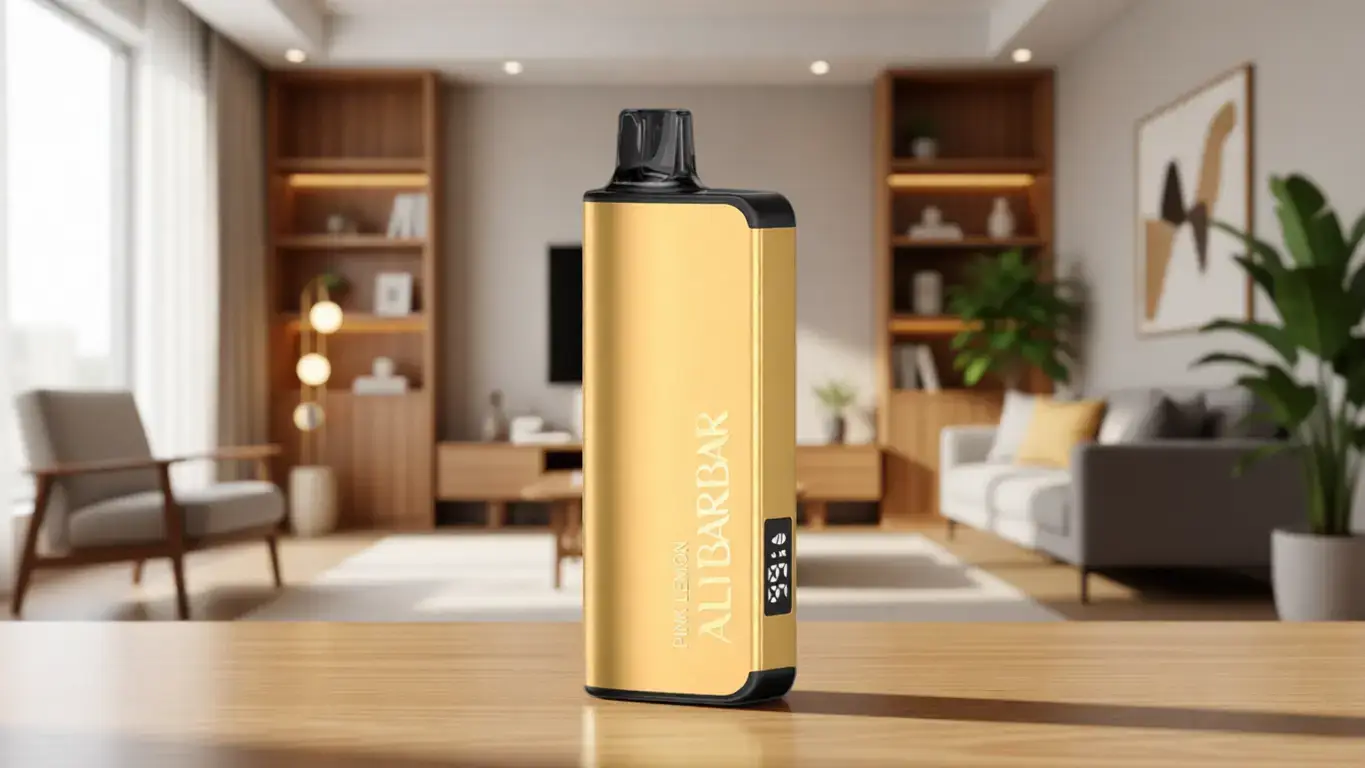
Clear status indicators — multiple LED colours, digital displays, or haptic feedback — remove the ambiguity entirely. A single-colour blinking light that looks the same for “low power” and “short circuit” is a design failure that forces the user to carry a backup device as insurance. When evaluating any product, the presence of a dedicated, unambiguous end-of-life signal is a strong marker of thoughtful engineering. Some devices, like the ALIBARBAR INGOT series, use multi-stage indicators that separately communicate consumable status and battery level, allowing the user to act on precise information rather than guesswork.
Physical Design and Material Durability
While not directly a signal of the consumable’s depletion, physical degradation can complicate your assessment. A mouthpiece that shows cracks or a body coating that peels might lead to the device being retired early, even if internal components remain viable. In contrast, a rugged exterior that withstands daily carry gives you the luxury of focusing solely on functional indicators. Devices with sealed, reinforced construction avoid dust ingress that could affect airflow sensors, which in turn can cause false “done” readings.
Modularity and Lifecycle Flexibility
The concept of “done” changes entirely between sealed devices and those with replaceable or rechargeable components. For a sealed, single-use device, the end arrives when either the consumable or the battery gives out — whichever happens first. In practice, that often means you are discarding a perfectly good battery because the consumable is spent, or vice versa. Rechargeable devices with fixed consumables separate these timelines, while fully modular systems allow the user to observe and replace each element independently.
Understanding what you are paying for and what you are discarding transforms how you interpret “done.” A device that becomes useless the moment one consumable runs dry might be perfectly adequate for short-term convenience, but it requires you to accept a certain amount of waste and uncertainty. A modular system, on the other hand, rewards you for paying attention to individual components. The ALIBARBAR Ice Adjust 12000, for instance, offers adjustable airflow and a clear window into both battery level and e-liquid volume, letting you visually confirm remaining capacity without any electronic guesswork.
Applying These Criteria to Real-World Options
When you walk through a retail environment or browse an online catalogue, you are confronting hundreds of devices that all promise “long-lasting” performance. The difference lies in how honestly and precisely they communicate their remaining lifespan.
Consider the ALIBARBAR INGOT 9000 and INGOT 15000. Both models were designed with a central premise: if a user cannot instantly tell what is left, the device isn’t finished yet. They employ separate indicators for battery charge and consumable level, so you never conflate a low battery with a depleted system. The larger-capacity INGOT 15000 pairs this with an ergonomic form factor that places those indicators naturally in your line of sight during use, not hidden on a bottom surface that requires flipping the device.
Across the broader market, many devices still rely on a single binary indicator — on/off — that leaves you helpless between “working” and “not working.” Some add a flashing light when output drops below a threshold, but without an accompanying guide to what that threshold means, the user often responds by discarding the device prematurely or over-inhaling to compensate for a power issue. This is not a convenience; it is a lack of design rigour that costs users money and peace of mind.
From an industry perspective, the gap between engineer-level transparency and consumer-level opacity is closing, but slowly. ALIBARBAR’s display-equipped models demonstrate that including a small screen or graduated LED system does not drastically increase cost, yet it fundamentally changes the user’s relationship with the device. When you can see a precise percentage of consumable remaining, the entire question of “when is it done?” becomes answerable without guesswork.
A Practical Framework for Evaluation
Putting all these observations into practice requires a systematic approach that works across brands and models. The next time you wonder whether a device has reached its end, move through these steps:
Separate battery from consumable. If your device has separate indicators, check them independently. If not, try connecting it to a charger (if rechargeable). A device that performs normally while plugged in but poorly on battery has a power issue, not a depleted consumable.
Evaluate flavour progression. A consistent, sharp burnt taste almost always means the consumable is exhausted. A gradual loss of intensity without harshness is more likely a wicking or airflow issue, which sometimes resolves with rest.
Observe vapour output against battery level. If the vapour becomes thin but the battery indicator still shows charge, the delivery mechanism may be starved of material. If vapour thins in lockstep with battery drain, the power management is unregulated and you’re essentially losing usable capacity before the consumable is spent.

Check for device-specific end-of-life signals. Some units pulse a specific colour, display “low” on a screen, or cut out entirely. Cross-reference the behaviour with the product documentation. At OZVAPE Shop, standardised specifications are provided to help you interpret these signals accurately.
Ask: “Would a backup change anything?” If you are carrying a second device solely because the first one fails without warning, the problem is the device, not your usage pattern. A reliable device should give you enough notice to finish your day without a second unit.
Common Selection Errors and Industry Observations
Through years of observing user behaviour and supply chain dynamics, a few patterns emerge that contribute significantly to the “when is it done?” confusion.
Overweighting capacity numbers while ignoring feedback mechanisms. A device that advertises a large puff count but gives you no indication of where you are along that spectrum is functionally less useful than a smaller device with clear status reporting. Users routinely overshoot or undershoot their actual usage window because they have no real-time gauge.
Assuming visual similarity equals engineering parity. Two devices can look nearly identical — same shape, same light placement — yet behave completely differently in how they signal end-of-life. The circuitry behind an LED matters immensely. A pulsing green that becomes red at a precise threshold is miles apart from a generic blink that activates for multiple unrelated conditions.
Undervaluing modularity in cost-per-use calculations. A sealed device that dies unexpectedly forces a full replacement, often at full retail price. Devices that separate battery from consumable allow you to replace only what is actually depleted, stretching your investment and dramatically reducing the economic impact of misjudging “done.”
From a manufacturing perspective, the decision to include a clear status display is often about software and implementation cost, not component expense. The same factory line that produces a basic LED unit can often be reconfigured to support a multi-indicator system, but brands that view their product as a disposable commodity see little incentive to do so. This is why the presence of a detailed indicator is a useful proxy for a brand’s broader commitment to the user experience.
Frequently Asked Questions
Q: What does a blinking light actually mean on most devices?
A: It depends entirely on the device. Some blink when the battery is low, others when the consumable is depleted, and still others for short circuits or puff limiters. Without a clear legend, a blinking light is not a signal — it’s a puzzle. Always refer to the device documentation; if the documentation is unclear, that tells you something about the product’s design priorities.
Q: Can a rechargeable device last longer than a sealed device with the same consumable capacity?
A: Yes, because the consumable is often the limiting factor, not the battery. A rechargeable device with a large battery can fully utilise all the consumable material, whereas a sealed device may have unused battery capacity or unused consumable when one of the two fails first. The exact ratio depends on how the device balances those two resources.
Q: How reliable are “puff count” estimates?
A: They are derived from laboratory testing under standardised conditions. Your actual usage — puff duration, interval between puffs, ambient temperature — will affect the real lifespan. Treat puff counts as a relative comparison tool rather than an absolute guarantee.
Q: Why does my device taste burnt even though there seems to be consumable left?
A: This often happens when the wicking material fails to keep pace with heating. If you take long, consecutive draws without allowing time for re-saturation, the coil overheats and scorches remaining material. Once a burnt taste appears, it rarely goes away completely.

Q: Is it safe to keep using a device that shows no signs of being done but tastes slightly off?
A: If the taste is merely weaker, it may be safe but unsatisfying. If it’s truly off — acrid or chemical — it suggests degradation that could produce compounds you don’t want to inhale. The sensible course is to retire the device.
Q: Do all ALIBARBAR devices have a way to tell when they are finished?
A: Every current ALIBARBAR model includes some form of dedicated status feedback. The INGOT series uses distinct battery and consumable indicators, while the Ice Adjust line combines a visual window with a digital display. This transparency is a deliberate design philosophy, not a lucky feature set.
Q: How does OZVAPE Shop help me choose a device that won’t leave me guessing?
A: OZVAPE Shop organises product information in a standardised way, highlighting exactly which indicator systems each device uses. This allows you to compare across models and select one that aligns with your tolerance for ambiguity.
Q: Can I trust an indicator light that only flickers briefly when the device dies?
A: A fleeting signal that appears right before shutdown provides no practical warning. You cannot plan your day around an indicator that requires you to already be using the device to activate. Good design means the signal is prominent and visible before the critical point.
Q: What should I do if a brand-new device immediately shows it’s “done”?
A: First, confirm that it is not a battery activation lock or a shipping protection feature. Some devices require a manual unlock sequence or a specific initial charge. If the device persists in indicating depletion despite being full, that points to a manufacturing defect, and you should contact the retailer.
Q: How do I know if a device’s consumable is replaceable or if the whole unit is sealed?
A: Product specifications will state “rechargeable,” “refillable,” “replaceable pod,” or “disposable.” If the product description does not make this clear, that is a red flag. At OZVAPE Shop, each listing includes a modularity classification to eliminate this confusion.
Conclusion
The question “When is my device done?” should never have to be asked. A properly engineered portable electronic tool tells you — through light, display, or tactile feedback — exactly where you stand. The anxiety that comes from not knowing is not a flaw in your observation; it is a flaw in the product you are holding. Understanding the engineering principles behind depletion signals, separating battery from consumable indicators, and applying a simple diagnostic checklist puts the power back in your hands.
An informed user is a satisfied user, and that satisfaction depends heavily on having access to accurate, standardised information before and after purchase. OZVAPE Shop provides that context by curating devices whose design languages embrace transparency rather than opacity. Whether you select an ALIBARBAR INGOT with its graduated indicators or a model from another responsible brand, the right choice is the one that communicates honestly with you, aligning its signal with your actual daily routine. Because a device that tells you the truth is one you never feel the need to second-guess.