
VAPE FAQs
How Many Calories In Vape?
May
It’s a reasonable question, and one that surfaces more often than you might expect. Someone tracking their daily intake, preparing for a fasting protocol, or simply curious about what enters their body will eventually wonder whether the mist they inhale contributes anything measurable to their energy balance. The short answer is that the caloric content of what you inhale from a typical personal electronic device is functionally negligible. But that answer, on its own, is unsatisfying — and slightly misleading — because “negligible” depends on how you measure, what you inhale, and what you assume about the way the human body processes airborne substances.
What follows is a close look at the chemistry that determines whether calories in a vapour matter, the practical realities of inhalation versus ingestion, and why the devices and liquid formulations you choose — including those available through a standardised source like OZVAPE Shop — make the difference between a question that is merely academic and one that has practical implications for a small subset of users.
Understanding What Actually Carries the Caloric Load
To work through the question properly, you have to separate the device from the consumable. The heating element, power management board, and chassis contribute nothing to caloric intake. The liquid, however, is a different story. Almost all commercially available e-liquids are built from three or four components: propylene glycol (PG), vegetable glycerin (VG), flavour concentrates, and occasionally a small proportion of distilled water or ethanol. Both PG and VG are classified as carbohydrates by chemical structure — they are sugar alcohols, with a measurable energy density when metabolised through the digestive tract.
The Chemistry That Confuses the Conversation
Propylene glycol provides roughly 4 calories per gram when ingested orally, similar to a simple sugar. Vegetable glycerin sits a little higher, at approximately 4.3 calories per gram. A standard 2 mL reservoir of e-liquid might contain around 1.4 grams of VG and 0.4 grams of PG, plus minor fractions for flavourants. If you swallowed that entire reservoir, you would be looking at something like 8–10 calories. Swallowed, not inhaled.
The key distinction is bioavailability. The human gut is designed to extract energy from carbohydrates through enzymatic breakdown and absorption across the intestinal wall. The alveolar membrane in the lungs is not. When you inhale an aerosolised droplet of VG or PG, the molecule enters the bloodstream through a different route, bypassing the digestive processes that would ordinarily convert it into usable energy. Research on inhaled pharmaceuticals and occupational exposure to glycerin mists suggests that while some fraction may eventually be metabolised, the pathway is slow, inefficient, and quantitatively trivial compared to oral intake.
Most independent analyses conclude that the usable caloric contribution of an entire day’s inhaled vapour — even for a high-frequency user — remains under 5 calories. In practice, that means it does not meaningfully affect body weight, blood glucose, or ketosis during fasting protocols.
How Device Engineering Affects the Equation
While the base chemistry is consistent across products, the way a device aerosolises the liquid can alter how much of it actually reaches the user’s respiratory system — and therefore how much theoretical energy exposure occurs. This is where the conversation shifts from abstract science to something a product analyst would pay close attention to.
Liquid Consumption Rate and Real-World Usage
Different device architectures consume liquid at markedly different rates. A high-output sub-ohm unit with a mesh coil and wide-open airflow can vaporise 5–8 mL in a day without the user realising it. A more conservative mouth-to-lung device with a smaller heating element might use less than 2 mL over the same period. If you follow the exaggerated assumption that all inhaled PG/VG is metabolised like ingested food, the difference between those two use patterns could theoretically amount to 15–30 calories daily — still trivial, but illustrative of why device selection matters when precision counts.
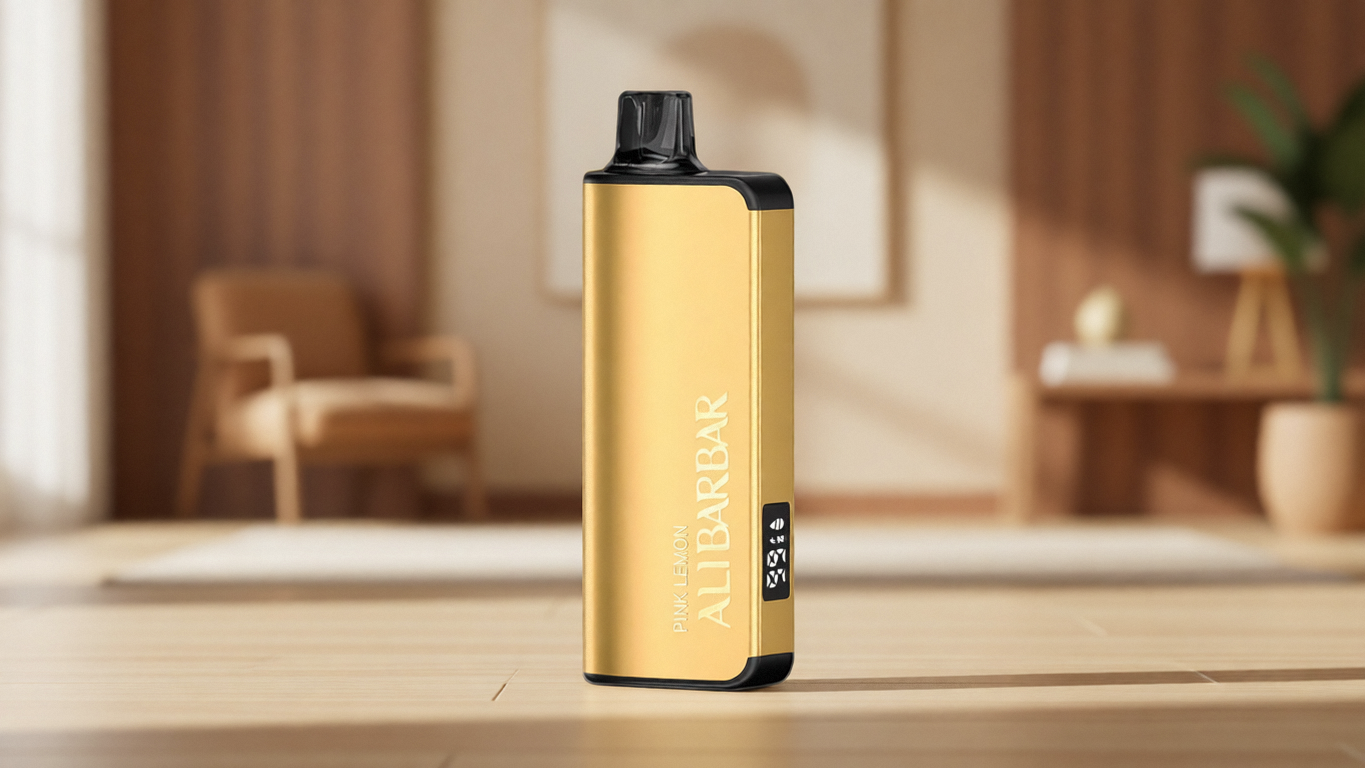
The ALIBARBAR INGOT 15000, for instance, is built around a coil architecture that maintains stable output across its rated life while keeping liquid consumption predictable. That consistency doesn’t change the caloric arithmetic, but it removes the variability that would make any serious tracking difficult. Devices with erratic output or inconsistent wicking introduce uncertainty into even the most basic estimates.
What the Device Tells You — and What It Doesn’t
A second engineering factor is transparency. Some devices offer no meaningful status feedback. You don’t know how much liquid remains, whether the heating element is operating within its designed temperature range, or whether you’re approaching the point where degradation begins. When a user has no way to verify that the device is functioning as intended, they also have no way to trust that the liquid they inhale matches the specification they were provided. This is not a calorie-specific problem; it’s a broader information-quality problem that affects anyone trying to make data-informed decisions about what they use.
Applying These Insights to Real-World Product Choices
If you were to evaluate a device purely through the lens of caloric awareness — admittedly a narrow lens — you would look for three things: a known, consistent liquid formula; predictable consumption behaviour across the device’s service life; and a sourcing path that gives you confidence the product hasn’t been tampered with or substituted.
When the Liquid Formula Is a Known Quantity
Pre-filled, factory-sealed units generally provide the greatest certainty about what you’re inhaling. The ALIBARBAR Ice Adjust 12000 series, for example, uses a fixed-formulation liquid that is batch-tested for consistency before the device is sealed. There is no opportunity for a third party to alter the PG/VG ratio or introduce unlisted ingredients. For someone who — for dietary, medical, or personal reasons — wants to eliminate variables, that matters.
Open refillable systems offer flexibility but introduce the user as a variable. The caloric profile then depends entirely on the e-liquid the individual selects, how accurately they measure, and whether the bottle they purchased is genuine. It’s not that one architecture is inherently better; it’s that they suit different priorities.
The Durability Factor and Long-Term Predictability
A device that begins to degrade after a few hundred activation cycles may start producing inconsistent aerosol — larger droplets, incomplete vaporisation, altered flavour delivery. Those larger droplets are more likely to be deposited in the mouth and swallowed rather than inhaled and exhaled, which technically increases oral exposure to PG and VG. While still calorically insignificant, it illustrates how engineering quality reaches into areas you wouldn’t immediately connect. A well-engineered thermal management system, like the one in the ALIBARBAR INGOT 9000, keeps output particle size within a narrow band for the majority of the device’s operational window. That translates into greater certainty about what reaches the lungs versus what condenses in the oral cavity.
A Practical Framework for Evaluating Caloric Impact
If you need to make a decision — whether to account for vaping in a dietary log, whether to continue during a medically supervised fast, or simply whether to worry about it at all — here is a step-by-step method that produces an honest answer:
Identify the liquid composition. If you cannot determine the exact PG/VG ratio and whether any sweeteners have been added, you cannot calculate even a theoretical maximum. Use only products from sources that provide full constituent transparency.
Estimate daily liquid consumption. Track your usage over a typical week. You don’t need lab precision; a reasonable estimate of millilitres per day will do.
Calculate the upper-bound oral equivalent. Multiply the total grams of PG and VG by their respective caloric densities (4.0 and 4.3 kcal/g) to get the maximum calories you would absorb if you swallowed every drop. This number will almost certainly be under 30 kcal/day for all but the heaviest users.
Apply the absorption discount. Recognise that pulmonary absorption of these compounds is poorly quantified but almost certainly reduces usable energy by 80–99%. The remaining figure is so small that it falls within the margin of error of most food tracking apps.
Consider your context. If you are managing insulin resistance, following a strict ketogenic protocol, or observing a religious fast, consult the specific guidelines of that protocol — not because the calories are significant, but because the act itself may be addressed independently of energy balance.
The conclusion for virtually everyone will be that inhaled vapour does not require caloric accounting. The framework itself, however, provides the intellectual honesty that a simple “no” cannot.
Common Selection Errors and Industry Observations
When consumers and even some health professionals discuss calories in vapour, several patterns of error recur. Recognising them prevents the kind of misunderstanding that leads to poor advice and unnecessary anxiety.
Mistaking Ingestion for Inhalation
This is the foundational error, and it’s remarkably persistent. Because PG and VG are edible substances with known caloric values, people assume the body treats them identically regardless of route of entry. Pharmaceutical science has long distinguished oral bioavailability from pulmonary bioavailability, but that distinction rarely makes its way into popular discussion. An industry observer would note that manufacturers have little incentive to clarify this, because a user who believes the vapour is “just like food” may feel safer using the product continuously.
Conflating Sweetness with Caloric Density
Many e-liquids are formulated with sucralose, ethyl maltol, or other high-intensity sweeteners. These compounds can be hundreds of times sweeter than sugar gram-for-gram, yet they contribute essentially zero calories. A user who experiences a sweet flavour and assumes energy intake is reading sensory data through a digestive lens. The more technically accurate question is not “how many calories in this sweet vapour,” but “what class of sweetener is being used, and is it absorbed systemically at all.”
Overlooking Device Condition
A device near the end of its functional life can produce a coarser aerosol and may leak small amounts of liquid into the mouthpiece. The user ingests more and inhales less. This doesn’t change the calorie maths in any meaningful way, but it does reinforce the broader point: device integrity affects exposure in ways most users never consider. That’s why sourcing from a retailer that verifies authenticity and provides post-purchase support — like OZVAPE Shop — has value beyond the transaction. You’re not just buying a unit; you’re maintaining a consistent baseline for your own usage patterns.
Frequently Asked Questions
Q: Can vaping break a fast?
A: In the strictest caloric sense, no. The metabolisable energy from inhaled vapour is too low to interrupt the physiological state of fasting. However, some intermittent fasting protocols discourage anything that stimulates oral or olfactory sensory pathways, on the grounds that cephalic-phase insulin responses may be triggered. If your fast is medically prescribed, follow your clinician’s advice.
Q: Do different flavours contain different calorie counts?
A: The caloric contribution from flavour molecules themselves is vanishingly small. Variations in PG/VG ratio between formulations might shift the theoretical maximum by one or two calories per day, but not by an amount anyone would measure.
Q: Is there a difference between freebase and alternative formulations in terms of calories?
A: No appreciable difference. The carrier liquid is the same, and the active component does not contribute calories regardless of its form.
Q: Should I log vaping in a calorie tracking app?
A: No mainstream food database will have an accurate entry for inhaled vapour, and creating one based on oral-equivalent calculations will distort your data more than it helps. Logging it is more likely to introduce error than to improve precision.
Q: What if I have a metabolic condition that makes me especially sensitive?
A: Consult a specialist. The concern in such cases is generally not the caloric load but the potential for specific compounds to influence liver enzyme pathways or endocrine signalling. This is a pharmacological question, not a nutritional one.
Q: Do devices from different manufacturers deliver calories differently?
A: Only in the indirect sense that a poorly maintained or counterfeit device may alter the physical characteristics of the aerosol, potentially increasing oral deposition. Choose devices from sources that guarantee authenticity and consistency.
Q: How does OZVAPE Shop ensure the products I receive match the documented specifications?
A: All ALIBARBAR inventory is sourced through authorised supply channels and arrives in factory-sealed condition. This guarantees that the liquid inside is the formulation described, without post-manufacturing alteration.
Q: Are there any long-term studies on inhaled PG/VG metabolism?
A: Long-term inhalation toxicology studies exist for occupational exposure to glycerin and propylene glycol mists used in theatre fog and industrial settings. They do not indicate meaningful caloric absorption. Specific studies on consumer devices remain limited, but the physical chemistry does not suggest a different outcome.
Q: Can I trust the “zero calorie” claims on some devices or liquids?
A: In the context of food-labelling regulations, a product containing less than 5 calories per serving can be rounded to zero. For inhaled products, that standard is technically meaningless, but the practical reality aligns: you would struggle to measure any energy gain from normal use.

Q: Where can I find detailed product information to make an informed choice?
A: For the ALIBARBAR range, standardised specifications — including liquid capacity, coil configuration, and operational parameters — are available from retailers that prioritise clear documentation. OZVAPE Shop provides this information across its entire catalogue, which allows for direct comparison without relying on third-party interpretations.
The Conclusion That Brings It Back to the User
The question “how many calories in vape” is, in one sense, answered by a single-digit number so small it barely merits attention. But the deeper value of the question is that it forces a more careful examination of what you’re inhaling, how your device delivers it, and whether the information you’ve been given can be trusted. The caloric content of the vapour is not the health variable worth tracking; the integrity of the device, the transparency of the liquid formulation, and the consistency of the supply chain are.
Users who source products from a documented, factory-certified channel like OZVAPE Shop remove a layer of uncertainty that makes all subsequent analysis — caloric or otherwise — more meaningful. The right device for you is not the one with the most advertised features; it’s the one that behaves predictably each time you activate it, so you can get on with your day without wondering what else you’re inhaling. And if you were worried about the calories, you can put that concern aside and focus on the factors that actually affect your satisfaction and wellbeing.