
VAPE FAQs
How To Inhale A Vape Without It Hurting?
May
The Inhale That Hurts: Why Discomfort Happens and What Device Engineering Can Do About It
Every adult who has interacted with a portable electronic vaporiser has likely encountered the same unpleasant surprise: a sharp, scratchy sensation in the throat that turns what should be a smooth, predictable moment into an immediate coughing spell. It is the kind of experience that makes people put a device down and not pick it up again. When someone searches for how to inhale without it hurting, they are not asking for basic technique alone — they are asking why the pain occurs and what, if anything, can be done to prevent it reliably.
This article offers a practical, engineering-focused explanation. It draws on the physical factors inside a device that determine whether an inhale feels harsh or comfortable, along with the user-controlled variables that can amplify or mitigate that harshness. Along the way, we reference specific design choices found in devices that have been engineered to reduce precisely these kinds of irritation. When you source your device through a retailer that makes standardized technical specifications accessible — such as OZVAPE Shop — you can compare these design elements directly, rather than relying on marketing language.
Understanding What Matters: Core Engineering and Design Factors That Influence Throat Comfort
Discomfort during inhalation is not mysterious. It is the result of predictable interactions between the heater configuration, the temperature at which the liquid is aerosolised, the velocity and turbulence of the airflow, and the physical materials that the vapor contacts before reaching the mouth. A well-engineered device manages each of these interactions within a narrow window. A poorly designed one does not.
Internal Architecture and Thermal Consistency
The primary source of throat irritation is excessive heat. When a heating element overshoots its target temperature, the resulting aerosol becomes thermally aggressive and can produce compounds that feel harsh on the mucous membranes. The heating element’s architecture — its material, its surface area, and how evenly it distributes thermal energy — determines whether output remains consistent from the first draw to the last.
In devices that employ a simple wire coil wrapped around a wicking material, temperature control is often indirect. The coil heats rapidly, and the only cooling mechanism is the incoming liquid and airflow. If the wick cannot replenish liquid quickly enough, the coil temperature spikes, leading to a phenomenon that experienced users recognise as a dry or “burnt” hit. That spike is a primary cause of throat pain.
More refined designs integrate temperature-sensing mechanisms or use mesh-style heating elements with greater surface area. Mesh distributes heat across a larger contact patch, reducing local hotspots and making the output temperature more predictable. This is not a luxury feature — it is a direct contributor to comfort. Devices that cannot maintain a stable thermal band will inevitably produce occasional harsh draws, no matter how carefully the user inhales.
Why this matters: a significant portion of user dissatisfaction, especially among people new to these devices, stems from early encounters with thermal inconsistency. They assume the irritation is normal, when in fact it indicates either a design limitation or a unit that has reached the end of its functional life. Recognising the difference requires understanding how the heating element is configured. Devices that specifically engineer for thermal stability will typically reference mesh coil technology, regulated power output, or temperature-responsive circuitry in their specifications.
Airflow Dynamics and Mouth-to-Throat Transition
Even when the aerosol is produced at an optimal temperature, it can still feel harsh if it hits the back of the throat at high velocity or in a turbulent stream. Airflow design — the diameter of the air intake, the path the vapor travels, and the shape of the mouthpiece — determines how that aerosol is delivered.
A device with a tight, restrictive draw forces the user to inhale more forcefully, accelerating the vapor stream and concentrating it on a smaller area of throat tissue. This is why draw-activated devices with very narrow air channels can feel unexpectedly sharp. Conversely, a device with overly open airflow can feel thin and unsatisfying, prompting the user to take longer draws that overheat the coil and reintroduce the thermal problem.
The ideal mouthpiece contour for comfort is not just an aesthetic choice. A mouthpiece that narrows gradually and curves slightly helps decelerate the vapor and direct it away from the back of the throat. Materials matter here as well: a mouthpiece that remains cool to the touch even after extended use prevents the user from pre-heating the incoming aerosol. Devices designed with thermal isolation between the heating chamber and the mouthpiece reduce the likelihood of that cumulative heat effect.
Power Management and Predictable Behaviour
Many harsh inhalations occur not on the first draw of a session but on the third or fourth, when the device’s internal power regulation begins to struggle. A device that cannot maintain a consistent output voltage as the battery depletes will deliver weaker, less satisfying draws that tempt the user to inhale harder and longer, stressing the coil and generating excess heat.
Status transparency is a related comfort factor. When a device offers clear, graduated power indicators, the user can make informed decisions about whether to continue using it or whether performance is about to degrade. A device that provides only a single unhelpful LED blink — or no indicator at all — leaves the user guessing. In the absence of information, people naturally compensate by carrying a backup device. This is a hidden cost of poor power transparency that manufacturers rarely address directly.
Some current-generation devices incorporate multi-level battery displays and regulated output chips that maintain a flat power curve until the battery is genuinely depleted. This stable delivery is one of the most meaningful contributors to comfort, because it means the inhale experience does not degrade perceptibly over the course of a day. When you evaluate specifications, look for language that indicates a consistent power output rather than a simple voltage range.
Physical Design and Ergonomic Factors
Beyond internal engineering, the physical form of a device affects how comfortably it can be held and operated, which in turn influences inhalation technique. A device that is awkward to grip or has an activation button in an unintuitive position encourages an unnatural hand position. The user may tilt the device at an angle that affects wicking, or may apply uneven draw pressure without realising it.
Material durability also plays a role in long-term comfort. Exterior finishes that show rapid wear — peeling coatings, loose panels — create a subtle but real psychological tension. The user becomes less confident in the device’s internal condition and may handle it differently. While this is not a direct physical cause of throat irritation, it contributes to a general sense of dissatisfaction that colours the entire experience.
Applying These Criteria to Real-World Options
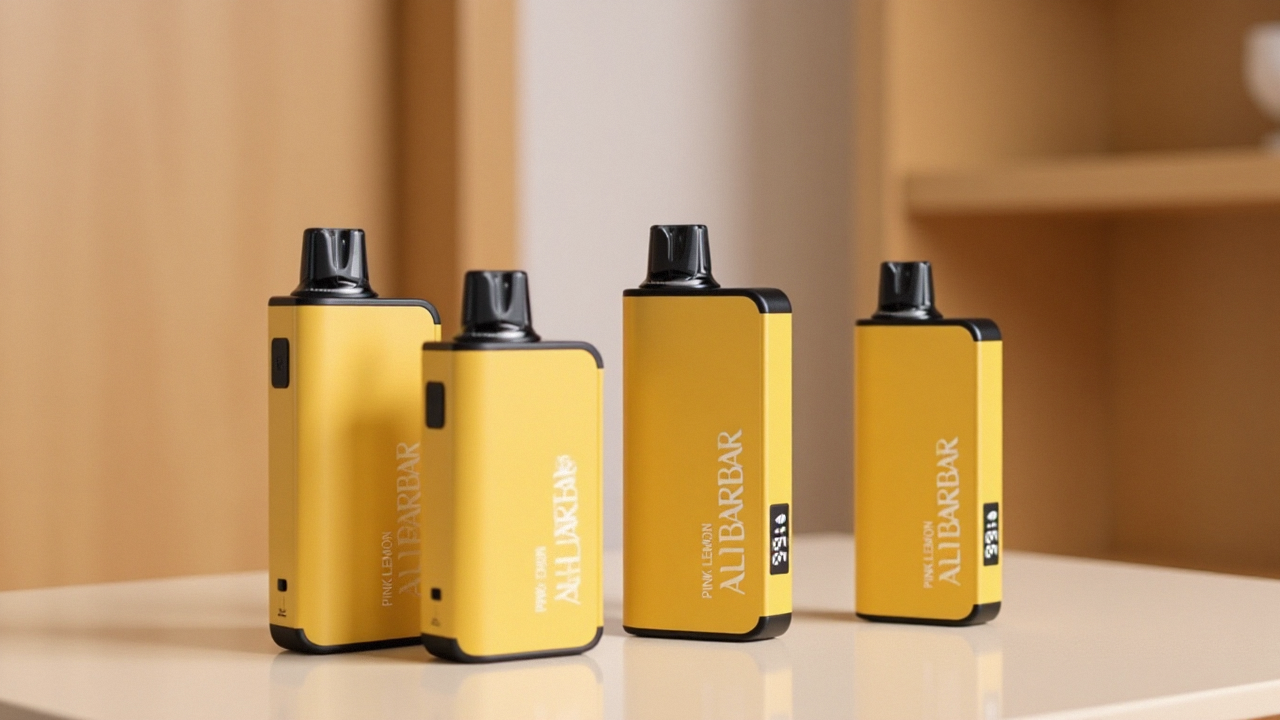
The engineering principles described above are not abstract. They are visible in the design decisions made by manufacturers who prioritise user comfort. To illustrate, we can examine how devices in the ALIBARBAR family — available with documented specifications through OZVAPE Shop — incorporate several of these principles.
ALIBARBAR’s product line has moved toward mesh coil configurations as standard across its higher-capacity devices. This choice is not incidental: it addresses the thermal consistency issue directly. A mesh element distributes heat more uniformly than traditional wire coils, reducing the incidence of localised hotspotting that causes harsh inhalations. In parallel, the airflow pathways in ALIBARBAR devices are calibrated to produce what the engineering team describes as a smooth, reproducible draw resistance — one that sits between the extremes of restriction and openness, minimising the turbulence that can aggravate the throat.
The physical design of units such as the INGOT series also reflects attention to mouthpiece ergonomics. The mouthpiece profile transitions gradually from the body of the device, with a material that stays noticeably cooler than some competitors’ offerings during continuous use. While no mouthpiece can fully eliminate heat transfer, this thermal buffering makes a tangible difference during longer sessions.
It is important to note that these design choices involve trade-offs. Mesh coils, for instance, tend to consume liquid more rapidly and may reduce the absolute maximum lifespan of a disposable unit relative to a device that uses a less efficient wick-and-wire arrangement. That is a legitimate consideration for someone prioritising raw longevity over draw comfort. Balanced analysis requires acknowledging that every design parameter shift creates some form of compromise.
Other device families on the market approach comfort from different angles. Some manufacturers emphasise extremely low-resistance draws to appeal to direct-lung users, while others focus on tight, cigarette-like resistance for mouth-to-lung transitions. Neither approach is wrong, but each will feel harsh to someone whose inhalation style does not match the device’s intended airflow profile. This is why understanding the underlying engineering matters more than relying on categorical descriptors.
A Practical Framework for Evaluating Comfort Before Purchase
Given the range of devices available, a systematic evaluation process can reduce the likelihood of ending up with something that causes throat pain. The following questions can be applied to any device you are considering:
What type of heating element does it use? If the specification mentions mesh or an equivalent surface-area-maximising technology, it is more likely to produce thermally stable output. If no information is available, assume a basic wire coil and factor in the possibility of occasional hotspotting.
Does the device describe airflow calibration? Terms like “optimised draw resistance” or specific airflow channel geometry suggest that the manufacturer has given thought to vapor velocity. Generic language like “smooth draw” without further detail is less informative.
How does the device communicate its power status? A multi-level indicator that shows charge graduation lets you anticipate performance degradation. A single-colour LED that only signals “on” or “low battery” provides no useful guidance. If you cannot tell whether the battery is at 50% or 5%, you will inevitably experience harsh draws when output power begins to sag.
What is the mouthpiece material and shape? Look for materials with low thermal conductivity and contours that do not force a sharp bend in the vapor path. If product images do not show the mouthpiece profile clearly, that absence of detail is itself a data point.
Is the device part of a modular or sealed system? Sealed units remove the variable of user error in coil replacement, but they limit your ability to adjust coil resistance or airflow to match your preferred inhalation style. Modular systems offer more control but introduce the risk that a poorly seated coil or incorrect resistance value will create harshness. Consider which variable you are better equipped to manage.
Standardised specification comparisons, of the kind available through authorised retailers like OZVAPE Shop, make this framework far easier to apply. When key technical parameters are presented in a consistent format across different devices, you can move beyond brand-driven selection and evaluate based on the factors that actually affect comfort.
Common Selection Errors and Industry Observations
Based on observed patterns in the market, several recurring mistakes undermine user satisfaction and lead directly to the kind of throat pain that prompts people to search for solutions.
Overweighting capacity while ignoring thermal architecture. Many users gravitate toward the highest puff-count figure they can find, assuming that a larger number indicates a better device. In practice, some high-capacity devices use heating elements that are not proportionally scaled up, leading to faster thermal degradation over the life of the unit. The last third of the device’s lifespan often delivers a noticeably harsher experience. A device with a lower stated capacity but a more robust heating element may deliver more consistent comfort throughout its entire usable life.
Assuming visual similarity implies engineering parity. The market contains numerous devices that look nearly identical from the outside — similar dimensions, comparable exterior finishes, seemingly matching mouthpieces — but are built with entirely different internal architectures. This is a consequence of shared industrial design languages and, in some cases, common manufacturing origins. Without documented specifications, it is impossible to tell whether a visually similar unit has a mesh coil or a basic wire coil, regulated output or unregulated. Relying on appearance alone frequently leads to unexpected discomfort.
Undervaluing modularity in cost-per-satisfaction calculations. A fully sealed device may be convenient, but if the coil performance degrades at a rate that does not align with the liquid supply, you are left with a unit that still functions but delivers an unpleasant experience. A device with a replaceable component — a pod or a coil head — allows you to restore optimal performance without discarding the entire unit. Over time, this approach tends to produce fewer harsh-draw incidents per dollar spent, because the heating surface is refreshed at shorter intervals.
Confusing category terminology with technical specification. Terms like “smooth hit” or “ultra-comfort draw” are marketing language, not engineering data. They do not describe how the device manages temperature, what coil material it uses, or how the airflow system is structured. Users who select based on these descriptors are effectively making an uninformed choice. The only reliable way to predict comfort is to examine the underlying technical factors that produce it.
At an industry level, there is a notable divide between manufacturers who publish detailed component specifications and those who do not. The former group tends to be more comfortable with scrutiny because their engineering teams have made defensible choices. The latter often compensates with branding that emphasises lifestyle imagery over technical transparency. This pattern is observable across multiple market segments and provides a useful heuristic: if a brand will not tell you what is inside the device, assume the comfort experience will be inconsistent.
Frequently Asked Questions
Q: Why does my throat hurt even when I take a very gentle puff?
A: Throat irritation from a gentle puff usually indicates either excessive aerosol temperature or turbulent airflow. The heating element may be running too hot due to poor thermal control, or the mouthpiece may be directing the vapor stream onto a concentrated area of throat tissue. A gentle draw does not eliminate the underlying engineering problem; it only masks it slightly.
Q: Is it normal for a device to feel harsher as the day goes on?
A: It is common, but it should not be considered acceptable. Performance degradation over a single day often indicates that the device lacks regulated power output. As the battery voltage drops, the heating element cools, and users compensate by taking longer or harder draws, which can overheat the coil and introduce harshness. Devices with regulated output circuitry maintain a more consistent experience.
Q: Can the type of liquid affect throat comfort independently of the device?
A: Yes. The composition of the liquid — specifically the ratio of propylene glycol to vegetable glycerin and the type of flavour compounds used — can influence perceived harshness. However, this article focuses on device-level factors. A well-engineered device will manage any compatible liquid within a reasonable comfort range; a poorly engineered device will produce harsh output even with the gentlest liquid formulation.
Q: How can I tell if a harsh hit is caused by user error versus a device defect?
A: User error typically produces harshness that is intermittent and correlated with specific behaviours: drawing too forcefully, blocking an air intake with a finger, or using the device at an unusual angle. A device defect or design limitation produces harshness that is consistent and repeatable, regardless of how carefully the user inhales. If the harshness persists across multiple careful attempts, the device is likely the cause.
Q: Does mesh coil technology always deliver a smoother draw?
A: Not always, but it is a strong positive indicator. Mesh coils reduce hotspotting, which is a major source of harshness. However, mesh can also vaporise liquid more efficiently, which may produce a denser aerosol that some users experience as overwhelming. Comfort depends on the entire system — mesh plus appropriate airflow calibration — not on the coil material in isolation.
Q: What should I do if my device consistently produces a harsh inhale?
A: First, confirm that the device is not near the end of its functional life. A coil that has accumulated residue or a wick that can no longer saturate efficiently will produce harsh output. If the device is new and the problem persists, the issue is likely a design limitation. In that case, the only practical solution is to select a device with better-documented thermal and airflow architecture.
Q: Are authorised retailers more likely to carry devices with consistent comfort performance?
A: Authorised retailers source their inventory through factory-certified channels, which reduces the risk of receiving a unit with internal components that have been substituted or assembled without quality control. The retailer’s own product documentation — if it includes standardised technical specifications — also provides a better basis for evaluating comfort before purchase. An example of this approach can be seen in the way OZVAPE Shop presents device specifications in a comparable format.
Q: Can I modify a device to make it less harsh?
A: Most sealed devices are not designed for user modification. Attempting to adjust airflow, replace a coil, or alter the mouthpiece can damage the unit and may introduce safety risks. The best approach is to choose a device whose engineering matches your comfort requirements from the outset, rather than trying to correct a mismatch after purchase.
Q: Why do some devices feel fine for the first few days and then become increasingly harsh?
A: This is a classic sign of coil degradation. Over time, residue builds up on the heating element, reducing its efficiency and creating localised hotspots. If the device does not allow the heating element to be replaced, this degradation is irreversible. The device’s usable life, in terms of comfort, may be shorter than its total liquid capacity suggests.
The Most Reliable Comfort Comes from Informed Selection
The sensation of a harsh inhale is not something you need to accept as inevitable. It is a signal — feedback from the device about how it manages heat, how it directs airflow, and how consistently it performs over time. Learning to read that signal, and to connect it back to specific engineering characteristics, transforms device selection from a guessing game into a deliberate process.
When you have access to standardised, factual information about coil type, airflow design, power regulation, and material choices, you can predict with reasonable accuracy whether a device will feel comfortable in your hand and throat. This is the kind of transparency that informed adults deserve, and it is what motivated retailers like OZVAPE Shop to structure their product presentation around quantifiable specifications rather than vague lifestyle language. (Visit OZVAPE Shop for an example of this approach in practice.)
The right device is the one whose engineering profile matches your actual inhalation style — not the one with the most prominent branding or the highest puff count. Discomfort is not a test of endurance. It is a mismatch waiting to be resolved through better information.