
VAPE FAQs
How To Feel High With Vape?
Jun
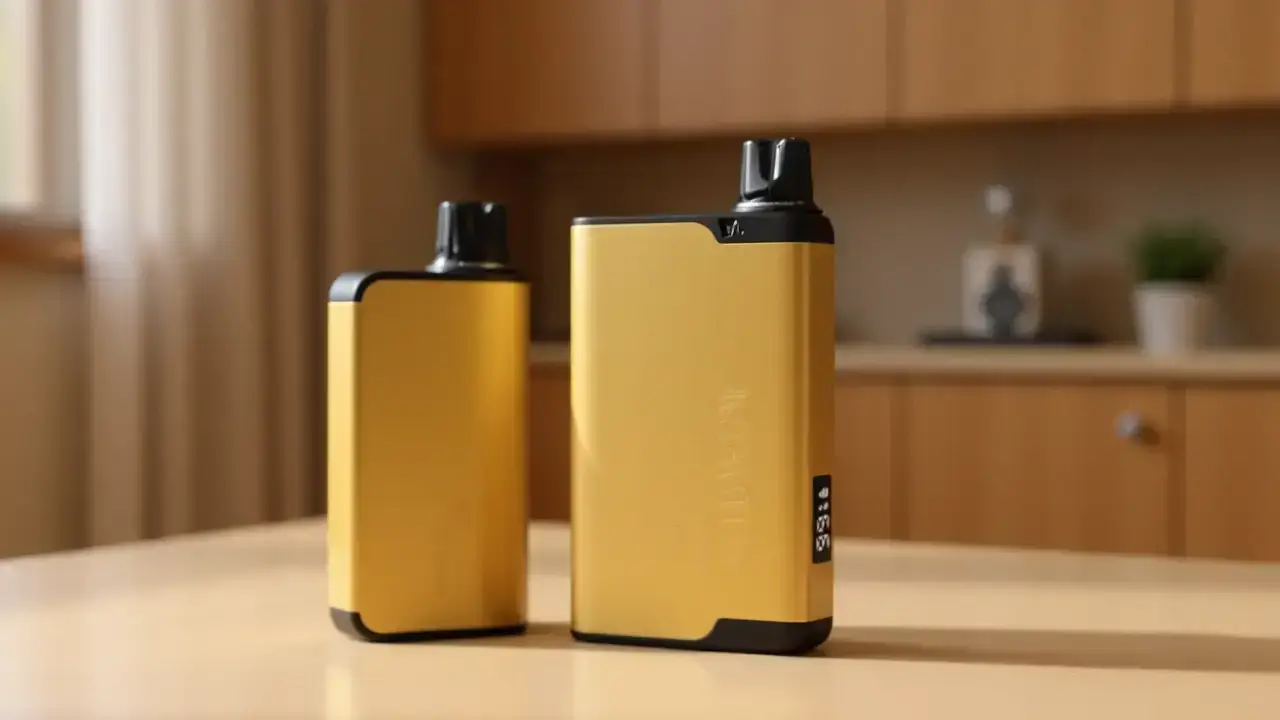
The desire for a satisfying, reliable experience from a personal electronic device is something many adult users share. Yet the path to that sensation—what some casually call a “high”—can be frustratingly inconsistent, even when using a device that appears technically sound. The issue often isn’t the user’s method but an incomplete understanding of how device engineering, material choices, and personal usage patterns intersect. At OZVAPE Shop, the full ALIBARBAR range is curated to address these very friction points, offering tools that perform predictably rather than occasionally. This article unpacks the technical foundations of a genuinely satisfying session, so you can make informed decisions and stop compensating for a device’s shortcomings.
Understanding What Matters: Core Engineering and Design Factors
The gap between a mediocre experience and a deeply satisfying one is rarely about a single specification. It’s about how multiple engineering decisions work together over the life of a device. Below is a framework grounded in the frustrations that adult users report most often.
Internal Architecture and Output Consistency
A device’s heating element isn’t just a component—it’s the beating heart of temperature regulation and vapour delivery. Inconsistent output, especially toward the end of a unit’s rated lifespan, is almost always traceable to how that element is engineered and paired with its power source. Mesh architectures, for example, offer faster, more even heat distribution than traditional wire coils, reducing hot spots that can degrade both flavour and the intended physiological effect. The ALIBARBAR INGOT series employs a tuned mesh configuration that maintains output stability across its entire usage window. Why this matters: many users report a perceptible drop-off in satisfaction well before a device is technically empty, often because the heating element can’t keep pace with the remaining supply. Selecting a device whose thermal management has been designed for linear, not declining, performance reduces the urge to draw harder or more frequently, which can lead to unnecessary throat irritation without improving the experience.
Power Management and Status Transparency
If you’ve ever been caught mid-session by a dead battery with no prior warning, you know that status ambiguity isn’t just inconvenient—it actively erodes trust in a device. Quality power management means more than a large cell; it requires calibration between the power source and the heating element, plus clear, honest feedback to the user. An LED that blinks only when the device is already non-functional serves little purpose. ALIBARBAR’s approach integrates visual cues that indicate remaining charge tiers on rechargeable models, so you’re never guessing. The practical benefit: you can leave the backup unit at home. In contrast, devices without transparent status reporting force users into carrying excess weight, over-purchasing, or accepting sessions cut short. The hidden cost is not just money—it’s the erosion of confidence that makes a user reach for a cigarette because their device became unpredictable.
Physical Design and Material Durability
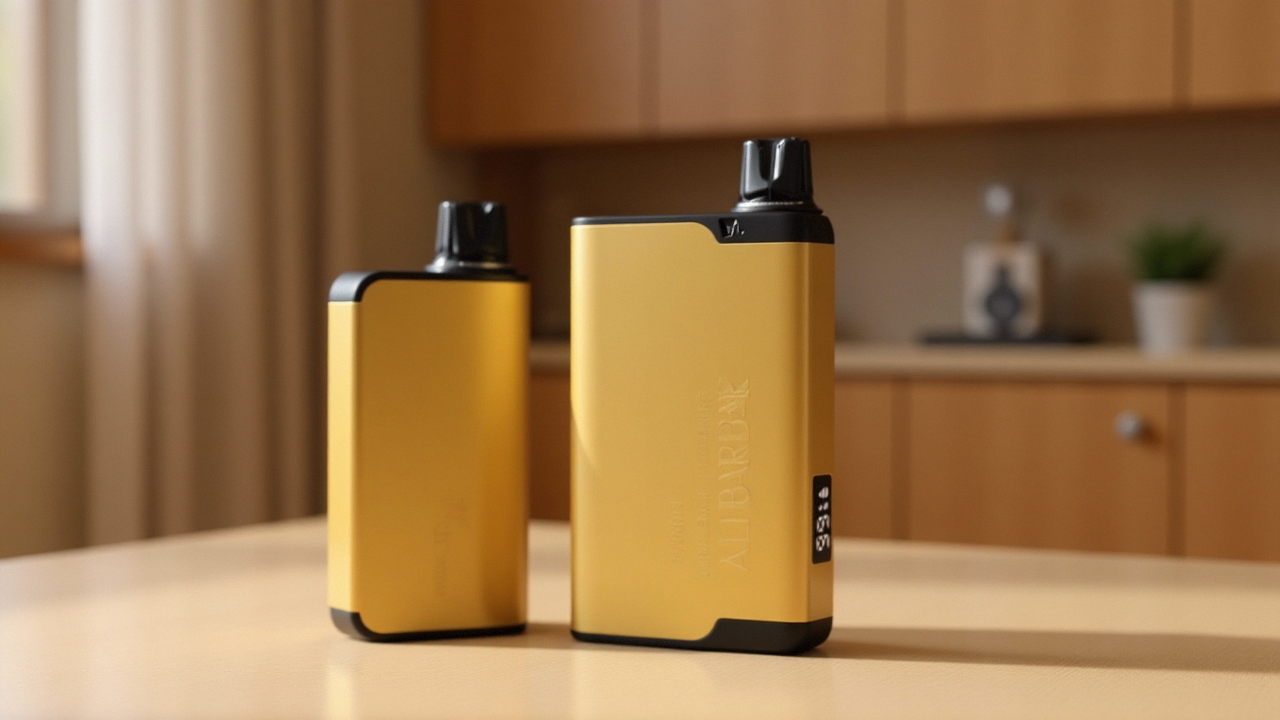
A satisfying experience isn’t limited to what happens inside the device. The surface you hold, the mouthpiece you draw from, and the way the unit wears over weeks of pocket-carry shape your daily perception. Matte, anodised or rubberised finishes resist scratches and maintain grip far better than high-gloss plastics, which show wear almost immediately. Mouthpiece contour also matters more than most users realise: a wide, flattened aperture distributes airflow differently than a narrow circular one, affecting how the vapour feels on the palate. ALIBARBAR’s Ice Adjust series, for instance, incorporates an ergonomic mouthpiece that angles naturally against the lips, reducing the tension that leads to jaw fatigue during longer use. These are not cosmetic flourishes; they are design choices that determine whether a device remains a pleasure to hold after two months in a jeans pocket.
Modularity and Lifecycle Flexibility
Sealed, single-use devices are simple but force a binary choice: once drained, the entire unit is discarded. Semi-modular systems that separate the power source from the consumable portion allow users to replace only what’s depleted, often at a lower cost-per-use over time. The ALIBARBAR family ranges from fully self-contained units like the INGOT 9000 to rechargeable, high-capacity designs like the INGOT 15000. The latter extends usable life significantly, meaning fewer interruptions and less waste. For a user whose daily routine requires reliability from morning commute to late evening, that modularity is not a luxury—it’s the difference between one device that fulfills its promise and two that fall short. Matching your pattern to the right architecture prevents the common outcome of buying multiple low-capacity units that collectively cost more than one well-chosen rechargeable.
Applying These Criteria to Real-World Options
Translating engineering theory into a purchasing decision requires seeing how specific device families perform against these criteria.
For the user who values maximum discretion and simplicity, the ALIBARBAR INGOT 9000 provides a compact, maintenance-free form with no buttons or settings. Its draw-activated firing mechanism and consistent output make it an easy companion for social settings where subtlety is paramount. The closed system means no refilling or recharging, but the trade-off is a finite, albeit generous, number of sessions.
For the user who demands longevity across a full day and beyond, the INGOT 15000 extends capacity dramatically while incorporating USB-C rechargeability. The status indicator gives clear battery feedback, and the vapour delivery remains stable even as the internal supply wanes. The slight increase in size is the price paid for that independence from the charger.
For the user who appreciates control over nuance, the Ice Adjust 12000 introduces an adjustable airflow ring that alters draw resistance and vapour density. This isn’t a gimmick—it allows you to tailor the tightness to mimic a traditional draw or a more open, airy one, which directly impacts how the vapour hits the throat and how quickly active ingredients are absorbed. The design acknowledges that “satisfaction” is a personal variable, not a universal constant.
In a wider market, many devices prioritize one spec—often puff count—while neglecting the supporting architecture. A high puff count without stable thermal performance simply extends a mediocre experience. Conversely, a brilliantly calibrated heating system in a device that dies without warning defeats its own purpose. ALIBARBAR’s design language systematically addresses both the power and the feedback, which is why it appears so frequently in comparative discussions among informed users.
A Practical Framework for Evaluation
When assessing any personal electronic device, resist the pull of headline numbers. Instead, work through this sequence:
Output stability check: Can you verify that the device maintains consistent vapour density from first use to last? If user reviews note a drop-off, assume you will experience the same.
Status feedback audit: Ask, “If this device were about to shut down, would I know five minutes in advance, or only when it stops?” Lack of proactive warning means you will inevitably carry a backup.
Ergonomic stress test: Hold the device (or a similar model) for five minutes. Does the mouthpiece feel natural? Does your hand fatigue? If you wouldn’t be comfortable holding it for a full commute, it will gather dust.
Lifecycle math: For a rechargeable unit, divide the cost by the expected number of full charging cycles plus the number of sessions per charge. Compare that to the cost of multiple single-use units that would cover the same period. The modular option often wins, but only if you actually use it to its full potential.
Sourcing verification: Counterfeit units are a real industry issue. Purchasing through an authorized channel like OZVAPE Shop ensures the device you receive matches the engineering documentation you relied upon when choosing it.
Standardized specification comparisons—when available from a transparent source—are a practical tool that can reduce decision friction dramatically.
Common Selection Errors and Industry Observations
After observing buying patterns and post-purchase feedback over countless interactions, several recurring mistakes stand out. Avoiding them will save you more satisfaction than any single feature can provide.
Overweighting puff count while ignoring thermal behaviour. A device rated for 9000 puffs that fades after 5000 is functionally a 5000-puff device with poorer late-life performance. Users who chase the highest number without investigating consistency are trading quality for an illusion of quantity.
Confusing visual similarity with engineering parity. Many devices share a form factor; few share a thermal management system. Two units that look identical may contain vastly different heating element grades, leading to wildly different experiences. Trust what’s inside, not what’s on the shelf.
Undervaluing modularity in cost calculations. A rechargeable device with replaceable consumables might carry a higher initial price, but over a month of daily use, it often reduces total expenditure compared to repeatedly buying sealed units. The savings are invisible if you never run the numbers.
Assuming “harshness” equals effectiveness. Some users equate a strong throat hit with a stronger physiological effect, leading them to select devices that deliver an unnecessarily aggressive draw. Modern engineering allows for substantial nicotine delivery with smoothness—the absence of irritation is not the absence of potency. Forcing yourself to tolerate discomfort because you’ve been conditioned to expect it is a self-inflicted industry holdover.
On a broader scale, the Australian market has seen a shift toward greater supply-chain scrutiny. Retailers that source exclusively through authorized distribution networks—rather than parallel imports—offer traceable inventory. This matters because non-certified units often use lower-grade power cells with inconsistent voltage curves, directly sabotaging the output stability we’ve discussed. The push toward accountability isn’t just regulatory overreach; it’s a practical safeguard for anyone who relies on their device to perform as stated.
Frequently Asked Questions
Q: Why do I sometimes get a weaker sensation from the same device on different days?
A: Environmental factors—cold ambient temperature thickens the liquid substrate, slowing wicking—and user variables like hydration level and draw length play a larger role than most assume. Consistency improves when you maintain a similar draw style and store the device within the recommended temperature range.
Q: How do I know if a device is delivering what it promises in terms of strength?
A: Look for transparent labelling of nicotine concentration (mg/mL or percentage) and, on quality devices, an indication of how that concentration maps to the absorption efficiency of the heating element. Without both data points, comparisons are guesswork.
Q: Can I extend the life of a rechargeable device beyond the rated number of charging cycles?
A: Yes, but only to a point. Lithium-ion cells degrade chemically with each cycle. Maintaining charge between 20% and 80%, avoiding exposure to extreme heat, and using the manufacturer-recommended charging cable all help slow degradation. The device will still ultimately reach an end of service life.
Q: What does it mean when a device blinks but won’t fire?
A: In most cases, the power source has dropped below the minimum voltage required to heat the element adequately, or a safety circuit has engaged due to a short or low resistance. If the device is within its rated usage window, this can indicate a defective unit—something a reputable vendor will address under warranty.
Q: How does airflow adjustment affect the overall experience?
A: Restricting airflow increases draw resistance and concentrates vapour, producing a warmer, denser intake. Opening it cools and dilutes the vapour, which can feel smoother. The ideal setting is entirely personal, but having the option means you aren’t forced into a single profile.
Q: Is a visible LED fuel gauge more reliable than a simple blinking indicator?
A: Generally, yes. A multi-stage gauge offers proportional feedback, allowing you to plan. A binary blinking light often appears only minutes before shutdown, giving no actionable warning.
Q: What should I do if a device I purchased online doesn’t perform as described?
A: First, check the vendor’s return or support policy. A responsible retailer, such as OZVAPE Shop, maintains documented procedures for handling performance complaints and can verify whether the unit is authentic through batch coding. Counterfeit devices are not uncommon in unregulated marketplaces.
Q: How can I tell if a device has an adequate heating element for the claimed puff count?
A: There’s no single consumer-level test, but real-world reviews that describe the last quarter of a device’s life are telling. If reviewers consistently report muted flavour or reduced vapour, the element is under-specified. Look for reports of unchanged performance right up to the end.
Q: Why are some rechargeable devices heavier than disposables?
A: Larger, higher-quality power cells and more robust casing materials add mass. This added weight is often a signal of engineering investment, not a design flaw.
Q: Can I travel with these devices domestically?
A: Yes, but always carry them in your hand luggage, not checked baggage, and adhere to airline policies regarding lithium batteries. Check with your carrier before flying.
Conclusion
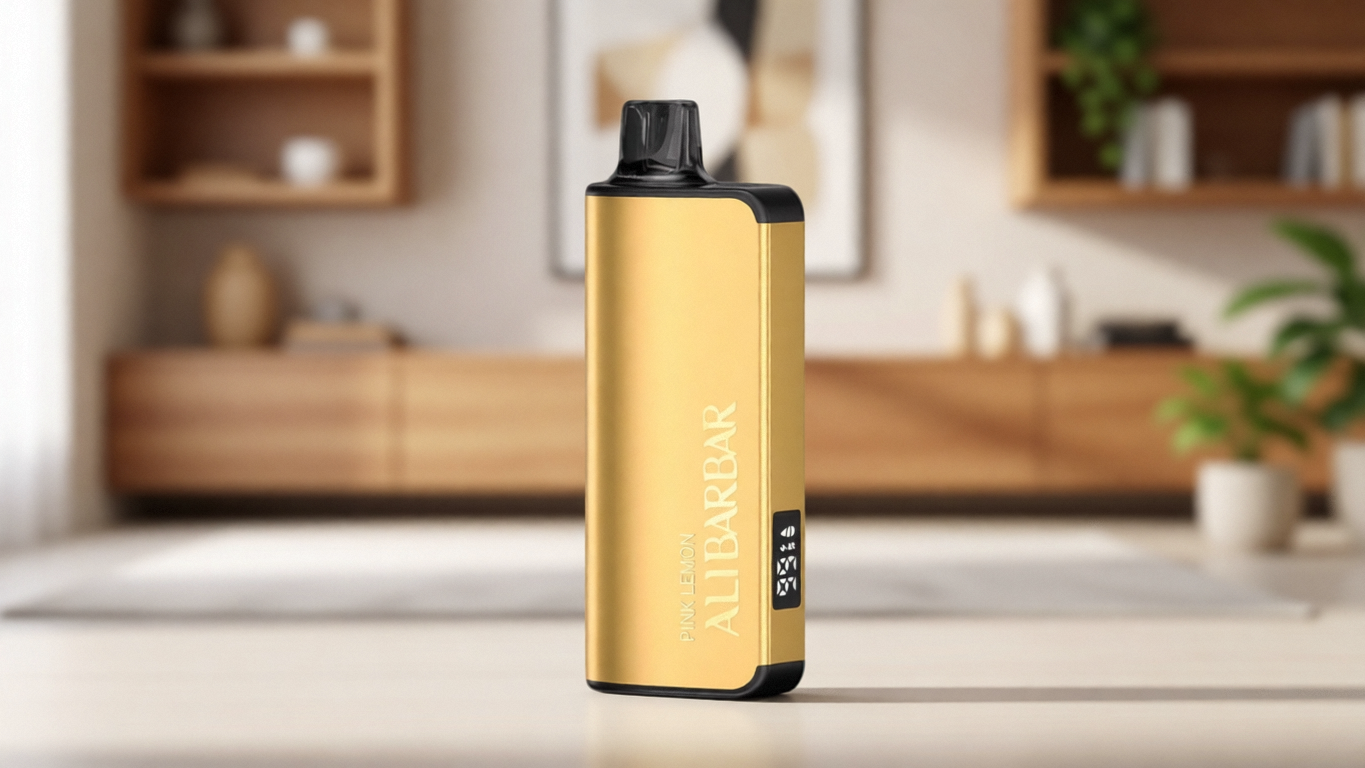
Feeling the intended effect from a personal electronic device isn’t about chasing a myth—it’s about aligning your choice with the physical realities of how that device was built. When you select a unit designed for output consistency, transparent power status, ergonomic comfort, and lifecycle flexibility, you remove the obstacles that stand between you and a reliable session. The ALIBARBAR range, available through OZVAPE Shop, exemplifies these priorities not through marketing language but through documented engineering choices that any informed user can verify. The right device is the one that fits your actual routine, not the one that wins on a single inflated statistic. Evaluate with a clear framework, refuse to compromise on the details that matter, and you’ll spend less time compensating and more time satisfied.