
VAPE FAQs
Can You Smell A Vape On Someone?
Jun
It is a question that surfaces in quiet conversations, online forums, and the unspoken calculations of anyone who carries a personal electronic device in shared spaces. The straightforward answer — yes, under certain conditions, vapour can be smelled — is less useful than understanding when it happens, why, and what device engineering has to do with it. At OZVAPE Shop{target=”_blank” rel=”noopener”}, we field this question regularly from adults who want to reconcile their choice of device with the reality of social, professional, or domestic environments. Rather than offer a blanket reassurance, we have assembled a practical, technically grounded explanation of the factors that govern odour detectability. This article examines the mechanisms, the design variables, and the environmental conditions that determine whether a bystander will register anything at all.
Core Engineering and Design Factors That Influence Vapour Odour
Every aerosol-generating device leaves a trail. The question is not whether the trail exists, but how noticeable it is, how long it lingers, and what engineering decisions can reduce it. Four interrelated architectural factors shape the answer.
Internal Architecture and Output Consistency
The heating chamber is the primary determinant of what leaves the device. In units where the coil temperature is poorly regulated, the aerosol can carry partially degraded compounds that produce a sharper, more acrid note — something the human nose registers as distinctly “off.” This is one reason why devices that suffer from inconsistent wicking or dry hits generate a smell that clings far more than a cool, saturated vapour.
A well-designed thermal path, by contrast, keeps the heating element within a narrow window that fully aerosolises the liquid without scorching its components. The result is a cleaner, less intrusive scent profile. Devices with mesh coils and large liquid-contact surfaces can achieve this consistency over thousands of cycles, provided the power delivery remains stable. When the architecture fails to sustain that equilibrium — as commonly happens in the final portion of a disposable unit’s rated puffs — the transition from neutral vapour to slightly burnt output is an odour event.
Power Management and Status Transparency
How a device manages energy directly influences when and how it becomes noticeable. Units that continue to fire when the battery is nearly depleted often deliver lower power to the coil, causing incomplete vaporisation and a heavier, more lingering scent. Sophisticated power regulation, including low-voltage cutoff and steady output circuitry, prevents this tail-off.
Equally important is status transparency. A device that provides no meaningful battery or usage feedback leaves the user blind. That uncertainty forces precautionary behaviours — carrying a backup, taking a longer draw to compensate for perceived weakness, or continuing to use a pod past its optimal life — all of which can increase the scent signature. Devices with clear, multi-level indicators help users stop before the output degrades, reducing those odour spikes.
Physical Design and Material Durability
The enclosure itself can either trap or transmit odour. Porous materials, poorly bonded seams, and microscopic gaps around the mouthpiece or pod connection allow minute amounts of liquid aerosol to condense on outer surfaces, where they slowly release volatile aroma compounds over hours. This is why a device that feels faintly sticky or carries a residual scent days after use is often a design problem, not a charging issue.
Sealed polycarbonate shells, precision-moulded mouthpieces, and tight snap-fit tolerances create physical barriers that minimise leakage and surface condensation. Internal airflow channels engineered to slow vapour velocity also encourage larger droplets to coalesce and drain back, rather than being ejected as a visible cloud. When all surfaces stay dry, the device imparts almost no transferable odour to hands, pockets, or bags.
Modularity and Lifecycle Flexibility
The distinction between sealed disposable units and systems with replaceable pods or coils matters more than many users assume. A sealed unit with a fixed coil must sustain performance across its entire chemical lifetime. Inevitably, wicking efficiency declines, and the final 15–20% of the device’s operational life often produces a denser, warmer aerosol that carries more noticeable aroma.
Replaceable-component architectures allow the user to refresh the heating element before degradation sets in. This keeps vapour output light and consistent. Moreover, a modular system lets the user match coil resistance and airflow to the specific liquid formulation, further controlling vapour density — a lower-mass aerosol dissipates faster and carries fewer volatile molecules. The lifecycle cost of maintaining that consistency is the trade-off, but for those for whom discreet operation matters, the maths are straightforward.
Applying These Criteria to Real-World Options
Not all portable devices intersect with odour in the same way. Sub‑ohm units designed for dense cloud production generate a large volume of visible aerosol, which by extension carries a larger payload of aroma compounds. Even with excellent temperature control, the sheer quantity of output means the scent is detectable at greater distances and for longer. At the other extreme, ultra‑low‑power pod systems can produce so little vapour that residual smell is negligible — but only if the coil is fed reliably and the device does not overheat.
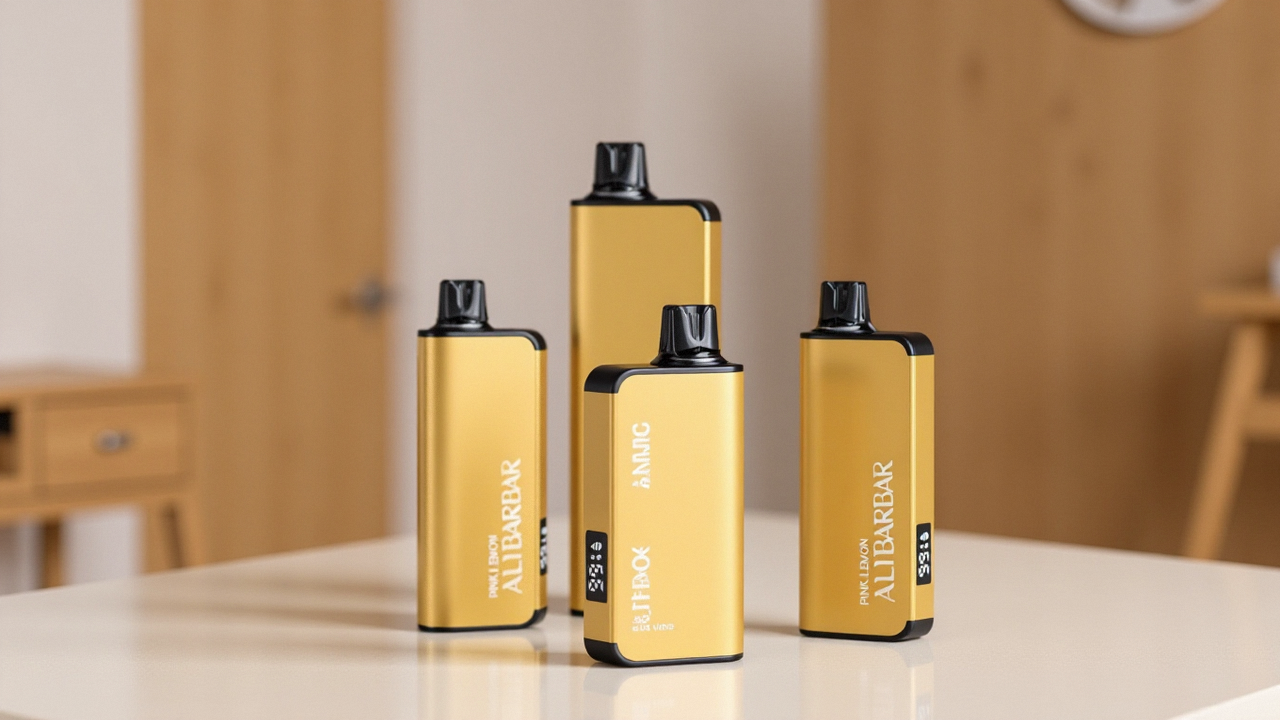
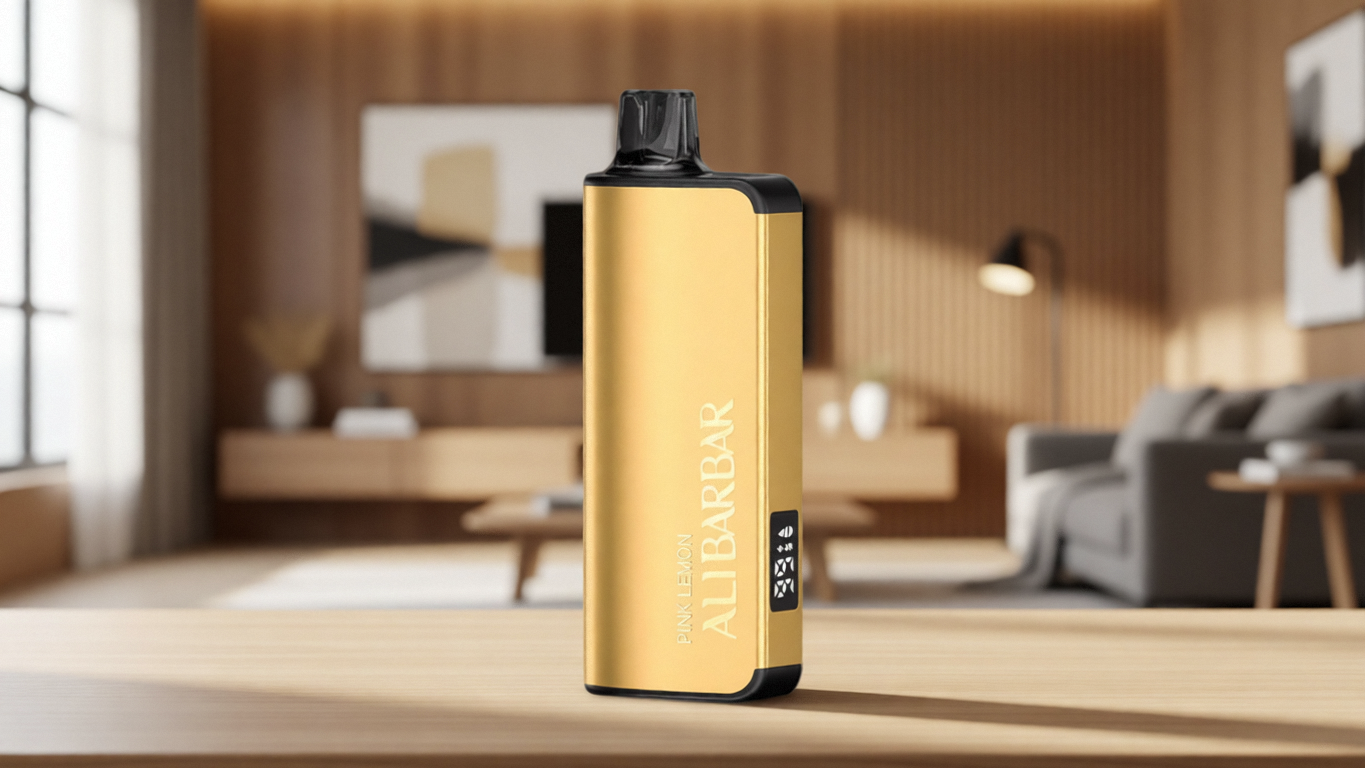
The ALIBARBAR family of devices, available through OZVAPE Shop{target=”_blank” rel=”noopener}, has attracted attention from users who prioritise low‑profile operation precisely because the engineering aligns with these principles. The INGOT 9000, for example, pairs a mesh coil with a sealed, non‑refillable reservoir and a precisely calibrated airflow path. The result is a vapour stream that stays cool, visible only in still, dimly lit conditions, and dissipates within seconds in normal room ventilation. Its sibling, the INGOT 15000, adds a layered output regime that maintains consistent coil temperature even as the liquid level drops — directly addressing the issue of end‑of‑life odour degradation. Meanwhile, the Ice Adjust 12000 uses a stepless airflow control that allows the user to tighten the draw to a near‑invisible level, reducing both cloud volume and the distance the scent can travel.
These are not magic solutions. No active device can claim zero olfactory output. But the evidence from the way these units are engineered suggests that deliberate attention to thermal stability, material integrity, and cycle‑long consistency yields a product that is, from a smell perspective, among the least conspicuous in the current market.
A Practical Framework for Evaluation
If you need to assess how detectable the output from your own device is likely to be, a structured, observational approach works better than guesswork. Walk through these diagnostic steps:
Measure visible output: Stand in a well‑lit, ventilated room and exhale normally after a standard draw. If the cloud remains compact and vanishes within 2–3 seconds, its scent‑carrying potential is low. If it hangs for 5 seconds or more, you are dealing with larger droplet sizes and greater dispersion.
Check for after‑taste and throat sensation: A hot, scratchy exhale suggests the coil is running above its optimal range. That heat volatilises more aromatic compounds. A smooth, cool exhale indicates well‑managed power delivery.
Test for residual surface smell: After using the device, place it on a clean, odour‑free surface for 10 minutes, then bring your nose within 10 cm. Any sweetness or chemical note that transfers to the surface means the device is leaking liquid or condensate. It will likely impart that same scent to clothing or enclosed spaces.
Evaluate the end‑of‑life transition: As the pod or device reaches 80% of its rated capacity, pay attention to whether the flavour subtly shifts toward a toasted or flat note. That is the tactile signal that aerosol composition is changing — and with it, the odour profile.
Cross‑check with an honest observer: Ask someone who does not vape to stand at normal conversation distance immediately after you exhale, and then again 5 minutes later. Their unbiased report on what they detect is worth more than any subjective self‑assessment.
This methodology is deliberately low‑tech. It does not require a calibrated airflow meter or a gas chromatograph. It simply asks you to observe the device as it actually operates in your actual environment, and to listen to the signals the engineering is giving you.
Common Selection Errors and Industry Observations
Users often undermine their own satisfaction through a handful of predictable misjudgements. Recognising these errors at the evaluation stage can prevent long‑running annoyance.
Overweighting a single specification. A device marketed as “low‑odour” because it uses a specific coil material is only half the story. If the power management is primitive, the low‑odour coil will be driven too hot, cancelling the benefit. Evaluate the complete thermal chain, not one component.
Equating physical size with vapour output. Compact devices can still run high‑power coils. A small, oval‑shaped body says nothing about the mass of aerosol produced per draw. Check the rated coil resistance and power level, not just the footprint.
Ignoring modularity in the cost‑per‑use calculation. A replaceable‑pod system might have a higher upfront price, but the ability to refresh the coil before degradation sets in means the user never suffers the burnt‑hit phase at the end of a disposable’s life. The value lies in consistent, low‑odour output across every session, not in an abstract puff count.
Assuming all sealed units are equivalent. There is a broad spectrum of quality inside the disposable‑format category. Some manufacturers invest in precision coil‑wick interfaces and multi‑layer sealing; others rely on basic cotton and press‑fit tolerances. The latter will almost certainly leak and scorch. Distinguishing between the two requires attention to build details, not just brand recognition.
From an industry perspective, the trend toward layered output regulation and multi‑stage airflow control is a pragmatic response to consumer demand for discretion. Factories that previously competed on maximum puff counts are now investing in thermal simulation software and bonding‑process improvements to reduce condensate. This is a quiet but genuine shift, and it means that devices launched in the last 12–18 months are, on average, considerably less detectable by smell than those from the previous generation. Discerning users can use that timeline as a rough filter when evaluating unfamiliar products.
Frequently Asked Questions
Q: Can a vape leave a noticeable smell on clothes?
A: Only if the device produces dense, warm aerosol that condenses on fabric, or if it leaks e‑liquid onto pockets or sleeves. Well‑sealed, low‑output devices used in ventilated spaces rarely transfer anything lasting. The scent that does deposit dissipates within hours, not days.
Q: Does vaping indoors leave a persistent room odour?
A: Unlike smoke, vapour does not embed itself deeply into soft furnishings. However, if high‑output devices are used repeatedly with the windows closed, volatile aroma compounds can accumulate on surfaces. Ventilation eliminates most traces within 15–30 minutes.
Q: Can trained animals, such as detection dogs, smell vapour on a person?
A: A dog’s olfactory sensitivity is orders of magnitude greater than a human’s, and they can be trained to alert to specific volatile compounds, including those found in e‑liquid flavourings. Encounters are rare in most jurisdictions for everyday individuals, but the theoretical possibility exists.
Q: Is there such a thing as a completely odour‑free vaping device?
A: No. Any device that aerosolises a flavour‑containing liquid will release some quantity of volatile organic compounds. The practical aim is to minimise mass, temperature, and droplet size to the point where the scent is undetectable at conversation distance.
Q: How can I tell if a device is about to start producing a burnt smell?
A: Warning signs include a gradual loss of flavour clarity, a slightly warmer draw, or a subtle toasted aftertaste. These precede the acrid note of scorched wicking. Devices with clear battery status indicators and consistent power output tend to exhibit a shorter degradation window, so there is less time spent in that risky zone.
Q: Do certain e‑liquid flavours leave a more noticeable smell than others?
A: Yes. Sweet, dessert‑type formulations often contain heavier aroma molecules that linger. Menthol and some fruit notes are lighter and dissipate faster. However, the device’s output temperature and vapour density magnify or minimise these differences — cooler, sparser aerosol reduces the gap between flavour categories.
Q: If someone uses a device in a car with the windows closed, how long does the smell last?
A: With a high‑output unit, the dense aerosol can condense on glass and upholstery, leaving a detectable scent for several hours. A low‑output pod device, even with windows up, produces far less condensation and typically clears within minutes with any air movement.
Q: Can I use a vape discretely in a public restroom without detection?
A: Enclosed, still air amplifies aroma. Even a very low‑output device will likely be detectable to anyone entering within a minute or two. The perception of discretness often differs from reality; the only reliable test is the observer’s account.
Q: Does the smell of a vape linger on the breath?
A: The exhaled aerosol carries the flavouring, which can be felt on the breath immediately afterward, but it dissipates rapidly. Residual taste in the mouth lasts longer than any olfactory signal at conversation distance. Drinking water effectively clears it.
Q: Where can I find devices that prioritise low‑odour engineering?
A: Retailers that offer detailed, standardised specifications — coil resistance, power output, airflow type, construction materials — allow for informed comparison. OZVAPE Shop{target=”_blank” rel=”noopener} maintains a curated catalogue with this level of transparency, and the ALIBARBAR range is one example of devices engineered with low‑profile operation in mind.
Informed Use Is the Best Discretion
The persistent question of whether vapour can be smelled on someone is, in reality, a question about understanding the device in hand and the world it operates in. The answer is not fixed. It lives in the interaction between coil temperature, airflow design, liquid composition, and the sensitivity of the nose doing the detecting. A device that barely registers in a breezy outdoor plaza may produce a distinct cloud of sweet aroma in a quiet study. Mastery lies in knowing your equipment well enough to predict what it will do, and in choosing tools that were built with those variables in mind.
No amount of engineering eliminates odour entirely, but the difference between a thoughtfully designed sealed system with stable power delivery and a generic high‑output unit is profound, and it is measurable by anyone willing to pay attention. As a retailer committed to factory‑certified inventory and transparent product information, OZVAPE Shop{target=”_blank” rel=”noopener} makes it possible to evaluate these differences before you ever open a package. The right device for your routine is the one you understand well enough to trust — in the car, across the table, or wherever life takes you.