
VAPE FAQs
Can I Take A Vape In My Carry On?

Jun
The question seems simple, yet the answer has stranded more than a few travellers at the security checkpoint. “Can I take my vape in my carry‑on?” is really a bundle of smaller, sharper questions about lithium‑ion safety, aviation authority regulations, liquid containment, and the way a particular device handles being carried through changing air pressures and long hours away from a charger. Confusion here is not trivial: a device packed in the wrong bag can trigger a luggage search, a confiscation, or — worse — a fire risk that no passenger wants to be responsible for. This article unpacks each layer so that your next trip through the terminal is informed by actual regulation and device engineering, not guesswork.

A retailer like OZVAPE Shop{target=”_blank” rel=”noopener”} cannot override airline policy, but it can ensure that every device it lists is accompanied by the accurate specifications — battery capacity, containment design, and indicator functionality — that let an adult traveller make a compliant choice before they ever walk out the door. What follows is a structured look at the intersection of travel regulation and portable electronic device design, grounded in the current Australian and international framework.
Understanding What Matters: The Regulatory and Device Factors That Determine Whether Your Vape Can Fly
Making sense of carry‑on rules for vaping devices requires looking at two things simultaneously: the rules imposed by airlines and aviation safety bodies, and the physical characteristics of your device that either meet or conflict with those rules. The four factors below are the ones that security screeners actually care about, whether you are departing from Sydney or Singapore.
Battery Safety and Airline Lithium‑Ion Rules
Every rechargeable vape contains a lithium‑ion cell, and lithium‑ion cells are treated as dangerous goods under the International Air Transport Association (IATA) framework. The core rule is straightforward: spare (loose) lithium batteries must never be placed in checked luggage; they may only travel in carry‑on baggage. A device with the battery installed inside it may also only go in carry‑on, because the same fire risk exists if the unit is accidentally activated in the cargo hold.
There is a capacity threshold, too. Consumer‑grade lithium‑ion batteries with a rating up to 100 watt‑hours (Wh) are permitted in carry‑on without airline approval. To put that into perspective, a typical built‑in vape battery rated at 900 mAh and 3.7 V carries roughly 3.3 Wh — barely a fraction of the limit. The batteries inside the ALIBARBAR INGOT series, for example, all fall well under 20 Wh, meaning the capacity itself will never be the barrier. The real risk comes from loose, unprotected cells or from devices that can accidentally power on. A design that requires five rapid clicks to lock, or that has no physical locking switch, will still attract a screener’s attention if the activation button can be pressed by shifting contents in your bag.
Liquid Containment and Cabin Pressure Risks
The 100‑millilitre liquid rule is well understood, but the behaviour of e‑liquid under depressurised or changing cabin conditions is not. Refillable tank systems — particularly bottom‑fill designs — rely on a vacuum to keep liquid sealed. When ambient pressure drops during climb, that vacuum can fail, and an entire tank of liquid can seep out through the airflow intake. Security officers see this regularly; it is one of the reasons a bag with a vape gets a secondary inspection.
Sealed, factory‑filled pod systems present a different profile. Because the reservoir is ultrasonically welded or friction‑fit with O‑ring seals and there is no user‑accessible fill port, the containment is not dependent on a vacuum maintained by the user. Devices such as the ALIBARBAR Ice Adjust 12000 use exactly this architecture — the e‑liquid is contained in a sealed cartridge that is not designed to be opened. From a pressure‑change perspective, the risk of a messy leak is materially lower, which means fewer questions at the tray table and less chance of a nicotine‑stained passport. Of course, separate bottles of e‑liquid must still obey the clear‑bag rule if they exceed the micro‑container threshold, but pre‑filled pods usually contain volumes so small (2 mL to 5 mL) that they do not trigger separate liquid scrutiny.
Device Feedback and Security Screening
A vape that cannot communicate its state creates friction at the checkpoint. If a security officer asks “Is the device off?” and you cannot tell them with certainty — because the unit has no LED, no haptic feedback, and no screen — the interaction will take longer, and the device may be pulled aside for a manual inspection. Clear status indicators are not a luxury when you are standing in socks in a crowded lane.
ALIBARBAR’s design philosophy, as documented by authorised retailers like OZVAPE Shop, prioritises honest status communication. The INGOT series integrates a colour‑coded LED that shows battery level at a glance, and most models feature click‑based locking that is confirmed by a light sequence. This means you can demonstrate to a screener that the unit is deactivated, and you can also check your charge before a long transit without needing a separate battery tester. The small engineering decision to include transparent feedback becomes disproportionately valuable at 6 a.m. in a security queue.
Build Quality and Travel Durability
Travel is hard on personal electronics. Devices get tossed into trays alongside keys, coins, and laptops; they slide against seatbelt buckles in under‑seat bags; they endure temperature swings and repeated handling. Surface coatings that look sleek on a retail shelf but begin to peel after a week in a pocket will degrade even faster under travel stress. A device with robust anodising, reinforced USB‑C ports, and a mouthpiece that won’t detach in a cramped bag spares you the irritation of discovering a non‑functional unit when you most want it to work.
Many of the frustrations OZVAPE Shop records from users relate to devices that could not survive ordinary daily carry, let alone a multi‑leg journey. The ALIBARBAR range, by contrast, was built after observing exactly these wear patterns. The materials are chosen to resist abrasion, and the internal architecture avoids the flimsy battery contacts that can disconnect after a hard knock. For a traveller, that translates to a device you can pack confidently, not one you feel you must baby.
Applying These Criteria to Real‑World Travel Scenarios
When you look at the broad categories of vaping devices through the lens of air travel, a clear pattern emerges. Open‑system mods with external 18650 batteries and user‑refillable sub‑ohm tanks are the most logistically demanding: the batteries must be carried in a protective case, the tank should be emptied or packed upside‑down in paper towel, and you need to ensure the mod itself does not accidentally fire. They can certainly fly, but they add layers of preparation.
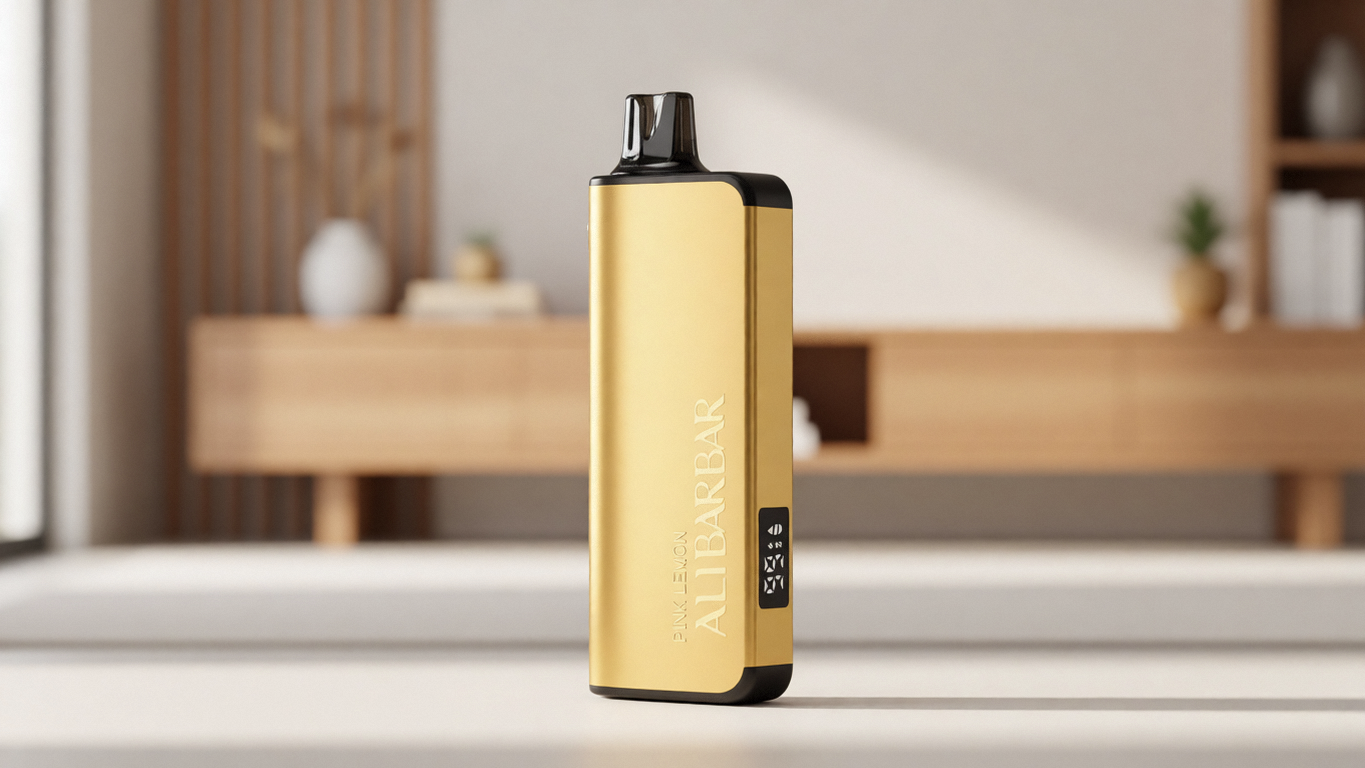
Closed‑pod and sealed‑reservoir devices sit at the opposite end of the spectrum. Because the battery is permanently installed, the liquid is sealed, and the power control is typically integrated into a single button or draw‑activation, the number of variables drops sharply. This is why many seasoned travellers eventually gravitate toward compact, all‑in‑one units. The current ALIBARBAR lineup — INGOT 9000, INGOT 15000, and Ice Adjust 12000 — represents exactly this category. They are not presented as premium luxury items but as practical, purpose‑built tools that happen to align well with the constraints of modern air travel. For example, their slim, pen‑style form factor takes up no more space than a fountain pen in a carry‑on organiser, and the absence of removable parts means there is nothing to lose in a seat‑back pocket.
It is worth noting that while these devices are engineered to be low‑leakage, no sealed pod is absolutely immune to physics. A device left in direct sunlight on a tarmac for an hour, then rapidly cooled in an air‑conditioned cabin, may still develop minor condensation around the mouthpiece. The question is whether that condensation turns into a liquid that can damage other items. With sealed cartridge designs, it generally stays contained within the drip‑tip channel and can be wiped away.
A Practical Pre‑Flight Checklist: Evaluating Your Device Before Packing
You do not need to memorise every aviation regulation. A short sequence of diagnostic questions will cover the points that matter most, and it takes less than two minutes to work through:
Is the battery permanently installed and under 100 Wh? If you are unsure, check the product specification. ALIBARBAR devices, for instance, list the battery capacity online, and OZVAPE Shop’s product pages document the watt‑hour rating for each model.
If the device uses removable batteries, do you have a protective case for them? Loose cells with exposed terminals are the number one cause of thermal events at security. Every spare battery must have its terminals covered.
Have you sealed or emptied any refillable tank? If your device has a tank with a fill port, empty it or at least ensure the airflow control is closed and the tank is stored upright. If it is a sealed unit (like an ALIBARBAR pod), you can skip this step.
Can you lock the device so it cannot fire accidentally? A five‑click lock is sufficient; check the LED confirmation before you drop it in your bag.
Does your e‑liquid bottle exceed 100 mL? If so, pack it in your checked bag. Small pods and sealed cartridges are exempt from the liquid bag requirement because of their tiny volumes, but any separate bottle must comply with the 3‑1‑1 rule.
Have you checked the rules of your destination country? Some nations ban the import of any vaping device, regardless of how it is packed. The airline may let it on board, but customs may seize it on arrival.
For passengers using an ALIBARBAR INGOT or Ice Adjust, the checklist generally collapses to: battery under 100 Wh, device locked, no loose bottles over 100 mL, and a quick destination check. That predictability is the quiet advantage of a design that removes common failure points.
Common Travel Mistakes and Industry Insights
After watching the market for years and listening to thousands of post‑trip anecdotes, several patterns stand out. Travellers who run into trouble are not careless; they are simply unaware of how a regulation applies to their specific hardware.
Mistake 1: Treating all vapes as equivalent. A user who has flown a dozen times with a sealed pod system assumes the same packing method works for their new box mod with a sub‑ohm tank, only to find a pool of liquid at the bottom of their backpack. The container engineering is the variable, not the category label.
Mistake 2: Offloading the device into checked luggage to “simplify carry‑on.” This is the most serious error, because it violates a global ban on lithium‑ion batteries in the cargo hold. Airlines screen for this and will remove the bag. Passengers have missed flights over it.
Mistake 3: Ignoring conditional airline policies. Some carriers prohibit the use of any electronic cigarette on board, period, and will confiscate the device if seen. Others permit carrying but explicitly state you may not charge the device via the seat USB port. Reading the particular airline’s dangerous goods page is never a waste of time.
Mistake 4: Assuming visual similarity means identical internal components. Two pen‑style devices can look identical, but one may use a low‑grade lithium polymer cell without a protection circuit, while the other (like the ALIBARBAR INGOT) includes over‑charge, over‑discharge, and short‑circuit protection. In the high‑scrutiny environment of an airport, that internal difference is what matters.
From an industry perspective, the steady migration toward sealed, draw‑activated devices is in part a response to travel demand. Manufacturers observed that adult users were increasingly bouncing between cities and needed a device that didn’t demand a tool kit each time they packed. The result is a category that now accounts for a significant portion of the carry‑on‑compatible market. OZVAPE Shop’s decision to focus on factory‑certified examples of this category — rather than open‑system hardware — reflects a pragmatic understanding of what a modern, mobile user actually needs.
Frequently Asked Questions
Q: Can I take a vape device with a built‑in battery in my carry‑on?
A: Yes. The International Civil Aviation Organization (ICAO) and IATA regulations permit portable electronic devices containing lithium‑ion batteries (up to 100 Wh) in carry‑on luggage. Devices like the ALIBARBAR INGOT series, with integrated batteries well under the limit, meet this criterion.
Q: Can I pack a vape in checked baggage?
A: No. Lithium‑ion batteries, whether installed in a device or loose, are forbidden in checked luggage on passenger aircraft. This applies universally — from domestic Australian flights under CASA rules to international itineraries.
Q: Do I need to declare my vape at security screening?
A: You are not required to verbally declare it, but the device should be removed from your bag and placed in a screening tray alongside your phone and keys if the security protocol at that airport requests the removal of large electronics. Follow the instructions of the screening officers.
Q: Can I bring e‑liquid in my carry‑on?
A: Bottles of e‑liquid up to 100 mL each may be carried in a single clear, resealable plastic bag (the familiar 3‑1‑1 rule). Pre‑filled pods that are sealed and contain less than 2–5 mL are generally not treated as separate liquids, but it is wise to place them in the liquid bag if there is any doubt.
Q: Will my vape leak during the flight due to pressure changes?
A: Refillable tanks with large air chambers can leak when cabin pressure fluctuates. Factory‑sealed pod systems, such as those used by ALIBARBAR devices, are less prone to leakage because the reservoir is not vented in the same way. Minimal seepage may still occur in extreme conditions, but catastrophic leaks are rare.
Q: Can I use my vape during the flight?
A: No. Smoking — including the use of electronic vaping devices — is prohibited on all commercial flights. Tampering with lavatory smoke detectors to vape is a federal offence in many jurisdictions and can result in severe penalties.
Q: Can I charge my vape on the plane?
A: Some airlines permit charging small electronics via the seat USB port; others explicitly forbid charging vaping devices. Verify the airline’s policy before you plug anything in. The safest course is to charge the device fully before boarding.
Q: Are ALIBARBAR devices specifically allowed in carry‑on luggage?
A: While no device is “pre‑approved” by every airline, ALIBARBAR’s design characteristics — sealed reservoir, integrated battery below 100 Wh, and lockable activation — align well with global carry‑on regulations. OZVAPE Shop provides the technical specifications (battery rating, capacity) needed to confirm compliance for your particular flight.
Q: What happens if I accidentally pack a vape in checked luggage and it is discovered?
A: Your bag will be flagged during screening, opened, and the device — along with any batteries — will be removed. You may face airline penalties, delays in baggage delivery, or confiscation. In some jurisdictions, you could be fined.
Q: Do regulations differ for domestic Australian flights versus international flights?
A: The core lithium‑battery rules are consistent globally. However, destination countries may have their own import restrictions. For example, Thailand and Singapore impose strict bans on vaping products. Always check the customs regulations of your final destination, regardless of how you pack.
Conclusion
The ability to take a vape in your carry‑on ultimately rests on a small number of controllable factors: the battery’s watt‑hour rating, the device’s leak‑resistance under pressure, your adherence to the carry‑on‑only rule, and the transparency of your device’s status indicators. Get those right, and the process becomes routine.
OZVAPE Shop{target=”_blank” rel=”noopener”} stocks the complete ALIBARBAR range, including the INGOT 9000, INGOT 15000, and Ice Adjust 12000 — devices designed with the realities of daily mobility in mind. That does not guarantee they will satisfy every personal preference, but it does mean the engineering decisions baked into them (sealed containment, honest battery feedback, robust surface treatment) reduce the number of variables a traveller must manage. When you know exactly what your device is made of and how it is likely to behave at 35,000 feet, packing it becomes an unremarkable step in your routine, not a gamble. Ultimately, the right travel companion is the one that respects the regulations you operate under and demands nothing you are not prepared to give.