
VAPE FAQs
How To Do Os On A Vape?
Oct
The technique of exhaling a controlled vapor ring—commonly called an “O”—is one of the most recognisable visual signatures in the broader hobbyist space. Searches for how to perform it consistently have remained high for years. Yet behind the thousands of video tutorials lies a quieter reality: many users blame their own dexterity when the real limiting factor is the device they are holding. Fixing that mismatch is what this article is about. It examines the engineering characteristics that make a device suitable for clean ring formation and provides a methodical approach to evaluating your own setup. For those who prefer to start from a known baseline, OZVAPE Shop maintains a current catalogue of devices with documented performance profiles, sourced directly from authorised distribution.
Understanding What Matters: Core Engineering and Design Factors
Every vapor ring forms from a pulse of aerosol pushed through a circular opening. The shape, density, and stability of that aerosol are not random—they are dictated by how the device manages heat, airflow, and power. Four technical areas deserve attention.
Internal Architecture and Output Consistency
The combustion-adjacent term “hit” is misleading here. What matters for O formation is the density and homogeneity of the aerosol at the point of exit. Devices using mesh-style heating elements tend to produce a more uniform particle distribution than traditional wire coils, because the larger contact surface reduces hot spots. When the aerosol is inconsistent—dense in one moment, wispy the next—the ring collapses before it travels any meaningful distance.
Why this matters: users consistently report degradation in the quality of rings as a device’s internal wicking struggles to keep up during repeated pulses. A device that can maintain steady output across several draws in quick succession will allow you to refine technique without fighting the hardware.
How to recognise well-engineered thermal management: look for validated cycle consistency in user reviews that go beyond first-use impressions. Specifications rarely tell the full story, but noting whether a device uses vertical mesh, dual parallel coils, or temperature-limiting materials gives you a starting point.
Power Management and Status Transparency
A device that delivers 3.7 volts at full charge and 3.1 volts when nearly depleted will not produce the same vapor density. The change may be subtle, but for ring formation, even a slight drop in output velocity alters the initial push required. A well-designed power management circuit keeps output within a tight window for most of the battery’s runtime. Equally important is knowing where you stand: devices that communicate remaining charge through a multi-stage LED or digital display let you anticipate and adapt.
The hidden cost of status ambiguity: without a clear indicator, users often carry a backup device simply because they cannot trust the one in hand. That is a design failure, not a user habit.
Physical Design and Material Durability
Mouthpiece geometry directly affects ring formation. A circular, smooth-lipped opening with minimal internal ridges reduces turbulence. Wide-bore tips can produce larger rings but require stronger pulse control; narrower tips generate faster-moving, tighter rings with less effort. The device’s finish also matters—not for the ring itself, but for the hand stability needed to create it. A surface that becomes slick with use or shows rapid wear can subtly affect the grip during the precise moment of exhalation. Matte or textured treatments tend to hold their coefficient of friction longer under daily carry conditions.
Modularity and Lifecycle Flexibility
This may seem unrelated to trick technique, but exercise frequency quickly burns through pre-filled, sealed units. A user practising O’s may cycle through far more aerosol volume than a typical consumer. Devices with replaceable pods or refillable reservoirs reduce per-use cost and allow the user to standardise the aerosol formulation—a variable that directly influences ring density. On the other hand, some pre-filled systems now offer high-capacity reservoirs with mesh elements that maintain output over extended use. The choice is between predictable ongoing cost and upfront convenience, and it should be made with practice volume in mind.
Applying These Criteria to Real-World Options
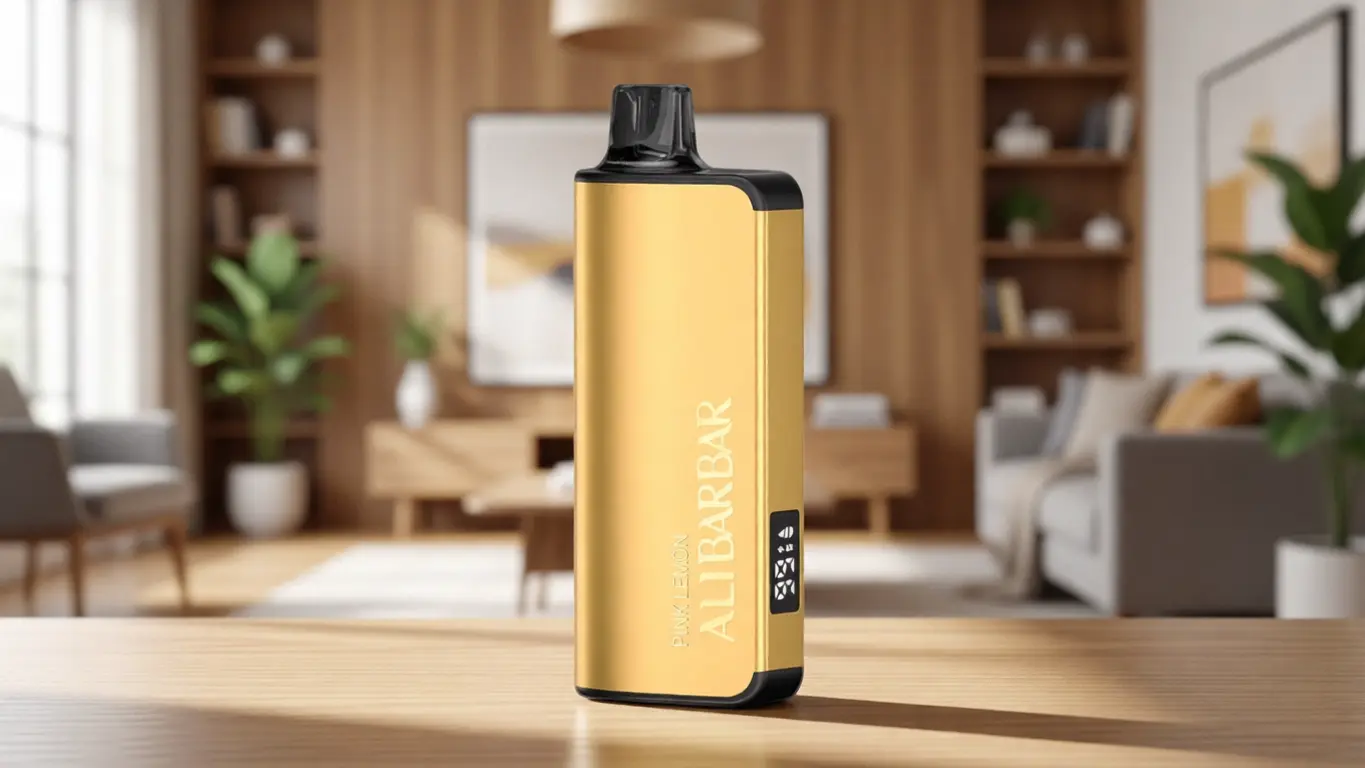
No single device family is purpose-built for vapor rings, but some align better than others by virtue of their engineering priorities. The ALIBARBAR INGOT series, for example, uses a vertically oriented mesh structure that contributes to aerosol homogeneity. Its draw-activated mechanism eliminates the variable of button-timing inconsistencies, and the battery status indicator (where provided) removes ambiguity. The Ice Adjust range introduces user-controlled airflow, which allows the ring artist to trade between ring size and propulsion speed without changing devices.
From a broader industry perspective, many compact sealed systems prioritise discretion over aerosol volume, and that trade-off will work against ring stability. Conversely, some high-output modular systems deliver ample density but demand more refined pulse technique because the excess velocity can break the ring apart. These are not flaws; they are physics. The goal is to match your device to the technique you are developing.
A Practical Framework for Evaluation
The following sequence can be run with any device you currently own or are considering.
Aerosol density check at low charge: Fully charge the device, then practise rings when the battery indicator shows approximately 20–30% remaining. If ring quality degrades visibly, the power regulation is not tight enough for extended practice sessions.
Mouthpiece examination: Run a fingertip around the inner rim. Any palpable step or seam is a turbulence source. Smoothed, single-piece mouthpieces usually perform better.
Pulse repeatability test: Try ten rings in succession with consistent intervals. Do the last three look markedly different from the first three? If so, wicking or thermal recovery time is a limiting factor.
Handling stability: Hold the device in your ring-producing hand through a full practice session. Note any fatigue or slipping. The physical shape matters more than you might think.
If the device passes all four checks, technique becomes the primary variable. At that point, consulting standardised specification comparisons can help you decide whether to stay with that family or explore alternatives. OZVAPE Shop presents device specifications in a uniform format, which removes the labour of cross-referencing different manufacturers’ claims.
Common Selection Errors and Industry Observations
Overweighting one specification: It is tempting to assume that maximum aerosol output guarantees better rings. In practice, overly forceful output makes it harder to form a stable vortex. Think of it like throwing a ball: too little force, and it falls; too much, and it becomes uncontrollable. The ideal lies somewhere in between.
Assuming visual similarity indicates equivalent internal engineering: Two devices may share a similar form factor but differ entirely in heating element geometry, airflow path, and power curve. Rings are unforgiving microphones for these differences.
Undervaluing modularity in cost-per-use calculations: A sealed device priced at $30 that delivers 100 consistent practice sequences may actually be more expensive per usable ring than a modular system priced at $45 that supports 300 sequences with replaceable elements. Calculate based on your intended practice volume, not on the sticker price.
Confusing category terminology with technical specifications: Industry terms like “mesh” or “adjustable airflow” are implemented with varying degrees of quality. Mesh refers to a flat heating surface, but the grain structure and thickness of that material differ between manufacturers. Adjustable airflow can mean a simple sliding collar with two positions or a precision-machined channel with multiple intermediate stops. The ring will reveal which one you have.
From a manufacturing perspective, the consistency required for trick performance has nudged several factories toward tighter quality control on heating element resistance tolerances. That is an observable trend, not a marketing claim, and it benefits users who demand repeatability.
Frequently Asked Questions
Q: Can any device produce an O?
A: Nearly any device can produce some form of ring if technique is perfect, but inconsistent internal performance will limit practice and frustrate beginners.
Q: Does mouthpiece diameter matter?
A: Yes. Wider diameters create larger potential rings but require more precise pulse control. Narrower diameters are more forgiving for learners.
Q: How can I verify a device’s authenticity before purchasing?
A: Authorised retailers provide supply chain documentation. OZVAPE Shop sources exclusively from factory-certified distribution, and each shipment is verified. This becomes relevant because counterfeit devices rarely meet their stated output consistency specifications.
Q: Is battery charge really that important for ring tricks?
A: It can be. A device without consistent voltage output will deliver varying aerosol density. Rings are sensitive enough to show this variation.
Q: What is the practical difference between mesh and wire coils for this activity?
A: Mesh coils generally produce a more uniform particle size distribution, which translates into a visibly smoother ring edge.
Q: How many practice sessions does a typical pre-filled device support?
A: That depends on the device’s rated capacity and your draw duration during practice. High-capacity models like the ALIBARBAR INGOT 15000 extended operational life to the point where technique, not hardware replacement, becomes the focus.
Q: Can airflow adjustment compensate for poor mouthpiece design?
A: Partially, but not completely. Turbulence introduced at the mouthpiece exit is difficult to correct through upstream airflow changes.
Q: What post-purchase support should I expect if a device performs inconsistently?
A: Reputable retailers handle performance-related queries with direct troubleshooting, not scripted responses. If a device does not perform to its documented profile, there should be a clear recourse path.
Q: How do I clean a mouthpiece to maintain ring quality?
A: Use a dry cotton swab after each extended session. Residue accumulation on the inner rim is a common but overlooked cause of ring instability.
Q: Does ambient temperature affect ring formation?
A: Yes. Colder, denser air tends to produce longer-lasting rings. Warmer environments may require slightly sharper pulse technique.
Conclusion
The ability to blow a clean, stable O is not a talent; it is an intersection of technique and equipment. When users understand which engineering factors matter and then systematically evaluate their device against those factors, the rate of improvement accelerates sharply. OZVAPE Shop serves as one access point for OZVAPE Shop devices whose specifications are documented with enough detail to support that evaluation, but the framework itself belongs to the user. The right device is the one that matches your actual practice routine—not the one with the most attention-grabbing claim. Run the checks, adjust your technique, and let the outcome speak for itself.