
VAPE FAQs
How Do I Know My Vape Is Empty?
Oct
It is one of the most common yet least discussed irritations in daily use: a device that stops delivering what you expect without warning, leaving you unsure whether the problem is a depleted energy source, an exhausted supply, or something else entirely. This uncertainty is not trivial. It leads to carrying unnecessary backups, abrupt interruptions, and a persistent low‑level doubt about whether you are getting the full value from the product in your hand. A pattern observed by retailers who track customer feedback, including OZVAPE Shop, is that many users purchase additional units not out of a desire for variety, but simply because they cannot confidently predict when their current device will cease to function.
This article provides a technical, practical framework for determining whether a personal vaporiser is empty, drawing on the engineering signals built into different device categories. By understanding how a product communicates its status — and where that communication often falls short — you can eliminate the guesswork and make better decisions about what to carry and when to replace it.
Decoding the Signals: How a Vape Communicates Depletion
Modern portable electronic devices of this type use a limited set of methods to inform the user that the consumable component has been exhausted. These methods are not all equally reliable, and conflating one signal with another is a primary source of user frustration.
Visual Indicators – Windows, LEDs, and Displays
The most direct method is a transparent or translucent reservoir that allows a visual check of remaining e‑liquid without any action from the device. In pod systems and some larger disposable units, this takes the form of a clear panel or a window cut into an opaque shell. Its value is simplicity: you can see at a glance approximately how much liquid remains.
LED‑based systems are far more common in compact, sealed designs. A single multi‑colour LED or a small array of lights typically communicates at least two states: one for battery charge and another to signal that the consumable is nearing its end. A design that genuinely helpful will use distinct blink patterns — for example, a slow green pulse during normal use, a rapid red blink when battery is low, and a steady blue flash for end‑of‑life. However, many devices assign a single red blink to both low battery and depleted liquid, which forces the user to guess.
Devices with small digital screens, while still a minority, can display an estimated puff count remaining, a liquid level icon, or both. This hardware adds cost and consumes a fraction more power, but it removes ambiguity.
Performance Changes – Flavour, Vapour, and Draw
Before a visual indicator activates, the actual output of the device often changes in detectable ways. A gradual drop in vapour density is one of the earliest signs that the liquid supply is running low. This is followed by a fading of the intended flavour profile, which becomes progressively muted, sometimes with a dry or slightly chemical note emerging at the very end.
The draw itself may feel different. Some airflow‑sensitive architectures will produce a looser, cooler draw when the wicking material is no longer fully saturated. This mechanical change is a secondary indicator that, once learned, can alert a user before the device shuts down entirely.
The key caution here is that a similar performance drop can also occur when the battery is near exhaustion, particularly in devices without regulated output. Learning to distinguish one source of degradation from the other requires paying attention to the order in which symptoms appear, which varies by design.
Automatic Cutoffs and Safety Shutdowns
Almost all modern sealed devices include a safety mechanism that interrupts the heating circuit when the coil temperature rises beyond a safe threshold — which typically happens when the wicking material runs dry. This is not a signal that the liquid reservoir is completely empty in an absolute sense; often a tiny amount remains but cannot be delivered efficiently to the coil. The device cuts power to prevent a dry hit that would produce a burnt taste and potential by‑products of thermal decomposition.
This cutoff can easily be misinterpreted. A user who experiences a sudden stop before any noticeable flavour degradation might conclude the device is defective, when in fact it is functioning precisely as designed to protect the user experience. The practical lesson is that a device that stops abruptly with no prior warning may have a small residual volume that is inaccessible, but for all practical purposes it is now empty and should be replaced.
Battery vs. E‑liquid: A Common Source of Confusion
A large share of “my vape is dead” reports are actually battery depletion events. If the device flashes a red light ten times and then becomes unresponsive, that is almost always a low‑voltage cutoff — the power management circuit protecting the cell from over‑discharge. In a rechargeable unit, connecting it to a charging source and then attempting to use it will reveal whether the liquid was still present, because vapour production will resume. In a non‑rechargeable disposable, this is effectively the same as reaching end‑of‑life, but the component that failed was the power cell, not the consumable.
Without an explicit liquid‑level indicator, the user has no way to know which consumable ran out first. This is a significant design trade‑off that manufacturers make when they choose a simpler status‑communication system.
How Different Device Categories Handle the ‘Empty’ Signal
The engineering described above plays out differently across the three main form factors available today.
Sealed Single‑Use Devices (Disposables)
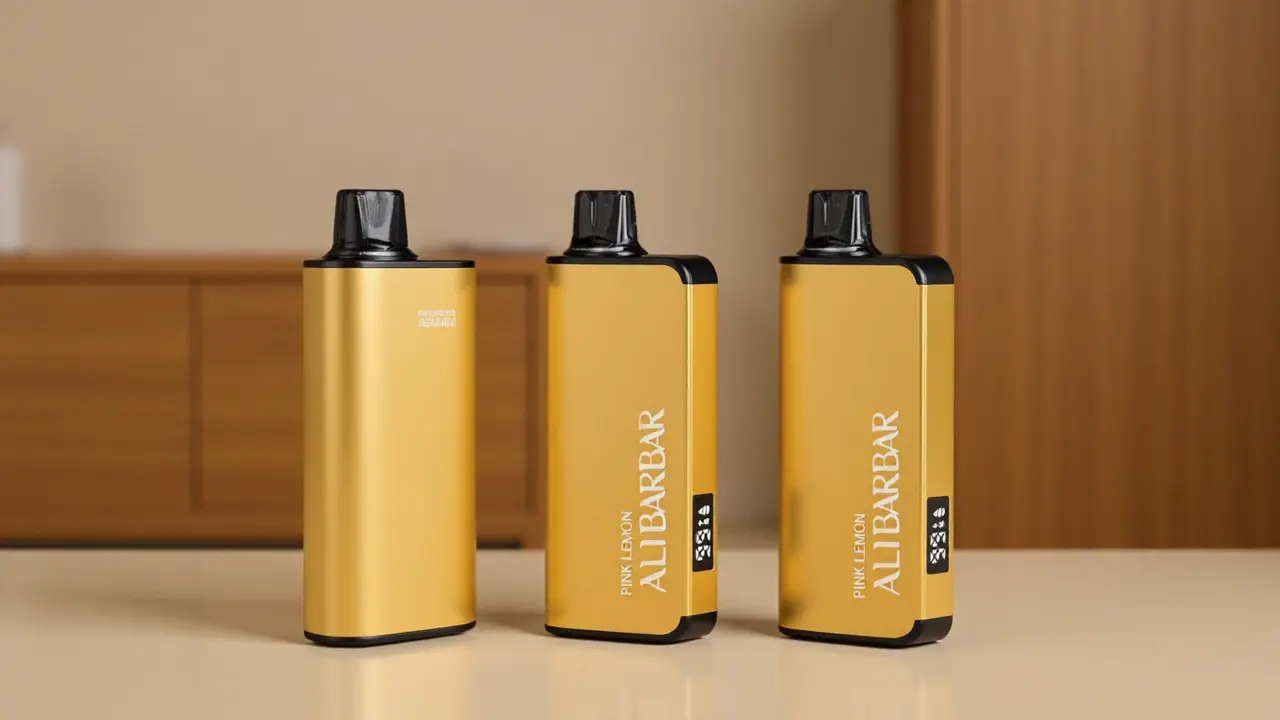
Most entries in this category rely on a single multicolour LED. Some are more transparent than others: a widely referenced family like the ALIBARBAR INGOT series uses a multi‑stage LED system that provides separate signals for battery health and end‑of‑liquid, reducing the guesswork that plagues many competitors. In contrast, many low‑cost disposables use a single blinking pattern for all status changes. If you are using one of those, the only reliable empty indicators are flavour loss and vapour thinning — conditions that require you to be attentive and experienced to catch early.
Refillable Pod Systems
The presence of a partially clear pod or a visible e‑liquid window changes the entire user experience. You can see when the liquid level drops below the wicking ports, which is a much more precise indicator than any light. However, opaque pods still exist, and with them, the same performance‑based detection methods apply. In any case, a pod system’s battery is usually rechargeable and separate from the consumable, so a blinking light is almost always battery‑related, not a statement about the pod. This separation of concerns is a design advantage that eliminates one of the most common sources of confusion.
Advanced Modular Systems
Box mods with screens and replaceable batteries can display coil resistance, live wattage, and puff counters — but even they rarely measure actual liquid volume. A puff counter only indicates how many times the firing circuit has been activated, not how much liquid each puff consumed. Users often assume that a fixed number of puffs equals full use, but puff duration, power settings, and coil efficiency vary so widely that this metric is a poor proxy for emptiness. The visual inspection of the tank remains the gold standard.
A Step‑by‑Step Checklist to Determine if Your Device Is Truly Empty
Vapour production and flavour are subjective; a structured diagnostic routine reduces error. Run through these checks in order.
External visual check. Is there a window? If yes, is any liquid visible above the wicking holes? If the tank appears dry, the device is functionally empty, regardless of what any light suggests.
Status light observation. Take a short puff and watch the LED. A green or white light during the puff followed by no unusual blink afterward means the device believes it is still within normal parameters. A blink pattern only after the puff — especially a sequence of rapid flashes — usually indicates a warning. Refer to the product documentation to decode the pattern. If no documentation is available, assume a red blink after a puff means either low battery or low liquid; you will need to rely on the next steps to differentiate.
Flavour assessment. Is the intended flavour still present, or has it become thin and neutral? A complete absence of flavour with some vapour remaining often signals that the liquid is nearly gone but a small amount of propylene glycol or vegetable glycerine is still being aerosolised. Once flavour disappears entirely, the device is effectively empty.
Vapour density evaluation. Hold the exhaled vapour against a dark background. If the plume is noticeably weaker than when the device was new, the delivery system is struggling — most likely due to insufficient liquid.
Draw resistance and temperature. A suddenly cooler draw with little resistance suggests the coil is not being adequately fed. This is a late‑stage indicator that empty is imminent.
Battery‑depletion test (rechargeable units only). Charge the device fully and repeat the puff test. If vapour returns, the previous failure was battery‑related, and the consumable still has life. If no vapour returns, the consumable is empty or the coil has failed.
Applying this sequence will give you a more accurate answer than any single signal alone. A device that provides unambiguous status reporting — a clear window, a distinct liquid‑level LED, or a digital gauge — collapses several of these steps into a single glance. When selecting your next device, the presence of such indicators is one of the highest‑value features you can prioritise.
Common Misunderstandings and Design Trade‑offs
Users often undermine their own satisfaction through a handful of avoidable errors in evaluation.
Mistake 1: Treating all blinking lights as “empty.” As discussed, a red blink frequently indicates low battery alone. In a sealed disposable, the practical outcome is the same (the device must be replaced), but understanding the underlying cause prevents you from discarding a device that might have yielded a few more uses had you waited for flavour loss. More importantly, when you replace the unit, you should be aware that the consumable may have outlasted the battery — a sign of weak power management in the product’s engineering.
Mistake 2: Using puff count as a precise meter. A “3000‑puff” rating is derived from laboratory standardisation that no real‑world user replicates. Deep, prolonged inhales consume several times the liquid of a short mouth‑to‑lung puff. Relying on puff count to gauge emptiness is like measuring a road trip by engine revolutions — it tells you something about activity, but nothing about distance traveled. Devices that combine a puff counter with a visible liquid indicator give you both pieces of the puzzle; those that offer only a puff counter are inviting you to guess.
Mistake 3: Ignoring the difference between a safety cutoff and a true empty reservoir. Many devices will shut down while a sliver of liquid still coats the bottom of the tank. This is not a defect; it is the thermal management system saying, “There is not enough liquid here to keep the coil below a safe temperature.” Attempting to extract the last fraction of a millilitre will either produce a burnt taste or not work at all. Treat the safety cutoff as the functional end of the device’s useful life.
Mistake 4: Choosing a device without considering its status transparency. A product’s external design — the smoothness of its finish, the attractiveness of its colour — dominates purchasing decisions, while the equally important question of how will I know when this is finished? is rarely asked. A minimalist exterior often means an opaque reservoir and a single‑colour LED. That choice may look sleek in a promotional image, but it creates daily uncertainty. The apparel parallel is a watch with no hands: striking, but functionally useless for its core task.
From an industry perspective, the trend toward “clean” industrial design has too often led to the removal of informative UI elements. Ironically, some manufacturers have started reintroducing visual liquid windows in response to user complaints, but the lesson is clear: expect transparency about status, not just about materials.
Frequently Asked Questions
Q: I see a red light blinking when I inhale. Is my vape empty?
A: Not necessarily. A red or blinking light often signals a low battery. If vapour production and flavour are still present, the consumable is likely not empty. If the light blinks and no vapour is produced, it could be either a dead battery or an empty cartridge — you need to test further or recharge (if possible) to isolate the cause.
Q: Can I keep using a vape until it completely stops producing vapour, or is that harmful?
A: For modern devices with thermal protection, the device will shut off before the coil reaches damaging temperatures. It is safe to use until it stops, provided you stop immediately if you taste a burnt or acrid note. That note indicates the wick is dry, and continuing to inhale after that point is not advisable.
Q: Why does my vape taste fine one moment and then suddenly taste burnt?
A: This is the classic signature of a wick that has lost full saturation, often because the remaining liquid cannot reach the coil quickly enough. Tilting the device or taking a series of rapid puffs can cause a temporary dry spot. If the burnt taste persists across all subsequent puffs, the device is effectively empty, even if a tiny amount of liquid remains in the reservoir.
Q: Do all disposable vapes have an empty indicator?
A: No. Many entry‑level disposables have only a single LED that flashes for low battery or end‑of‑life, with no differentiation. A clear e‑liquid window or a dedicated end‑of‑liquid colour change is a feature present only on more thoughtfully engineered devices.
Q: My pod still has some liquid visible, but no vapour is produced. Is it dead?
A: Likely a battery issue or a failed coil. In a rechargeable system, charge the battery fully and try again. If vapour returns, the battery was exhausted. If not, the coil may have reached the end of its functional lifespan, and the pod should be replaced even though liquid remains.
Q: How can I tell if a refillable pod is empty without taking it apart?
A: If the pod is transparent or has a window, a visual check is all you need. If the liquid level is below the cotton wicking ports near the base, it is time to refill. If the pod is completely opaque, you must rely on flavour and vapour degradation to estimate.
Q: Why do some devices stop working even though there’s still e‑liquid left?
A: Besides battery depletion, some devices have a pre‑set operational lifespan enforced by a timer or a puff‑count lockout, often to comply with certain regulatory frameworks. Once the internal counter reaches its limit, the device will cease to fire regardless of consumable status. This is a design feature, not a malfunction.
Q: Is it possible to refill a disposable vape that still works but seems empty?
A: While it is technically possible to force liquid into some sealed units, it is not recommended. The housing is not designed for repeated opening; doing so introduces the risk of battery short‑circuit, coil damage, and exposure to internal components. The unit should be replaced with a new, factory‑tested device.
Q: Can I check my vape’s e‑liquid level without taking a puff?
A: Only if the device is equipped with a clear reservoir or a digital display that includes a fluid level gauge. Most basic devices require a puff to trigger the LED, which then only communicates post‑inhale status. If in‑situ visual inspection matters to you, look for a unit with an e‑liquid window when purchasing.
Q: Why does my vape flash 10 times? Is that an empty signal?
A: A ten‑flash sequence is almost universally a low‑battery or safety‑shutdown indicator. It may appear when the battery voltage drops below a safe threshold, when the device detects a short circuit, or after a maximum puff duration is exceeded. It does not specifically indicate that the consumable is empty unless vapour production also ceases entirely and charging (on rechargeable units) does not restore function.
A Clear Signal Is Better Than a Guess
The central insight that emerges from a detailed look at device behaviour is simple: ambiguity about status is a design choice, not an inevitability. When a product gives you no way to distinguish a dead battery from an empty reservoir, it has shifted the mental burden entirely onto you, the user. When it offers a transparent window, a separate liquid‑level LED, or a precise digital readout, it has done the work for you.
Before you purchase your next unit, consider asking a practical question that rarely appears in product descriptions: How will I know, without tasting it, that this device is nearly finished? The answer to that question will determine whether you carry a backup you do not need or confidently use the one in your hand until its last reliable moment. A platform like OZVAPE Shop, which provides standardised product specifications, can help you identify which options genuinely deliver on‑the‑spot transparency.
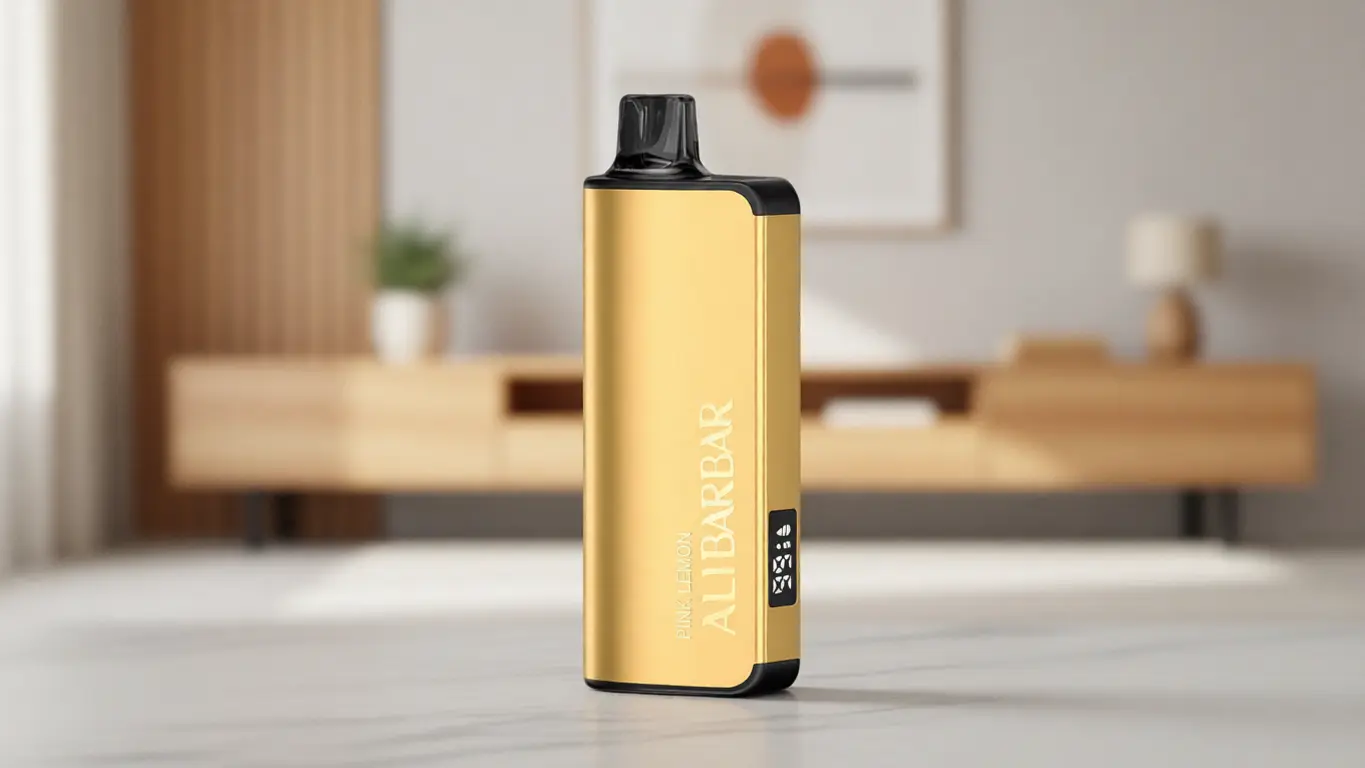
The right device is not the one with the most attention‑grabbing exterior. It is the one that communicates clearly, so you can trust it to tell you when it is done.