
VAPE FAQs
How To Do O With A Vape?
May
It is a question that arrives in countless online communities and late-night conversations: “How do you blow those perfect O’s with a vape?” The short answer is that it is a combination of a practiced oral and throat technique, the right airflow dynamics, and a device delivering dense, consistent vapor almost on command. The longer answer — the one that moves someone from sporadic, misshapen rings to effortless, clean circles — is that the device you choose silently dictates whether your technique ever stands a chance. Many users blame themselves when their vapor rings wobble, dissipate, or simply refuse to form, but the engineering inside the device often carries equal responsibility. At OZVAPE Shop, we have seen how access to standardised, factory‑certified equipment removes guesswork from the learning process. This article unpacks the physical and mechanical factors that enable controlled vapor ring production, explains what device attributes genuinely matter, and gives you a repeatable framework for evaluating any equipment you might consider for this pursuit.
Understanding What Matters: Core Engineering and Design Factors
A vapor ring is a toroidal vortex — a spinning ring of denser-than-air vapor that holds its shape because it carries its own momentum. The device’s job is to produce a plume of vapor that is consistent in density, temperature, and delivery; anything less works against the fluid dynamics required. Four engineering areas disproportionately influence whether a device becomes a tool for clean O’s or a source of frustration.
Internal Architecture and Output Consistency
Every vapor production system relies on a heating element and a wicking or delivery mechanism. In devices designed for repeatable performance, the heating element geometry — whether it is a mesh, a traditional coil, or an advanced ceramic structure — determines how evenly the liquid is converted into aerosol. Inconsistent heating leads to variable vapor density: one puff dense, the next thinner. A vortex ring cannot travel far if the plume itself is unstable. Devices engineered with dual or multi‑coil chambers, or those employing precision temperature management, maintain output stability across successive draws, which translates directly into the uniform plume required for ring formation. The deadliest foe of the beginner is a device whose output fades after twenty minutes of use; look for those where the wicking keeps pace with the heating element even during back‑to‑back draws.
Power Management and Status Transparency
Power delivery is often overlooked because users assume that the device simply “works until it doesn’t.” But the way a power source discharges — whether it maintains a stable voltage until the end, or drops off gradually — determines whether the last hundred puffs produce vapor of the same density as the first. A device without clear status indication leaves you in the dark: you attempt a ring, it falls apart, and you wonder if it’s your tongue position or a depleted cell. The frustration is real, and it frequently leads people to carry an unnecessary second device, adding cost and bulk. An engineering approach that includes a reliable fuel‑level indicator, or at least a consistent output curve, saves you from that second‑guessing loop.
Physical Design and Material Durability
Mouthpiece geometry may be the single most underappreciated variable in vapor tricks. A wide, rounded, and slightly tapered mouthpiece allows the vapor to exit as a coherent column without interference from lips or teeth. Narrow, rectangular, or sharp‑edged apertures introduce turbulence that breaks the vortex apart before it can stabilise. Beyond the mouthpiece, the device’s external finish and weight distribution matter more than most realise. A heavy, polished unit that slides in the hand forces you to grip harder, tensing muscles you need relaxed for the delicate oral mechanics of O‑formation. A textured, lightweight chassis — particularly one that stays cool to the touch — permits a relaxed hold, which keeps your jaw and cheeks supple.
Modularity and Lifecycle Flexibility
Most discussions of modularity focus on sustainability and cost per use, but for the trick‑oriented user, modularity means the ability to tune the device to the task. Sealed, single‑use devices offer convenience but lock you into whatever airflow and power profile the manufacturer set; if that profile produces vapor too warm, too thin, or too turbulent for clean rings, you have no recourse. Rechargeable systems with replaceable components — or at minimum, adjustable airflow — let you experiment with draw resistance and vapor density until you find the combination that works with your personal technique. In a world where technique is everything, having a device that can adapt is not a luxury but a foundational requirement.
Applying These Criteria to Real‑World Options
When we map the above criteria onto the current market, it becomes easier to see why some device families are repeatedly mentioned in trick‑practice forums while others are not. The ALIBARBAR range, for instance, has drawn attention not because of any single headline feature but because its models explicitly address the four factors above in a calibrated way.
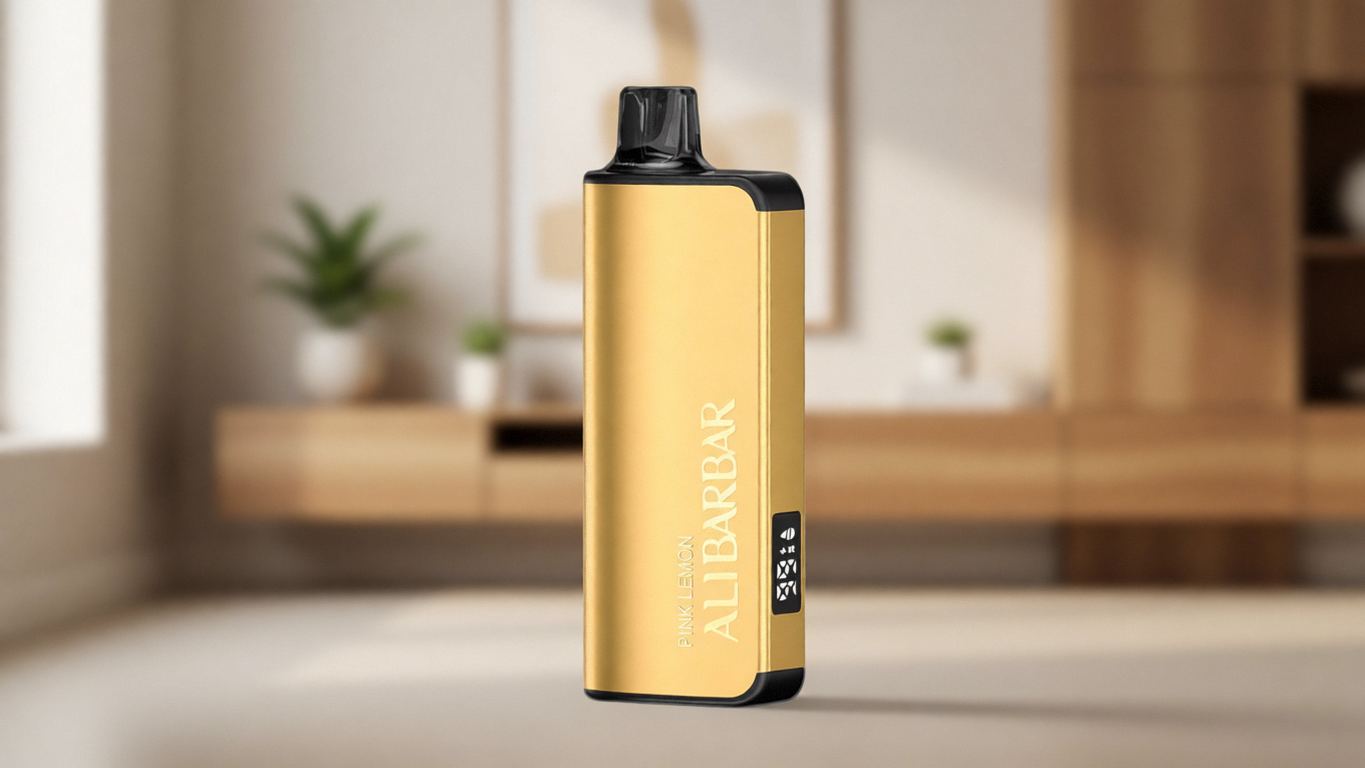
The ALIBARBAR Ice Adjust 12000 series incorporates a user‑adjustable airflow slider, allowing you to move from a tight, controlled draw for ring‑density tuning to a more open pull for larger plume volume. The mouthpiece is broad and rounded — a deliberate design choice that reduces exit turbulence. Inside, the heating element is paired with a mesh configuration that maintains density deep into the device’s lifecycle, meaning the 11,000th puff produces a plume that behaves almost identically to the 1,000th. For those seeking high capacity, the INGOT 9000 and INGOT 15000 models offer substantial vapor volume without sacrificing consistency, though they use a fixed airflow system, trading adjustability for sheer stamina. Other well‑known product families in the market may offer adjustable airflow but pair it with a narrower mouthpiece, forcing the user to compensate with lip positioning. Neither approach is universally superior; it is about matching the device’s design priorities to your learning style.
A Practical Framework for Evaluation
Rather than relying on brand reputation, you can apply a simple, repeatable set of tests to any device you are considering:
Airflow character: With the device powered off, take a slow, unpowered draw. Note the resistance. Is it smooth or does it feel like sucking through a narrow straw? Smooth, unrestricted airflow predicts an easier time forming a clean plume.
Vapor density at 50% power: Take a moderate draw and exhale immediately against a lit background. Does the vapor hold together as a cloud or disperse instantly? Dense, slow‑dissipating vapor is a prerequisite for rings that last.
Mouthpiece fit: Place your lips loosely around the mouthpiece as you would for a ring. If the mouthpiece forces your lips into an unnatural pucker, you will struggle to create the circular aperture needed for the initial O‑shape.
Consistency test: Take five consecutive draws of equal length, resting only a few seconds between each. If the vapor thins noticeably by the fourth or fifth puff, the device’s wicking cannot keep up, and you will face inconsistent ring practice.
Status transparency: Ask: “Will I know when this device is about to stop working, or will I be caught off guard?” A clear, graduated indicator prevents wasted sessions.
These criteria are not theoretical; they are drawn from watching hundreds of learners struggle against their hardware. At OZVAPE Shop, the product specifications we publish include airflow type, mouthpiece shape, and rated puff consistency so that you can compare devices side‑by‑side before committing.
Common Selection Errors and Industry Observations
The gap between wanting clean vapor rings and achieving them is often widened by predictable mistakes that stem from industry‑wide miscommunication. Recognising these traps is the quickest route to progress.
Overweighting a single specification – A device marketed as “high puff count” or “maximum cloud” can still deliver a plume that is too turbulent for rings. Many users see “high vapor production” and assume this automatically equals ring‑friendly vapor. It does not. Volume without density and laminar flow just gives you a bigger, messier puff.
Assuming visual similarity indicates equivalent internal engineering – Two devices with identical external dimensions may house entirely different heating elements. The market is full of contract‑manufactured designs where the shell remains constant but the internals are downgraded for cost. This is why counterfeit and third‑party inventory can perform inconsistently. Authorised supply chains — such as those behind the OZVAPE Shop inventory — are the structural safeguard against this variance.
Undervaluing modularity in cost‑per‑use calculations – A perfectly tuned fixed‑airflow device can produce brilliant rings, but if the user’s technique is still developing, being locked into one draw profile may extend the learning curve significantly. The higher upfront cost of an adjustable airflow model often pays for itself in saved frustration and more efficient practice time.
Confusing category terminology with technical specifications – Terms like “mesh coil” or “adjustable airflow” describe categories, not performance guarantees. The quality of the mesh, the precision of the airflow slider’s detents, the calibration of the chipset — these are the details that separate a tool from a novelty. Observing how a device is positioned in a retailer’s catalogue can be instructive: a store that provides engineering‑level breakdowns rather than emotional language is more likely to source from manufacturers that document these internals.
Frequently Asked Questions
Q: Do I need a special device to blow O’s, or can I learn with any vape?
A: You can produce vapor rings with almost any device that creates a dense plume, but your learning speed and the cleanliness of the rings will be dramatically affected by airflow, mouthpiece shape, and vapor consistency. A device engineered for smooth, laminar vapor output eliminates variables and lets you focus solely on technique.
Q: Why do my rings collapse so quickly, even when my mouth shape looks correct?
A: Rapid ring collapse usually points to insufficient vapor density, a lack of forward momentum, or turbulence at exit. Check that your device is not fading in output and that your lips are forming a tight, even circle with the mouthpiece positioned parallel to your lips, not angled.
Q: Does adjustable airflow really make a difference for tricks?
A: Yes, significantly. It allows you to tailor the draw speed that feels natural to you and match it to the plume velocity. A too‑tight draw can produce a jet that scatters, while a too‑loose draw may not create enough exit velocity. The ability to dial this in precisely accelerates learning.
Q: I’ve seen people blow multiple rings. Does that require a different device?
A: Not necessarily. The technique for multiple rings (machine‑gunning) relies more on throat and diaphragm control than on device output, though a device that sustains consistent density during short, repeated puffs makes it easier because each mini‑ring starts from an identical vapor quality.
Q: How important is it to buy from an authorised retailer?
A: It is critical if you want a device whose internals match its specification sheet. Unauthorised channels often carry inventory with substituted components that alter vapor density and draw resistance. Buying from verified sources ensures you are learning on the platform the engineers designed, not an approximation.
Q: Can device surface texture affect trick execution?
A: Indirectly, yes. A slick, polished device requires a tighter grip, which tenses hand and arm muscles, and that tension often travels to the jaw. A matte or textured finish permits a relaxed hold, contributing to the overall relaxation needed for precise oral control.
Q: Are high‑capacity devices always better for practice?
A: They offer the advantage of not interrupting a session to recharge, but if the output density declines before the end of the capacity, you end up practicing with degrading vapor. A mid‑capacity device with a flatter power curve may serve trick practice better than a high‑capacity unit with a gradual drop‑off.
Q: What is the single most overlooked factor in ring formation?
A: Lip position relative to the mouthpiece aperture. Many users place the device too far into the mouth or angle it upward, creating an irregular exit shape. Positioning the mouthpiece just inside the lips, with the lips relaxed and making a circle independent of the device, produces a more symmetrical ring.
Q: How does temperature affect vapor rings?
A: Warmer vapor rises and dissipates more quickly, while cooler vapor hangs longer. Some devices with precise temperature regulation allow for cooler, denser vapor that is easier to shape and observe. Devices that run consistently warm may still work, but the rings will scatter sooner, making practice harder to evaluate.
Q: Where can I find devices that have been verified against these engineering criteria?
A: Retailers that publish detailed technical specifications — airflow type, mouthpiece dimensions, power delivery curve — and source directly from authorised distributors are the safest starting point. This transparency is a prerequisite for matching equipment to technique.
Conclusion
Mastering vapor O’s is not a parlor trick; it is a vivid demonstration of how a device’s hidden engineering either supports or undermines a user’s physical skill. The machinery matters — but only when you understand what to look for, and more importantly, what to ignore. When you treat device selection as a deliberate step that involves checking airflow, vapor density consistency, mouthpiece geometry, and supply chain integrity, you stop practising against your own equipment and start practising with it. At OZVAPE Shop, every product in the ALIBARBAR range is documented against the same functional criteria discussed here, because we believe that informed adults make decisions they never need to second‑guess. The right device is not the one with the loudest claims; it is the one that fades into the background so naturally that your O’s become the only thing worth watching.