
VAPE FAQs
Can You Bring Vape Into China?
May
Finding yourself standing in an airport queue, vape device in hand luggage, wondering whether it will clear customs on the other side — that moment of uncertainty is far more common than most travel guides admit. China’s regulatory landscape for personal electronic devices has shifted sharply in recent years, and what was routine a few years ago now demands careful preparation. This article examines the current rules and practical considerations, so you can make an informed decision before you book that flight.
We will walk through the legal framework, customs enforcement patterns, device-level factors that influence inspection outcomes, and the simple checklists that seasoned travelers now follow as second nature. For those who purchase their equipment through verified Australian channels like OZVAPE Shop{:target=”_blank”}, understanding cross‑border compliance is as important as choosing the right device itself. Nothing here constitutes legal advice, but it reflects the best publicly available information and the collective experience of frequent travelers who have had to adapt to the new reality.
Understanding What Matters: Regulatory Logic and Practical Risk
A traveler’s success at the border rarely comes down to one single factor. Instead, it is shaped by how well their device and packing decisions align with China’s layered system of tobacco control, consumer safety, and customs enforcement. Three elements converge at the inspection point: the legal classification of the device, the quantity carried, and the physical characteristics that either invite or deflect scrutiny.
Legal Status and Customs Classification
China regulates e‑cigarettes and similar devices under its tobacco monopoly framework. Since late 2022, the sale of flavored products has been banned except for tobacco‑flavored variants, and all e‑cigarette products — whether containing nicotine or not — are subject to import controls. Customs officers treat these devices as restricted goods. They are not prohibited outright for personal use, but they are not free‑entry items either.
The practical implication is clear: if you arrive without considering these rules, you are exposing yourself to confiscation, fines, and in extreme cases, detention for undeclared commercial quantities. The authorities publish updates through the General Administration of Customs of the People’s Republic of China, and those notices — not forum anecdotes — should guide your planning.
Personal Use Quantities and the Intent Test
There is no single, fixed number printed on an official document that guarantees trouble‑free passage. Customs agents apply a reasonableness test. Most seasoned travelers report that carrying up to two portable devices and a modest supply of sealed cartridges or pods — typically what would last a short trip — is treated as personal use. Larger quantities, multiple identical units in original retail packaging, or loose components that suggest resale intent will almost certainly trigger seizure.
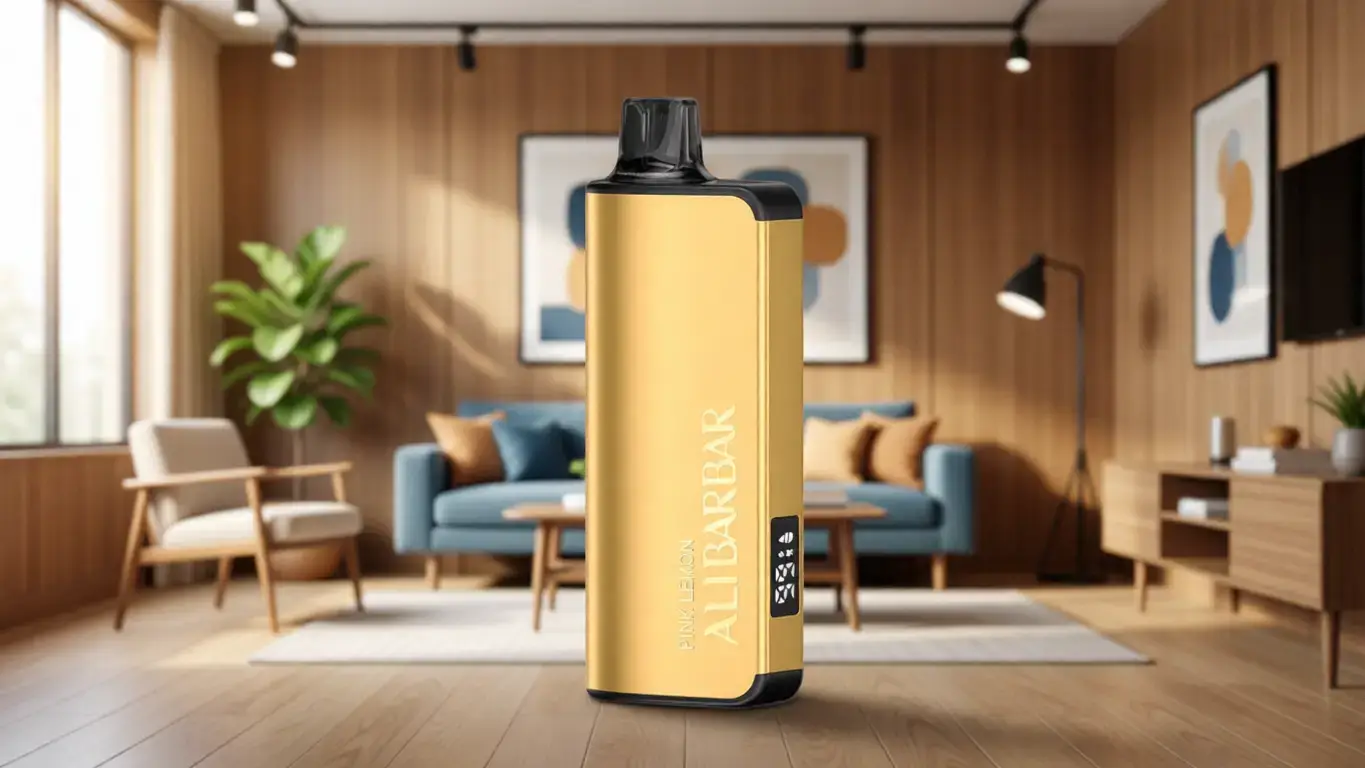
Airlines also impose their own restrictions: lithium‑ion batteries must be in carry‑on luggage, and liquids must observe the 100ml container rule. Devices that combine a battery with a sealed liquid capsule, such as the pre‑filled ALIBARBAR INGOT series, simplify this equation because the liquid is contained within a factory‑sealed unit that neither leaks nor exceeds volume limits. An officer inspecting a bag is far less likely to spend extra time on a device that looks self‑contained and professionally manufactured than on a refillable tank with a half‑open bottle of e‑liquid beside it.
Device Engineering and Inspection Outcomes
Customs is not just about paperwork. The physical design of the device you carry influences how it is perceived at the checkpoint. Three practical characteristics matter:
Sealed integrity: Devices that rely on user‑refilled tanks or exposed heating coils create the possibility of leakage in transit. A puddle of liquid inside a bag raises questions that a dry, intact pod system never does.
Status transparency: Units that give clear battery and liquid‑level feedback — meaning you do not need a backup device for peace of mind — reduce the temptation to carry multiple units, which would push your quantity into a more suspicious range.
Durability under travel conditions: Pocket‑wear, pressure changes in aircraft holds, and constant handling are hard on electronics. A device with a robust finish and consistent output for its full rated life stands a better chance of functioning normally when you arrive, avoiding the secondary problem of disposal in a foreign country with its own waste regulations.
These considerations are not hypothetical. Travelers who overlook them end up either packing several devices “just in case,” which raises the customs count, or discovering a dead unit on landing with no local option to replace it.

Real‑World Scenarios: How Device Choices Intersect with Travel Rules
Consider two different travelers. One brings a high‑capacity refillable mod, two 60ml bottles of liquid, spare coils, and a separate battery charger — earnest hobbyist gear. At the customs counter, that assortment looks like stock for sale or a small workshop. The second traveler carries a single pre‑sealed, draw‑activated device — something the size of an ALIBARBAR INGOT 9000 — in the original box. It is compact, the battery is integrated and chargeable via standard USB, and there is nothing to dismantle. The difference in inspection intensity is palpable.
This is not a claim that one brand solves the legal problem; laws apply equally to all brands. But the traveler who chooses equipment that minimizes leakage risk, reduces the need to carry supplementary items, and presents a clean, factory‑finished appearance at the x‑ray belt will experience fewer delays. For Australian users, verifying provenance matters too. Devices sourced through authorised retailers like OZVAPE Shop come with traceable batch information and authentic packaging, which can help if an officer questions authenticity — counterfeit electronics face additional scrutiny and potential confiscation under consumer safety laws.
A Practical Pre‑Travel Evaluation Framework
Use the following checklist before any trip that involves international travel with a personal electronic device. It is built on the principle that preparation removes friction at the checkpoint.
Check the latest official notice. Visit the General Administration of Customs website and search for recent announcements about e‑cigarette imports. Print or screenshot the relevant sections.
Downscale your kit. Carry no more than two portable units and a quantity of sealed consumables appropriate for your length of stay. Leave backup devices at home.
Inspect your device for flight compliance. Ensure the battery is safely integrated, cannot be accidentally activated, and that any liquid is securely contained within a sealed cartridge or pod.
Pack in carry‑on only. Lithium batteries are not permitted in checked luggage. Keep your device and any charging cable in a clear, accessible pouch for secondary screening.
Declare if in doubt. The red channel exists precisely for goods that may be restricted. A voluntary declaration, even if the item is later held for assessment, is almost always treated more leniently than discovery by an officer during a random check.
Carry proof of purchase. A receipt or digital invoice from your retailer confirming the product’s specification and authenticity can be useful if questions arise about whether the device is a genuine consumer product.
Common Errors That Undermine Your Own Security
Travelers regularly compromise themselves through a handful of preventable misjudgments. Understanding these patterns is more valuable than any brand comparison.
Overweighting reviews while ignoring regulatory reality. A device may be five‑star rated for flavor consistency, but that does not tell you whether its design will survive a humidity change or whether its refill port will leak at altitude. Separate user satisfaction from travel suitability.
Assuming visual similarity means identical internal engineering. Two slim, metallic pod systems can look alike, yet one may use a sealed coil‑in‑pod architecture while the other uses a cotton‑wick tank that slowly seeps liquid. In overhead bins, the difference becomes critical.
Carrying a “just-in-case” backup that doubles the customs count. The logic is understandable: you do not want to be without a functioning device. But from a customs perspective, you are now importing two units, and if they are the same model in sealed retail packaging, the intent judgement shifts. A single reliable device with transparent status indicators — the kind that shows remaining charge and liquid at a glance — removes this psychological need to double up.
Confusing airline rules with customs rules. An airline permitting a device in the cabin does not mean the destination country permits its import. These are two separate regulatory domains. Satisfying one does not automatically satisfy the other.
Frequently Asked Questions
Q: Is it legal to bring a vape into China for personal use?
A: Personal‑use quantities are generally permitted, but the devices are subject to tobacco import regulations and must be declared if requested by customs. The legality of flavored products has been restricted, so carrying non‑tobacco flavors may attract extra attention.
Q: How many vape devices can I bring through Chinese customs?
A: There is no universally published limit, but a rule‑of‑thumb based on traveler reports is two portable units and a proportionate number of sealed cartridges. Exceeding this risks commercial‑intent scrutiny.
Q: What happens if I don’t declare my vape and customs finds it?
A: Non‑declaration can lead to confiscation, administrative fines, and in cases involving large quantities, more serious legal consequences. The device will likely be seized and not returned.

Q: Can I bring e‑liquid separately?
A: Very small amounts that comply with liquid carry‑on rules (under 100ml containers) may pass, but larger bottles invite suspicion and are frequently confiscated. Factory‑sealed pre‑filled pods are generally a safer option as the liquid is pre‑metered and sealed.
Q: Are there any types of vapes that are explicitly banned?
A: Flavored products (other than tobacco flavor) are banned for sale and may be subject to seizure at customs. Open‑system devices that encourage user‑refilling are not banned outright but attract more scrutiny due to the loose liquids they require.
Q: Does it matter if my device contains nicotine?
A: Yes. Nicotine‑containing devices are regulated under China’s tobacco monopoly. Even nicotine‑free devices may be classified similarly, so it is safest to assume the same rules apply to all personal vaporizers.
Q: Can I buy a vape inside China if I forget mine?
A: Sales are heavily restricted, and the range of legally available products is narrow. Relying on local purchase is not recommended. Better to travel with a compliant device that you know will get through.
Q: Where can I find the most up‑to‑date official information?
A: The General Administration of Customs of the People’s Republic of China (english.customs.gov.cn) publishes notices. Check the “Travelers” section and search for “electronic cigarettes” before departure.
Q: Should I tell my airline about my vape device?
A: Airlines generally permit e‑cigarettes and vaping devices in carry‑on luggage only, with batteries protected from short circuits. It is never permitted to use them on board. Check your specific airline’s dangerous goods policy.
Q: Can OZVAPE Shop advise me on Chinese import regulations?
A: OZVAPE Shop encourages all customers to independently verify destination regulations. While they can confirm a product’s specification and authenticity, the final responsibility for compliance rests with the traveler.
The Traveler’s Responsibility
China’s approach to personal electronic devices at the border is not designed to catch out the average visitor, but it is unforgiving toward those who treat the rules casually. The difference between a smooth journey and a tense episode at customs often comes down to whether you treated the device you carry as an afterthought or as a piece of gear that needed pre‑flight due diligence.
Whatever device you choose, and whether you sourced it from OZVAPE Shop{:target=”_blank”} or another authorised retailer, the same principle applies: the right choice is not the one with the highest puff count or the most social media attention. It is the one that fits your actual routine, complies with the rules of the country you are visiting, and leaves you with nothing to explain when the officer says, “Open your bag, please.” Travel well prepared, and you travel with confidence.