
VAPE FAQs
How To Do Ghost With Vape?
Sep
The Hidden Frustration Behind Every Failed Vape Trick
Ask anyone who has spent an afternoon trying to learn the ghost inhale — that brief, almost hypnotic moment where a small ball of vapor leaves the mouth only to be drawn sharply back in — and you will hear a familiar story. The first few attempts produce nothing but thin wisps. Then a handful of near-successes that dissolve too quickly. Frustration builds. Most people blame their technique. In many cases, they should be looking at their equipment.
The reality is that not every device supports trick execution equally. Differences in airflow architecture, power delivery, and even mouthpiece geometry create a performance gap that technique alone cannot fully bridge. At OZVAPE Shop, we have observed this pattern consistently: users who switch from a poorly suited device to one with transparent, stable engineering often report that the trick they had been struggling with for weeks suddenly becomes achievable within an hour. This article is not about promoting a product line. It is an honest, technically grounded explanation of what makes a device trick-friendly, a step-by-step breakdown of the ghost inhale technique, and a framework to help you make smarter choices before you invest more time in practice.
Why Device Choice Matters More Than You Think
Before breaking down the technique, it is worth understanding why the ghost inhale — and vape tricks in general — are so sensitive to hardware. The explanation lies in a handful of engineering factors that directly control vapor behavior.
Airflow Consistency and Vapor Density
The ghost inhale requires a short, dense burst of vapor that travels as a cohesive ball. If the vapor is too thin, it disperses before you can recapture it. If the airflow is turbulent, the ball wobbles and breaks apart. This is not a matter of opinion; it is a function of how the device’s air intake path is machined.
Devices with a smooth, laminar airflow path — often achieved through precision-milled channels and minimal internal obstructions — produce vapor that exits the mouthpiece with a predictable, undisturbed trajectory. Conversely, devices with convoluted internal paths or loose-fitting mouthpiece seals create micro-eddies that shred the vapor ball before it travels a few centimetres. When you are learning, this difference is the gap between seeing a clean ghost form and watching every attempt vanish into thin air.
What to look for: A device that offers adjustable airflow is not automatically better. The critical variable is how cleanly the air moves through the system. A well-designed fixed-airflow device often outperforms a cheaper adjustable one because the engineering tolerances are tighter.
Power Delivery and Heat-Up Time
A ghost inhale fails most often because the vapor production during the initial puff is too weak. You take a draw, start the trick, and the vapor exits the mouth already half-dissolved. The culprit is frequently a delay between activating the device and the coil reaching optimal temperature.
Instant ramp-up is not a marketing term; it describes how quickly the heating element stabilizes. Devices that use a high-quality power management chip can heat the coil within a fraction of a second, providing a full-density puff the moment you begin your draw. Devices with cheaper circuitry or larger mass coils may require half a second or more to stabilize — long enough for the first part of your exhalation to carry underheated vapor. With a trick as timing-sensitive as the ghost, that half-second is the margin between success and failure.
Mouthpiece Geometry and Handling Ergonomics
The ghost inhale requires you to open your mouth slightly and push out a small cloud using your tongue or a gentle cheek press. The mouthpiece directly affects how comfortable and controlled that motion feels. A wide-bore duckbill design offers different lips positioning than a narrow, rounded tip. Neither is inherently superior; the key is whether the shape matches your natural oral posture.
Weight and balance further influence control. A device that is too heavy to hold steadily between two fingers while you concentrate on mouth movements introduces muscle tremor that disrupts vapor release. A lightweight, well-balanced unit allows you to keep your attention on the trick, not on preventing the device from slipping.
Coil Longevity and Predictable Vapor Output
Even the best device degrades over time. A coil past its prime produces thinner, harsher vapor that behaves erratically. For trick practice, this matters acutely because the vapor characteristics you rely on shift without warning. One session you produce consistent ghost inhales; the next, your muscle memory works against a fundamentally different vapor density.
Devices with higher-quality coil materials and consistent wicking maintain a steady output profile for longer, giving you a larger window of usable performance. This is not about lifespan numbers on a box; it is about how flat the performance curve remains before the inevitable drop-off.
Applying These Criteria — A Quick Look at the ALIBARBAR Range
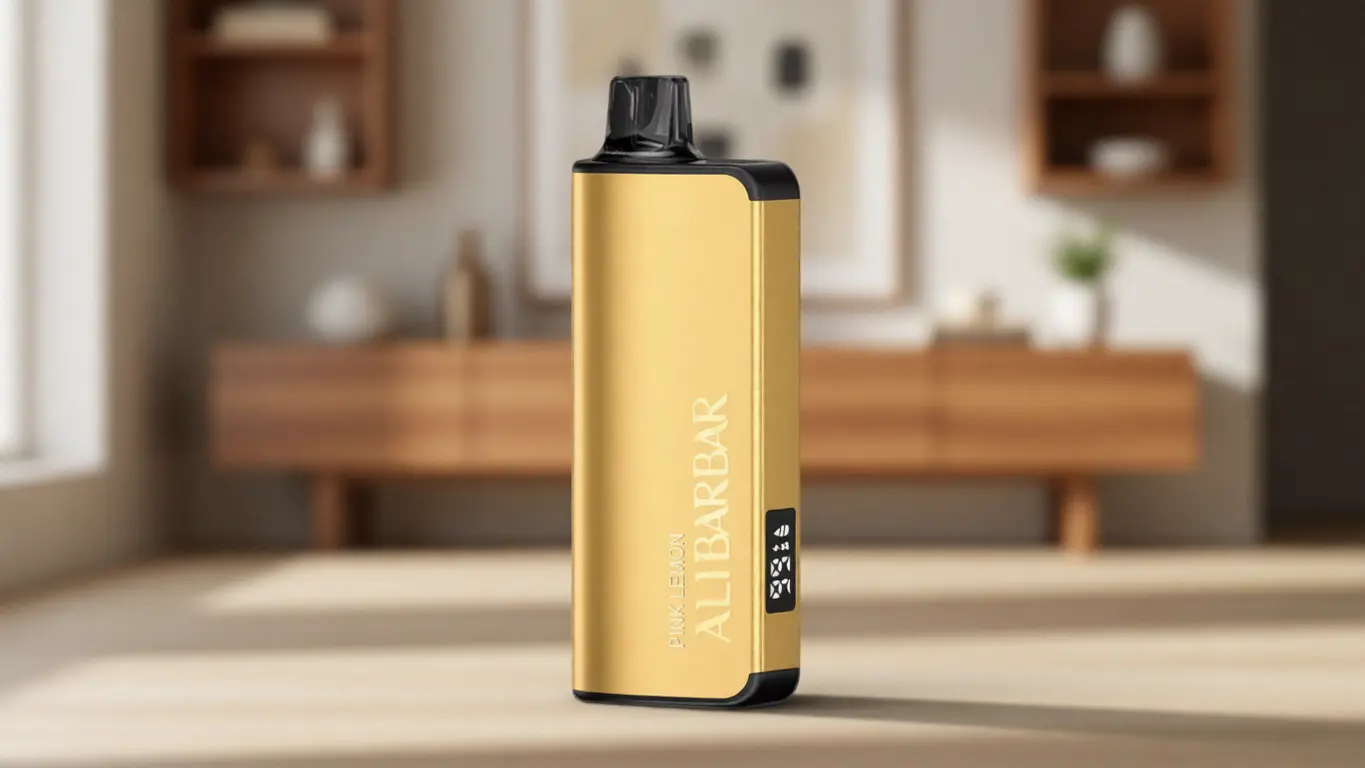
The ALIBARBAR device collection, available through OZVAPE Shop, illustrates several of these engineering principles in practical form. While the brand was not designed exclusively for trick users, its design language happens to align with what makes a device trick-friendly.
The ALIBARBAR INGOT 15000, for example, demonstrates tight power calibration: the coil reaches operating temperature almost immediately, and the vapor density remains consistent from first puff to the latter stages of the device’s life. Its airflow path, while not adjustable, is machined to a smooth tolerance that produces a calm, cohesive vapor stream — exactly what a ghost inhale demands. Similarly, the Ice Adjust 12000 offers a measured degree of airflow customization without sacrificing the laminar flow that keeps vapor together.
This is not to say that no other devices can perform the trick. Many can. The point is that when a device’s engineering is transparent and its specifications are verified — as they are when sourced through an authorized channel — you remove one major variable from your practice. You can then focus entirely on your mouth control, breathing, and timing, confident that the device is doing what it should.
Step-by-Step: Performing the Ghost Inhale
Now that the hardware discussion is out of the way, we can focus on technique. The ghost inhale, sometimes called the mushroom cloud or snap inhale, is a two-part motion: a short, gentle exhale that releases a small ball of vapor, immediately followed by a sharp inhale that pulls the ball back in.
1. Prepare the vapor. Draw from your device as you normally would, but do not inhale the vapor into your lungs. Hold it in your mouth. Your cheeks should feel gently full, not tight. The amount of vapor matters — too much, and you will struggle to shape a clean ball; too little, and the ball will be invisible. Start with a half-second draw and adjust.
2. Position your mouth. Open your lips slightly, forming a small, rounded “O” shape. Keep your jaw relaxed. You are not blowing out; you are creating an opening for the vapor to exit when you push it with your tongue.
3. Release the vapor. Using the back of your tongue, give a short, gentle push forward. The vapor should emerge as a compact cloud that hangs in front of your mouth for a fraction of a second. Avoid exhaling with your lungs; the movement comes from the tongue and the slight compression of your cheeks. This is the most common mistake — lung pressure scatters the vapor instantly.
4. Snap it back. As soon as the ball has fully left your mouth, sharply inhale through your mouth in a quick, controlled motion. The ball will reverse direction and be pulled back in. Do not inhale so forcefully that you create a vacuum that distorts the ball; a crisp, rapid intake is sufficient.
5. Exhale naturally. Once the vapor is recaptured, you can either swallow it into your lungs and exhale normally or release it through your nose in a “French inhale” style. For learning purposes, simply exhaling steadily is fine.
Troubleshooting tips:
If the ball looks ragged, your release pressure is uneven. Focus on using only your tongue, not your breath.
If the ball floats away and won’t come back, you are either releasing too forcefully or inhaling too late. Shorten the gap.
If you produce little to no visible vapor, check your device’s power level or try a slightly longer initial draw times.
Common Mistakes That Undermine Progress
Even with an understanding of device engineering and technique, several cognitive errors frequently delay progress.
Mistaking device capability for skill: A high-performing device will not do the trick for you. It removes the hardware barrier; it does not substitute for coordination. Many users cycle through multiple devices believing the next one will unlock the trick, when the real roadblock is insufficient deliberate practice.
Ignoring mouthpiece compatibility: A device with a wide, flat mouthpiece may seem comfortable for regular use but hinder the controlled release of a ghost inhale. If you cannot form a reliable small “O” around the mouthpiece, the vapor ball will always start distorted.

Practicing with an inconsistent power source: A device near depletion often delivers weaker, cooler hits. Practicing tricks on a device that behaves differently from one hour to the next rewires your muscle memory for failure.
Overlooking environmental factors: Drafts from air conditioning, fans, or even your own breathing can disrupt a floating vapor ball. The ghost inhale is best practiced in still air. Once you can perform it reliably indoors, you can graduate to more challenging environments.
Frequently Asked Questions
Q: Can I do the ghost inhale with any device?
A: Technically yes, if it produces vapor. In practice, the quality of the vapor — density, consistency, and airflow stability — strongly affect how easy it is to learn. A device with good power management and clean airflow dramatically flattens the learning curve.
Q: Is the ghost inhale harmful in any way?
A: The trick itself involves only vapor held in the mouth and briefly in the air. There is no unusual exposure beyond normal device usage. However, repeatedly practicing with a device that is overheating or operating with a degraded coil can expose you to dry, harsh vapor that may cause throat irritation.
Q: Does battery level affect trick performance?
A: Yes. As the battery depletes, output voltage may sag, leading to cooler coils and thinner vapor. For consistent practice, use a device that maintains stable output across its charge cycle, or keep your device topped up.
Q: How do I know if my device is suitable for tricks before buying?
A: Look for reviews or specification sheets that mention “instant ramp-up,” “smooth airflow,” and “consistent vapor density.” Devices that advertise adjustable airflow are worth examining, but confirm that the airflow is clean, not just variable. If specifications are hard to verify, consider purchasing from a source like OZVAPE Shop that provides standardized product data and authentic inventory.
Q: Why does my vapor ball flatten instead of staying round?
A: This usually indicates excess mouth pressure during release. Too much lung involvement forces the vapor out in a jet rather than a gentle sphere. Focus on a soft tongue push.
Q: I can do the ghost inhale sometimes, but not always. What is the variable?
A: Inconsistent technique is possible, but also consider if your device is delivering slightly different vapor from one puff to the next. Coil condition, battery sag, or even a partially blocked airflow path can introduce session-by-session variability.
Q: Is there a specific device that makes the ghost inhale easiest?
A: No single device is a magic solution. However, devices with tight power regulation, laminar airflow, and a comfortable mouthpiece profile reduce the hardware variables so you can concentrate on your mouth movements. The ALIBARBAR INGOT 15000 is one example of a unit that meets those criteria in practice, based on user reports, but any properly engineered device with those traits will serve you well.
Q: What should I do if the device I’m using feels uncomfortable for tricks?
A: First, isolate the discomfort: is it the mouthpiece shape, the weight, the activation delay? Then look for a device that addresses that specific point. Trying a friend’s device with a different form factor can quickly tell you if ergonomics are the issue.
The Takeaway
The ghost inhale is a trick of both timing and trust — trust in your own muscle memory and trust that your device will produce the same vapor characteristic every time you pick it up. The technique itself is not complex. The difficulty comes from fighting invisible variables introduced by hardware that is difficult to assess until you use it.
When you choose a device that has been engineered with consistent output and honest, transparent specification, you eliminate those variables. OZVAPE Shop exists to give adult users access to such devices — products that arrive as described, perform predictably, and let you focus on what you are actually trying to achieve. The right device does not perform tricks for you. But it does stop standing in your way.