
VAPE FAQs
Can You Take A Vape On An Airplane?

Sep
Passengers often arrive at security screening with a device in their pocket and a knot of uncertainty in their mind. The rules are not always obvious. Different airlines, different jurisdictions, and different device categories pull in opposite directions. One search online returns forum answers that are years out of date. Another search produces official documents that read like legal disclaimers. The result is a genuinely frustrating experience for a traveller who simply wants to avoid having a perfectly functional device confiscated or, worse, becoming the subject of an embarrassing gate announcement.
This article provides a clear, technically grounded answer to the question of whether you can take a vapour device on an aeroplane. It explains the regulatory logic, the safety rationale, and the practical distinctions that determine what travels with you and what must be left at home. Along the way, we reference the kind of device information a responsible retailer makes available up front. For instance, OZVAPE Shop maintains detailed, standardised specifications for every ALIBARBAR unit it ships — specifications that directly assist in determining airline compatibility before you pack.
Understanding Airline and Airport Security Regulations
Airline policies are not arbitrary. They are built on top of international safety standards established by the International Civil Aviation Organisation (ICAO) and enforced through national authorities such as Australia’s Civil Aviation Safety Authority (CASA) and the United States Transportation Security Administration (TSA). The core risk they are managing is thermal runaway in lithium-based power cells — a chain reaction that can produce intense heat and, in rare circumstances, fire. Because of that, almost all rules trace back to battery containment, battery size, and the prevention of accidental activation.
Carry‑On vs. Checked Baggage: The Primary Distinction
The single most important rule is simple to state and yet frequently overlooked: vapour devices must travel in the cabin with you, never in checked luggage. The reason is immediate detection. If a device were to malfunction in the cargo hold, the crew would have no way of knowing until it was too late. In the passenger cabin, early warning signs — a hot surface, an unusual sound — are far more likely to be noticed and addressed. CASA guidance mirrors that of the International Air Transport Association (IATA): portable electronic devices containing batteries must be carried in the cabin, and spare batteries must be individually protected against short circuits.
If you have ever seen a checked bag searched and a note left inside, you can be reasonably certain that the search was triggered when x‑ray operators spotted a power cell that belonged in the cabin.
Battery Limits and Power Rating
Not all batteries are treated equally. The distinction that matters is watt‑hour (Wh) rating.
Under 100 Wh: Most current vapour devices fall into this category. There is generally no approval needed; these are treated like a laptop or a phone battery. Cabin carriage is permitted, typically with a limit on the number of spare batteries you can carry (usually 2–5, depending on the airline).
100 Wh to 160 Wh: Some high‑capacity devices or external power banks may cross this threshold. Airlines usually permit no more than two such spares, and you may need to notify the check‑in counter or gate agent. Approval is routine but not guaranteed.
Over 160 Wh: These are treated as dangerous goods. They cannot be carried in the cabin or checked without special freight arrangements.
For context, the ALIBARBAR INGOT 9000 and INGOT 15000 series integrate sealed lithium‑ion cells that fall well under the 100 Wh threshold. The exact Wh rating is documented in the device specification sheet that OZVAPE Shop makes available at the point of listing — a small detail that becomes large when you are standing at a security checkpoint.
Liquid and Capacity Considerations
An often‑confusing crossover exists between vapour devices and the liquids rule for carry‑on baggage. The 100 mL container limit applies to e‑liquid bottles, not to the device itself. However, if your device uses a refillable pod or tank that holds liquid, that liquid counts toward your total liquids allowance when the device is carried onto the aircraft. As a practical matter, a device that is pre‑filled and sealed — as many closed‑system designs are — is not treated as a liquid container by most screeners. Still, it is wise to isolate any bottles of liquid in the clear resealable bag alongside your toiletries to avoid scrutiny.
How Device Design Affects Travel Compliance
The engineering of your device determines how straightforward the travel experience will be. A unit that communicates clearly, disables its activation circuit reliably, and uses a secure battery housing will almost never cause a problem at security. One that behaves ambiguously often triggers a secondary inspection, even if it is technically compliant.
Lockout Mechanisms and Accidental Activation Prevention
One of the least visible but most important design features is a proper lockout or transport mode. Many devices rely solely on a rapid‑click sequence to turn off. That is fragile under cabin pressure changes and the jostling of a carry‑on bin. Better‑engineered devices, including the ALIBARBAR range, incorporate a physical airflow cut‑off or a microcontroller‑managed standby that requires a deliberate, specific user action to re‑engage. This is not a marketing feature — it is a safety feature. When a security officer asks, “Is it off?” you can answer with confidence because the device’s design does not leave activation to chance.
Transparent Status Feedback
A LED that blinks green for full, blue for medium, red for low — and does nothing else — is less useful than it appears. The more meaningful indicator is one that confirms the device is in a locked, safe state. The ALIBARBAR INGOT series, for example, uses a distinctive light pattern on power‑on reset that tells the user exactly what the power management system is doing. For a traveller, this means the difference between being able to demonstrate an inert device at a checkpoint versus having to explain that “the light might blink if you shake it.”
Battery Housing Integrity
Devices with removable batteries introduce a separate set of requirements: the battery must be removed and carried in a protective case. Integrated batteries simplify travel because they eliminate the risk of loose cells contacting metal objects. The current ALIBARBAR catalogue consists entirely of integrated‑battery devices, a design choice that aligns well with the typical carry‑on scenario. That said, an integrated battery means the whole device must be handled as a battery‑containing unit, so the lockout mechanism takes on even greater importance.
Material Resilience Under Pressure and Temperature
Aircraft cargo holds and passenger cabins experience temperature and pressure variations that can cause cheap polymers to warp or seals to fail. While ALIBARBAR devices have not been tested under every conceivable aviation profile, their aluminium‑alloy bodies and silicone‑sealed internal chambers are designed for a far wider environmental tolerance than the basic plastic‑clamshell constructions found in some alternatives. This does not make them immune to damage, but it does reduce the likelihood that a device returns from a long‑haul flight in a worse state than it departed.
Practical Steps to Travel with Your Device
Below is a checklist that translates the regulations and design considerations into a sequence of actions. No step relies on specialised knowledge; each is something you can verify for yourself.
Identify the battery’s Wh rating from the manufacturer’s documentation. If the retailer does not publish this, assume you may face questions.
Confirm the device is in a locked or fully powered‑off state. Do not rely solely on inhalation‑activation deactivation; look for a clear visual confirmation.
Separate any e‑liquid containers and place them in the standard 1‑litre plastic bag with other liquids.
Place the device in an accessible outer pocket of your carry‑on. Security may need to visually inspect it, and you do not want to unpack your entire bag.
Leave spare devices in their original packaging or slide them into a soft pouch that prevents contact with keys, coins, or charging cables.
Do not attempt to charge the device on the aircraft, even if USB ports are available. Airline power systems do not always deliver the stable current that lithium‑ion cells expect, and a poorly timed charge cycle can trigger a fault.
If you purchased your device through a retailer that provides a printed specification card — OZVAPE Shop includes one with every ALIBARBAR unit — consider photographing it on your phone. In the rare event that a screening officer asks for battery details, you can provide the information immediately, without rummaging through bags or relying on an internet connection.
Common Mistakes and Industry Observations
Years of observing traveller behaviour and feedback from security personnel reveal a handful of patterns that undermine an otherwise prepared passenger. These are not exotic errors; they are the things that go wrong when device information is incomplete or assumptions go unchecked.
Overestimating the Universality of Policies
A common assumption is that if a device cleared security in Sydney, it will clear security in London, Singapore, or Dubai the same way. The overarching ICAO framework is consistent, but local implementation varies. Some airports interpret “loose lithium batteries” more strictly than others. The only defence is to have the device’s documentation accessible and to comply with the most conservative interpretation: powered off, battery protected, cabin only.
Confusing Category Terminology with Technical Reality
The terms “disposable,” “closed‑system,” and “modular” are marketing categories, not technical ones. A device marketed as “disposable” does not mean it is exempt from battery regulations. In fact, because many low‑cost units lack status indicators or lockout mechanisms, they can be more likely to draw inspection. The ALIBARBAR INGOT series, while often referred to casually as a pre‑filled device, is technically a sealed, integrated‑battery electronic unit with full power‑management ICs. Retailers that present both the convenience label and the underlying engineering data help customers navigate this distinction without confusion.
Undervaluing Pre‑Travel Documentation
Most passengers would not board a flight without a boarding pass. Yet many attempt to board with a device about which they possess no documentation at all. The difference between a quick nod and a 10‑minute questioning session is often just a specification sheet or a card with the manufacturer’s name, battery rating, and safety certification marks. OZVAPE Shop includes this as standard practice because the cost of providing it is negligible and the alternative — a device left behind at security — is entirely preventable.
Assuming That “I’ve Done It Before” Is Sufficient
Compliance isn’t proven by past success; it’s proven by adherence to published regulations. If a device has never been challenged, that may mean it’s compliant, or it may mean no one looked closely. The issue arises when you encounter a thorough screening. Devices that lack obvious safety features (a lockout LED, a protected charging port, secure battery housing) simply present more surface area for doubt. This is not a statement about brand superiority; it is an observation about how security personnel are trained to assess risk.
Frequently Asked Questions
Q: Can I pack a vapour device in my checked baggage if I remove the battery?
A: No. Even with the battery removed, the device itself is still subject to airline policies on electronic devices, and the airline may refuse carriage. More critically, all lithium batteries must be in the cabin, and loose batteries require protective covering. There is no practical scenario where checking the device is safer or simpler.
Q: What happens if security determines my device cannot fly?
A: You will generally be given the option to surrender the device, move it to your checked luggage (if allowed and you have time), or make alternative arrangements such as posting it to yourself. At that point, you have no leverage because the device’s compliance credentials are not in your possession. Having documentation ready changes this dynamic significantly.
Q: Are there special rules for devices with more than 2 mL of liquid capacity?
A: The liquid capacity of the device’s pod or tank does not directly violate the liquids rule unless the pod is removable and contains more than 100 mL of liquid (which is almost never the case). However, a pre‑filled pod that exceeds 2 mL might attract the attention of a screener who is applying the broader “container of liquid” principle. Sealed, non‑refillable units generally pass without issue, but if you are carrying a large‑capacity tank, it is prudent to empty it before screening.
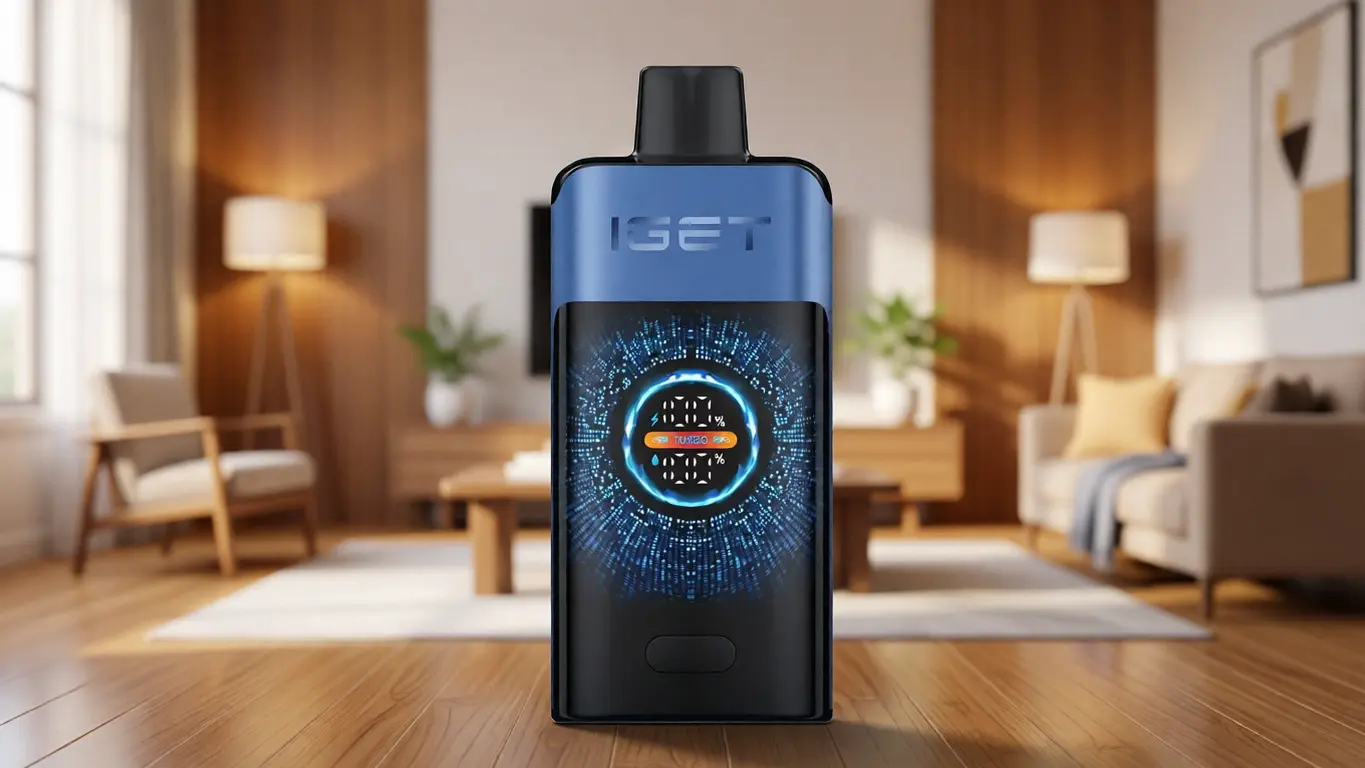
Q: Can I use my device inside the airport or on the plane?
A: No. The use of vapour devices is prohibited on board aircraft and is restricted inside airport terminals, with the exception of designated smoking areas where they exist. Cabin pressure sensors can trigger false activation, and the device’s vapour can be mistaken for smoke, causing unnecessary alarm.
Q: Do I need to notify the airline in advance if I’m carrying multiple devices?
A: For devices under 100 Wh, generally not. However, if you are carrying more than two or three units, it is courteous to mention them at check‑in. Airlines are primarily concerned with the quantity of spare batteries, and most integrated devices are treated as a single battery‑containing item.
Q: Is there any device brand or model that is universally accepted at all airports?
A: No brand can guarantee acceptance at every checkpoint worldwide because screening is ultimately a human decision within a regulatory framework. That said, devices that clearly display their compliance information — such as those from the ALIBARBAR range when accompanied by the OZVAPE Shop‑provided specification card — remove much of the ambiguity that triggers secondary inspection.
Q: What should I do if my device gets flagged at the x‑ray?
A: Remain calm. Tell the officer it is a vapour device with a sealed lithium battery, and that it is in a powered‑off/locked state. If you have the documentation, show it. Most officers will inspect it visually, confirm the battery is not accessible, and wave you through.
Q: Can I carry a vapour device in my pocket on the plane?
A: You may carry it on your person through security, but once on board, it must be stowed in your carry‑on bag or a seat‑back pocket (if permitted) for the duration of the flight, in accordance with airline policy.
Conclusion
The question “Can you take a vape on an aeroplane?” is not answered with a simple yes or no. It is answered with a clear understanding of the safety principles that govern air travel and a recognition that your own preparedness is the deciding variable. The regulations are stable and well‑documented. What changes from traveller to traveller is whether they can demonstrate compliance at the moment it is requested.
This is where thoughtful sourcing makes a measurable difference. A retailer that treats specification transparency as a baseline, not an extra, equips you with the information you need to pass through security with minimal friction. OZVAPE Shop, for example, documents the battery rating, safety certification, and operational state indicators for every ALIBARBAR device it sells, so that the choice you make at the point of purchase continues to serve you thousands of kilometres later. That kind of consistency is not a luxury; it is simply how responsible retail should work.
The right device for travel is not the one with the longest advertised runtime or the sleekest finish. It is the device whose design makes its status legible to you and to the people charged with keeping flights safe. Choose accordingly.