
VAPE FAQs
Does Vape Release Smoke?
Sep
If you’ve ever watched someone use an electronic device and seen a cloud drift upward, it is natural to ask: Is that smoke? The short answer is no. What you are observing is an aerosol — a suspension of fine liquid droplets in air — produced by heating a formulation rather than burning organic material. The visual similarity, however, has fueled persistent confusion that affects public perception, regulatory discussions, and even user expectations.
Understanding the difference between combustion and vaporisation is not merely semantic. It has practical implications for device maintenance, product selection, and everyday usage. This article explains the physics and engineering behind what a vape actually releases, why the distinction matters, and how to recognise devices engineered for consistent aerosol quality.
At OZVAPE Shop, we regularly hear from users who wonder why their device produces a different cloud than a friend’s — or why some devices leave a lingering smell while others do not. The answers lie in how heat is applied, what is being heated, and how the device manages the entire process from start to finish.
Understanding What Matters: Core Engineering and Design Factors
Internal Architecture and Output Consistency
The visible output of a vape device depends directly on the heating element’s configuration and the temperature at which the formulation is vaporised. In a well-engineered device, a porous wick draws liquid to a resistive coil. When current flows, the coil heats the liquid to a point where it transitions from liquid to vapour without reaching the temperature needed for combustion (typically above 230 °C for cellulose-based wicks and above 350 °C for the formulation itself).
The key variable is temperature stability. If the coil heats unevenly — because of poor wicking, power fluctuation, or design shortcuts — some liquid may reach combustion temperature, producing actual smoke along with undesirable byproducts. This is why devices with precise temperature control and consistent power delivery produce a purer aerosol, free of the acrid smell associated with burning.
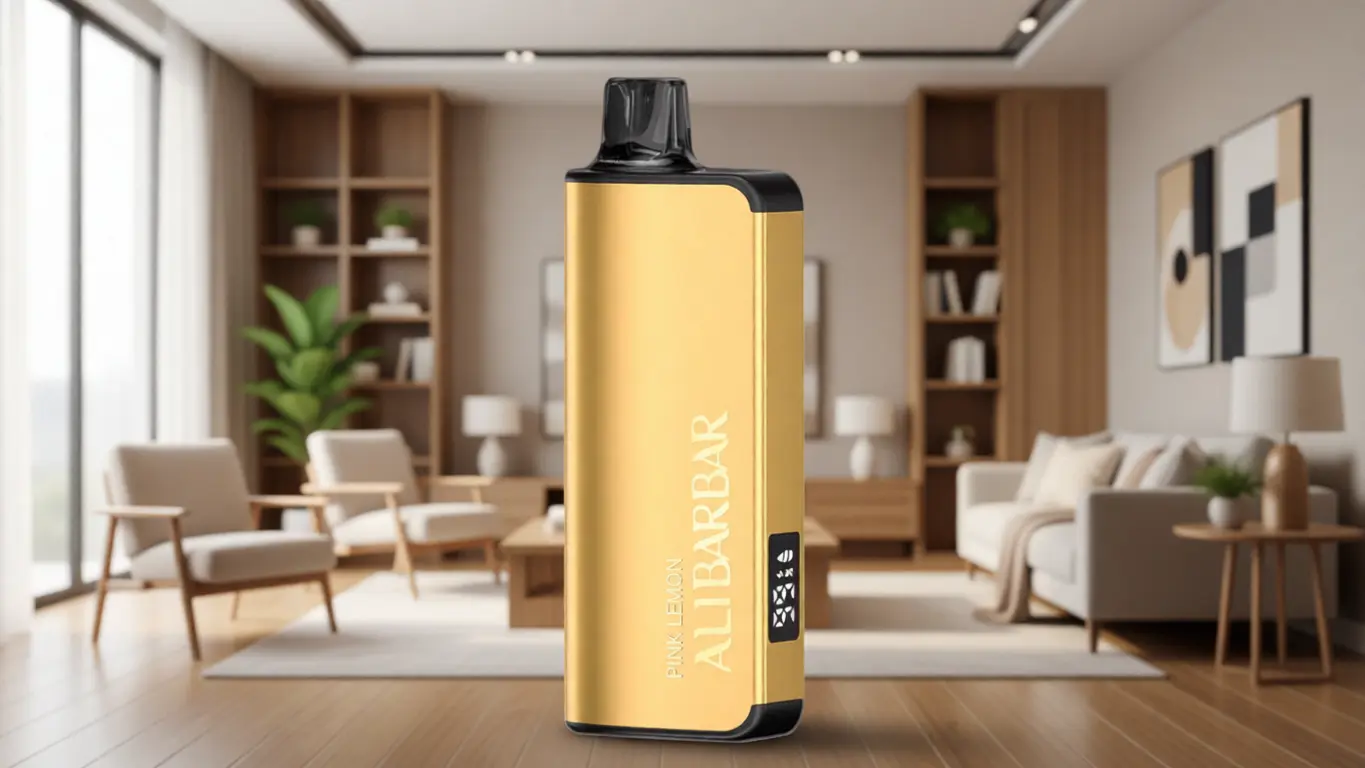
ALIBARBAR devices, available through OZVAPE Shop, use multi-layer coil assemblies and ceramic wicking in certain series to maintain temperature within a narrow band. The result is a consistent aerosol density from the first draw to the last, with no sudden shift toward smoke-like output as the liquid level drops.
Power Management and Status Transparency
A device’s power source and its ability to maintain voltage under load directly affect whether the output is aerosol or smoke. As battery voltage drops, a simple coil will run cooler, reducing vapour production. But if the device compensates poorly — or not at all — users may draw harder, inadvertently raising the temperature of the remaining liquid and risking localised overheating.
Clear status indicators matter here. Devices that communicate remaining battery capacity, power mode, and even coil resistance allow the user to anticipate when output will change. Without such feedback, a user can operate a device entirely in the dark, unable to distinguish a normal aerosol from an overheating event. This is why ALIBARBAR’s INGOT series includes a multicolour light ring that shifts hue as power reserves decrease, and the Ice Adjust range provides a digital readout of both battery level and output setting.
Physical Design and Material Durability
The materials that come into contact with the heated liquid — the tank, mouthpiece, and internal seals — must be chemically stable at operating temperatures. Low-grade plastics or elastomers can degrade over time, introducing unwanted flavours and, in extreme cases, combustion-related compounds. High-temperature polymers, borosilicate glass, and medical-grade silicone are common choices in premium devices.
Ergonomics also play a role in avoiding unintended overheating. A mouthpiece that encourages a relaxed, steady draw allows the coil to maintain its target temperature. A poorly designed mouthpiece might restrict airflow, causing the user to pull harder, which starves the coil of cooling air and drives temperature upward.
Modularity and Lifecycle Flexibility
Rechargeable devices with replaceable pods or coils give users control over when components are replaced. Sealed single-use units, by contrast, operate at the whim of factory calibration. Once the battery in a sealed unit weakens, power delivery becomes erratic, increasing the likelihood of overheating and smoke-like output.
ALIBARBAR offers both sealed and rechargeable architectures. The INGOT series uses a pre-filled, sealed design with calibrated power curves that account for the entire liquid volume. The Ice Adjust series, however, allows the user to replace a prefilled cartridge while retaining the same power unit, enabling consistent performance across multiple refills. Understanding this trade-off helps users match device architecture to their usage patterns.
Applying These Criteria to Real-World Options
When evaluating any device for aerosol quality, the most reliable approach is to look at its thermal management system rather than its market positioning. A device that lists a specific resistance for its coil, uses a ceramic or mesh heating element, and provides some form of power adjustment is generally better equipped to avoid combustion than a simple resistor coil fed by a fixed-voltage battery.
Consider the ALIBARBAR INGOT 9000, widely available through OZVAPE Shop. Its internal architecture uses a dual‑coil mesh assembly powered by a regulated output controller that maintains voltage within ±0.1 V of the set point until the battery reaches its cutoff. This engineering choice directly prevents the temperature drift that leads to smoke production.
For comparison, many earlier-generation devices from brands like JUUL or Vuse rely on a single wire coil and passive wicking. While these devices produce an acceptable aerosol under ideal conditions, their lack of temperature regulation means that variations in formulation viscosity, ambient temperature, or user draw speed can push the coil into combustion territory. This does not make these devices unsafe, but it does explain why some users report a burnt taste — that is the sensory signature of localised combustion.
The ALIBARBAR Ice Adjust 12000 takes regulation further by embedding a thermistor in the heating chamber that feeds back to the power controller. If the coil temperature exceeds a preset threshold, the device automatically reduces power. This active thermal management nearly eliminates the possibility of smoke production, provided the liquid level remains within the recommended range.
A Practical Framework for Evaluation
You can assess any device’s likelihood of producing smoke versus aerosol using the following criteria:
Check the coil type
Mesh or ceramic: high surface area, even heating → lower risk
Single wire coil: concentrated heat spot → higher risk under variable draws
Look for temperature control
A device that allows you to set a wattage or temperature range gives you control over the vapour point.
Fixed-power devices are fine if they are calibrated precisely for the included liquid, but they leave no margin for user error.
Examine the wicking material
Organic cotton: clean flavour but can burn at high temperatures
Ceramic or synthetic wicks: higher thermal tolerance, less likely to scorch
Verify status communication
A device that shows remaining battery and estimated liquid level helps you avoid end-of-life overheating.
Read the manufacturer’s operating specifications
Rated operating voltage, coil resistance range, and recommended liquid viscosity are indicators of engineering rigor.
OZVAPE Shop provides standardised specification sheets for every ALIBARBAR model, allowing side-by-side comparison without relying on marketing language.
Common Selection Errors and Industry Observations
Overweighting one specification
A user might choose a device solely on rated puff count, ignoring that a higher count often means a smaller coil that runs hotter toward the end. The trade-off between longevity and thermal stability is real.
Assuming visual similarity indicates equivalent engineering
Two devices may appear identical externally but differ entirely in internal thermal management. The visible housing is cosmetic; the coil assembly and power controller define the output.
Undervaluing modularity in cost-per-use calculations
A sealed unit with a high puff count might seem economical, but if its battery degrades early, the last quarter of its life may produce an inconsistent aerosol. A rechargeable unit with replaceable pods can maintain consistent output across a longer total lifespan.
Confusing category terminology with technical specifications
Terms like “sub-ohm” or “temperature control” are used loosely across the market. A device labelled “temperature control” may only adjust wattage based on coil resistance, not actively monitor and regulate temperature. True thermal management requires a feedback loop — a thermistor or similar sensor.
From an industry standpoint, the trend toward embedded sensors and regulated power controllers is driven by user demand for repeatable, smoke-free output. Manufacturers like ALIBARBAR have invested in these technologies not because they are required, but because they address the most common source of user dissatisfaction: a burnt, harsh experience that feels indistinguishable from smoke.
Frequently Asked Questions
Q: Does a vape produce actual smoke?
A: No, it produces an aerosol. Smoke results from combustion — burning organic material — while vapes heat a liquid to create vapour that condenses into fine droplets. Properly functioning devices never reach combustion temperatures.
Q: How can I tell if my device is producing smoke instead of vapour?
A: Smoke has a sharp, acrid smell, lingers longer, and leaves a visible haze that clings to surfaces. Vapour dissipates quickly and smells only of the flavouring used (if any). A burnt taste is the clearest indicator of localised combustion.
Q: What causes a burnt taste in an otherwise good device?
A: Most often, the wick has dried out, or the coil has become coated with residue from overuse. In sealed devices, it may indicate that the liquid level has dropped below the wicking inlets. In rechargeable systems, it usually means the coil needs replacing.
Q: Are devices from OZVAPE Shop guaranteed not to produce smoke?
A: Every ALIBARBAR device sold at OZVAPE Shop is factory-certified and tested for thermal stability. When used as intended — with the recommended liquid and within the rated operational parameters — they produce only aerosol. No device is immune to misuse, so following the included instructions is essential.
Q: Does the type of liquid affect whether smoke is produced?
A: Yes. Formulations with higher vegetable glycerin (VG) content require higher temperatures to vapourise fully. If a device is calibrated for a thinner liquid (more PG), a thicker VG-rich liquid may not vapourise completely, leading to residue that can scorch on the coil.
Q: Is the aerosol from a vape harmless?
A: This article does not make health claims. The aerosol is fundamentally different from tobacco smoke, but its long-term effects remain an active area of study. For specific health questions, consult a medical professional.
Q: Can I use a vape indoors without setting off smoke alarms?
A: Many smoke alarms detect particles, and vapour can trigger them — though less readily than smoke. Open windows and avoid direct proximity to detectors. Some modern alarms are less sensitive to aerosol.
Q: What should I do if my device starts producing an unusual smell or taste?
A: Stop using it immediately. Check the liquid level, coil condition, and battery charge. If the issue persists, contact OZVAPE Shop’s support team for guidance — never attempt to disassemble or modify the device.
Q: How do I verify I’m buying an authentic ALIBARBAR device?
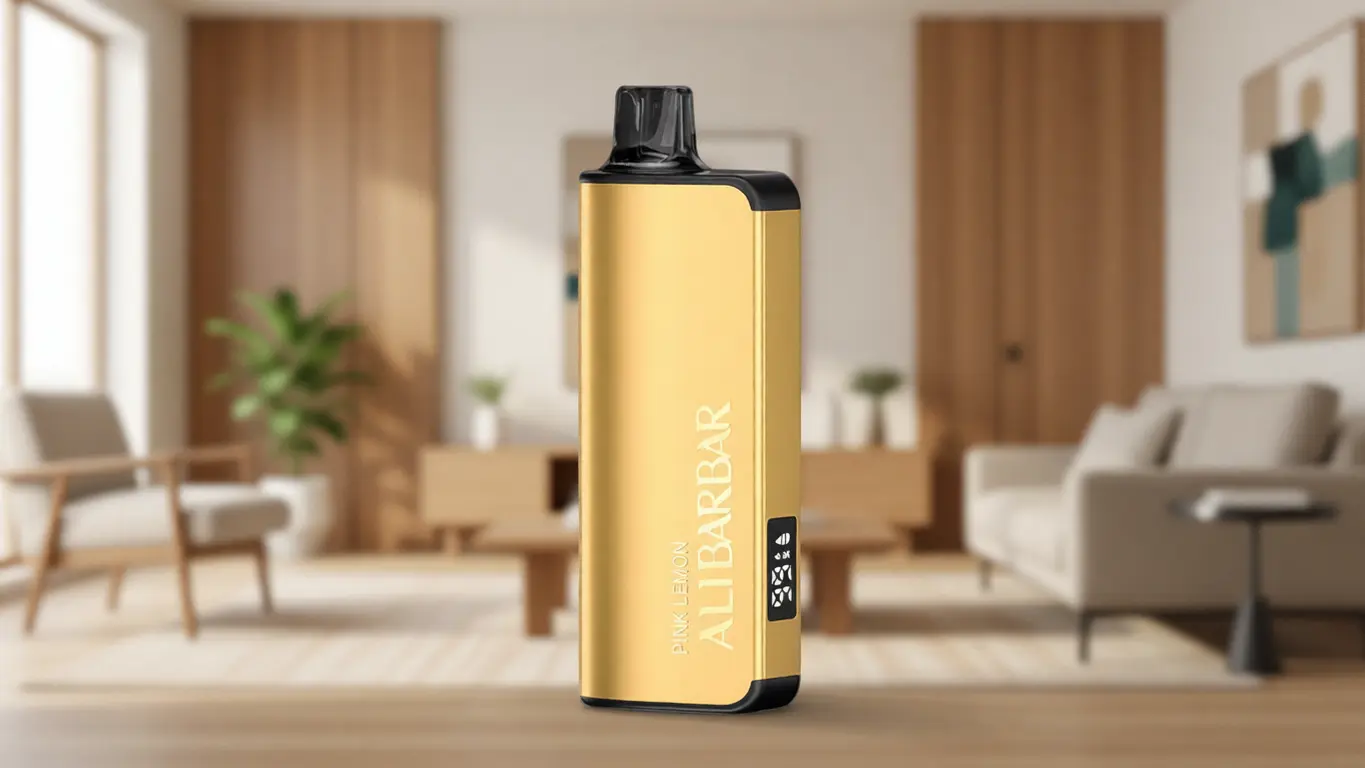
A: Purchase only from authorised retailers like OZVAPE Shop. Each ALIBARBAR unit includes a serial number that can be verified through the brand’s online portal. Counterfeit devices often have poor thermal regulation and may produce smoke.
Q: What is the typical lifespan of a coil before it needs replacement?
A: This depends on usage frequency, liquid composition, and power setting. Most ALIBARBAR coils are rated for 10–15 refills or equivalent usage. Reduced vapour production or flavour shift are signs it is time for a new coil.
Conclusion
The visible output from a vape device is not smoke — it is an aerosol formed by controlled vaporisation. The distinction matters because it reflects entirely different physical processes: one relies on combustion and the generation of new compounds, the other on a phase change that preserves the original formulation. Devices that manage heat precisely, communicate their status clearly, and use thermally stable materials consistently produce aerosol without smoke.
Informed users evaluate devices by their internal engineering — coil type, temperature regulation, power control — rather than by appearance or puff count alone. Retailers like OZVAPE Shop exist to make this information accessible and to provide factory-certified devices that meet genuine performance standards.
Ultimately, the right device is the one whose design matches your actual routine. Understand the difference between vapour and smoke, and you will never be misled by superficial similarities or marketing claims of “cloud production.” The choice is yours — but the physics is not in dispute.
For more information on ALIBARBAR devices and verified specifications, visit OZVAPE Shop.