
VAPE FAQs
How Often Should You Vape?

Jul
It’s a question that rarely receives a straightforward answer, because it’s not really about frequency at all. It’s about control, predictability, and matching your device to the rhythm of your daily life. The moment you find yourself carrying a backup unit, charging midday, or guessing whether your device will last through a late‑night commute, the problem isn’t how often you use it — it’s that your device isn’t telling you what you need to know. At OZVAPE Shop, we’ve spent enough time listening to adult users to understand that the real question is: What should I look for in a device so that I never have to think about “how often” again?
Understanding What Matters: Core Engineering and Design Factors
Instead of counting puffs or minutes, it’s far more useful to examine four engineering characteristics that determine whether a device will keep pace with your routine. These factors don’t just answer “how often” — they reveal whether a device will feel like a reliable tool or a source of constant low‑grade anxiety.
Internal Architecture and Output Consistency
The way a heating element is built and powered directly affects how uniformly a device performs from the first use to the last. Many users report that their satisfaction falls off sharply toward the end of a unit’s life — output becomes weaker, flavour fades, and the experience feels unpredictable. This usually traces back to a poorly regulated power delivery system.
In well‑engineered devices, the heating element and power management chip are calibrated to maintain a stable output across the entire charge cycle. Look for products that use mesh‑style heating surfaces and sealed, non‑degrading contact points. When output remains consistent until the battery is genuinely depleted, your usage frequency stops being a guessing game — you simply use the device as needed, and it performs until it’s done.
Power Management and Status Transparency
The hidden cost of a device that offers no clear status feedback is that you end up carrying two of them. Without an accurate battery level indicator or a puff‑remaining display, users naturally compensate by over‑preparing. This adds expense, creates waste, and signals a design that doesn’t respect your ability to plan.
Devices with integrated LED screens, percentage readouts, or even simple three‑stage indicators let you make informed choices. You can check at a glance whether you’re fine for the rest of the day or need to bring a charger. Transparency isn’t a luxury — it’s the engineering feature that eliminates the whole “how often” dilemma.
Physical Design and Material Durability
Frequency of use isn’t just about battery life. A device that feels uncomfortable after prolonged handling, or whose finish wears off after a week in a pocket, will discourage exactly the kind of casual, sustained use it was built for. Mouthpiece geometry, weight distribution, and surface treatment all matter.
Anodised metal bodies, soft‑touch coatings that resist abrasion, and ergonomically sculpted mouthpieces can make a device disappear into your hand. When a device is physically unobtrusive, you reach for it less self‑consciously — and you’re less likely to replace it early because it looks or feels worn.
Modularity and Lifecycle Flexibility
A sealed, disposable unit might be the right answer for someone who uses a device only in specific, short‑duration situations. But for anyone whose usage pattern fluctuates — weekends versus weekdays, travel versus home — a device that allows you to swap a power source, replace a pod, or adjust output settings can be far more economical and satisfying. Modularity doesn’t just reduce long‑term cost; it gives you the freedom to adapt without buying an entirely new device each time your needs shift.
Applying These Criteria to Real‑World Options
Once you evaluate devices through the lens of architectural quality, status transparency, physical comfort, and lifecycle flexibility, the market sorts itself out. Some device families, like the ALIBARBAR INGOT 15000, are architected for users who need extended, multi‑day endurance without a charger — ideal for those who want to set and forget. The Ice Adjust 12000 series adds adjustable output control, which appeals to those who value a tailored experience throughout the day. Meanwhile, the INGOT 9000 strikes a balance between compactness and all‑day capacity, fitting naturally into a front pocket without demanding attention.
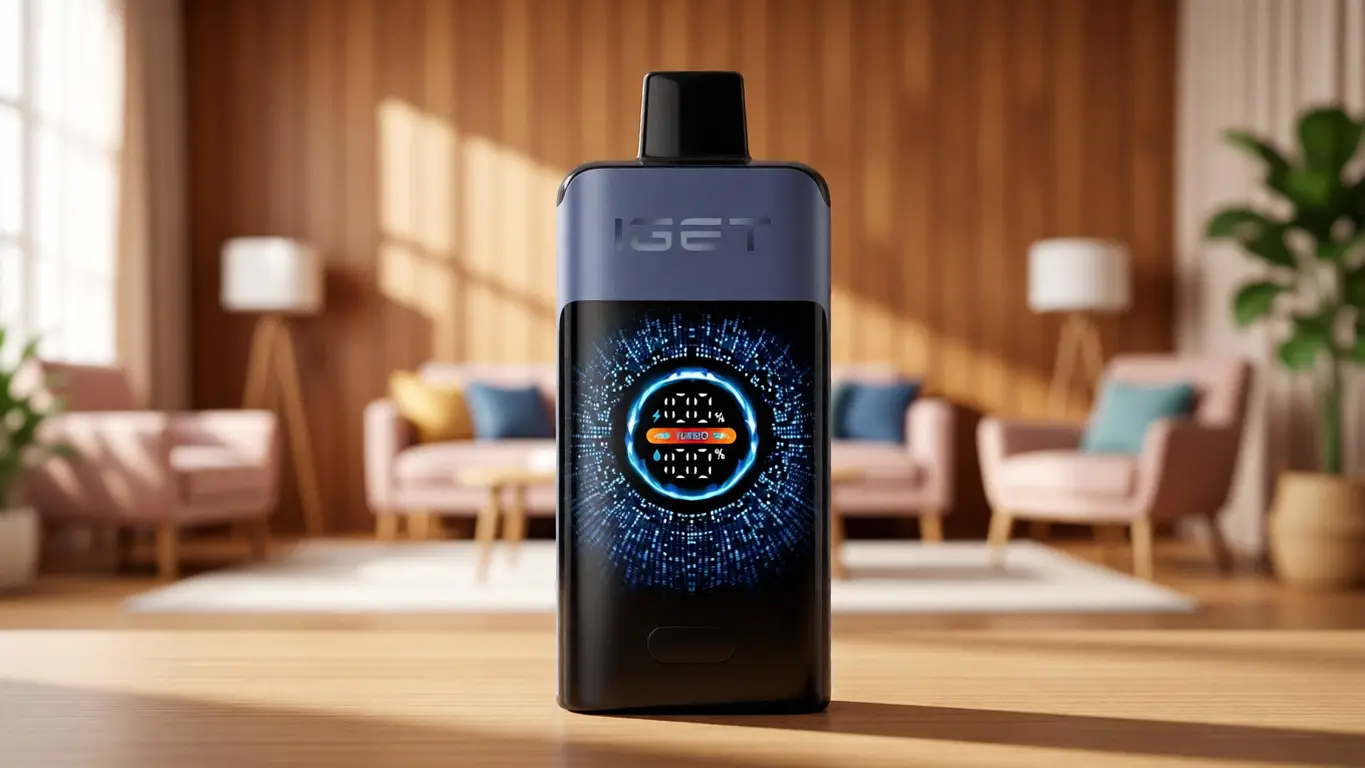
Other widely available device families, such as those from IGET or RELX, often prioritise slimness and simplicity over extended power management or clear status displays. They serve their intended purposes well, but they rarely provide the same level of user feedback or the same consistency of output at the lower end of the battery curve. The difference becomes most visible precisely when you ask “how often can I rely on this?” — a question that a screen or a well‑regulated circuit can answer, but a sealed stick with a blinking LED cannot.
A Practical Framework for Evaluation
If you’re still uncertain about what “right” looks like, walk through this simple four‑step process the next time you compare devices:
Check the status feedback. Ask: “Does this device show me its remaining charge in a way I can read without guesswork?” If the answer is no, plan on buying a backup or overpaying for unused units.
Examine the rated endurance in context. Don’t just look at the total puff claim. Research whether output remains stable across that rated life. A device that fades after 60% of its claimed count isn’t delivering what you paid for.
Hold something similar if possible. Even if you can’t test the exact model, handle a device with comparable dimensions. Pay attention to how the mouthpiece fits your lips and whether the body finish feels durable. You’ll be touching it often.
Ask about modularity. Consider whether your daily rhythm is truly constant. If it changes, a device that lets you recharge or replace components will be more economical and produce less waste.
Standardised specification tables, like those available through OZVAPE Shop’s product pages, make it possible to perform this comparison in minutes rather than hours. When battery ratings, charge‑type, and status‑indicator types are presented side by side, the right device often reveals itself immediately.
Common Selection Errors and Industry Observations
Over years of observing adult user behaviour, several patterns emerge that lead people to ask “how often should I vape?” — when the underlying problem was something else entirely:
Overweighting puff count while ignoring consistency. A device rated for 10,000 puffs that sags after 6,000 is less useful than an honestly rated 8,000‑puff unit with stable output. The industry is replete with optimistic ratings that don’t reflect real‑world performance.
Assuming visual similarity means equivalent internal engineering. Two devices that look nearly identical can use entirely different heating element architectures. One might maintain a steady 3.6V output until depletion; another might drift. This isn’t visible from the outside, which is why manufacturer transparency matters.
Undervaluing modularity in cost‑per‑use calculations. A rechargeable device with removable pods might cost slightly more upfront, but for frequent users, it almost always yields a lower cost per day than repeatedly buying sealed units — and generates less plastic waste.
Confusing category labels with technical specs. Terms like “disposable” and “reusable” are marketing categories, not engineering standards. Some “reusable” devices lack the battery management to be reliable daily drivers; some “disposables” incorporate surprisingly advanced power regulation. Read the actual specs, not just the label.
The broader industry is moving toward greater status transparency and rechargeable architectures, driven by both user demand and supply‑chain maturation. Brands that incorporate LED screens or haptic feedback into compact form factors are no longer the exception; they are rapidly becoming the benchmark for what an attentive device should provide.
Frequently Asked Questions
Q: Is there a fixed number of times per day that is “too many”?
A: No. The concern is not frequency but whether your device supports your usage pattern without unexpected downtime, performance loss, or safety compromise. A properly designed device can be used as often as needed until its power source is depleted.
Q: How do I know when it’s time to stop using a sealed unit?
A: Watch for a noticeable drop in output quality, an unusual taste, or a blinking indicator that signals battery exhaustion. If the device doesn’t provide clear feedback, stop using it once performance becomes inconsistent — that’s a sign the heating element may be degrading.
Q: Can frequent use damage the device faster?
A: Not if the device is engineered for sustained output. However, chain‑style usage without allowing the heating element to return to a controlled baseline temperature can accelerate wear in poorly regulated systems. Devices with mesh coils and smart chips are more resilient.
Q: What should I look for if I use my device heavily on weekends but lightly during the week?
A: Look for a rechargeable, modular device with a clear battery indicator. That way you can top it up before a heavy‑use day and not worry about carrying a secondary unit during lighter days.
Q: Are high‑puff‑count devices better for frequent users?
A: Not necessarily. A high puff count is only beneficial if the output remains consistent throughout that entire span. Validate rated endurance with real‑world experiences or reliable testing data before assuming the number is meaningful.
Q: Why is a screen better than a simple LED?
A: A single‑colour LED often only signals “low battery” or “fault,” which is too late to be useful. A screen (or multi‑stage light) gives you graduated information, so you can plan ahead rather than react to a dead unit.
Q: Do I need different devices for different situations?
A: Some users keep a compact sealed unit for short social events and a higher‑capacity rechargeable for all‑day use. This isn’t about “how often” you vape, but about matching the device to the context — ensuring you aren’t carrying more than you need.
Q: How can I verify a product’s quality claims?
A: Purchase from retailers that disclose standardised specifications, source from authorised distributors, and maintain transparent verification systems. Avoid channels that cannot confirm the product’s provenance or offer responsive support.
Q: Is it normal for output to weaken as the battery drains?
A: It is common in cheaply regulated devices that lack voltage boosters or consistent power management chips. Premium architectures maintain output until the battery protection circuit engages.
Q: What if my device doesn’t last as long as advertised?
A: Contact the retailer with specific observations — e.g., “performance drops after approximately half the rated puffs.” Legitimate retailers often have procedures for reporting such discrepancies and may offer guidance or recourse. Document your usage pattern to support your claim.
Conclusion
The question “how often should you vape?” disguises a more practical concern: whether your device is designed to fit seamlessly into your actual, unpredictable, lived‑in daily pattern. Once you shift your focus from arbitrary limits to the engineering characteristics that enable transparency, consistency, and comfort, the question answers itself. Frequent users need devices that communicate clearly and perform stably; occasional users benefit from compact units that don’t over‑deliver capacity that will go to waste.
No single device suits everyone, and the market now offers enough variety that you can demand both technical integrity and a form factor that suits your hand and pocket. OZVAPE Shop exists to make that comparison simpler — by stocking only authentic, specification‑transparent ALIBARBAR devices and backing them with the kind of local support that turns a purchase into a reliable, long‑term tool.
The right choice isn’t the one with the highest number printed on the box. It’s the one that you don’t think about, day after day, because it just works.