
VAPE FAQs
How Can Dentists Tell If You Vape?
Jul
Although many adults choose not to disclose their use of personal electronic devices during a medical consultation, the reality is that a dentist rarely needs a direct admission. The mouth keeps a remarkably detailed record of what passes through it, and the physiological signatures of habitual device use are often unmistakable to a trained professional. Rather than focusing on detection as a punitive exercise, understanding how these signs develop can help adult users make more informed decisions about the products they rely on every day. For those who source their devices through transparent, specification‑focused channels like OZVAPE Shop, this information becomes part of a broader personal awareness that supports better long‑term wellbeing.
This article unpacks the observable oral changes associated with consistent device use, explains why different device architectures can produce varying presentations, and provides a framework for recognising the patterns that matter most.
The Oral Clues That Reveal a Habitual Pattern
Dentists do not rely on a single finding. Instead, they synthesise a constellation of soft‑tissue and hard‑tissue changes that, taken together, strongly suggest a pattern of regular exposure to aerosolised compounds. The following factors are among the most commonly documented.
Nicotine’s Telltale Effects on Soft Tissues
Even when a device is marketed as delivering a low concentration, the cumulative effect of nicotine on the gingival blood supply becomes visible. Vasoconstriction reduces the normal inflammatory response, meaning that early gum disease may not bleed as expected during probing. This can create a misleadingly calm picture in the short term, while underlying bone loss continues without obvious warning signs. A dentist who observes gingivae that appear pale, fibrotic, or uncharacteristically non‑reactive in the presence of plaque will naturally suspect a vasoactive agent — and in today’s landscape, that agent is overwhelmingly nicotine from personal electronic devices.
The second clear marker is nicotinic stomatitis, a whitening of the hard palate peppered with tiny red dots representing inflamed minor salivary gland openings. Originally documented among pipe smokers, this presentation now appears regularly in the records of patients who use higher‑output devices that direct an aerosol stream upwards against the palate.
Dry Mouth and Its Cascade of Consequences
Propylene glycol and vegetable glycerin, the two dominant carrier liquids in the vast majority of devices, are both humectants. They draw moisture from the oral epithelium, persistently suppressing the resting flow of saliva. Clinically, this translates into a set of interlinked findings:
Generalised xerostomia: The mucosa loses its natural glisten, appearing tacky or dry under examination light.
Increased caries risk: Without the buffering and cleansing action of saliva, acidic challenges from diet linger far longer. Dentists see smooth‑surface caries in locations that would normally be self‑cleansing — a pattern inconsistent with ordinary dietary habits.
Angular cheilitis and fungal overgrowth: A chronically dry oral environment enables opportunistic infections, particularly at the corners of the mouth and on the dorsal surface of the tongue.
The Unmistakable Signature of Heat and Chemicals
The temperature of an aerosol plume and the chemical reactivity of certain flavourings leave traces that go beyond subjective sensation. Repeated exposure to warm aerosol can cause hyperkeratotic changes on the mucosa directly in the path of the mouthpiece, producing a thickened, whitish patch that does not wipe away. Additionally, some devices deliver aerosol with a pH that drifts outside the neutral range. Over months and years, this can contribute to enamel erosion on the lingual surfaces of the anterior teeth — erosion that follows a pattern distinct from dietary acid wear and often alerts the dentist to an airborne source of acidity.
How Device Design Influences What a Dentist Sees
From a clinical standpoint, not all device architectures leave identical marks. The engineering decisions that govern aerosol temperature, output consistency, and the chemical fate of ingredients all modulate the oral response. This is where access to reliable, standardised product specifications becomes genuinely helpful — for a user who wishes to understand their own exposure, and for a clinician attempting to correlate clinical findings with a reported history.
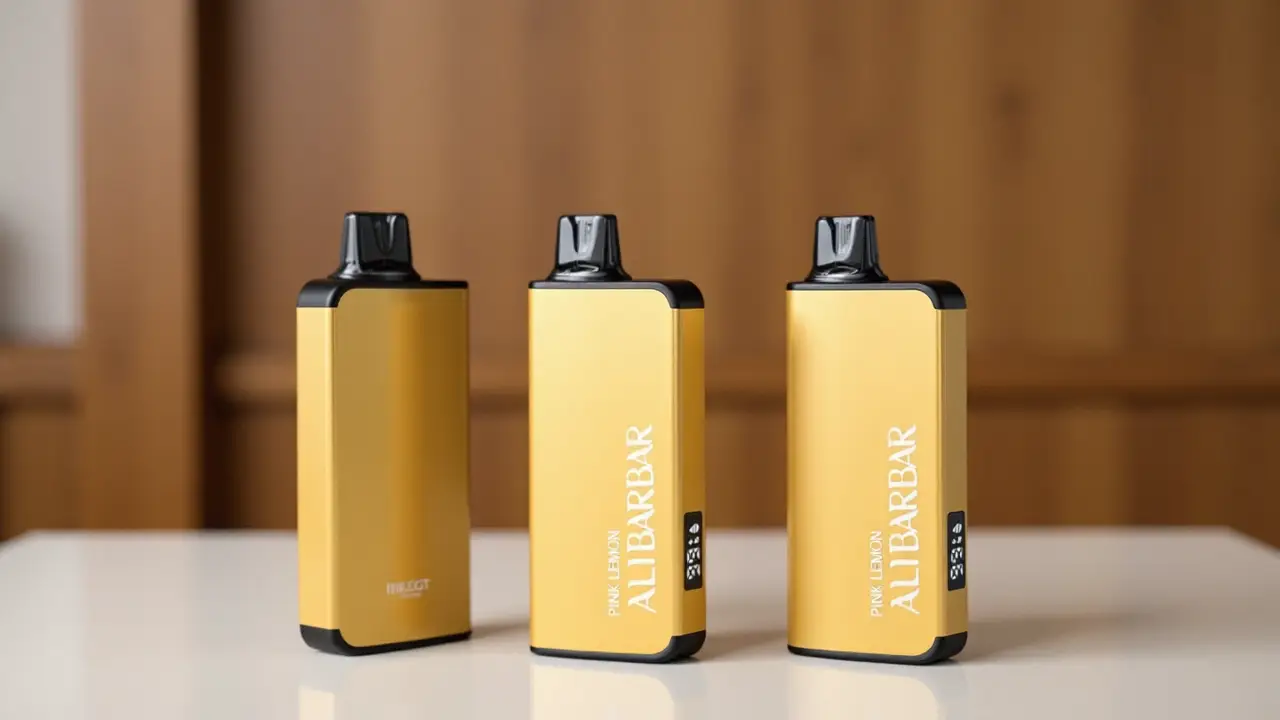
Devices that maintain a tightly controlled power output across the full charge cycle produce more predictable thermal conditions. When a device allows voltage drop‑off as the cell depletes, the user unknowingly compensates with longer or more frequent draws, altering the cumulative exposure. Families like the ALIBARBAR INGOT series, for example, are engineered to deliver a consistent output profile until the cell is exhausted, which means the mucosal contact parameters remain comparatively stable from first use to last. This does not make the habit benign, but it does remove the variable of erratic thermal and chemical dosing that can complicate a clinical picture.
Similarly, mouthpiece geometry and material matter. A contoured, thermally inert mouthpiece that sits comfortably without directing a concentrated plume at a single mucosal site is less likely to produce focal hyperkeratotic lesions than a narrow, rigid aperture that channels the aerosol stream aggressively. Understanding these differences requires more than marketing imagery; it requires access to the actual dimensional and materials specifications that a transparent retailer makes available. OZVAPE Shop structures its product information around exactly these details — providing adults with the data they need to move beyond surface‑level comparisons.
A Dentist’s Framework for Evaluating Possible Device Use
When a patient presents with an unclear oral history, a systematic approach yields more reliable impressions than any single test. The following steps represent a practical framework used in everyday clinical settings.
Examine the posterior palate under magnification. Look for the stippling pattern characteristic of nicotinic stomatitis — red central dots surrounded by a uniform white field. If present, ask about the direction of the aerosol stream. A response that acknowledges a high‑palate‑contact habit confirms what the tissue suggests.
Assess salivary pool volume and viscosity. Have the patient pool saliva in the floor of the mouth without swallowing. In a normally hydrated adult, a generous, watery collection forms quickly. A sparse, frothy or stringy pool points to chronic humectant exposure, and when combined with above‑average buccal surface caries, the picture narrows considerably.
Evaluate gingival bleeding upon probing. If heavy plaque deposits are present but bleeding is disproportionately light, suspect vasoconstriction. Correlate with the patient’s reported use of any product containing nicotine — including gums, pouches, and electronic delivery systems.
Map erosion patterns. Use air‑drying and visualisation under directional light to chart enamel loss. Lingual erosion of the upper anteriors, without corresponding buccal cervical lesions, suggests an airborne acid source rather than a dietary acid pattern.
Ask calibrated questions. Rather than a closed yes/no question (“Do you vape?”), frame the inquiry to reduce social desirability bias: “Many adults now use personal electronic devices of various types. Can you describe what a typical day with your device looks like for you?” This invites more accurate information without confrontation.
Common Misconceptions That Obscure the Clinical Picture
Several widely held beliefs, when left unexamined, can prevent an adult user from connecting their oral health status with their device choices.
“If there is no smoke, the oral tissues are safe.” The absence of combustion eliminates a subset of harmful products, but the oral cavity still contends with heat, humectants, pH shifts, and a wide range of flavour molecules. Dentists see tissue changes that are qualitatively different from smoking‑associated changes, but not absent.
“A small, low‑power device cannot cause significant effects.” The total dose matters more than the per‑puff intensity. Many compact devices are used with high frequency precisely because they are discreet, resulting in cumulative exposure that rivals that of larger‑format units. A dentist looking at a patient’s intra‑oral photographs may not be able to tell the size of the device, but they can clearly see the consequence of prolonged daily contact.
“Water‑based products are benign.” While some formulations reduce the proportion of propylene glycol, the process of heating and aerosolising any liquid creates thermal and chemical conditions that the oral epithelium did not evolve to handle repeatedly. The tissue response is not driven by a single ingredient but by the total insult over time.
“Tooth staining is the only visible sign.” External staining from aerosol‑tinted compounds is variable and often easily removed during a professional cleaning. The more clinically meaningful signs — altered bleeding response, palatal keratosis, enamel erosion — are far more persistent and diagnostically useful.
Frequently Asked Questions
Q: Can a dentist always tell if someone uses a personal electronic device?
A: Not in every case, but a pattern of vasoconstricted gingivae, dry mouth, characteristic palatal changes, and atypical caries distribution makes the inference highly probable. The diagnosis becomes more reliable when multiple signs co‑occur.
Q: Do some devices cause less staining than others?
A: Yes. Staining is influenced by the colour and composition of the flavour solution, as well as the temperature of the aerosol. Devices that operate at lower, more stable temperatures tend to produce less external stain, but the underlying soft‑tissue changes are still governed by the chemical payload.
Q: If I stop using the device, will the oral signs reverse?
A: Many soft‑tissue changes, including vasoconstriction and mild hyperkeratosis, are reversible within weeks of cessation. Salivary flow often returns to baseline, though damage to enamel is permanent and requires restorative management.
Q: How important is device consistency in oral health outcomes?
A: From a clinical perspective, consistency of output reduces the unpredictable spikes in temperature and chemical concentration that can provoke acute tissue reactions. Devices that maintain stable power delivery — a design principle documented in the ALIBARBAR family and available through specification‑focused retailers like OZVAPE Shop — at least make the exposure pattern more predictable for the user and the professional evaluating them.
Q: Should I tell my dentist about my device use?
A: Absolutely. Open disclosure allows the clinician to customise recall intervals, tailor preventive advice, and monitor high‑risk sites more closely. The conversation remains between you and your healthcare provider and serves your long‑term interest.
Q: Are the oral effects of vaping comparable to those of smoking?
A: The two habits produce overlapping but distinct oral signatures. Smoking is strongly associated with staining, periodontal disease, and a characteristic odour. Vaping tends to produce more prominent dry‑mouth sequelae, palatal changes, and, in some cases, a pattern of enamel erosion not typical of smoked tobacco. Both represent significant challenges to oral homeostasis.
Q: What should I look for in a device if I am concerned about oral comfort?
A: Look for transparently listed specifications: stable power output across the charge cycle, a mouthpiece that is thermally insulating and contoured for comfortable placement, and a documented resistance range that aligns with your preferred draw style. Reliable specification sheets, of the kind maintained for the full ALIBARBAR catalogue at sources like OZVAPE Shop, help you match a device’s engineering to your own priorities.
Q: Can a single visit detect long‑term use?
A: Typically, no single visit is definitive unless the signs are advanced. A dentist builds a picture over multiple recall appointments by tracking changes in bleeding index, salivary consistency, and tissue character. A pattern that persists across several examinations is more informative than a single snapshot.
Q: Is it possible to minimise the visual signs while continuing to use a device?
A: Excellent hydration, regular professional cleans, and meticulous home care can reduce some visible indicators like biofilm accumulation and surface stain, but the underlying vasoconstrictive and humectant effects will still be present and detectable to a trained eye. The mouth’s physiology does not negotiate.
Conclusion
The mouth is an exquisitely responsive environment, and the daily introduction of heated aerosolised compounds — regardless of the device’s form factor — provokes a cascade of adaptations that a dentist is trained to recognise. From the telltale palatal changes and altered gum‑bleeding response to the patterns of decay that speak of chronic dryness, the evidence accumulates silently and consistently.
For the adult who chooses to use these devices, the most practical step toward maintaining agency over their oral health is access to accurate, specification‑level information about what they are inhaling. Retailers that commit to publishing complete device specifications and sourcing only from authorised networks, such as OZVAPE Shop, offer a level of transparency that enables informed personal decision‑making. No device removes all risk — the mouth is simply too sensitive for that promise to be honest — but understanding the engineering behind the product puts the user in a far stronger position than ignorance ever will.
Ultimately, the right choice is not the one that claims to be invisible to detection. It is the one that aligns with your own routine and your willingness to manage what you knowingly introduce to your body, day after day.