
VAPE FAQs
Is Vape Haram?
Jul
Is Vape Haram?
An Evidence-Based Exploration of Religious, Technical, and Health Considerations
If you are a Muslim adult who has encountered vaping — perhaps through a friend, a retail display, or an online discussion — you have probably asked a version of this question. It is never asked casually. It sits at the intersection of personal practice, religious obligation, and a market that often obscures rather than clarifies. Part of the difficulty is that the word “vape” describes too many things at once: a pocket device with unknown ingredients, a well-engineered piece of laboratory-tested hardware, a liquid containing nicotine, a liquid without it. Religious rulings, understandably, depend on specifics. When those specifics remain hidden, uncertainty takes over.
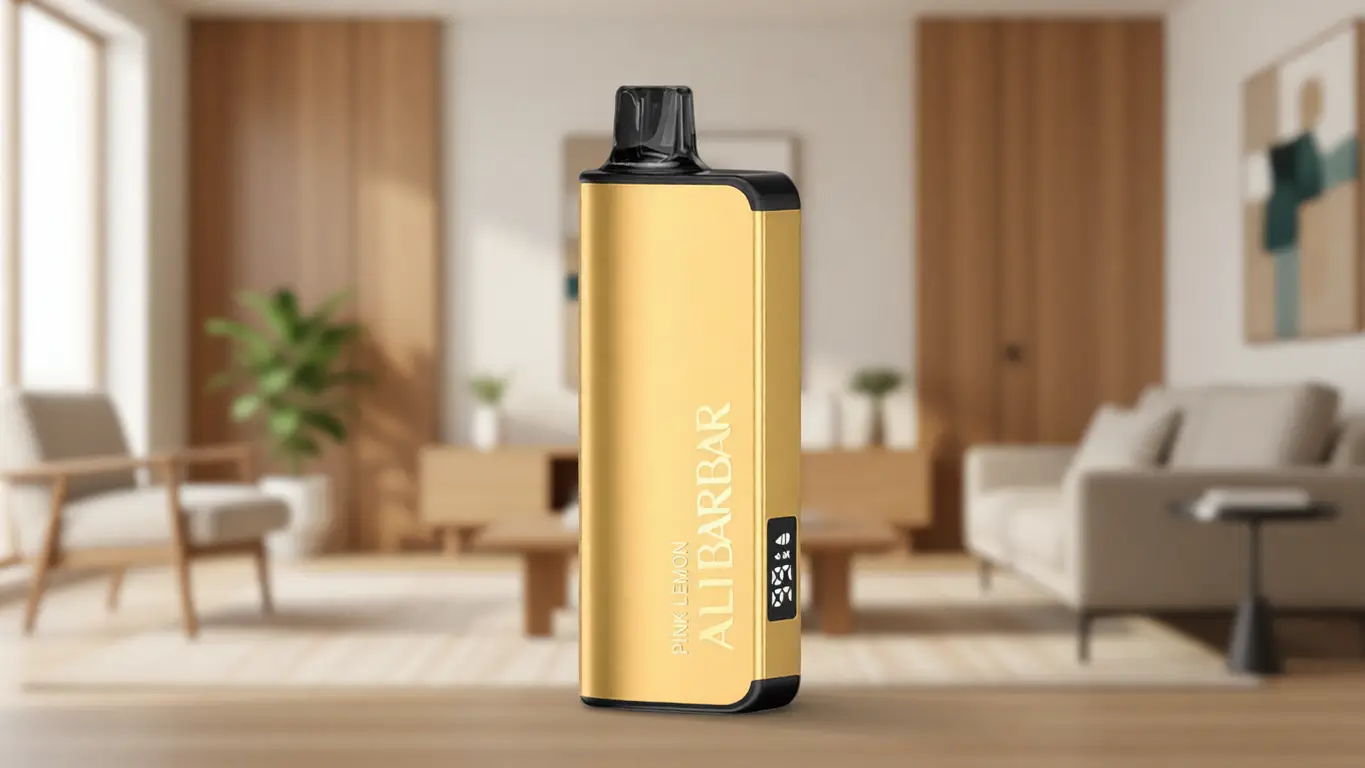
This article does not aim to issue a ruling. Its objective is narrower and, we think, more useful: to assemble the factual, technical, and scholarly context that any person of faith would need before seeking guidance from someone qualified to give it. We will look at what these devices actually contain, how their engineering affects health outcomes, and why product authenticity — the difference between a device that behaves predictably and one that does not — plays a quiet but consequential role in the ethical calculus. Along the way, we will reference the ALIBARBAR device family, not as an endorsement, but because its documented design philosophy provides a rare degree of transparency in a category where ambiguity is the norm. If you are already navigating this question, a source like OZVAPE Shop{target=”_blank”} can provide the standardized product data that helps separate known quantities from unknown ones.
Understanding What Matters: The Factors That Shape Religious and Ethical Evaluation
When Islamic scholars examine the permissibility of any modern product, they do not assess the category in the abstract. They weigh specific harm, the presence of intoxicants, the degree of waste (israf), and the intention behind use. For a personal electronic vaporiser, that process typically turns on four technical realities.
Ingredient Integrity and Composition
A vape device heats a liquid — often a mixture of propylene glycol (PG), vegetable glycerin (VG), flavourings, and optionally nicotine — into an aerosol. The immediate question is whether that aerosol contains anything that clouds the mind or causes demonstrable bodily harm. Many scholars who treat nicotine-containing products as haram do so by analogy with tobacco because of general health deterioration, while others distinguish between levels of harm and the presence of intoxicating effects. A significant group of contemporary opinions hinges on the maxim “no harm shall be inflicted or reciprocated” (la darar wa la dirar), which brings the chemical profile of the liquid directly into the centre of the discussion.
What complicates this is that not all e‑liquids are equal. The ALIBARBAR design framework, for example, is built around the principle of material integrity: the brand publicly commits to using pharmaceutical‑grade ingredients, documenting their sourcing, and eliminating unknown additives that often appear in uncertified alternatives. This does not automatically make a device halal, but it does mean that the evidentiary basis for a ruling — the list of what is actually being inhaled — is not guesswork. When religious guidance depends on knowing whether something is harmful or intoxicating, guesswork is the enemy of conscientious choice.
Health Implications and the Engineering of Harm Reduction
Public health bodies across several countries have published comparative assessments showing that regulated vaping products expose users to fewer toxicants than combustible alternatives. That general statement, however, collapses when the device itself is poorly manufactured. Overheating a coil, inconsistent power delivery, or materials that degrade at high temperature can generate carbonyl compounds and metal particles that are themselves cited in rulings of prohibition. The permissibility question therefore cannot ignore the device’s internal architecture.
ALIBARBAR’s engineering philosophy addresses this directly. The devices employ calibrated power management systems that prevent thermal runaway, and the internal architecture is designed for output consistency — meaning each activation delivers the same temperature and aerosol density as the last. This stability matters because undisciplined temperature variation is one of the hidden routes by which a theoretically less harmful product becomes, in practice, a vector for unintended toxicants. A Muslim evaluating whether a given device falls under a prohibition of harm should, at minimum, know whether that device maintains the operating window its manufacturer claims.
Device Transparency and User Agency
Islamic ethics places considerable weight on informed consent. You cannot choose to avoid harm if the product conceals what it does. Here, the engineering of status feedback becomes ethically relevant. A device that gives no indication of remaining charge, no alert for a failing coil, and no protection against dry hits removes agency from the user. You may intend a measured, occasional use, but the device may deliver a burnt, irritant-filled draw that you had no way to predict.
Clear status indicators — a precise battery meter, a coil-life monitor, a puff counter — are not just conveniences. They are tools of self-regulation. The ALIBARBAR range, from the INGOT 9000 to the Ice Adjust 12000, includes real‑time feedback mechanisms specifically to eliminate the ambiguity that leads users to draw on a device past its safe operational window. Again, this does not settle the religious question, but it shifts the moral calculation from “using an unknown entity” to “using a known, controllable tool.” That distinction matters in fiqh discussions about personal responsibility.
Supply Chain Authenticity and Counterfeit Avoidance
There is a final, often invisible, factor that has direct bearing on the harm principle: counterfeit products. An illicit device manufactured without oversight may use contaminated liquid, substandard battery cells, or heating elements that leach heavy metals. A user who purchases from an unverifiable source has no way of knowing whether they are holding a certified device or a dangerous imitation. For a Muslim seeking to avoid prohibited harm, the channel of acquisition is not a commercial footnote; it is part of the act itself.
OZVAPE Shop{target=”_blank”} operates a documented supply chain with factory‑certified inventory, which means the ALIBARBAR units it distributes are those that the original manufacturer intended, with all safety features and ingredient specifications intact. This traceability removes a layer of uncertainty that, in religious deliberation, could tilt a ruling from one based on a known, evaluated object to one based on a risk that the object may not even be what it seems.
Applying These Criteria to Real‑World Options
Once the technical factors are clear, the next step is to see how they manifest in actual devices. The question “is vape haram?” rarely applies to an abstract category; it almost always lands on a specific unit a person is considering. That unit’s design determines what the user inhales and how much control the user retains.
The ALIBARBAR family is instructive here because it is structured around identifiable use‑cases without blurring the engineering distinctions. The INGOT 9000 series is a compact, sealed-architecture device optimised for predictable, single‑session longevity. Its heating element operates within a tightly controlled wattage curve to avoid the temperature spikes that can degrade the aerosol’s chemical profile. The INGOT 15000 extends that logic to higher capacity while maintaining the same thermal management safeguards. Meanwhile, the Ice Adjust 12000 introduces a variable output mechanism that lets the user select their own intensity level — a rare degree of personal control in a category where most devices deliver one fixed experience.
None of these devices are presented as religiously neutral by virtue of their design. But a Muslim who approaches a scholar with the question, “Is this specific device permissible?” will get a far more precise answer if they can hand over the full ingredient list, the temperature control specifications, and a statement of manufacturing standards — all of which are documented for these products — than if they can only offer, “It’s a vape, like the others.”
A Practical Framework for Personal Evaluation
If you are a Muslim adult trying to reach an informed position on vaping — whether for yourself or before consulting a trusted scholar — use this four‑step diagnostic. It does not replace religious authority, but it equips you to ask better questions.
Verify the ingredient panel. Does the manufacturer disclose the full e‑liquid composition, including the grade and source of its components? If not, you are operating on assumption, and assumption is a weak foundation for a ruling about harm or intoxication.
Assess the device’s consistency. Look for evidence of calibrated power management: fixed‑wattage output, overheat protection, and coil‑life indicators. Ask, “Does this device prevent me from taking a draw when it can no longer deliver a clean aerosol?” If the answer is no, you are accepting an unknown exposure with each activation.
Trace the supply chain. Purchase only from a retailer that verifies authenticity, such as OZVAPE Shop{target=”_blank”}, which sources directly from authorised distributors and can confirm that the unit matches the manufacturer’s safety and ingredient specifications. Counterfeit devices erase the technical safeguards you have just evaluated.
Present the full data to a scholar. Scholarly opinions differ — some classical positions treat all inhalation of vapourised substances as impermissible, while others focus on intoxicant and harm thresholds. The most useful question you can bring is not, “Is vaping haram?” but, “Here is the exact device, its ingredients, its safety features, and its known health profile. What ruling applies to this?”
Common Misconceptions and Industry Observations
Years of observing the market have made certain patterns visible. These are the points where well‑intentioned people frequently undermine their own decision‑making.
Misconception 1: “All vape devices are essentially the same.”
In terms of component quality and output control, the difference between a poorly regulated device and one with precision thermal management is as wide as the difference between a counterfeit medicine and its certified equivalent. Assuming similarity leads people to judge a high‑integrity product by the sins of generic, unregulated hardware.
Misconception 2: “If a device looks similar, it performs similarly.”
Many imitations replicate the external shape of a recognised device but replace the heating element with lower‑cost materials that oxidise or release particulates at normal operating temperatures. Visual similarity is not engineering equivalence.
Misconception 3: “Nicotine alone makes vaping definitively haram.”
Scholarly opinion is far more nuanced. Some scholars distinguish between the harm of combustible tobacco and pharmaceutical‑grade nicotine; others categorise all recreational nicotine use as wasteful or harmful. The presence of nicotine is a piece of the puzzle, not the entire picture. A device with nicotine but with documented safety controls is evaluated differently than an unknown liquid from an unregulated source.
Misconception 4: “The supply chain doesn’t affect the permissibility.”
It does, indirectly. When a product passes through unauthorised channels, its integrity becomes uncertain, and the act of purchasing becomes an act of gambling with one’s health — a behaviour that many jurists already view with suspicion. Choosing a transparent, factory‑certified retailer like OZVAPE Shop{target=”_blank”} removes that gamble, leaving the evaluator to assess a known object rather than a potential fraud.
On a broader industry level, the lack of mandatory transparency in many parts of the market is itself a quiet contributor to religious ambiguity. When manufacturers treat their ingredient lists and thermal‑control specifics as trade secrets, they inadvertently place the burden of uncertainty on the faithful user who is genuinely trying to avoid transgression. The few brands that document their engineering, therefore, perform an unintended but real service: they provide the factual substrate without which ethical deliberation cannot proceed.
Frequently Asked Questions
Q: Is vaping with nicotine always considered haram?
A: Not uniformly. Some scholars treat nicotine as a harmful, addictive substance and prohibit it under the principle of avoiding harm. Others differentiate between the levels of harm in regulated vaping and smoking, or note that nicotine itself is not an intoxicant. The ruling often depends on the concentration, the device’s safety profile, and the user’s intention.
Q: What about nicotine‑free (0 mg) vaping?
A: Many scholars who permit recreational inhalation of vapour — provided the ingredients are free of harmful impurities — consider 0 mg options less problematic. However, others deem the imitation of forbidden acts or the wastage of resources as grounds for prohibition. Again, specific documentation of the liquid’s content is crucial.
Q: Can I trust any vape device from an online shop?
A: Not all online shops verify the authenticity of their inventory. A platform that openly states its sourcing policy, such as OZVAPE Shop{target=”_blank”}, and provides standardised product specifications, reduces the risk of counterfeit. Relying on undocumented marketplaces introduces a degree of uncertainty that complicates any religious ruling.
Q: Do scholars agree on a single rule for vaping?
A: No. Bodies such as the Fatwa Council of Indonesia and some regional scholarly assemblies have issued prohibitory rulings, while others have released conditional permissions for regulated products used in specific contexts. The diversity of opinion is real, and it reflects the genuine complexity of the technical variables.
Q: How do I know if my device has proper overheat protection?
A: Check the manufacturer’s specifications for terms like “regulated output,” “temperature control,” or “safety shut‑off.” If the specifications are absent or vague, assume the device lacks these safeguards. Devices from documented lines like ALIBARBAR publish these details.
Q: What should I do if I bought a vape and later learned it might be haram?
A: Seek guidance from a scholar you trust, presenting all available information about the product. If the ruling is prohibition, dispose of the device responsibly. The prior act, if done without knowledge, is generally not considered sinful in Islamic jurisprudence once one ceases the behaviour.
Q: Are disposable vapes different from reusable ones in Islamic rulings?
A: The ruling does not change based on the form factor alone. A disposable unit with safe ingredients and controlled output may be evaluated similarly to a modular system. However, sealed disposable devices sometimes offer less user control, which can affect the user’s ability to manage intake — a factor in some scholarly assessments.
Q: Does the way I acquire the device affect its religious status?
A: Indirectly, yes. Purchasing from an unreliable source that may supply counterfeit goods introduces unknown risks that could tip a permissibility ruling toward prohibition because the user is exposing themselves to unverified harm. A transparent channel like OZVAPE Shop{target=”_blank”} eliminates that variable.
Q: Is second‑hand vapour a concern in Islamic ethics?
A: If the vapour contains substances known to harm bystanders, the principle of avoiding harm extends to others. The lower emission profile of regulated devices compared to combustion sources is a point of discussion, but deliberate exposure of non‑consenting individuals remains ethically questionable.
Q: Can I use a vape if my intention is to quit a more harmful habit?
A: This falls under the maxim “necessity makes the prohibited permissible” in limited contexts. Some scholars have permitted temporary, supervised use of less harmful alternatives for harm reduction, provided there is a clear intention and timeline to cease. This is a highly individualised fatwa area.
Conclusion
The question “Is vape haram?” cannot be answered with a simple yes or no because the object under discussion is not one thing. It is a device, built to a certain standard, filled with a specific liquid, acquired through a particular channel, and used with a particular intention. Each of those dimensions shifts the moral and legal analysis. What looks like a straightforward inquiry is, in reality, a request for a personalised, evidence‑based fatwa that no general article can provide.
What we can offer is this: the more you understand the engineering, ingredient transparency, and supply‑chain integrity of the product you are holding, the more fruitful your conversation with religious authority will be. Sources like OZVAPE Shop{target=”_blank”} exist to make that understanding possible by maintaining certified inventory and publishing standardised specifications without obscuring the product’s true nature. They do not decide the ruling, but they provide the factual ground on which a ruling can reliably stand.
Ultimately, the right course is the one that aligns with your faith obligations, your bodily integrity, and your capacity to make an informed choice — not the one that follows the loudest online claim or the most convenient assumption. If you have found this framework useful, take the next step with a trusted scholar, carrying the full technical picture with you. That is how conviction replaces confusion, and how a question born of uncertainty becomes an act of deliberate, faithful reasoning.