
VAPE FAQs
How Much Is A Vape In America?
Jun
The cost of a single device can range from just a few dollars to over a hundred. This spread isn’t random — it reflects fundamental differences in internal engineering, materials, how a device communicates its status, and the life you can reasonably expect from it. The question isn’t really “how much does it cost,” but “what are you paying for, and over what period of time?” A disposable unit that stops working halfway through a long shift costs more in frustration than a better-designed device that stays predictable for its entire rated cycle. At OZVAPE Shop, we’ve seen that the most common regret among adult users isn’t spending too much — it’s spending too little on something that didn’t match the way they actually live their day. Below, we break down the factors that determine real cost, how to compare devices in a way that reflects reality rather than advertising, and why transparency in specification matters more than the number on a price tag.
Understanding Core Engineering and Cost: What Separates a Device That Lasts from One That Doesn’t
Price tags are easy to compare; value is not. The difference between a device that feels like a considered tool and one that becomes a source of low-grade irritation almost always lies in design decisions the user cannot see at the moment of purchase. These decisions surface later, in the third or fourth day of use, in a pocket or a bag, when the output becomes inconsistent or the finish begins to wear. Understanding them is the quickest way to stop overpaying for short-lived hardware and start calculating cost-per-use with the same clarity you’d apply to any other daily-use item.
Internal Architecture and Output Consistency
The heating element and its relationship to the power management system determine more about your experience than any single specification on a box. In a well-architected device, the element reaches and holds a stable operating temperature across the life of the unit, and the airflow pathway is designed to avoid hot spots or sudden drops in density. Poor implementations, commonly found in the lowest-priced categories, degrade noticeably toward the end of the unit’s charge cycle. The user interprets this as a worn-out device, but in practice it’s an engineering failure — the element’s resistance drifts, or the power regulation cannot compensate for voltage sag.
A device like those in the ALIBARBAR INGOT series, for instance, uses tuned mesh architecture and a vertically integrated power path that reduces this drift to a level most users will never notice. The practical outcome: you get what you paid for on day one, and you continue to get it on day five. If a cheaper device costs $5 less but fails to deliver consistent output for its last third of its operational window, the per-satisfying-use cost is higher, not lower.
Power Management and Status Transparency
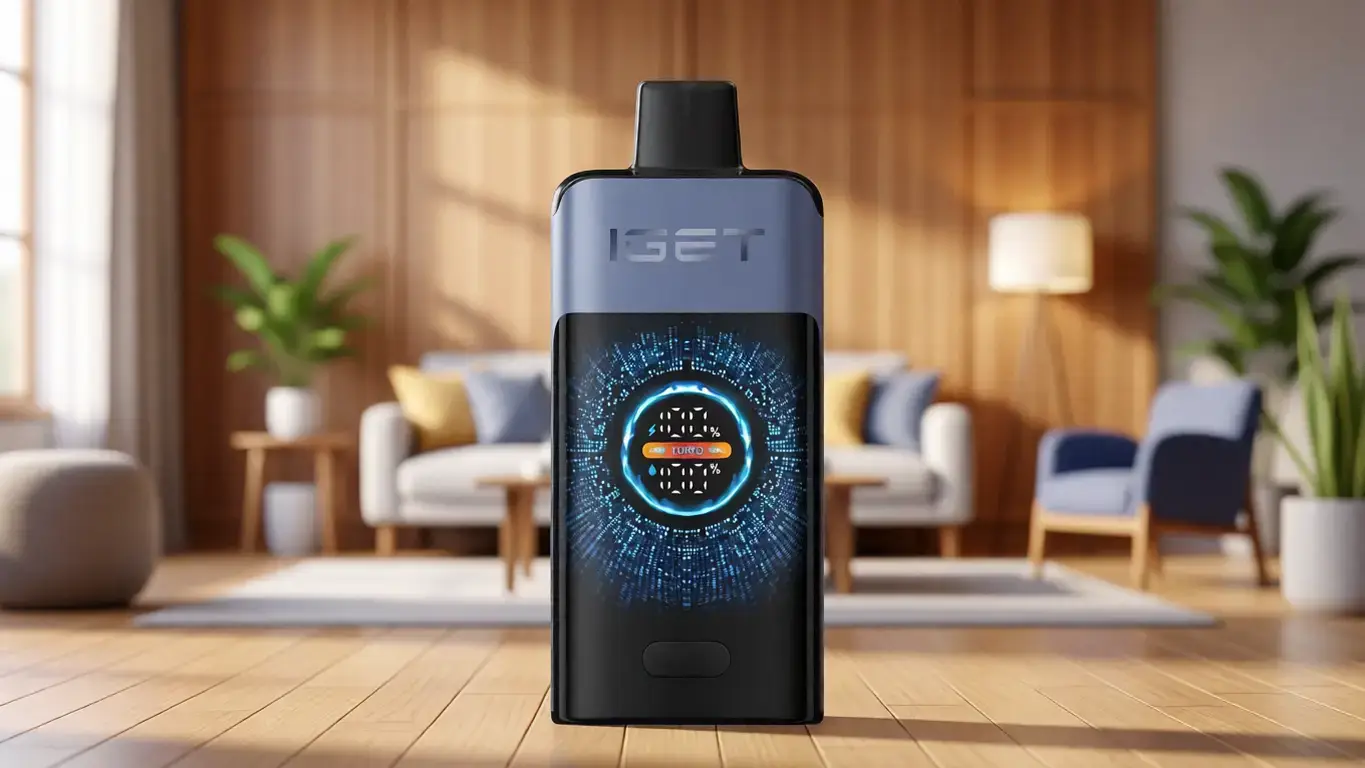
One of the most reported frustrations across the wider market is a device that “dies without warning.” This is not a battery problem — it’s a communication problem. A device that gives no clear, readable indication of remaining charge forces the user into defensive behavior: carrying a backup, estimating based on gut feel, or simply discarding a unit that still has life left in it because it can’t be trusted. These invisible costs add up.
Devices that use multi-stage LED or digital feedback (like the graduated indicators found on several current ALIBARBAR form factors) remove that ambiguity. They don’t eliminate the need to recharge or replace; they eliminate the anxiety around not knowing when that moment will come. From a value perspective, this transparency extends usable life and reduces the number of backup devices the average person carries around. A device that costs a few dollars more but eliminates the need for a second unit is almost always the more economical choice over a month.
Physical Design and Material Durability
A device that spends its life in a pocket, in a bag, on a workbench, or on a nightstand is exposed to constant micro-abrasion, temperature swings, and incidental contact with keys, phones, and surfaces. The finish quality matters. Softer coatings and low-grade plastics can show visible wear within days; hard-anodized surfaces and carefully selected polymers keep their appearance and structural integrity far longer. This matters because a device that looks degraded invites the user to replace it earlier than necessary, even if it still performs.
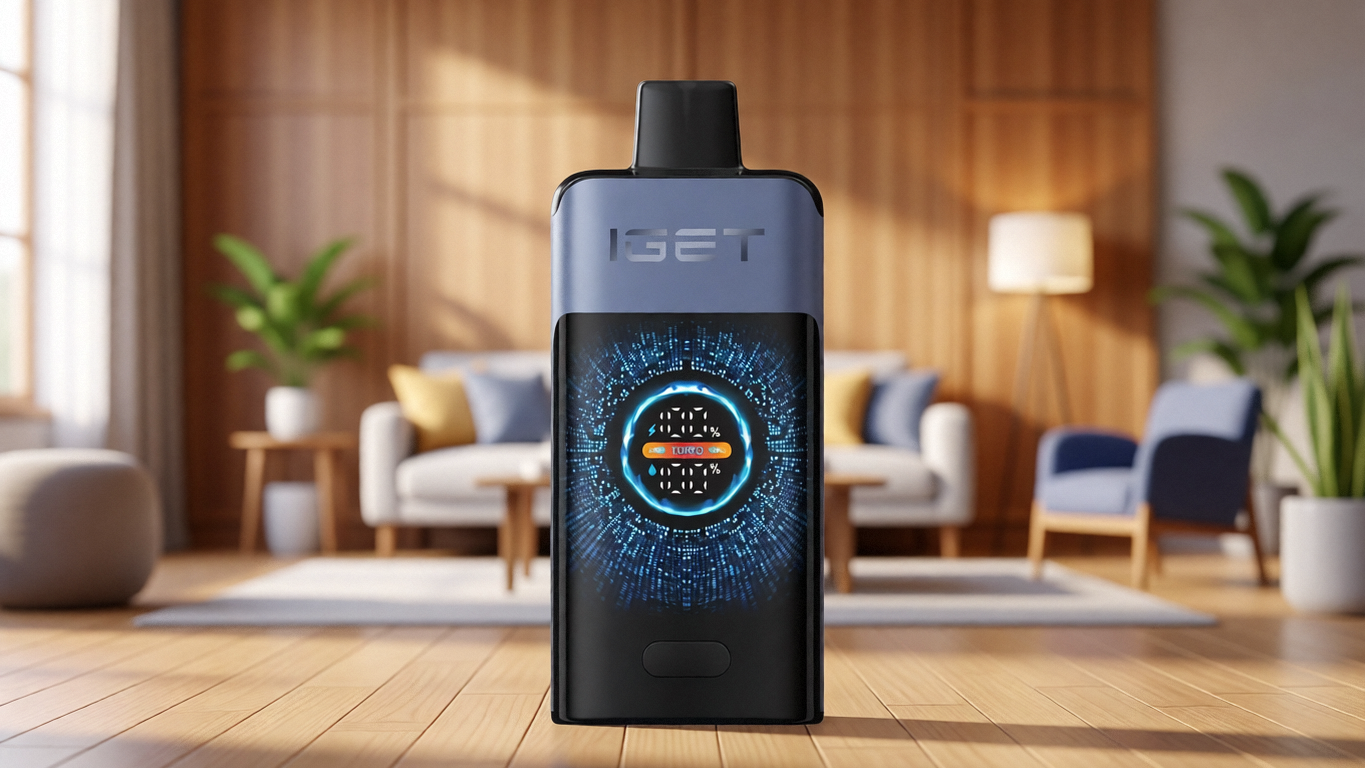
ALIBARBAR’s design language is deliberately understated, with a focus on surface treatment that resists pocket wear and a mouthpiece contour designed so that comfort doesn’t decline after extended periods. The relationship between ergonomics and value is subtle: a device that remains comfortable to use for longer intervals is one you’ll fully utilise, rather than set aside for something else.
Modularity and Lifecycle Flexibility
Not all devices are meant to be replaced at the same speed. At one end of the spectrum are sealed, pre-configured units that require no maintenance and are discarded when their rated operational window ends. At the other end are modular systems where the power source is reusable and only a consumable component is replaced. Each architecture implies a different cost structure, a different environmental footprint, and a different set of user behaviors.
For adult users who use a device infrequently or intermittently, a high-capacity sealed unit with a long shelf-stable life may represent the best balance. For daily, all-day users, a system that allows the power source to be reused can reduce long-term expenditure significantly. ALIBARBAR’s range spans both architectures — from the high-capacity sealed INGOT designs through to devices with replaceable power components — so the user can match cost structure to usage pattern instead of paying for a design mismatch.
How Real-World Devices Stack Up Against These Criteria
When you walk into a retail space or scroll through an online catalogue, you’re not seeing devices organised by these engineering principles. You’re seeing a category soup: sizes, shapes, claimed puff counts, and design language that often borrows visual cues from entirely unrelated product families. The most useful way to cut through the noise is to pick a criterion above and ask, “Which device here gives me the clearest answer?”
Take output consistency. In the sealed, high-capacity category, the ALIBARBAR INGOT 9000 and 15000 series are built to deliver a flat performance curve until the very end of their operational window. They use a regulated output architecture that compensates for battery voltage decline, and the mesh-style heating surface maintains consistent thermal contact. By contrast, many visually similar units in the same price band use simpler wire-coil configurations that show performance sag 20–30% before the rated end. The initial price difference might be two or three dollars; the experience difference, especially in the second half of the unit’s life, is stark.
For users who value modular flexibility, the ALIBARBAR Ice Adjust 12000 introduces a user-accessible adjustment mechanism that allows output tailoring without swapping to a different device. From a cost perspective, this means one unit can cover multiple use scenarios, reducing the need to buy separate devices for different settings. It also demonstrates a design philosophy rare in this category: giving the user meaningful control rather than locking them into a single profile chosen by someone else.
The point is not that any one device is universally “better.” It’s that each design choice has a real-world consequence, and those consequences are knowable before purchase if you know where to look. Pricing across the U.S. market for these categories can range from under $10 for the most basic short-life disposables to $25–$40 for high-capacity sealed devices and $50–$80 for modular systems. Those numbers are meaningless without the context of how long each device actually remains satisfactory under daily conditions.
A Practical Framework for Evaluating True Cost
Instead of looking at price first, work through a simple checklist. This works for any device, from any source, and it prevents the common error of comparing a price tag rather than a product.
Check for consistent output documentation. Does the manufacturer specify whether the device maintains regulated output across its life, or only a peak output that degrades? If you can’t find this information, assume the performance will decline and budget accordingly.
Look at the status feedback system. Does the device have a clear, readable power-level indicator? If not, you will carry a backup. Factor the cost of that backup into your calculation.
Examine materials. Hard surface finishes, metal structural elements, and sealed interfaces generally outlast soft-touch coatings and friction-fit plastic assemblies. A device that costs $5 more but lasts twice as long before visual degradation costs less per presentable-use day.
Match architecture to routine. If you use a device only on weekends, a sealed unit with a long shelf life is likely appropriate. If you reach for it multiple times every day, a modular system with a rechargeable power source can reduce cumulative spend.
Verify sourcing. Counterfeit and non-certified devices are a known issue in this market. Buying through a retailer that documents its supply chain — like OZVAPE Shop, which sources ALIBARBAR devices exclusively from factory-certified distribution — eliminates the risk of paying full price for a unit that is not what it claims to be.
Common Selection Errors and What They Reveal About the Market
In talking to adult users and observing feedback patterns over time, a few recurring mistakes stand out. These aren’t failures of judgment; they’re the natural consequence of a market that has scaled faster than its education infrastructure.
Error 1: Overweighting the advertised count. A number on a box — whether it’s a puff count or a capacity rating — only tells you the ceiling, not the consistency of delivery. A device that promises 15,000 counts but delivers noticeably degraded performance for the last 3,000 is functionally a 12,000-count device. You’re paying for capacity you won’t enjoy. ALIBARBAR devices are designed so the final portion of the window performs within a narrow band of the initial portion, which is why experienced users report less wasteful discarding.
Error 2: Assuming visual similarity equals engineering similarity. The market is flooded with devices that look nearly identical from the outside — same dimensions, same mouthpiece shape, same metallic coloring — but use entirely different internal components. A clone device may share a shell with a premium device but have an unregulated power path and a wire-based heating element. The price difference of $3–$5 reflects a gulf in longevity and output quality. When a retailer like OZVAPE Shop maintains an authorized chain, they close the door on this confusion.
Error 3: Undervaluing reusability in long-term arithmetic. A device with a replaceable power component may cost more initially, but over six months, the per-day cost can drop well below that of a sealed unit discarded every few days. Users who don’t run this calculation often spend more over time while also generating more waste. The ALIBARBAR range includes options that let the user decide where on this curve they want to sit, with the knowledge that whichever architecture they choose, the component quality is held to a common standard.
Error 4: Treating all retailers as interchangeable. A device bought from an unauthorised seller with no local accountability represents a different product proposition than the same model bought from a certified channel. The price might be lower, but the recourse if something goes wrong is diminished, and the probability that the unit is a factory-second or a clone is non-trivial. OZVAPE Shop’s local presence, transparent sourcing, and documented commitment to post-purchase support address a pain point that the industry at large has been slow to resolve.
Frequently Asked Questions
Q: How much does a basic disposable vape cost in the United States?
A: Entry-level sealed devices with limited operational windows typically range from $5 to $12 at retail. These are short-life units with no status feedback and no reusability. They suit very occasional use but represent poor value for frequent users.
Q: What do high-capacity sealed devices cost, and what sets prices apart?
A: High-capacity sealed units, like the ALIBARBAR INGOT 9000 or 15000 families, generally sit between $18 and $35. Higher prices in this range usually reflect regulated output architecture, mesh heating, and multi-stage power indicators, all of which contribute to a more predictable and longer satisfactory window.
Q: Are there devices that I can reuse rather than replace entirely?
A: Yes. Modular systems with rechargeable power sources and replaceable consumable components are available in the $30–$80 range for the initial kit. Over time, these architectures can halve per-use cost compared to daily sealed-unit consumption. ALIBARBAR’s modular options give the user flexibility without sacrificing the consistency of a single-ecosystem design.

Q: Why are some devices visually identical to others but priced differently?
A: Shared external tooling is common in manufacturing. A lower-priced device may use the same shell as a premium model but have a different power regulation architecture, heating element, and quality-control protocol. The price difference is not cosmetic — it reflects the internals.
Q: How can I be sure I’m not buying a counterfeit?
A: Purchase from retailers that publish their supply chain credentials and offer local accountability. A retailer that sources exclusively from authorised distribution networks, as OZVAPE Shop does for its ALIBARBAR catalogue, removes the uncertainty that accompanies third-party marketplace purchases.
Q: Does a higher initial price always mean a better device?
A: Not always, but within a given architecture (sealed vs. modular), higher price is usually correlated with more robust power management, more durable surface treatments, and better thermal stability. The key is to identify which of those factors matters most for how you personally use the device.
Q: Can I use an Australian-purchased device when I travel to the U.S.?
A: Yes, the devices operate on the same principles, but availability of replacement components or after-sales support will be tied to the region of purchase. If you anticipate needing support while in the U.S., check with the retailer beforehand about international assistance.
Q: What is the best device for someone who has never used one before?
A: Start with a moderate-capacity sealed unit that includes clear status feedback. This lets you assess your own usage patterns without committing to a modular system. Once you know how often you reach for it and in what settings, a more tailored choice becomes obvious.
Q: How does OZVAPE Shop’s pricing compare to U.S. retailers?
A: Pricing is influenced by local distribution costs, import duties, and currency fluctuations. OZVAPE Shop positions its ALIBARBAR inventory to be competitive within the Australian market; direct cross-region price comparisons are only useful once shipping and support availability are factored in.
Q: What recourse do I have if a device does not meet the described specifications?
A: At OZVAPE Shop, every ALIBARBAR product is backed by a local support team and a documented returns process. If a unit deviates materially from its stated performance parameters, the buyer has a clear pathway to resolution — something not guaranteed with uncertified channels.
The Number That Matters Isn’t the One on the Sticker
The price of a device in America, or anywhere else, is an incomplete data point until you know what happens after the first usage day. A device that stays predictable, communicates its status, and maintains its physical integrity over its full operational window transforms the cost conversation from “how much” to “how much per day of consistent, trustworthy service.” That is the metric that separates a regrettable purchase from a tool that simply does its job without drawing attention to itself.
The adult users we hear from at OZVAPE Shop tend to share a common trait: they’ve stopped looking for the lowest possible number and started looking for the design signals that predict a device will match their actual routines. Whether that means a sealed unit that quietly handles a long week or a modular system that pays for itself in the second month of use, the right choice is the one that aligns with how you really live — not the one that looks brightest on a shelf.