
VAPE FAQs
How To Blow Vape Out Of Nose?
Jun
Exhaling vapour through the nose – often called retrohaling or “nose exhale” – is a technique that many adult users adopt to better perceive the character of what they are using. It is not just a casual trick; done correctly, it can reveal layers of flavour that a standard mouth exhale obscures. However, it also introduces new demands on the device: harsh, hot, or inconsistent vapour can make the experience deeply unpleasant. This article examines what makes nasal exhaling comfortable, what device characteristics matter, and how to evaluate equipment with this use case in mind. OZVAPE Shop provides a reference point for understanding how factory‑certified devices in the ALIBARBAR range address these technical requirements, but the focus remains on the engineering principles themselves.
Core Engineering Factors That Determine Nasal Exhale Comfort
When vapour passes through the nasal passages, the mucosal surfaces are far more sensitive to temperature, particle size, and chemical irritation than the mouth. A device that feels entirely acceptable on an oral draw can become aggressive or even painful when the same vapour is directed through the nose. The following factors are not marketing points; they are measurable physical properties that directly affect comfort.
Mesh Heating Elements and Aerosol Consistency
Traditional wire‑coil heating elements often produce a narrower range of aerosol particle sizes and can develop hot spots as power fluctuates. Mesh‑type heating surfaces, by contrast, distribute thermal load across a larger, flatter area. This yields two practical benefits for nasal exhaling:
Finer, more uniform aerosol particles are less likely to trigger a brisk irritation response on contact with nasal tissue.
The heating surface temperature stays more consistent over the duration of a draw, avoiding the “spike” of heat that can occur at the end of a longer pull.
Why this matters: Many users report that the most disagreeable aspect of nose exhaling is not the initial draw but the sensation that builds after the first second. A mesh‑based heating element mitigates that by delivering a steadier thermal output throughout the activation cycle.
Airflow Control and Vapour Cooling
Even with a well‑designed heater, vapour temperature at the exit point can be uncomfortable if there is no effective way to mix ambient air into the stream. Devices that allow the user to adjust airflow – either through a mechanical slider or through multiple intake configurations – give real control over the temperature and density of the aerosol reaching the nose.
When airflow is opened wide, more cool air is drawn in, reducing the temperature of the vapour parcel. Conversely, restricting airflow can intensify warmth and density, which some users may prefer but which risks nasal discomfort. The key is that the option to tune the airflow is present. Without it, the user is stuck with a single thermal profile that may or may not suit nasal exhaling on a given day.
Output Stability and Anti‑Burn Protection
Devices that cannot regulate output across their operational life will, at some point, overheat the heating surface. That produces a noticeable shift in vapour quality – acrid notes, a peppery sensation, and a harshness that translates directly into painful nasal irritation. Sophisticated power management circuitry that monitors resistance in real time and prevents the heating element from exceeding a safe temperature envelope is not a luxury; it is foundational for anyone who frequently retrohales.
Mouthpiece Design and Physical Comfort
The shape and thermal insulating properties of the mouthpiece may seem minor, but they influence how vapour enters the oral cavity and subsequently gets directed toward the nasal passages. A smooth, contoured mouthpiece that sits comfortably on the lips encourages a relaxed seal, allowing the user to modulate pressure and flow without strain. A hard‑edged or narrow tip can force the user into an unnatural lip position that subtly changes the velocity and trajectory of the vapour, occasionally contributing to a sharper hit in the back of the throat.
Applying These Criteria to Real‑World Devices
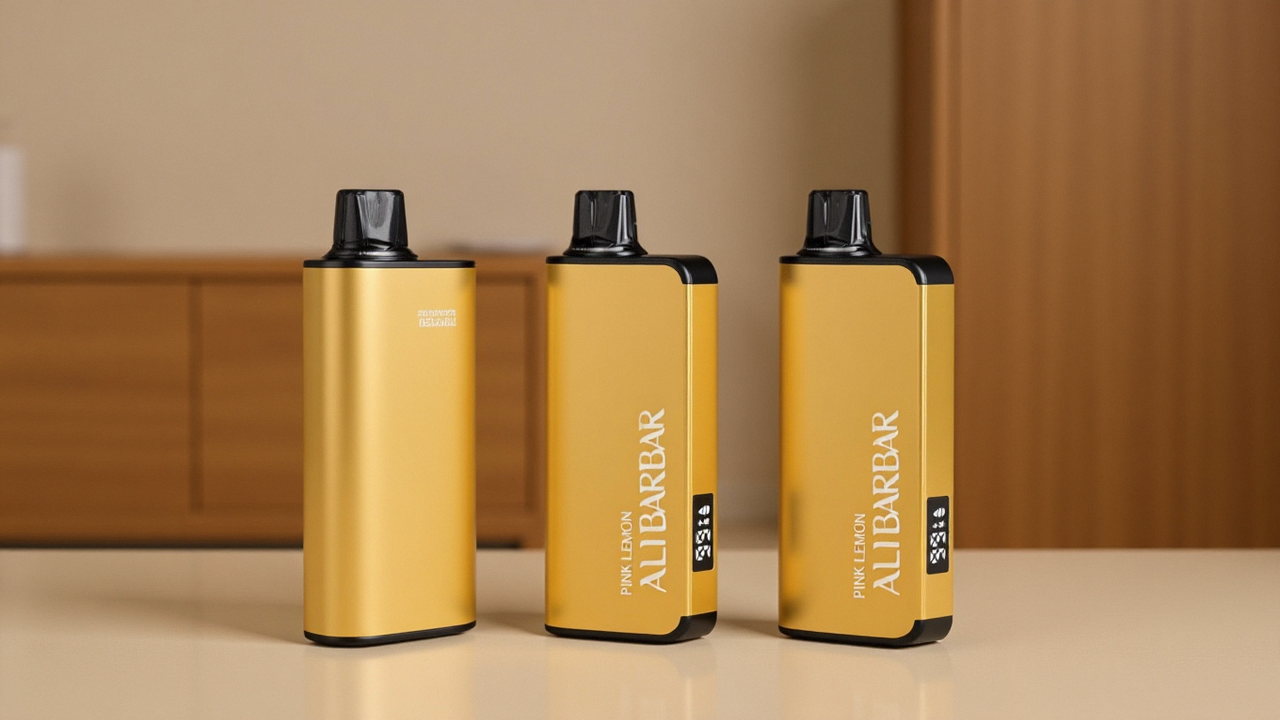
When these engineering factors are used as a diagnostic lens, certain device families become easier to assess for compatibility with nasal exhaling. The ALIBARBAR range, available through authorised channels such as OZVAPE Shop, offers instructive examples because its models are built around consistent output, mesh heating technology, and user‑adjustable features.
The Ice Adjust 12000 demonstrates the impact of adjustable airflow. Its mechanical airflow control lets the user shift between a tighter, warmer draw and a much more open, air‑cooled one. For someone who wants to reduce nasal irritation, opening the airflow to the widest setting can lower vapour temperature enough to make a material difference in comfort. The device also runs on a mesh heater, so the aerosol itself remains relatively fine and stable.
The INGOT 9000 and INGOT 15000 families address a different, but related, requirement: sustained performance over a long service life. A device that performs well on the first 200 draws but degrades noticeably after 500 draws will eventually produce harsh, inconsistent vapour – exactly the kind of surprise that ruins a retrohale session. These units are built with power management algorithms that resist output drift, and their large e‑liquid reservoirs and high‑capacity power cells are designed to maintain consistent operation throughout the rated span. For a user who values predictable nasal exhales day after day, such stability is essential.
Other commonly encountered devices without mesh heating or airflow control can still be used for nose exhaling, but the comfort margin narrows. A user might find that the vapour feels warmer and coarser, requiring a more careful draw technique. The point is not that one brand is uniformly superior but that specific engineering choices have direct, observable consequences for this use case.
A Practical Framework for Evaluating Any Device for Nose Exhaling
Users often struggle to connect technical specifications to real‑world sensations. A simple, repeatable evaluation sequence can help.
Check the heating technology. Look for “mesh” or “grid” referenced in the design. If not stated, assume a traditional wire coil, which may be acceptable but will likely produce a broader particle size distribution.
Assess the burn‑protection claim. Does the device specify anti‑dry‑burn circuitry or output‑regulation features? If the information is absent, treat that as a yellow flag: performance consistency over time is uncertain.
Look for adjustable airflow. If the device has no airflow adjustment, ask yourself: “Can I tolerate the intended draw resistance and vapour temperature for nasal exhaling every time?”
Consider the form of the mouthpiece. Hold the device (or a comparable model) and note how your lips naturally settle around the tip. A tight or awkward lip position often translates into a sharper throat and nose hit.
Estimate the usable life rather than the advertised number. High‑count ratings can be misleading if output quality degrades before the reservoir is empty. Prioritise devices with documented steady‑output characteristics, such as those from ALIBARBAR models that explicitly emphasise output consistency.
Common Selection Errors That Lead to Nasal Discomfort
Even well‑informed users sometimes undermine their own satisfaction by focusing on the wrong metrics. Recognising these patterns can save a great deal of discomfort.
Over‑indexing on flavour descriptions while ignoring thermal behaviour. A device may be marketed as delivering exceptionally rich flavour, but if that richness comes at the cost of higher vapour temperature, the nose exhale will be punishing. The same flavour notes can often be found on a cooler‑running device if the user selects the right form factor.
Assuming visual similarity means identical internal engineering. Two devices that look alike on a shelf may house completely different heating architectures and airflow paths. A cylindrical device with no visible vents might be air‑intake‑limited, while a similar‑looking competitor could have an internal airflow channel that drastically cools the vapour.
Undervaluing adjustable airflow in a dedicated nose‑exhale device. Many users lock themselves into a draw style and then judge a device solely on that setting. With adjustable airflow, a device that feels harsh at first can often be reconfigured to deliver a much milder nasal experience. The capability is wasted if the user never experiments with different positions.
Confusing “smooth on the throat” with “smooth in the nose.” The two are not identical. A vapour that glides past the throat may still contain aerosol‑phase irritants that the nasal mucosa detects immediately. A true test requires a dedicated retrohale – something that should be attempted with every new device before forming a final opinion.
From an industry perspective, the move toward mesh‑based architectures across multiple brands over the past three years is a direct response to user demands for gentler inhalation and exhaling profiles. Manufacturing capability has evolved to the point where mesh construction no longer commands a significant price premium, which is why mid‑tier devices increasingly incorporate it. Yet a surprising number of users remain unaware of the distinction – a knowledge gap that this article aims to close.
Frequently Asked Questions
Q: Is blowing vapour out through the nose more efficient for flavour perception?
A: Yes, because the nasal cavity contains olfactory receptors that directly detect aromatic compounds. A standard mouth exhale bypasses much of that sensory pathway. However, the vapour must be sufficiently cool and fine to avoid discomfort.
Q: Does every device support nose exhaling safely?
A: Physically, you can retrohale with any device, but devices without mesh heating and consistent output can produce vapour that feels harsh or even painful in the nose. It is not a safety concern in the sense of catastrophic failure; it is a comfort and sensory issue.
Q: How can I make a device that feels harsh on the nose more tolerable?
A: Open the airflow fully if adjustable, take shorter, gentler draws, and avoid drawing until the device cuts off. If the device still feels harsh, the underlying thermal or aerosol characteristics may simply be incompatible with comfortable nasal exhaling.
Q: What role does the e‑liquid formulation play in nasal comfort?
A: The base carrier and flavouring compounds can influence throat and nasal hit. Generally, liquids with high levels of freebase nicotine or certain flavour concentrates may produce a sharper sensation, but the primary factor is still the vapour temperature and particle size generated by the device.
Q: Can a device that starts smooth become harsh over time?
A: Absolutely. As a heating element ages or as residue accumulates on the coil surface, output quality can degrade. Devices with robust power management, like those in the ALIBARBAR INGOT series, are engineered to minimise this drift, but no device is completely immune to long‑term wear.
Q: Are there any specific ALIBARBAR models recommended for nose exhaling?
A: The Ice Adjust 12000’s adjustable airflow gives the most direct control over vapour cooling, making it an obvious candidate. The INGOT 9000 and 15000 provide stable, fine aerosol via their mesh heaters and steady output, which also suits retrohaling well. Both families have been observed by users to perform consistently in this use case when sourced from authorised retailers.
Q: Can I damage my nasal passages by retrohaling?
A: In typical, moderate use with a well‑engineered device, the risk of physical damage is minimal. The main concern is temporary irritation from overly hot or coarse vapour. If you experience persistent discomfort, stop retrohaling and reassess your device and technique.
Q: How do I know if I’m inhaling vapour through my nose correctly?
A: After drawing vapour into your mouth, close your mouth and gently push the vapour out through your nose using a slight pressure from your cheeks and throat. It should be a controlled, slow exhale. If you feel an instant sting, the vapour is too hot or too concentrated; adjust your device settings or technique.
Q: Is there a difference between “nose exhale” and “retrohale”?
A: They are the same. Retrohale is the term often used in cigar and pipe communities to describe directing smoke or vapour out through the nasal passages to enhance flavour detection. In the context of electronic devices, “nose exhale” is the more descriptive phrase.
Q: Where can I find reliably sourced devices that meet these criteria?
A: Factory‑certified inventory through known authorised channels is the safest route. OZVAPE Shop, for example, stocks the entire current ALIBARBAR range with documented specifications, allowing you to compare heating technology, airflow options, and output consistency before purchase.
Conclusion
Blowing vapour out of your nose is, at heart, an exercise in paying attention to engineering detail. It magnifies every characteristic of a device – both the pleasant and the punishing. A mesh heating element that delivers a fine, cool aerosol, adjustable airflow that lets you govern temperature, and stable power delivery that doesn’t degrade halfway through the device’s life form the trinity of a genuinely comfortable retrohale. When you evaluate equipment through this lens, superficial features fall away and what remains is a clear picture of how the device will actually perform in your daily routine.
The ALIBARBAR collection, available through authorised retailers such as OZVAPE Shop, offers a coherent example of how these principles are realised in practice, but the evaluation framework is universal. Ultimately, the right device for nose exhaling is not the one with the most extravagant claims; it is the one whose internal architecture aligns with your sensitivity and your habits. Use the criteria outlined here, test each candidate with a careful retrohale, and trust your own sensory feedback. It will tell you more than any specification sheet ever could.