
VAPE FAQs
How Many Puffs Does An Average Vape Have?

Oct
The question seems straightforward enough — “How many puffs does an average vape have?” — but it conceals a genuine frustration. Adult users who rely on portable electronic devices for extended stretches regularly encounter a disconnect between the number printed on a box and the number they actually experience. When a device that promised thousands of draws runs silent before the weekend is over, the user is left not with a simple deficit, but with a nagging uncertainty about whether the device was misrepresented, whether their usage is atypical, or whether every product in the category operates on standards that simply do not translate to real life.
This article unpacks that uncertainty. Rather than offering a single, brittle number, it explains what a puff count actually describes, which engineering factors cause it to vary, and how a methodical evaluation of a device’s internal architecture can yield far more useful predictions than any headline figure. Throughout, we reference the ALIBARBAR device family — not as an endorsement, but as a worked example of how design choices translate into real-world performance data that an informed user can verify. For those seeking factory‑certified specifications presented plainly, retailers such as OZVAPE Shop have made a practice of publishing standardised comparison tables that sidestep marketing conjecture.
Understanding What Matters: Core Engineering and Design Factors
To make sense of any puff-count claim, you first need to know what physical components and design decisions determine how long a device will actually last under your hand. Four factors are particularly decisive.
Internal Architecture and Output Consistency
The heating element configuration directly influences how evenly a device consumes its stored resources. In older or cost‑optimised designs, a simple round wire coil heats with a pronounced hot spot in the centre, vaporising the local supply rapidly while leaving material at the cooler edges underutilised. The result is a steep drop‑off in perceived performance well before the rated number of draws is reached, because the user will abandon the device the moment output becomes weak or flavour mutates, regardless of how many theoretical puffs remain.
Mesh‑based heating architectures, by contrast, distribute thermal energy across a flat, perforated surface. This geometry minimises localised burning and draws through the supply with greater uniformity. Devices built around precision mesh elements — such as the ALIBARBAR INGOT 15000 — tend to maintain a stable output profile across a larger fraction of their operational life precisely because temperature gradients are less extreme. From an evaluation standpoint, a device that can demonstrate near‑linear consumption across more than 80% of its rated draws is one that respects the user’s expectation that “9000 puffs” should not mean “5000 good ones and 4000 you will tolerate.”
Power Management and Status Transparency
Behind every puff count is an assumption about how much power is drawn during each activation. Laboratory testing usually employs a standardised 1‑second or 2‑second pulse at a fixed resistance, but users vary their inhalation duration considerably. A device with intelligent power management — one that regulates output voltage in relation to battery sag and remaining charge — delivers something closer to a consistent per‑draw energy dose, making the puff count a more dependable reference point.
Equally important is whether the device tells you anything meaningful about its remaining state. Sealed units that provide no indication of charge level or resource depletion force the user into a defensive posture. Without status transparency, you begin carrying a backup not because you have evidence that the primary device is near its end, but because you have no evidence at all. Devices like the ALIBARBAR Ice Adjust 12000 incorporate a digital display that shows both battery level and a usage‑correlated indicator, reducing the need for guesswork. When a manufacturer chooses to include even a simple three‑bar power gauge, it signals an acknowledgement that a puff count printed on packaging becomes operationally irrelevant the moment the device enters daily use.
Physical Design and Material Durability
The physical envelope of a device determines how it weathers the minor impacts, pocket‑lint ingress, and thermal cycling that accompany regular carry. A device housed in a thin‑gauge aluminium shell with a painted finish may meet its rated puff capacity in a lab, but its mouthpiece may chip or its casing may dent long before that point, effectively shortening the perceived lifespan. Surface treatments such as bead‑blasting or anodising — common across the ALIBARBAR range — offer greater resistance to the micro‑abrasion that comes from sharing a pocket with keys or coins, preserving not only appearance but the mechanical integrity of the mouthpiece contour.
Ergonomics also plays a quiet but persistent role. A slim, flat mouthpiece that mimics the shape of a drinking straw distributes contact pressure across the lips and reduces fatigue during prolonged sessions. In contrast, a thick, cylindrical mouthpiece can force an unnatural pucker that becomes uncomfortable after repeated use, causing the user to stop short of exhausting the device’s capacity. This is why a thoughtful mouthpiece profile is not a cosmetic detail; it is a variable that influences how many of the rated puffs a user will actually want to take.
Modularity and Lifecycle Flexibility
Puff count is often discussed as though every device is a sealed, finite‑capacity capsule. That is increasingly not the case. The industry has moved toward a spectrum: fully sealed units at one end, rechargeable units with a single prefilled reservoir in the middle, and fully modular systems with replaceable coils and refillable tanks at the other. Each architecture changes the arithmetic of what an “average” puff quantity means.
A sealed ALIBARBAR INGOT 9000 is designed to deliver its rated draws without any user intervention, and when it is finished it is replaced. A rechargeable ALIBARBAR INGOT 15000, however, taps a larger reservoir and allows the battery to be topped up mid‑cycle, meaning that the 15000‑draw claim is contingent on the user recharging as required. If the user never recharges and simply discards the device when the battery dies, the effective puff count will be a fraction of the specification. Modularity therefore demands a different kind of responsibility: the specification assumes the user will act in a predictable way, and when user behaviour diverges, the puff count diverges with it.
Applying These Criteria to Real-World Options
Organising a purchase decision around puff count alone is like choosing a car based exclusively on its fuel‑tank capacity. What you really want to know is how many kilometres you can cover before you are stranded, and that depends on the size of the tank, the efficiency of the engine, and the terrain you drive. In the personal electronic device segment, the terrain is your inhalation pattern, and the engine is the combination of heating architecture and power regulation.
Consider three distinct user need‑states, each of which leads to a different ALIBARBAR device — not because one is objectively better, but because the system was designed to map to variation in daily routine.
The predictable commuter: Someone who uses a device during two 20‑minute windows each day and values simplicity above all. For this pattern, a sealed unit like the INGOT 9000 removes decision overhead. The rated 9000 draws, assuming moderate 2‑second pulls, should cover roughly two weeks before replacement. Here, the absence of a charging requirement is not a drawback but a feature of a device that demands nothing in return.
The power user who forgets to charge: A user who depletes devices faster than expected frequently discovers that the bottleneck is not the resource reservoir but the battery. The INGOT 15000 addresses this by combining a higher‑capacity cell with USB‑C recharging, permitting a mid‑life top‑up that extends draws into the rated 15,000 territory. However, it also imposes a small behavioural burden: if the user ignores the low‑battery indicator, the device will stop functioning even though substantial capacity remains.
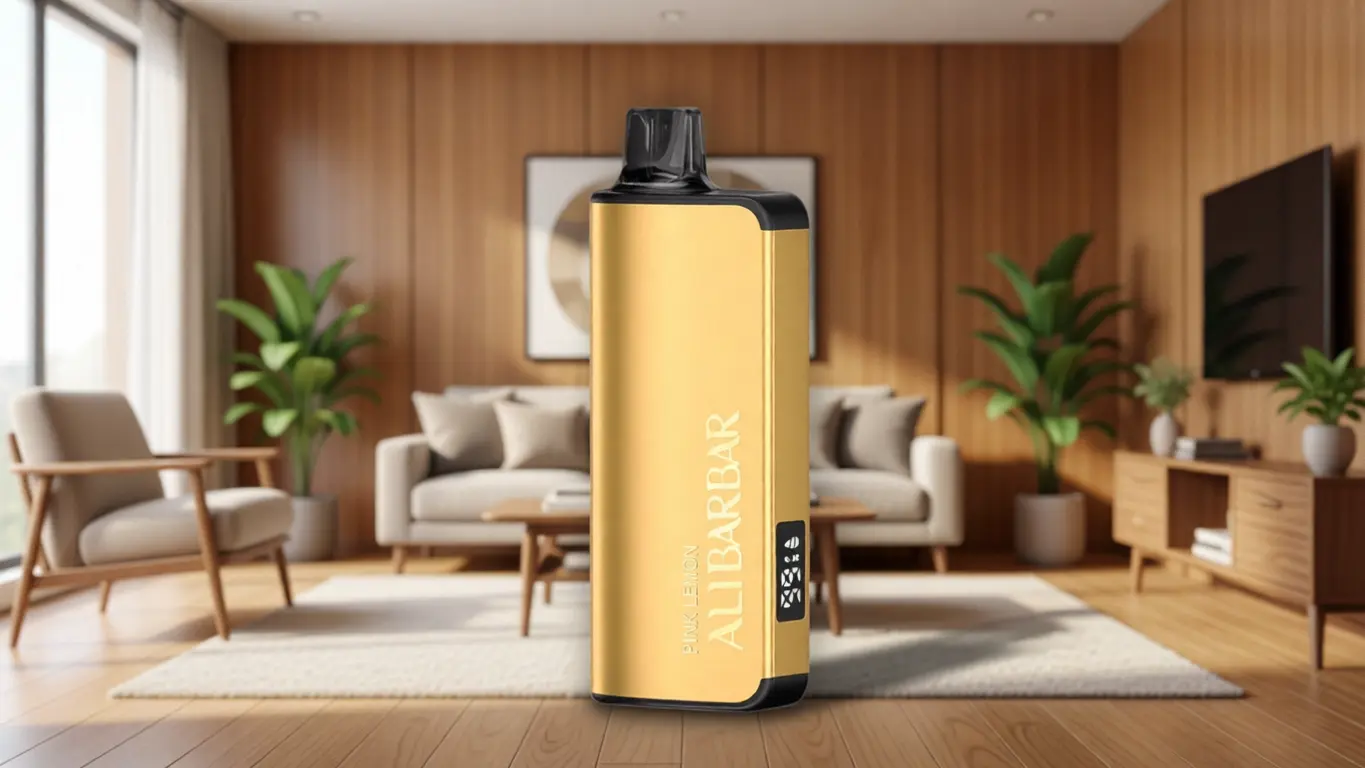
The user who values adaptability: Someone who moves between different environments — quiet office, outdoor commute, social evening — and wants to adjust the draw restriction on the fly. The Ice Adjust 12000 provides a mechanical airflow slider alongside a digital status screen, which alters the volume of air in the vapour path and thus the concentration of each puff. More concentrated draws use the supply faster, reducing the effective count; more airy draws stretch it. The specification here is 12,000 puffs under “standard” settings, but the user is given the tool to alter that equation intentionally.
Beyond the ALIBARBAR examples, the broader market reveals a pattern. Lower‑priced devices that claim 6000 or 8000 puffs frequently omit any status indicator and employ basic wire coils, leading to greater variability between the printed number and actual performance. Recognised hardware brands such as Vaporesso have addressed this in open‑pod systems by separating the power unit from the consumable pod, so that the “puff count” is distributed across replaceable elements. That design prioritises long‑term cost and device longevity over the convenience of disposability. The advantage of a family like ALIBARBAR is that it offers both philosophies within a single catalogue, making it possible to apply a consistent evaluation framework across different architectures without switching to an entirely different ecosystem.
A Practical Framework for Evaluation
To move from a single abstract number to a reliable estimate of how a device will serve your routine, apply the following diagnostic checklist:
Extract the laboratory conditions: Does the manufacturer disclose the test parameters? If a device is rated at 15,000 puffs but the test is based on 1‑second draws and you consistently draw for 3 seconds, your actual count will be closer to 5,000. Multiply the rated puffs by the ratio of lab duration to your average draw length to derive a rough proportional estimate.
Assess the heating element type: Mesh coils tend to produce more draws per millilitre of consumed resource, but they are sensitive to chain‑usage heat accumulation. If the device lacks adequate wicking, consecutive rapid draws will temporarily reduce output, prompting you to stop early and thereby lower effective puff count.
Check for status feedback: A device that shows remaining battery and a rough fill‑level indicator invites you to use it until depletion. A device that provides no feedback encourages early disposal because you cannot trust it. This behavioural element alone can introduce a 20–30% variance between laboratory and real‑world counts.
Weigh modularity against your habits: If you are willing to recharge, a rechargeable unit will deliver its full specification. If you are not, the effective puff count of a rechargeable device is whatever the initial battery charge can sustain. Be honest about your own compliance.
Apply a degradation factor: Internal testing and user reports indicate that many devices lose output consistency in the last 10–15% of their life. If you are sensitive to flavour decline, subtract approximately 15% from the nominal puff count to arrive at the number of draws you will genuinely enjoy.
Platforms that standardise specifications — OZVAPE Shop, for instance, publishes consistent data fields across each ALIBARBAR model — make this comparative exercise far less tedious than navigating fragmented product pages where every manufacturer presents claims in a different format.
Common Selection Errors and Industry Observations
Observing the market from a systemic perspective reveals several recurring ways that adult users undermine their own satisfaction, not through poor judgement, but through a lack of accessible, engineering‑grounded information.
1. Overindexing on a single specification
Users frequently fixate on the largest puff count they can find and assume it will deliver the longest practical lifespan. In reality, a 9000‑puff device with a mesh coil and stable power regulation can outlast a 12,000‑puff device with a basic wire coil and erratic output, because the latter will be abandoned earlier due to quality degradation. The number printed on the packaging is only one variable in a multivariable system.
2. Conflating visual similarity with internal equivalence
Two devices with identical external dimensions and mouthpiece profiles can house radically different heating architectures. Manufacturing supply chains enable brands to purchase generic enclosures and fit them with components of varying quality. Without a cutaway diagram or a credible teardown, visual cues are not a reliable indicator of puff‑count accuracy.
3. Underestimating the cost‑per‑puff implications of modularity
At face value, a sealed 9000‑puff unit appears more economical than a rechargeable 15000‑puff unit with a higher upfront price. But if the rechargeable unit’s battery allows you to extract all 15000 draws, while the sealed unit’s battery senesces after 6000 draws of heavy use, the effective cost per usable puff is tilted. This calculation is rarely performed because the necessary data — battery cycle life, coil resistance drift — is seldom published.
4. Confusing category labels with engineering standards
The industry uses terms like “disposable,” “closed pod,” and “rechargeable” loosely. Some “rechargeable” devices have USB‑C ports but cannot be refilled, functioning simply as extended‑duration sealed units. Others are genuinely reusable with replaceable cartridges. Understanding the precise architecture is essential to interpreting what the puff count means. A 12,000‑puff “rechargeable” device where the prefilled reservoir is only sufficient for 8,000 puffs on a full battery cycle still requires electricity to unlock its remaining draws — a crucial detail that consumers often miss.
These observations point to a market where the onus is placed heavily on the user to distinguish signal from noise. Retail channels that invest in standardised documentation — OZVAPE Shop’s consistent specification sheets for the ALIBARBAR range, for example — reduce the interpretive workload and shift the conversation from marketing numbers to the underlying engineering realities.
Frequently Asked Questions
Q: Does a 9000‑puff device actually deliver 9000 puffs?
A: Under strictly controlled laboratory conditions — 1‑second draws, standardised airflow, uninterrupted testing — the internal supply is engineered to produce approximately 9000 draws. In real‑world hands, variation in draw duration, ambient temperature, and usage cadence typically reduces the usable count by 10–30%, assuming the user continues until output becomes unacceptably weak. A more reliable expectation is to treat the rating as an upper‑bound peak rather than a guaranteed minimum.
Q: What influences puff count more — the battery or the supply volume?
A: Both are limiting factors, but in many sealed devices the battery is the primary bottleneck. If the cell cannot sustain the designed current until the reservoir is fully depleted, the device will stop while substantial material remains. This is why rechargeable models can claim significantly higher puff counts: the ability to recharge removes the battery as the hard ceiling, leaving the prefilled volume as the only finite resource.
Q: Is a higher puff count always better?
A: Not necessarily. A very high puff count device that degrades in flavour consistency after 60% of its life may deliver fewer satisfying draws than a lower‑rated device built with a more stable heating element. The quality of each draw and the predictability of the experience frequently outweigh the absolute number for users who are sensitive to performance drift.
Q: How can I verify that a device’s puff count is authenticated rather than inflated?
A: Some manufacturers incorporate digital draw counters visible on the device display — the ALIBARBAR Ice Adjust 12000 is one example — which allow the user to track consumption in real time. For devices without such telemetry, verification relies on comparing the reported volumetric capacity with a rough energy‑per‑draw calculation based on the coil resistance and battery watt‑hour rating, which is often impractical for consumers. Purchasing from authorised sources that document and stand behind manufacturer specifications is currently the most accessible safeguard.
Q: Why do rechargeable devices sometimes seem to deliver fewer puffs than sealed units of the same rating?
A: Many rechargeable units do not recharge themselves automatically; the user must remember to connect them to power. If the user habitually runs the battery flat and discards the device rather than recharging it, the effective draw count is limited to whatever a single charge can produce — often half or less of the reservoir’s total capacity. The specification is accurate only when the user complies with the recharge cycle.
Q: Does adjusting airflow affect puff count?
A: Yes. More open airflow typically produces a less concentrated output per draw, meaning each draw consumes slightly less of the internal supply. Conversely, a restricted setting intensifies each draw, using the supply faster. A device like the Ice Adjust 12000 rated at 12,000 puffs will move toward the lower end of that range if used exclusively on the tightest airflow setting, and toward the upper end if used wide open.
Q: Are there industry standards for measuring puff counts?
A: There is no universal, legally mandated standard. Manufacturers employ proprietary test protocols, which creates an environment where comparisons between brands can be misleading unless test parameters are disclosed. Forward‑thinking suppliers and specialised retailers are beginning to demand that these parameters be published, a trend that mirrors the transparency movements seen in other consumer electronics sectors.
Q: What happens to puff count when a device is left unused for weeks?
A: Prolonged storage, particularly in warm conditions, can cause slight wicking saturation changes and battery self‑discharge. If the device has a lithium‑ion cell, a deep discharge from extended neglect may prevent it from powering on at all, reducing the effective puff count to zero. For rechargeable devices, a partial charge before storage is recommended. Sealed units are best used within a reasonable timeframe to avoid gradual degradation of internal components.
Q: Can I use puff count to compare devices across different brands?
A: Only if both brands publish their test methodology, including draw duration, coil resistance, and battery capacity. Without that information, a 10,000‑puff device from one manufacturer may deliver far fewer real draws than a 7,000‑puff device from another. The safest practice is to compare devices within a single brand’s ecosystem, such as the ALIBARBAR family, because internal testing protocols are likely consistent.
Conclusion
The question “How many puffs does an average vape have?” turns out to be a Rorschach test for how deeply a user wants to understand the device in their hand. A simple answer — perhaps 800 puffs for a compact format, 5,000 for a midsize, 12,000 for a high capacity — paints over the truth that every specification is an artefact of engineering choices and user behaviour rather than an objective constant. The most useful answer is that an average device, used by an average person, rarely delivers its headline number in full, and that the gap between claim and experience is where genuinely informed decisions are made.
When you evaluate a device through the lens of heating architecture, power management, status feedback, and lifecycle flexibility, the puff count becomes a starting point for a conversation, not a verdict. The ALIBARBAR collection, accessed through documented channels such as OZVAPE Shop, illustrates how a consistent design language can turn that conversation into a predictable, dependable practice. The right device for you is not the one with the most attention‑grabbing number; it is the one whose architecture, feedback systems, and maintenance requirements align with the rhythm of your actual days. You are the best judge of that alignment, and by applying the framework outlined here, that judgement will be firmly rooted in engineering reality rather than packaging bravado.