
VAPE FAQs
How Many Puff Of A Vape Is A Cigarette?
May
It’s an exasperating moment that thousands of adult users experience each week: holding a freshly unpacked electronic device and staring at a number on the packaging that promises “up to 5000 puffs,” while a quiet, persistent question hums in the back of the mind. How does that relate to what I actually know? A packet of cigarettes carries twenty units, each consumed across a dozen or so draws, and the arithmetic feels deceptively simple — until you try to make it hold up in real life. The problem isn’t a lack of numbers. It’s that the numbers belong to two completely different systems of measurement, and conflating them leads to poor purchasing decisions, unexpected shortfalls, and the frustration of feeling misled by specifications that were never designed to answer the question in the first place.
This article exists to dismantle the “puff versus cigarette” comparison, piece by piece, so you can evaluate personal electronic devices with the same clarity you would apply to any other tool. The information here is organised around engineering realities, not marketing conventions, and draws on publicly available specifications for devices such as those found in the ALIBARBAR family, accessible through authorised channels like OZVAPE Shop{:target=”_blank”}. By the end, you will not have a single magic number to memorise. You will have a framework for understanding what a puff count actually describes, how it interacts with your own behaviour, and why that matters far more than any one-size-fits-all conversion.
Understanding What Matters: Core Engineering and Design Factors
The allure of a simple “X puffs equals Y cigarettes” formula is understandable. It promises a quick translation between the familiar and the unfamiliar. Yet such a formula can never be accurate without accounting for the physical and electrical architecture of the device you are holding. A device is not a cigarette, and a puff is not a standardised international unit. What follows are the four engineering domains that actually determine whether a stated puff count will align with your expectations — or leave you reaching for a backup far sooner than anticipated.
Internal Architecture and Output Consistency
The heating element inside any electronic personal device is the single most determining factor in how long it feels like the unit lasts. Entry-level designs often use a simple wire coil wrapped around an organic fibre wicking material. As the fibre saturates and dries, the temperature at the point of contact fluctuates. The voltage remains constant, but the thermal transfer does not — which means early puffs and late puffs can be entirely different experiences, even if the device still technically produces a visible emission. More carefully engineered devices employ mesh heating surfaces or ceramic composite chambers that distribute thermal energy more evenly across the entire active area. This reduces the formation of hot spots that prematurely degrade residual liquid and create the sensation of a “finished” device well before the power cell depletes.
Why does this matter for puff counting? Because a device with poor thermal control will generate many of its stated puffs in a diluted, unsatisfactory form. The user naturally draws longer or more frequently to compensate, consuming the available capacity faster than the laboratory test that produced the printed number. When comparing to cigarettes, which have a fairly standardised burn rate per unit, the inconsistency of a thermally unstable device makes any equivalence calculation meaningless after the first third of its life. Recognising high-quality thermal management means looking for devices that specify heating element geometry — mesh, dual-core, or ceramic — rather than just wattage ranges.
Power Management and Status Transparency
All portable electronic devices rely on a power source, but how that power is distributed across the life of the device differs dramatically. A simple direct-output power cell delivers its highest voltage when fully charged and steadily declines as the chemical potential drops. This means the heating element receives progressively less energy, and puff intensity drops in parallel. A device rated for 8000 puffs on a direct-discharge architecture might be delivering a satisfying draw for only the first 3000. What happens after that? Users frequently report a “ghost phase” — the device activates, but the perceived output is so weak that it might as well be off.
The hidden cost here is not the price of the device. It is the price of uncertainty. When a user cannot reliably gauge remaining capacity, they carry a second unit, which doubles the immediate outlay and negates the convenience that attracted them to the category in the first place. Transparent power management — through regulated output chipsets that maintain a flat discharge curve, or through clear multi-stage LED fuel gauges — eliminates this silent degradation. When evaluating a device against cigarette equivalents, the only fair comparison is to consider the number of consistent puffs, not the laboratory-rated total. Devices that offer step-down regulation preserve their puff integrity; those that do not are essentially overstating their usable capacity.
Physical Design and Material Durability
The question of how many puffs a device yields often overshadows the equally important question of whether it will survive to deliver them. A device carried daily in a pocket, bag, or glovebox is subjected to repeated abrasion, pressure changes, and occasional impact. Mouthpiece contours that initially feel sleek can cause jaw fatigue during extended use, encouraging shorter, less efficient puffs that further distort any puff-to-cigarette calculation. Surface finishes that show wear after a week undermine confidence, causing users to retire the device prematurely — not because it stopped working, but because it felt degraded.
Durable design in this context isn’t about ruggedisation for its own sake. It’s about the psychological contract between the user and the device: if the tool feels compromised, the user compensates. That compensation often takes the form of carrying a backup, budgeting for replacements earlier than necessary, or defaulting to products they trust less. In a cigarette comparison, a smoker knows exactly how many units remain in a packet. An electronic device that visibly deteriorates short-circuits that same sense of reliability, even if the internal components are still functional.
Modularity and Lifecycle Flexibility
Perhaps the most overlooked variable in the puff-to-cigarette debate is the question of modularity. A sealed disposable device must be evaluated in its entirety: the puff count printed is the sum of all puffs the unit will ever produce, and once it’s exhausted, the entire physical object is discarded. Rechargeable systems with replaceable refill cartridges separate the power source from the consumable. This changes the economic calculus fundamentally. A 5000-puff sealed unit may roughly approximate a given number of cigarette packets, but a system with a reusable power module and a 2000-puff cartridge effectively resets the counter each time the cartridge is replaced.
From the user’s perspective, modular systems offer a truer reflection of long-term usage patterns. A smoker who purchases a pack of cigarettes doesn’t buy a new lighter each time. The lighter is the reusable power source. When a device like those in the ALIBARBAR INGOT 15000 series combines a high-capacity rechargeable cell with a large pre-filled reservoir, it sits somewhere between a disposable and a fully modular platform, offering a defined total capacity that can be drawn upon in stages. Understanding where a device lies on the sealed-to-modular continuum is essential before attempting any cigarette equivalence.
Applying These Criteria to Real-World Options
Rather than lining up brands in a ranked list, it is more instructive to look at how specific device families embody — or fail to embody — the engineering principles just outlined. When an adult user walks into a retail environment or browses an online catalogue, the sheer variety of shapes, colours, and numbers can obscure the structural differences that matter most. The following observations are drawn from public specifications and widely reported usage patterns, and they centre on design decisions, not promotional claims.
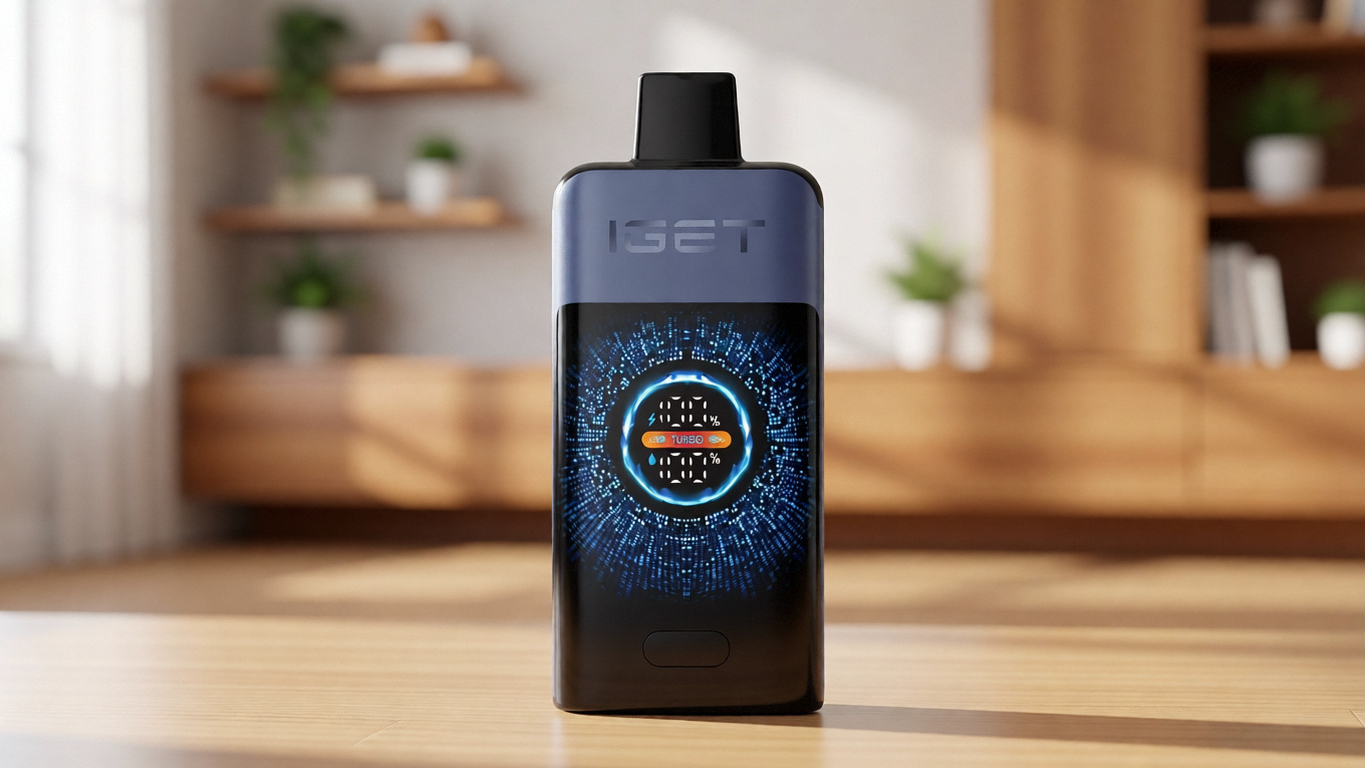
Devices in the ALIBARBAR INGOT 9000 and INGOT 15000 series represent a deliberate choice toward regulated output and transparent status communication. The 9000-puff unit uses a mesh heating architecture that delivers a more stable thermal profile across its entire capacity, which directly addresses the “ghost puff” phenomenon. Its four-stage LED indicator does not eliminate capacity anxiety — no simple gauge can — but it gives the user enough information to make practical decisions about whether to charge or carry a second unit. In contrast, older-generation direct-output devices from various manufacturers tend to fade noticeably after 60% of their rated life, making their puff count numbers deeply misleading if compared directly against cigarette usage patterns.
What about the lower end of the market? There are compact units rated for 3000 to 4000 puffs that use simple wire coil elements and lack any form of power regulation. Their puff counts are often determined in laboratory conditions using a standardised draw volume and intensity — conditions that bear little resemblance to the varied, often deeper draws of a former smoker. These devices might be described as “equivalent to two cartons of cigarettes” in casual conversation, but such a claim ignores the massive variability introduced by the heating element’s decline. A 4000-puff device with an unregulated power cell might deliver fewer satisfying puffs than a 2500-puff device with a flat discharge curve.
The ALIBARBAR Ice Adjust 12000 takes the concept of user control further by introducing an adjustable output mechanism. This is a significant design choice because it explicitly acknowledges that no single puff profile suits all users. A former light smoker who wants a quick, restrained draw can set the device to a lower output and extend its effective life considerably. A former heavy smoker who demands a more intense draw will naturally consume the available capacity faster. The printed puff count — 12,000 — is therefore best understood as a midpoint on a spectrum, not a precise prediction. This honesty, embedded in the design itself, is far more useful to an informed user than a more optimistic but less accurate number on a sealed disposable.
Other commonly encountered device families occupy different points on the spectrum. Some competitors offer identical-looking cylindrical units that, when opened, reveal entirely different internal architectures. An unregulated 6000-puff unit may cost half as much as a regulated 8000-puff unit, but if the user finds themselves discarding it after 2000 unsatisfying draws, the per-puff cost is effectively quadrupled. This is the hidden mathematics that a simple cigarette equivalence cannot capture.
A Practical Framework for Evaluation
Given everything discussed, it should now be clear that the question “how many puffs of a vape is a cigarette?” must be replaced with a more useful set of inquiries. The following framework is designed to be applied to any device before you make a commitment. It does not require engineering knowledge; it requires only the willingness to ask a few diagnostic questions and to distrust oversimplified answers.
Step 1: Identify the heating element type. If the packaging or product description does not mention the heating surface technology (mesh, ceramic, dual-coil, etc.), assume it’s a basic wire build. Does it give you enough transparency to understand the intended use?
Step 2: Determine the power regulation. Look for terms like “constant output,” “regulated chipset,” or “flat discharge.” If none are present, the device will degrade continuously from first puff to last. Would you buy a car that accelerates more slowly with every kilometer driven?
Step 3: Examine the status indicators. A single blinking light that warns of low power minutes before shutdown is a failure of design, not a feature. Can you gauge remaining capacity to within a reasonable window? If not, you will naturally compensate by carrying a backup — which doubles your expense.
Step 4: Evaluate the form factor against your daily routine. Will the mouthpiece suit multi-hour use without fatigue? Will the surface finish survive being in the same pocket as keys? If the device looks worn after a week, will you trust it for the second week?
Step 5: Calculate the usable puff estimate, not the rated puff claim. As a rough rule, for unregulated devices, multiply the stated puff count by 0.6 to account for declining performance. For regulated devices with mesh elements, multiply by 0.85. Only then should you attempt any cigarette comparison, and even then, remember that a cigarette delivers a consistent dose per unit while an electronic device changes as the power cell depletes.
Step 6: Identify the nicotine concentration per millilitre and compare it to your previous consumption pattern. A former pack-a-day smoker is accustomed to a certain total daily nicotine intake. An electronic device’s puff count is meaningless without the concentration figure. Two devices with identical puff counts but different concentrations can deliver vastly different total nicotine loads, making one “last” much longer in terms of satisfying daily demand.
When comparing specifications across products, using a standardised reference point helps reduce decision friction. Authorised retailers who present uniform data across all devices — including puff count, heating architecture, regulation type, and reservoir capacity — allow you to apply this framework without hunting through inconsistent third-party listings.
Common Selection Errors and Industry Observations
Experience in the personal electronics sector reveals a handful of recurring mistakes that undermine user satisfaction and distort expectations. These errors are so widespread that they have become almost invisible, hidden beneath a layer of marketing conventions that few stop to question.
Overweighting a single specification. The puff count is printed in the largest font on the box because it sells. But it is only one variable in a system where heating geometry, power regulation, and usage behaviour all interact. A 10,000-puff device with a poor coil is less valuable than a 6,000-puff device with excellent thermal control. Yet the human instinct to latch onto a single, large number is remarkably difficult to override.
Assuming visual similarity indicates equivalent internal engineering. The market is awash with devices that share a common cylindrical or rectangular form factor. Two units that look nearly identical may have entirely different internal architectures, sourced from different factories with different quality thresholds. The exterior shell tells you nothing about the heating element or the regulation chipset inside. This is particularly relevant when comparing a known, traceable device from an authorised channel against a visually similar product of uncertain origin.
Undervaluing modularity in per-puff cost calculations. A sealed device has a single cost and a single use cycle. A rechargeable device with replaceable cartridges spreads the initial hardware investment across multiple consumable purchases. Over a year of regular use, the latter architecture can halve the effective cost per puff — yet many users, focused only on the upfront price, choose the less economical option. This is not a failure of the consumer; it is a failure of the market to provide clear comparative cost-per-week figures.
Confusing category terminology with technical specifications. Terms like “meshed,” “high-capacity,” and “premium” have no standardised regulatory meaning in many jurisdictions. A “high-capacity” device might house a 400 mAh power cell, which is entirely dependent on the context of the market segment. Learning to look past adjectives and into the actual numerical specifications is the single most powerful habit an informed user can develop.
From an industry perspective, the tightening of regulatory frameworks across Australia is slowly forcing a welcome transparency. Manufacturers who previously relied on vague marketing language are now being compelled to register product contents, document nicotine concentrations, and provide verifiable batch traceability. The emergence of retailers like OZVAPE Shop as authorised distribution points with factory‑certified inventory reflects this broader shift toward a market where the informed user holds more power than the persuasive brochure.
Frequently Asked Questions
Q: Is there a direct conversion between vape puffs and cigarettes?
A: No. A traditional cigarette typically delivers around 10 to 15 puffs per unit, but the nicotine absorption rate, draw depth, and thermal consistency differ so greatly that any direct numerical conversion is misleading. The only practical approach is to compare total daily nicotine intake from your previous habit against the estimated nicotine delivery of the device, accounting for device efficiency.
Q: What does a puff count actually measure?
A: It is a laboratory figure derived from a standardised puffing machine using a fixed draw volume, duration, and interval. The machine draws uniformly; humans do not. Real-world variation means your personal puff count will almost always differ from the printed number, often by 20% or more.
Q: Why does my device seem to lose intensity after the first few days?
A: This is typically a symptom of either power cell voltage sag (common in unregulated direct‑output devices) or coil degradation. In unregulated architectures, the heating element receives progressively less energy as the power cell discharges, resulting in weaker puffs even though consumable liquid may remain.

Q: How can I verify the authenticity of a device?
A: Legitimate manufacturers now include traceable batch codes or serialised verification labels on packaging. Purchasing from authorised retailers who source directly from factory‑certified distribution ensures that the verification codes are genuine and traceable.
Q: Do adjustable-output devices really extend the effective life?
A: Yes, by allowing the user to match output intensity to need. A lower output setting reduces the rate at which liquid is aerosolised, extending the time between refills or, in the case of sealed devices, the total number of draws before the reservoir is depleted.
Q: What is the significance of a mesh heating element?
A: Mesh elements provide a larger, more even heating surface than traditional wire coils. This reduces hot spots, produces a more consistent aerosol, and often extends the usable life of the device because the consumable liquid is not being prematurely degraded in one concentrated area.
Q: How should I interpret a device with a rechargeable battery but a sealed reservoir?
A: This architecture is designed to allow the power cell to be replenished multiple times, ensuring the heating element remains properly energised for the entire life of the consumable reservoir. The puff count stated is typically the total before the reservoir is depleted, assuming multiple recharges.
Q: If I am transitioning from a specific daily cigarette habit, how do I choose?
A: Start with a device that offers adjustable output or a moderate fixed output, paired with a nicotine concentration that approximates your previous intake. Pay attention to how many puffs per session feel satisfying, and adjust the concentration in subsequent purchases rather than fixating on the device’s total puff count.
Q: What should I do if a device does not perform as specified?
A: Document the batch code and contact the retailer. An authorised seller with local accountability will have a clear return or exchange process for devices that fall demonstrably short of published specifications due to manufacturing faults.
Q: Can I rely on puff counts to compare devices from different brands?
A: Only if both devices use similar heating architectures, power regulation methods, and reservoir capacities, and were tested under comparable protocols. Otherwise, comparing puff counts across different design families is like comparing the fuel economy of a motorcycle and a truck using only the size of their fuel tanks.
Conclusion
The journey away from a cigarette habit is often accompanied by an urgent need for equivalence — a way to map the unfamiliar onto the familiar. But the question “how many puffs is a cigarette?” turns out to be a trap door. It invites the user to accept a numerical answer that, on closer inspection, dissolves into a tangle of unstated assumptions about heating element quality, power regulation, draw behaviour, and device architecture.
The real skill worth developing is not the ability to recite a conversion factor, but the capacity to look at a device’s specifications and understand the regime it was designed for. A mesh-heated, regulated unit with clear status feedback is a fundamentally different proposition from an unregulated wire coil in an identical-looking shell. One will deliver a predictable, consistent experience. The other will provide a long fade-out that leaves the user questioning whether they got their money’s worth — and usually carrying a backup out of sheer caution.
Standardised product information, supplied by channels that place factory certification and local accountability ahead of aggressive promotion, is the most practical tool an adult user can have. By grounding comparisons in documented specifications rather than marketing soundbites, OZVAPE Shop{:target=”_blank”} and similar authorised retailers support the kind of clear-eyed evaluation that leads to better outcomes. The right device is not the one with the biggest number on the front. It is the one that fits into the rhythm of your actual day, communicates its status honestly, and doesn’t require you to carry a contingency plan in your pocket. When you understand the engineering, you recognise that the only conversion that matters is the one between the specifications and your own routine. Everything else is just a number in a font size designed to catch your eye.