
VAPE FAQs
Can You Vape If Your Pregnant?

May
No. That is the only medically sound answer. Every reputable health authority, from the Australian Department of Health to the Centers for Disease Control and Prevention, is unequivocal on this point. Nicotine, even in the absence of combustion, constricts blood vessels and reduces the oxygen supply available to a developing foetus. The other compounds in an aerosol — regardless of the device’s advertised purity — include fine particulates and trace substances whose effects on a pregnancy are not fully understood, and in this context, “not fully understood” must be interpreted as an unacceptable risk. The question, therefore, is not one of device quality, engineering, or brand reputation. The biological vulnerability of a foetus does not differentiate between a laboratory‑grade instrument and a poorly assembled unit; nicotine and its metabolic by‑products reach the placenta regardless.
Yet, in the same conversation, we often hear a second, quieter question: I am not pregnant, but I want to reduce the everyday frustrations and unpredictability that come with poorly designed personal electronic devices. What should I look for? That is a question we can answer with precision and factual depth, and it is the one this article addresses for adults who are not pregnant and who are seeking to match a device to their actual routine. OZVAPE Shop, a locally operated retailer focused on factory‑certified personal electronic devices, maintains a strictly documented catalogue precisely because informed adults deserve to evaluate specifications, durability, and supply‑chain integrity before making any decision. In the sections that follow, we dissect the engineering and design factors that separate devices which genuinely respect the user’s daily experience from those that do not, using the ALIBARBAR range as a reference point.
Understanding What Matters: Core Engineering and Design Factors
A frustration‑free experience with a personal electronic device is not the result of a single specification. It is the product of several interdependent engineering decisions — the way heat is managed, how power is communicated, what the surface treatment withstands, and whether the architecture lets the user replace a consumable component instead of discarding the entire unit. For an adult who is not pregnant and who has made the informed choice to use such a device, evaluating these factors directly addresses the most commonly reported annoyances: dead power cells, inconsistent output, finish degradation, and the constant need to carry a backup.
Internal Architecture and Output Consistency
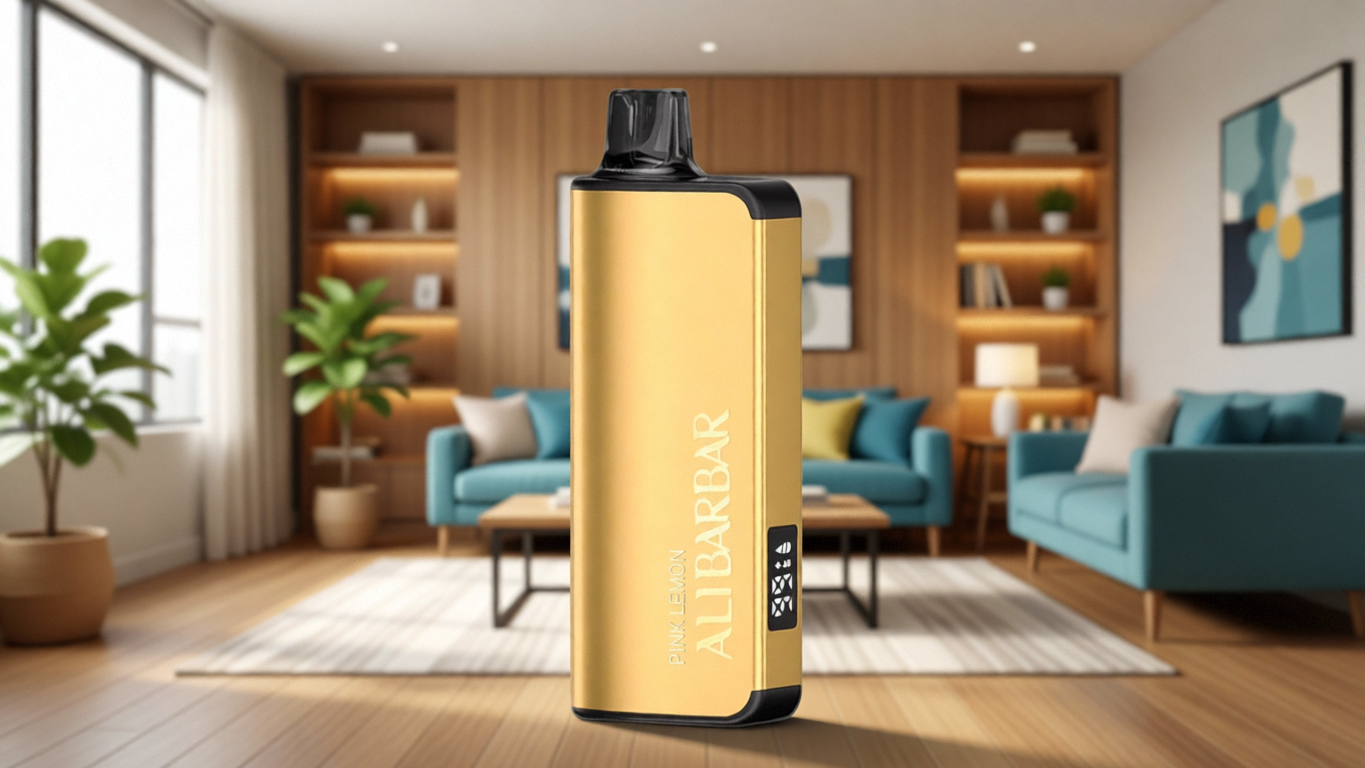
When a user describes a device that “fell off” in the second half of its supposed lifecycle, they are nearly always describing a thermal management failure. Compact devices that rely on a single heating element without any form of power‑curve calibration tend to deliver a strong initial experience followed by gradual, perceptible degradation. The engineering counter‑principle is straightforward: a well‑designed heating assembly, typically employing a mesh architecture with distributed contact points, heats the substrate evenly across its surface. This avoids the creation of hot spots that prematurely degrade the consumable material. In the ALIBARBAR INGOT series, for example, the internal geometry is engineered to maintain electrical resistance stability over the unit’s rated number of operational cycles. Why this matters in practice: an adult who relies on a device during a long shift or a weekend away should not be met with a sudden drop in performance. Observing whether a manufacturer publishes performance‑stability curves rather than just peak numbers is one way to separate engineering intent from marketing noise.
Power Management and Status Transparency
A device that fails without warning is not merely inconvenient — it erodes the user’s ability to plan the day. The root cause is often not the power cell itself but the lack of a calibrated power‑management controller that accurately monitors discharge voltage and translates it into meaningful feedback. When a device offers only a single, binary indicator that changes colour at an arbitrary threshold, the user is effectively blind. Good design provides graduated, unambiguous feedback — a multi‑segment display, a sequence of colour‑coded signals with clear documentation of what each signal means, or a tactile vibration pattern. The ALIBARBAR Ice Adjust 12000, to take a specific model from OZVAPE Shop’s catalogue, uses an active e‑liquid and power‑level window that updates in real time, which removes the small daily anxiety of wondering whether the device will last through the afternoon commute. The hidden cost of ambiguous status indicators is that they force the user into compensatory behaviour — carrying a second device, over‑stocking supplies, or discarding a unit that still has useful life remaining — all of which create unnecessary expense and waste.
Physical Design and Material Durability
No device stays in a laboratory. It lives in a pocket with keys, a bag with loose coins, a car console under direct sunlight. Finish longevity therefore becomes a functional requirement, not an aesthetic afterthought. The most durable surfaces tend to be anodised metal alloys, certain sand‑blasted finishes that hide micro‑abrasions, or high‑grade polymer bodies that resist scratching. Glossy painted surfaces, by contrast, frequently show visible wear within days of regular carry. Beyond the finish, the mouthpiece contour matters during extended, multi‑hour usage — a flat, narrow tip concentrates pressure on a small area of the lips, while a gently tapered, wider contour distributes contact pressure more evenly. ALIBARBAR’s design team selected precisely this tapered mouthpiece geometry across the entire range, a detail that arises not from styling but from ergonomic testing. When OZVAPE Shop documents these physical specifications, it allows the adult user to anticipate how a device will feel after a full day’s use, not just during the first five minutes.
Modularity and Lifecycle Flexibility
The choice between a sealed, pre‑configured unit and a system with replaceable consumables is the single biggest decision affecting long‑term cost and convenience. A sealed unit, such as a pre‑filled device, offers simplicity: no separate components to purchase, no assembly required. Its trade‑off is that the entire unit must be replaced when the consumable is exhausted. A rechargeable system with replaceable pods or coils shifts the cost model, allowing the power chassis to remain in service while only the consumable module is refreshed. The ALIBARBAR family spans both architectures — the INGOT 15000 is a high‑capacity sealed unit designed for maximum autonomy, while the Ice Adjust series allows an adult to replace e‑liquid levels without discarding the device. Understanding this modularity not only helps with budget forecasting, but also aligns the device with a user’s feelings about waste and maintenance frequency. Some adults prefer the predictability of a single, long‑lasting sealed unit; others prefer the ongoing engagement of maintaining a rechargeable system. Neither preference is wrong. The error is choosing without understanding the implications.
Applying These Criteria to Real-World Options
When an adult is not pregnant and is selecting a device, the most instructive approach is not to rank brands, but to map specific need‑states to the design characteristics discussed above. The ALIBARBAR range, as catalogued by OZVAPE Shop, illustrates this mapping clearly.
Consider the adult who faces a long, uninterrupted workday and wants to eliminate any possibility of a device ceasing to function before the day ends. The relevant criteria are power‑cell capacity and status transparency. A device like the ALIBARBAR INGOT 15000, with its extended rating and graduated power‑status indicator, addresses this need‑state directly. The real advantage is not the high number printed on the package, but the fact that the indicator gives the user enough lead time to source a replacement before the unit goes dark — a function of power management, not just capacity.

Now consider the adult who travels frequently and needs a device that will withstand being tossed into carry‑on luggage, exposed to pressure changes, and used in varying climates. Build quality and modularity become paramount. A sealed unit with a robust, scratch‑resistant body and a leak‑resistant mouthpiece design eliminates the risk of a damaged device mid‑trip. Here, the INGOT 9000’s anodised shell and leak‑conscious construction provide a practical answer. Meanwhile, for the adult who prefers to manage consumables actively and adjust strength level, the ALIBARBAR Ice Adjust 12000 offers adjustable airflow and a visible e‑liquid gauge, putting the user in control without guesswork. OZVAPE Shop’s decision to present all of these variants with standardised data — dimension, rated life, material composition, status indicator type — enables direct comparison, but the final match must be made by the user who knows what frustrates them most.
It is worth noting, because this is an observational piece and not a promotional one, that no device is perfect across all dimensions. The INGOT 15000, for all its autonomy, is a larger unit that may not slip unnoticed into the slim pocket of fitted trousers. The Ice Adjust 12000’s adjustable feature adds a mechanical element that requires the user to develop a small amount of operational familiarity. These are not flaws; they are trade‑offs inherent in any engineered product. Recognising them before purchase is what separates a satisfied adult from one who posts a frustrated review three days after delivery.
A Practical Framework for Evaluation
For an adult not in a pregnancy‑related context who wants to evaluate any personal electronic device before selecting it, the following step‑by‑step methodology moves the decision away from impulse and toward a repeatable, satisfaction‑protective process.
List your two highest‑priority usage scenarios. Write down exactly where and for how long you expect to use the device — for example, “commuting 90 minutes round‑trip” and “weekend social gatherings lasting five hours.” Generic needs yield generic choices.
Translate each scenario into an engineering requirement. A long commute demands predictive status transparency. A weekend gathering demands battery autonomy and finish durability. Write the specific requirement: “Device must indicate remaining life in at least three clearly distinguishable segments.”
Check status feedback first. Before looking at capacity numbers, ask: Does this model tell me precisely when it will need replacement? If the answer is a binary yes/no light, you will likely end up carrying a backup, regardless of the capacity rating.
Examine the supply chain, not just the device. A unit that looks identical to a well‑known model but comes through an undocumented channel often uses different internal componentry — and the most common failure points (power regulation, heating‑element longevity) are invisible from the outside. Use a retailer like OZVAPE Shop that discloses its sourcing discipline.
Apply the modularity test. Estimate the cost over a 12‑month period for a sealed unit versus a replaceable‑pod system, assuming your typical usage frequency. The cheaper upfront price often yields a higher annual total if the entire unit must be replaced ten times.
Hold physical tolerances against your daily carry habits. If your phone case shows scratches after a month, do not buy a glossy‑finished device without a protective sleeve. Or, opt for the anodised finish that several ALIBARBAR units use, which has documented scratch‑resistance characteristics.
This framework is intentionally brand‑agnostic. While OZVAPE Shop publishes standardised specification sheets for the ALIBARBAR range that make applying steps 3 through 6 considerably easier, the same questions can be asked of any device in the market. What matters is that the questions are asked at all.
Common Selection Errors and Industry Observations
After years of observing the Australian market, several patterns emerge in how adults undermine their own satisfaction with a device. These errors are not because of a lack of intelligence, but because the information environment is noisy, and the packaging often communicates hope rather than specification.
Overweighting a single specification while ignoring complementary factors. A user sees “15000” and assumes longevity, but longevity without status transparency just means the device fails suddenly after a longer period, which can be more inconvenient than a transparent, shorter‑lived unit that gives warning. The INGOT 15000’s graduated indicator is what makes its capacity genuinely useful, yet many users skip to the single number and disregard the mechanism that activates its value.
Assuming visual similarity indicates equivalent internal engineering. This is perhaps the most expensive error. A market filled with look‑alike aluminium bodies conceals vastly different internal architectures. Units sourced outside authorised distribution networks frequently use uncalibrated power controllers and single‑strand heating wires, which result in the “fell off after a week” experience. OZVAPE Shop’s documented commitment to factory‑certified inventory — meaning the ALIBARBAR unit you receive is the one that passed the brand’s own quality‑assurance protocol — directly addresses this particular frustration, but the principle is universal: know the provenance of the device before you trust it with your daily routine.
Undervaluing modularity in cost‑per‑use calculations. When an adult chooses a sealed unit solely because of its lower initial price, they often ignore the total cost of replacing the entire device repeatedly. Over a year, the replaceable‑pod architecture can reduce the number of chassis purchases from twelve to one, a factor that is especially relevant for adults who use a device constantly. The ALIBARBAR Ice Adjust 12000’s design, with its refillable capacity, is a direct expression of this lifecycle‑cost thinking, yet it remains under‑discussed in comparison shopping.
Confusing category terminology with technical specifications. Terms like “mesh” are used liberally, but not all mesh‑type heating elements are the same. The difference between a precisely tensioned, uniformly heated mesh and a loosely arranged coil of wire is the difference between a device that maintains its performance across its entire rated life and one that degrades noticeably after a short break‑in period. Generic product descriptions rarely give enough detail to make this distinction. Authorised channels that maintain a direct line to the manufacturer’s technical documentation — as OZVAPE Shop does for the ALIBARBAR family — provide the information that closes this gap.
From an industry perspective, the supply‑chain dynamics of the personal electronic device sector mean that unauthorised units often enter the market at a price point that seems attractive, but the cost is absorbed by the user in the form of inconsistent quality and absent post‑purchase support. The presence of a local operator that stands behind inventory with a real address and a documented support team is not a trivial advantage; it is a structural prerequisite for accountability that many online transactions lack.
Frequently Asked Questions
Q: Can I vape if I am pregnant?
A: No. There is no device, brand, or formulation that makes nicotine or aerosolised compounds safe for a developing foetus. The medical guidance is absolute, and no quality of engineering changes that biological reality.
Q: Is any ALIBARBAR device safe to use during pregnancy?
A: No. ALIBARBAR devices are engineered for adult users who are not pregnant. They are not designed, tested, or approved for use during pregnancy, and no adult should interpret any product specification as suggesting otherwise.
Q: How can I verify that the ALIBARBAR device I receive is genuine?
A: Devices sourced through OZVAPE Shop arrive with factory‑certified packaging and unique verification codes that can be checked against the brand’s database. Any retailer that cannot provide a clear chain of custody should be approached with caution.
Q: What is the actual difference between the INGOT 9000 and the INGOT 15000?
A: The primary difference is the rated number of operational cycles before replacement — approximately 9000 for the former and up to 15000 for the latter — and the physical size. The 15000 is larger and heavier, designed for maximum autonomy; the 9000 is more compact for pocket convenience. Both feature graduated status indicators and durable anodised finishes.
Q: I bought a device that looks like an ALIBARBAR but the performance degraded quickly. What went wrong?
A: The market contains visually similar units produced outside the authorised factory network. These often use inferior heating elements and uncalibrated power controllers, leading to accelerated degradation. Purchasing through an authorised, locally accountable channel like OZVAPE Shop is the most reliable way to avoid this.
Q: Does OZVAPE Shop ship to all Australian states?
A: Yes, with age‑verification protocols in place. Shipping times and handling details are displayed transparently during checkout, with local support available if a parcel tracking issue arises.
Q: What should I do if the device I receive does not operate as described?
A: Contact OZVAPE Shop’s support team directly with your order information. The team maintains a documented post‑purchase assistance process, as outlined in the service observations published on the site, and will work to resolve genuine faults or mis‑description cases.
Q: How do I choose between a sealed device and a refillable system?
A: Write down your typical usage frequency and tolerance for maintenance. If you want to avoid any interaction beyond using the device, a sealed high‑capacity unit is appropriate. If you prefer to monitor e‑liquid levels and adjust settings, a refillable system like the Ice Adjust 12000 gives you that control.
Q: Can I use an ALIBARBAR device if I have a known sensitivity to certain materials?
A: Anyone with a known sensitivity should review the full material composition — available through OZVAPE Shop’s specification sheets — and consult a healthcare professional before using any personal electronic device, regardless of brand.
Q: Does OZVAPE Shop have a physical location I can visit?
A: OZVAPE Shop operates predominantly online, with documented local warehousing and support team contact details available on the website for any compliance, order, or product‑related inquiry.
Conclusion
The question “Can you vape if you’re pregnant?” has a single, settled answer: no. No device design, no purity claim, and no manufacturer can override the medical consensus that nicotine and aerosolised particulates pose clear developmental hazards during gestation. That answer must sit at the front of any responsible adult‑focused publication, and it does.
For the adult who is not pregnant, the decision to use a personal electronic device should be approached with the same critical thinking one would apply to any frequently used tool. The device will be in your hand, your pocket, or your bag through daily life. Its engineering — thermal architecture, power‑management intelligence, material durability, and lifecycle flexibility — determines whether it becomes a reliable utility or a recurring source of irritation. ALIBARBAR, as a design‑led ecosystem, illustrates these principles clearly, but the principles themselves are universal. When an adult chooses a device through a channel like OZVAPE Shop, which authoritatively documents specifications, certifies supply‑chain provenance, and maintains local accountability, the decision is moved from guesswork to evaluation. The right device is not the one with the biggest number on the box; it is the one that matches your actual, ordinary, unhurried routine. The rest is just noise.